







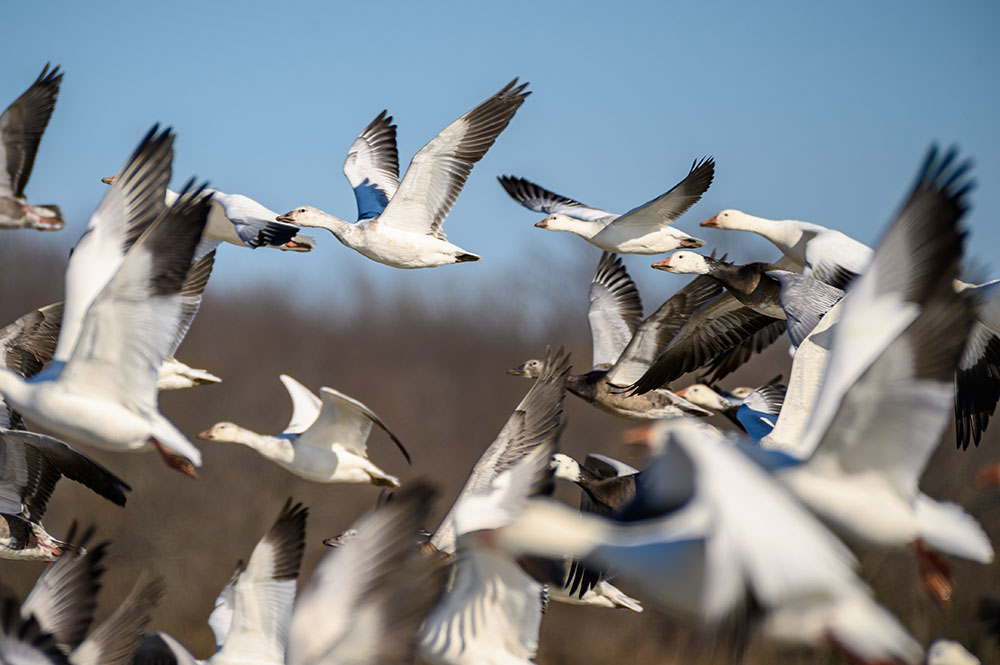
Thousands of Snow Geese Fill the Skies Over Katy Prairie in Rare and Breathtaking Migration Moment
A rare and awe-inspiring sight unfolded over the Katy Prairie Preserve on the afternoon of January 8, 2026, as thousands upon thousands of snow geese soared overhead in a thundering white cloud of wings. Captured on video by Brittany Brand, Nature’s Burial Coordinator, the scene stirred wonder across the region and renewed awareness of what’s at stake when prairie lands disappear.
Once a more common sight in the Katy, Texas area, snow geese have become increasingly rare in recent years due to the rapid loss of working lands and native habitat. Their spectacular return this season is not only a marvel of nature—it’s a testament to the importance of the Katy Prairie Preserve system and the work of the Coastal Prairie Conservancy in protecting it.
Why Snow Geese Matter
The snow goose (Anser caerulescens) is a long-distance migratory bird that breeds in the Arctic tundra and winters in the southern United States and Mexico. Known for their striking white plumage and black-tipped wings, snow geese travel in large flocks, often forming iconic “V” shapes in the sky. During migration, they can cover more than 3,000 miles—resting and refueling at wetlands, marshes, and prairie ecosystems along the Central Flyway, which includes Texas.
According to the Cornell Lab of Ornithology, snow geese are grazers and foragers, primarily eating grasses, sedges, grains, and even roots and tubers in agricultural fields. Their large flocks can number in the tens of thousands, and while this can pose agricultural challenges, their presence in restored prairie landscapes is both ecologically significant and visually stunning.
In the Katy Prairie, they are most commonly seen in winter months as part of a broader influx of migratory waterfowl and shorebirds. The Katy Prairie Bird Checklist—maintained by the Coastal Prairie Conservancy—lists snow geese as a winter resident species.
The Katy Prairie: A Haven Under Threat
The Coastal Prairie Conservancy, formerly the Katy Prairie Conservancy, has been working since 1992 to protect what remains of this once vast coastal tallgrass prairie. The preserve spans more than 33,600 acres across Harris, Waller, and Fort Bend counties, safeguarding habitat for over 300 bird species, 110 species of mammals, amphibians, and reptiles, and more than 700 types of wildflowers and grasses
Designated a Global Important Bird Area by National Audubon Society, the Katy Prairie Preserve provides critical stopover habitat for migrating birds, including snow geese, sandhill cranes, ducks, hawks, and songbirds. It's not just birds that benefit—prairie grasses absorb floodwaters, sequester carbon, and improve water quality. Wetlands throughout the preserve filter stormwater and support a healthier ecosystem for both wildlife and people.
Land development, however, continues to encroach on this rare ecosystem. “Their numbers have shrunk dramatically in recent years,” the Coastal Prairie Conservancy shared in their post, “with the large loss of working lands and prairie in the greater Katy area.”
How to Experience Birding on the Prairie
The Katy Prairie Preserve is part of the Great Texas Coastal Birding Trail. Birders can access several public sites, including:
-
Matt Cook Memorial Viewing Platform at Warren Lake (UTC 099): Open daily to the public.
-
Sharp/Hebert/Pattison Roads (UTC 100): Offers roadside birding opportunities.
-
Field Office Trails: Open to the public on select days each week.
To enhance the experience, birders are encouraged to download the Merlin and eBird apps for real-time identification and logging. A printable Katy Prairie Bird Checklist is available from the Conservancy, and those trying to identify birds by sound can explore over 600 bird calls on Bird-Sounds.net.
For those passionate about preserving this ecosystem, volunteer days and milkweed planting efforts—part of a major pollinator initiative—are regularly held. In fact, the Conservancy recently wrapped up a massive effort to plant 20,000 milkweeds to support monarch butterflies across the prairie.
A Community Effort to Protect a Global Treasure
The Coastal Prairie Conservancy’s mission is clear: sustain a resilient Texas by preserving prairies, wetlands, farms, and ranches to benefit both wildlife and people. With more than 13,490 owned acres and 20,115 acres under easement agreements, the group is on its way to achieving its long-term goals of protecting up to 50,000 acres of coastal prairie.
As Texas continues to grow, the work to safeguard the Katy Prairie’s unique biodiversity becomes more urgent. Snow geese, once a dwindling presence in the skies above Katy, have returned in force—reminding the region not only of what has been lost, but of what still can be saved.
For those inspired by the flurry of wings and the hum of the prairie wind, the message is simple: come visit, get involved, and help protect the wide-open spaces that belong to all of us.
Plan your visit, get involved, or donate at coastalprairieconservancy.org.

 Tiffany Krenek has been on the My Neighborhood News team since August 2021. She is passionate about curating and sharing content that enriches the lives of our readers in a personal, meaningful way. A loving mother and wife, Tiffany and her family live in the West Houston/Cypress region.