







Austin-Bergstrom Finalizes Historic Airline Agreements to Propel $5B Expansion
In a major milestone for Central Texas infrastructure, Austin-Bergstrom International Airport (AUS) has finalized new multi-year use and lease agreements with its airline and cargo partners, creating the financial and operational foundation for a sweeping $5 billion expansion.
The historic Airline Use and Lease Agreements and Signatory Cargo Agreements solidify a decade-long commitment between AUS and major carriers—Southwest Airlines, Delta Air Lines, United Airlines, American Airlines, Alaska Airlines, FedEx, and UPS—ensuring both long-term operations and proportional financial investment from each airline. These agreements will directly fund a series of ambitious capital projects, including the addition of 32 new gates, utility infrastructure upgrades, and a completely reimagined passenger experience.
“These agreements reflect years of partnership, thoughtful negotiations, and shared vision with our airline partners,” said Ghizlane Badawi, CEO of Austin-Bergstrom International Airport. “Their commitment provides the financial foundation we need to modernize our facilities, transform customer experience, and build the infrastructure needed to support Central Texas’ continued growth for generations to come.”
Key Expansion Projects at AUS
The expansion program, dubbed Journey With AUS, includes multiple transformative construction projects:
-
Concourse B: A new terminal with 26 gates, including 18 dedicated to Southwest Airlines, 5 for United Airlines, and 3 for domestic common use.
-
Concourse A Redevelopment: A full modernization of the existing Barbara Jordan Terminal, adding post-security amenities and expanded gate areas. Delta Air Lines will anchor the concourse with 15 gates, American Airlines with 9, Alaska Airlines with 1, and 8 gates reserved for domestic/international common use.
-
New Arrivals and Departures Hall: This project will revamp the airport’s front entrance, adding a redesigned curbside, new baggage claim, centralized TSA checkpoint, ticket counters, concessions, and a pedestrian bridge connecting to parking and rental cars.
-
Concourse M: A 6-gate pre-engineered facility offering increased flexibility during construction phases and accommodating off-schedule and new airline services.
-
Utility Infrastructure Upgrades: Central Utility Plant and campus-wide enhancements will boost the airport’s heating, cooling, power, drainage, and deicing systems, enabling reliable support for current and future expansions.
Together, these projects are designed to boost passenger capacity, increase operational resilience, and improve the overall traveler experience—all while meeting the demands of one of the nation’s fastest-growing regions.
Strategic Financing, No Local Taxpayer Dollars
The agreements define how AUS calculates fees for airline use of key facilities such as runways, baggage systems, gates, and leased spaces. These charges will support airport revenue bonds and other airport-backed funding mechanisms. Airlines and cargo companies not part of the agreements will operate under standard per-use charges.
Importantly, the AUS expansion program is funded entirely through traditional airport development channels: airport revenues, reserves, future bonds, and FAA grants. No local Austin taxpayer dollars will be used to finance the project.
As the scope of the expansion has grown—from a $4 billion plan with 20 gates to a now $5 billion+ plan with 32 gates—Austin Aviation will request additional authority from the Austin City Council to proceed with design and construction services.
Mayor Kirk Watson, reflecting on the momentous occasion, stated, “I’m proud to have been here when this airport first opened, and I’m proud to stand here again as we usher in a new era for aviation in Central Texas. The expansion we commit to today will define the expansion of the future—supporting travelers, strengthening our economy, and preparing Austin for the decades of growth ahead.”
Councilmember Vanessa Fuentes, representing District 2, echoed that sentiment, highlighting the local economic impact. “This expansion program represents a tremendous economic opportunity for Austin—not only through the trades and construction jobs created during the buildout, but also through long-term jobs in concessions, airport operations, and airline services after the program is complete. We thank our airline partners for their continued investment in our community and for helping create a stronger, more connected Central Texas.”
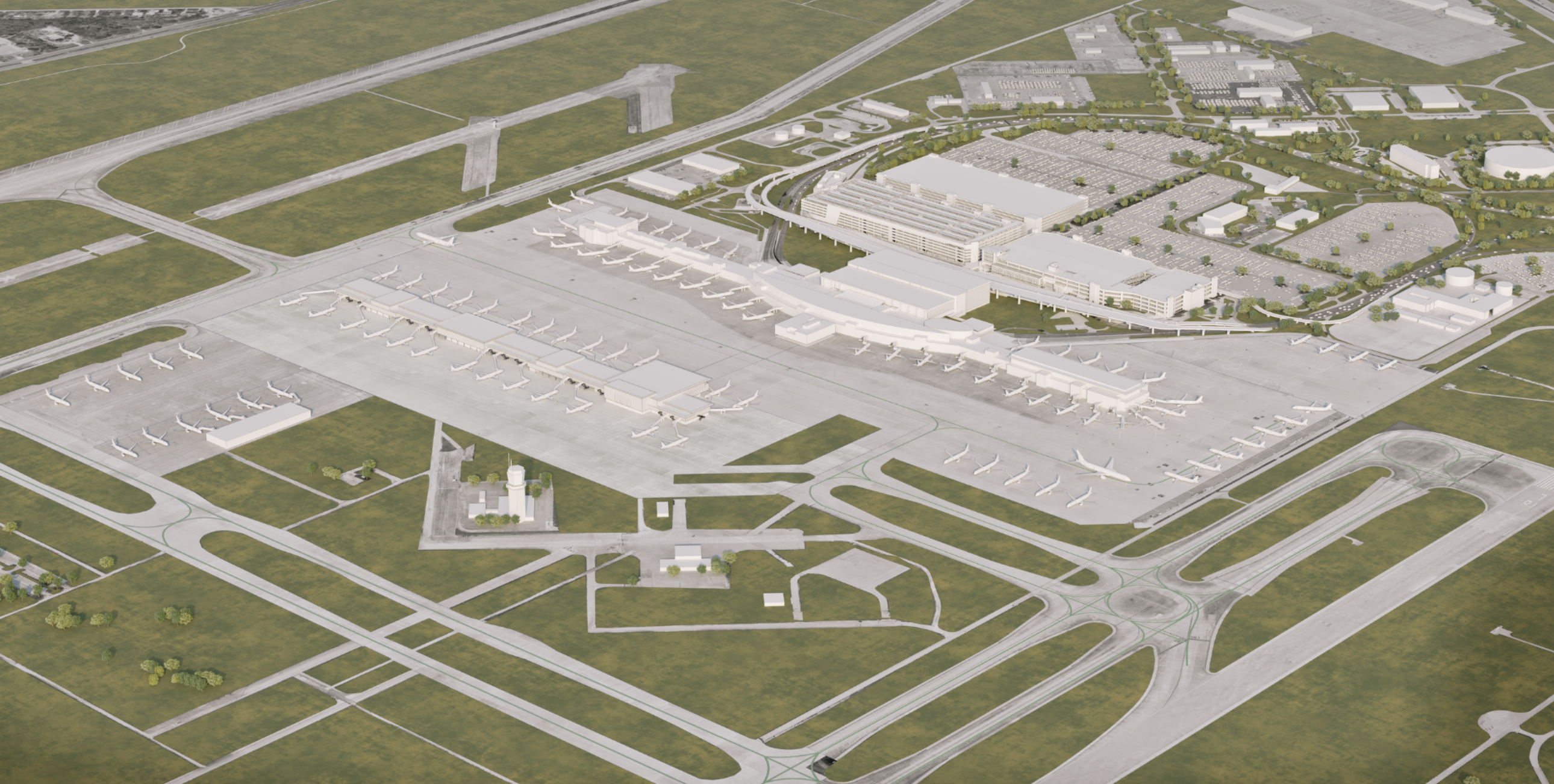
| Rendering of the future Austin-Bergstrom International Airport expansion shows the planned Concourse B, Concourse M satellite terminal, and a redesigned Arrivals and Departures Hall, part of the $5 billion Journey With AUS program to modernize air travel in Central Texas. (Source: Austin-Bergstrom International Airport) |
Looking Ahead: A New Era for AUS and Central Texas Travel
As Austin-Bergstrom continues to serve millions of travelers annually and accommodate the explosive growth of the Central Texas region, these new agreements and expansion plans mark a turning point for the airport and the community it serves.
Residents, travelers, and businesses can expect enhanced services, more gates for faster travel, and new amenities that reflect the airport’s position as a gateway to Austin’s vibrant and diverse culture.
To learn more about the Journey With AUS Expansion Program and upcoming improvements, visit AustinTexas.gov/AUSJourney.

 Tiffany Krenek has been on the My Neighborhood News team since August 2021. She is passionate about curating and sharing content that enriches the lives of our readers in a personal, meaningful way. A loving mother and wife, Tiffany and her family live in the West Houston/Cypress region.