







Westfield Regional Water Authority Rates Hold Steady for 2027 as West Harris County Water Authority Marks 25 Years of Progress
For residents of Westfield, the water flowing from household faucets is part of an increasingly complex regional system designed to support growing communities while addressing a challenge that has affected the Houston area for decades: land subsidence caused by excessive groundwater pumping.
The West Harris County Regional Water Authority (WHCRWA) is marking 25 years of progress in transforming how west Harris County obtains and distributes drinking water. With a major new pumping station now operating, billions of dollars invested in regional infrastructure and additional projects underway, the Authority is entering another important phase of its long-term groundwater reduction efforts.
There is also some encouraging news for local water providers and the residents they serve. WHCRWA has confirmed that its groundwater and surface water rates will remain unchanged in January 2027, extending a rate freeze that began in 2023. The announcement comes as the Authority continues expanding its distribution system and preparing to meet an 80% groundwater reduction requirement by 2035.
Why West Harris County Is Moving Away From Groundwater
For decades, communities across west Harris County relied heavily on groundwater pumped from underground aquifers. While groundwater remains an important resource, excessive pumping can cause land subsidence, a gradual sinking of the ground as underground clay layers compact.
In a region already familiar with drainage concerns and flooding, preventing additional subsidence is an important part of protecting homes, roads, drainage systems and other infrastructure.
The Harris-Galveston Subsidence District, established by the Texas Legislature in 1975, regulates groundwater withdrawal to help prevent further sinking of the land. Its requirements call for water providers operating under applicable groundwater reduction plans to transition progressively away from groundwater.
The West Harris County Regional Water Authority was created by the Texas Legislature in May 2001 to help local utility districts meet those requirements and develop a sustainable, long-term water supply.
Today, the Authority's groundwater reduction plan area covers approximately 232 square miles, with an estimated population of 648,500 people. The region includes more than 150 municipal utility districts (MUDs), as well as portions of the City of Katy.
Rather than each municipal utility district independently building the large-scale infrastructure needed to obtain treated surface water, WHCRWA coordinates regional water supply projects and distributes water to participating local providers.
The transition does not mean groundwater will disappear entirely. Instead, the goal is to obtain most of the region's water from alternative sources, primarily treated water originating from lakes and rivers, while limiting groundwater pumping.
From Copperfield to Katy: 25 Years of Water Infrastructure Development
During WHCRWA's Central Pump Station Open House on October 10, 2026, visitors had an opportunity to learn about the projects that have transformed the region's water supply.
Eric Hansen, WHCRWA Board President and Precinct 3 Director, presented a retrospective covering the Authority's accomplishments, partnerships, financing decisions and plans for the future. The presentation was subsequently published on November 17.
The Authority's early water supply arrangements with the City of Houston established access to approximately 28.25 million gallons of treated surface water per day.
A significant milestone followed in 2005 when Harris County Municipal Utility District No. 179 in the Copperfield area became the first district to receive surface water through WHCRWA. The water was delivered through a connection to an existing City of Houston pipeline along FM 529.
In 2006, the Authority purchased a 44-mile pipeline easement from ExxonMobil Corporation, stretching across Houston and Harris County toward the Katy gas fields. That acquisition helped establish a route for future large-diameter transmission pipelines, reducing the time and expense associated with obtaining individual easements.
Pump Station No. 1 became operational in 2008, adding the capacity to pump up to 60 million gallons per day and supporting additional surface water deliveries.
By 2010, WHCRWA had exceeded its first regulatory milestone, achieving a 31.4% groundwater conversion rate against a required 30%.
The following years brought major planning and construction efforts. The Authority partnered with the North Fort Bend Water Authority on shared facilities in 2010, established a financial partnership with the City of Houston for the Northeast Water Purification Plant expansion in 2014, and began awarding engineering contracts for the Surface Water Supply Project in 2016.
Construction of major regional pipelines began in 2019, followed by additional pipeline segments in 2020 and internal Capital Improvement Program planning in 2021.
WHCRWA successfully met its 60% groundwater reduction requirement in 2025 through a combination of surface water deliveries and accumulated regulatory credits. Additional pipeline and distribution projects remain underway, with more water plants scheduled to transition to surface water through 2027.

New Central Pump Station Marks a Major Step Forward for West Harris County
One of the most significant milestones occurred on June 2, 2026, when WHCRWA's Central Pump Station began delivering treated surface water into its distribution system.
Located on North Fry Road in Katy, the facility initially pumped approximately 21 million gallons per day from the expanded Northeast Water Purification Plant near Lake Houston.
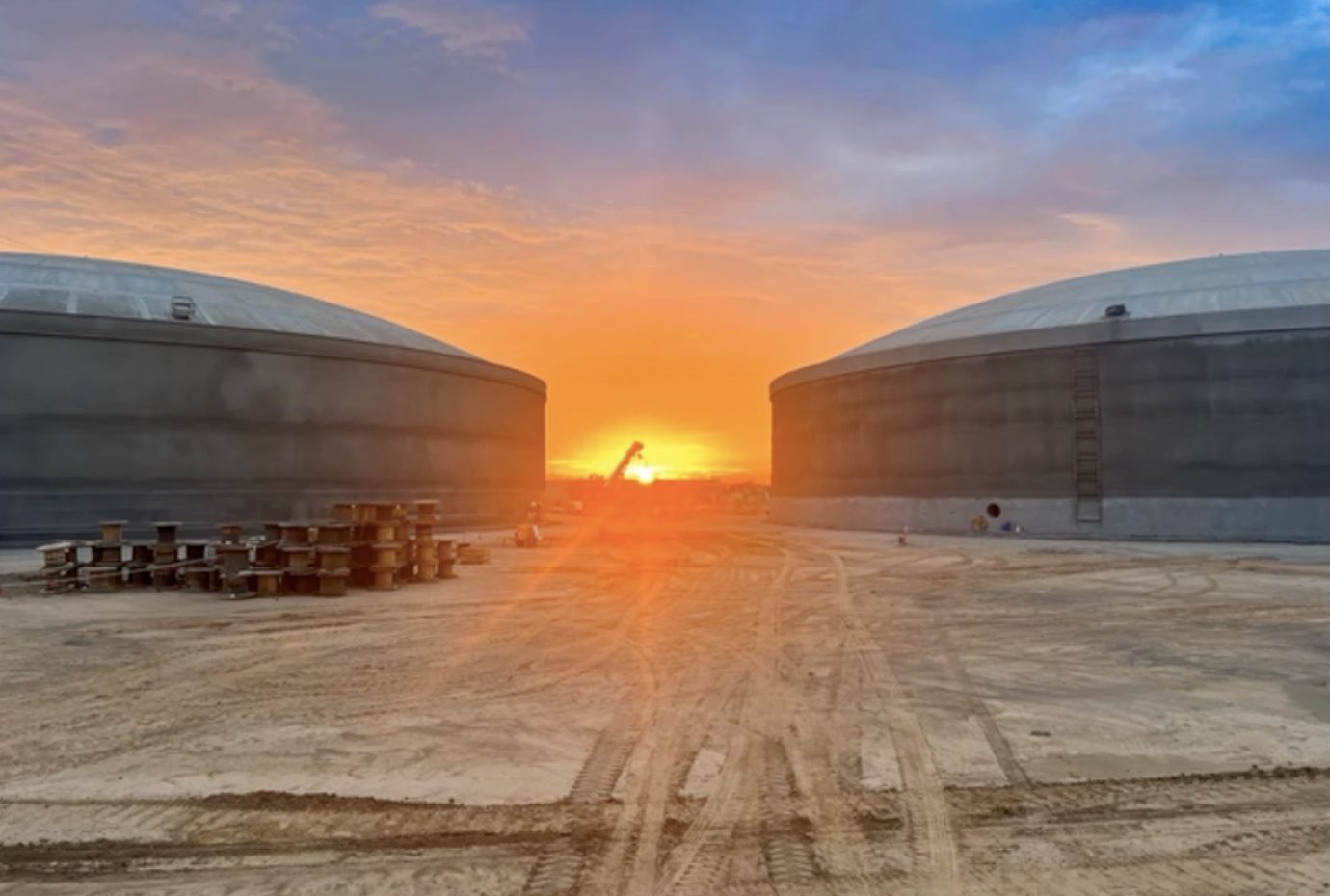
The pump station includes two 15-million-gallon storage tanks, giving it a combined storage capacity of 30 million gallons. It provides the pressure necessary to move treated water through the Authority's internal pipelines to local water providers.
The project is part of the larger Surface Water Supply Project, developed jointly by WHCRWA and the North Fort Bend Water Authority.
The approximately $1.45 billion project includes more than 55 miles of 84-inch and 96-inch transmission pipelines, two pump stations and three meter stations. The largest pipes are eight feet in diameter, large enough for a full-size pickup truck to fit inside.
WHCRWA's share of the project is approximately 55%, or $785 million.
The water feeding this system comes from the Northeast Water Purification Plant, where Phase 1 began delivering 80 million gallons per day in 2024. Phase 2, completed in May 2026, added the capability to treat another 240 million gallons daily.
The project's major transmission pipeline was also completed and disinfected in May 2026, ahead of the Central Pump Station startup.
For families in Westfield, these investments are part of the regional system that supports local water providers as they transition away from groundwater. The changes occur primarily within water treatment, pumping and distribution infrastructure, rather than through changes residents would necessarily notice at their faucets.
More Than $4.25 Billion Invested in Regional Water Projects
WHCRWA's progress is part of a broader regional undertaking involving the City of Houston, multiple water authorities and infrastructure spanning three counties.
According to WHCRWA, the City of Houston and regional water authority partners have invested more than $4.25 billion in major water infrastructure projects designed to reduce groundwater dependence and combat land subsidence. That figure does not include additional investments in internal distribution pipelines connecting individual cities and municipal utility districts.
Among those investments are:
-
Luce Bayou Interbasin Transfer Project and Capers Ridge Pump Station: Approximately $350 million to transfer up to roughly 500 million gallons of water daily from the Trinity River to the Lake Houston watershed. Delivered by the Coastal Water Authority, the project was funded in part through partnerships involving Houston and four regional water authorities.
-
Northeast Water Purification Plant Expansion: Approximately $1.97 billion, including $1.75 billion in construction costs, to add 320 million gallons per day of treatment capacity. When its contract was awarded in 2015, it was the largest progressive design-build project in the United States.
-
Northeast Transmission Line: Approximately $450 million for large-diameter pipelines delivering treated water from the Northeast plant toward the Central and North Harris County Regional Water Authority service areas.
-
Surface Water Supply Project: Approximately $1.45 billion for the major transmission network serving the West Harris County Regional Water Authority and North Fort Bend Water Authority.
The projects reflect how interconnected the Greater Houston area's water supply has become. Water originating from the Trinity River can eventually be treated near Lake Houston and transported across the region to communities many miles away.
Together, these investments represent a long-term shift in regional water planning, with infrastructure designed to serve existing neighborhoods while helping accommodate future population growth.
What the 2027 Water Rate Announcement Means for Residents
One of the most immediate takeaways from the Authority's anniversary presentation concerns the cost of water.
WHCRWA has confirmed that its regional water rates will not increase in January 2027, marking another year without a rate adjustment.
The current rates, unchanged since January 1, 2023, are $3.95 per 1,000 gallons for groundwater pumpage and $4.35 per 1,000 gallons for surface water delivery.
These are wholesale charges assessed by the Authority, not necessarily the rates a homeowner pays for every 1,000 gallons used.
For residents served by participating municipal utility districts, WHCRWA's costs are generally passed through as part of their monthly water bills. These regional fees help fund the purchase and delivery of surface water, the construction and operation of water infrastructure, and the financing necessary to meet groundwater reduction requirements.
Depending on a household's water usage and its MUD's billing structure, the WHCRWA-related portion of a monthly bill can be substantial. For example, at the Authority's current wholesale rates, 10,000 gallons of water represents approximately $39.50 in groundwater pumpage charges or $43.50 in surface water delivery charges before any adjustments made by the local water provider.
Individual MUDs determine how those costs are passed through to customers and may account for additional expenses, such as system water losses and operating costs. As a result, unchanged WHCRWA rates do not necessarily mean every household's total water bill will remain the same.
WHCRWA explains these charges on its official What Is the WHCRWA Fee on My Water Bill? information page.
The Authority does not have taxing authority. Instead, its operations and infrastructure costs are funded through water-related fees, bonds and other authorized financing mechanisms.
Historically, WHCRWA has relied on engineering estimates, financial forecasts and rate studies to plan gradual rate adjustments ahead of major construction projects.
Hansen explained that state funding requirements also influence the timing of those decisions. According to his presentation, construction funding must be available before projects begin, requiring the Authority to accumulate substantial financial reserves and issue bonds ahead of major construction.
With current projects progressing within estimated budgets, the Authority has not recently needed additional bond sales or rate increases.
However, officials are not promising that rates will remain unchanged indefinitely.
“What will our water rates be in the future? Quite honestly, it’s too early to tell,” Hansen said during the presentation.
A new rate study is scheduled for mid-2027 to help evaluate future financial needs.
The Authority expects to use available improvement fund balances, investment earnings, unused contingency funds and opportunities created as older bonds are repaid to help finance upcoming projects and potentially limit future rate increases.

How WHCRWA Uses Groundwater Conversion Credits to Meet Regulatory Requirements
Another important part of the Authority's long-term strategy involves managing groundwater reduction requirements while additional infrastructure is being completed.
Under Harris-Galveston Subsidence District regulations, water providers that exceed their permitted groundwater withdrawals can face a disincentive fee.
At the time of WHCRWA's October 2026 presentation, that fee was $12.52 per 1,000 gallons of groundwater pumped beyond the applicable permitted amount, substantially higher than WHCRWA's standard groundwater pumpage rate.
The disincentive fee is separate from the regular WHCRWA charges passed through to customers by their local water providers. It is designed to encourage compliance with groundwater reduction requirements.
To help maintain compliance while infrastructure projects are completed, WHCRWA has accumulated what are known as over-conversion credits.
These credits recognize reductions in groundwater use beyond the applicable regulatory requirements and can be applied under Subsidence District rules.
By the end of 2024, the Authority had earned more than 36.8 billion gallons of over-conversion credits. Those credits are being used to support regulatory compliance during 2025, 2026 and 2027 as construction associated with the 60% conversion program continues.
The Authority expects to resume accumulating additional credits beginning in 2027 as more water plants transition to surface water.
According to WHCRWA, these credits help provide flexibility as the system expands, allowing the Authority to coordinate construction schedules and regulatory compliance while managing costs.
What's Next: More Pipelines, More Water Plants and the 2035 Deadline
Although the Authority has achieved its 2025 groundwater reduction milestone, another substantial expansion is underway.
As of the anniversary presentation, WHCRWA operated approximately 81.9 miles of internal distribution pipelines, delivering treated surface water to 69 water plants.
Approximately nine additional miles were under construction, while another 17.3 miles were in design.
During 2027 and 2028, the Authority expects to continue connecting water plants to surface water as additional pumping equipment, transmission segments and local distribution lines are completed.
The next major regulatory deadline arrives in 2035, when the Authority must meet an 80% groundwater reduction requirement under the applicable groundwater reduction plan.
To prepare, WHCRWA is already working on pipeline routes, easement acquisitions and additional Capital Improvement Program projects.
The next phase is expected to include portions of the City of Katy and involve approximately 10 to 20 construction contracts, with pipelines ranging from 12 inches to 54 inches in diameter.
By 2035, WHCRWA expects more than 140 water plants to be connected to its surface water distribution system.
For residents of Westfield, the continued expansion is worth following because it supports the region's long-term water supply, helps reduce groundwater-related subsidence and may influence future water-related charges.
Residents wondering when their neighborhood may transition to surface water can check their municipal utility district's announcements and WHCRWA's construction updates. The Authority communicates with homeowners associations and affected businesses ahead of certain pipeline projects, while local utility districts provide customers with notices about applicable water treatment changes, including transitions to chloramine disinfection when relevant.
The Authority's full anniversary presentation, including its historical milestones, water rate discussion and upcoming construction plans, is available on the WHCRWA website.
As west Harris County continues growing, the infrastructure built over the past 25 years is helping shape how the region will obtain and deliver water for decades to come. The next phase will focus on expanding surface water access, meeting the 2035 groundwater reduction requirement and balancing those investments with the costs borne by local water providers and their customers.
Stay tuned to My Neighborhood News for updates on regional water infrastructure, municipal utility districts, water rates and other developments affecting local homeowners and families.

 Tiffany Krenek has been on the My Neighborhood News team since August 2021. She is passionate about curating and sharing content that enriches the lives of our readers in a personal, meaningful way. A loving mother and wife, Tiffany and her family live in the West Houston/Cypress region.

Local business spotlight
Grow your business
where trust already lives.
Let’s introduce your business to the neighbors nearby.
Have a local favorite?
Let’s make an introduction.
Leave your email and our team will reach out with ways to promote your business.
Give a local favorite a little love.
Know a business your neighbors should discover? Tell us who they are.
We couldn’t send that just yet. Please try again.