








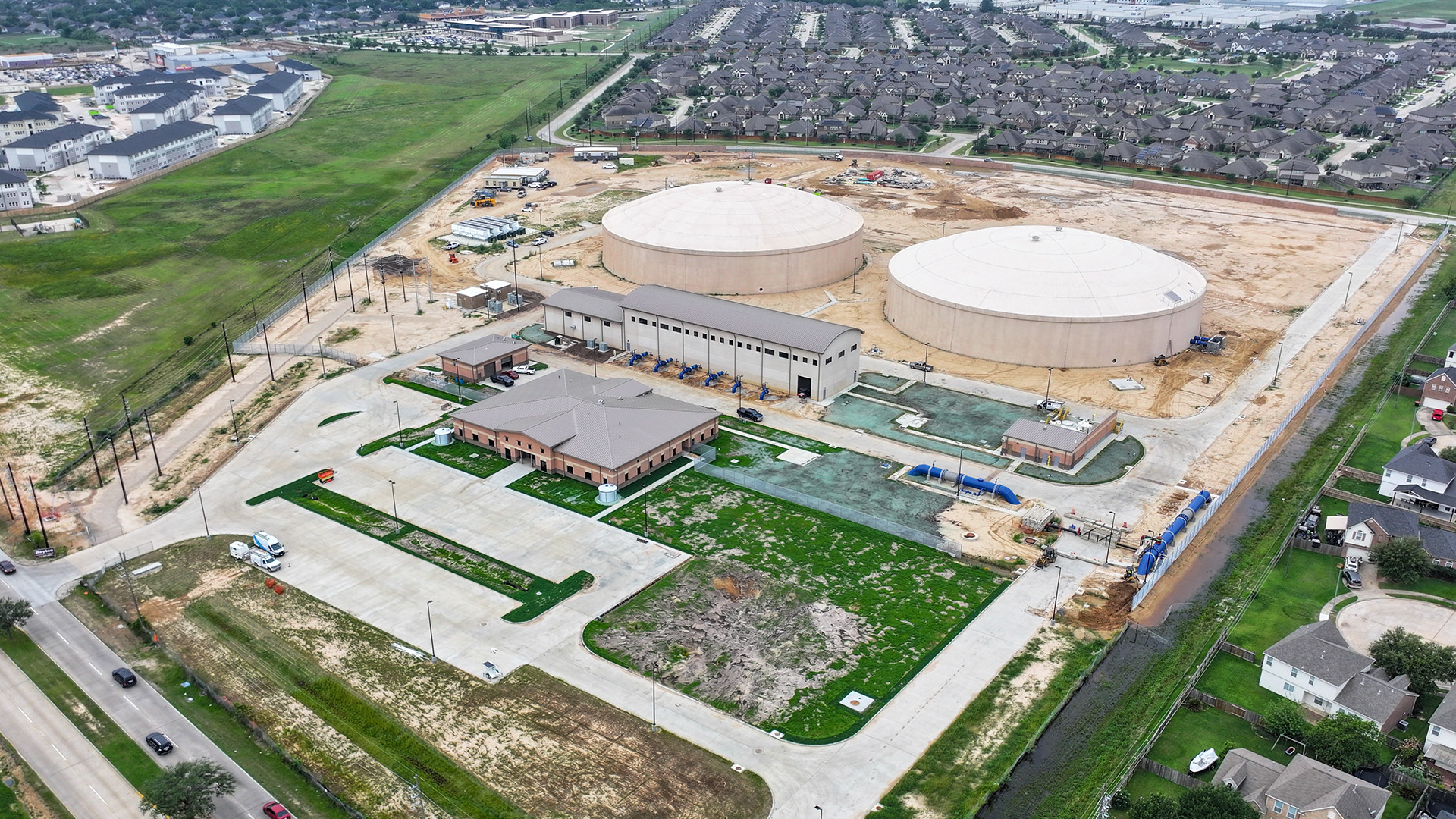
Central Pump Station Begins Delivering Surface Water to West Harris County Communities, Marking Major Milestone in Regional Water Project
For hundreds of thousands of residents across West Harris County, June 2, 2026, marked more than just another day in the region's rapid growth story. It marked a significant step toward securing the area's long-term water future.
At approximately 11:15 a.m., the West Harris County Regional Water Authority (WHCRWA) announced that its Central Pump Station officially began pumping treated surface water from the City of Houston's Northeast Water Purification Plant into the WHCRWA distribution system. The water originates from Lake Houston and will now be delivered to municipal utility districts and local water providers before ultimately reaching homes and businesses throughout the region.
The milestone represents a key achievement in the Surface Water Supply Project (SWSP), a multi-billion-dollar regional infrastructure effort designed to reduce dependence on groundwater, address land subsidence concerns, and ensure a reliable water supply for future generations.
Why This Matters for West Houston Residents
While much of the work has taken place behind the scenes over the past several years, the impact reaches directly into neighborhoods throughout West Harris County and North Fort Bend County.
As the Greater Houston region continues to grow, demand for water continues to rise. Regional projections estimate the metropolitan area's population will increase from approximately 6.5 million residents to more than 9.2 million residents by 2030, creating increased pressure on critical infrastructure systems, including water supply.
For local homeowners, businesses, schools, and communities, the transition to surface water is intended to provide a more sustainable long-term solution while helping the region comply with state and local groundwater reduction requirements.
The Central Pump Station's activation means a major component of that transition is now operational.
A Project Years in the Making
The Surface Water Supply Project was developed through a partnership between the West Harris County Regional Water Authority and the North Fort Bend Water Authority (NFBWA).
Created by the Texas Legislature in 2001, the West Harris County Regional Water Authority serves approximately 120 municipal water providers within its boundaries and several additional providers outside the authority. Its mission includes acquiring reliable surface water supplies, conserving groundwater resources, facilitating compliance with subsidence district regulations, and promoting water conservation.
The North Fort Bend Water Authority, established in 2005, serves approximately 69 utility districts and the cities of Fulshear and Arcola. The authority is funding roughly 45% of the Surface Water Supply Project and will benefit from the surface water delivered through the system.

Design work for the Surface Water Supply Project began in 2016, with construction launching in 2020. The project includes more than 55 miles of large-diameter transmission pipelines, ranging from 42 inches to 96 inches in diameter, along with two major pump stations that transport treated surface water from Lake Houston through the City of Houston's Northeast Water Purification Plant and into regional distribution systems.
The project was created to help both authorities meet groundwater reduction mandates established by the Harris-Galveston Subsidence District (HGSD) and the Fort Bend Subsidence District (FBSD).
Under current requirements, communities within HGSD Area 3 must reduce groundwater usage by 60% by 2025 and 80% by 2035. Much of West Harris County falls within this regulatory area, making conversion to alternative water sources a necessity rather than an option.
Addressing a Longstanding Regional Challenge
One of the primary drivers behind the project is the need to reduce land subsidence, a phenomenon caused by excessive groundwater pumping.
Land subsidence occurs when underground aquifers are depleted, causing the land surface to gradually sink. In portions of northwest Harris County, measurements have shown as much as seven feet of subsidence between 1906 and 2000.
The consequences can affect drainage systems, flood resilience, infrastructure performance, and long-term community planning.
By transitioning more communities to surface water sourced from Lake Houston, regional water authorities hope to preserve groundwater resources while reducing future subsidence risks.
Regional Partnerships Powering the Future
The Surface Water Supply Project is closely connected to several other major infrastructure investments underway across the Houston region.
WHCRWA and NFBWA partnered with the City of Houston and other regional water providers to support expansion of the Northeast Water Purification Plant, one of the largest water infrastructure projects in the nation.
The authorities also participated in the Luce Bayou Interbasin Transfer Project, which helps maintain Lake Houston water levels by transferring water from the Trinity River into the lake, providing additional reliability for future water demands.
Officials have emphasized that these collaborative investments allow multiple agencies to share costs, accelerate construction timelines, and create long-term regional benefits.
Funding and Local Impact
The approximately $1.2 billion Surface Water Supply Project is funded through revenue bonds issued by WHCRWA and NFBWA. According to project officials, costs are supported through surface water sales and groundwater pumpage fees paid by water providers within the participating authority boundaries.
Project leaders have noted that residents outside the participating water authorities' groundwater reduction plans are not funding the project.
Throughout construction, officials worked to minimize impacts by utilizing existing utility corridors whenever possible, reducing disruption to neighborhoods, businesses, schools, and major transportation routes.

What Happens Next
Although the opening of the Central Pump Station represents a major achievement, it is also part of a broader transition that will continue throughout the coming years.
As additional infrastructure components become fully integrated and groundwater reduction requirements become more stringent, surface water will play an increasingly important role in meeting the region's needs.
For residents across West Houston, Katy-area communities, Cypress, Fulshear, and surrounding portions of the WHCRWA and NFBWA service areas, the milestone reflects a long-term investment in infrastructure that often goes unnoticed until it becomes essential.
Water systems rarely make headlines when they work as intended. Yet projects like the Surface Water Supply Project help ensure that growing communities have access to reliable drinking water while addressing challenges that can impact the region for decades.
The opening of the valve at the Central Pump Station may have lasted only a moment, but for the communities it serves, the significance could be felt for generations to come.
Stay tuned to My Neighborhood News for updates on regional infrastructure projects, water resources, and community developments affecting West Houston and Fort Bend County residents.

 Tiffany Krenek has been on the My Neighborhood News team since August 2021. She is passionate about curating and sharing content that enriches the lives of our readers in a personal, meaningful way. A loving mother and wife, Tiffany and her family live in the West Houston/Cypress region.
Local business spotlight
Grow your business
where trust already lives.
Let’s introduce your business to the neighbors nearby.
Have a local favorite?
Let’s make an introduction.
Leave your email and our team will reach out with ways to promote your business.
Give a local favorite a little love.
Know a business your neighbors should discover? Tell us who they are.
We couldn’t send that just yet. Please try again.