








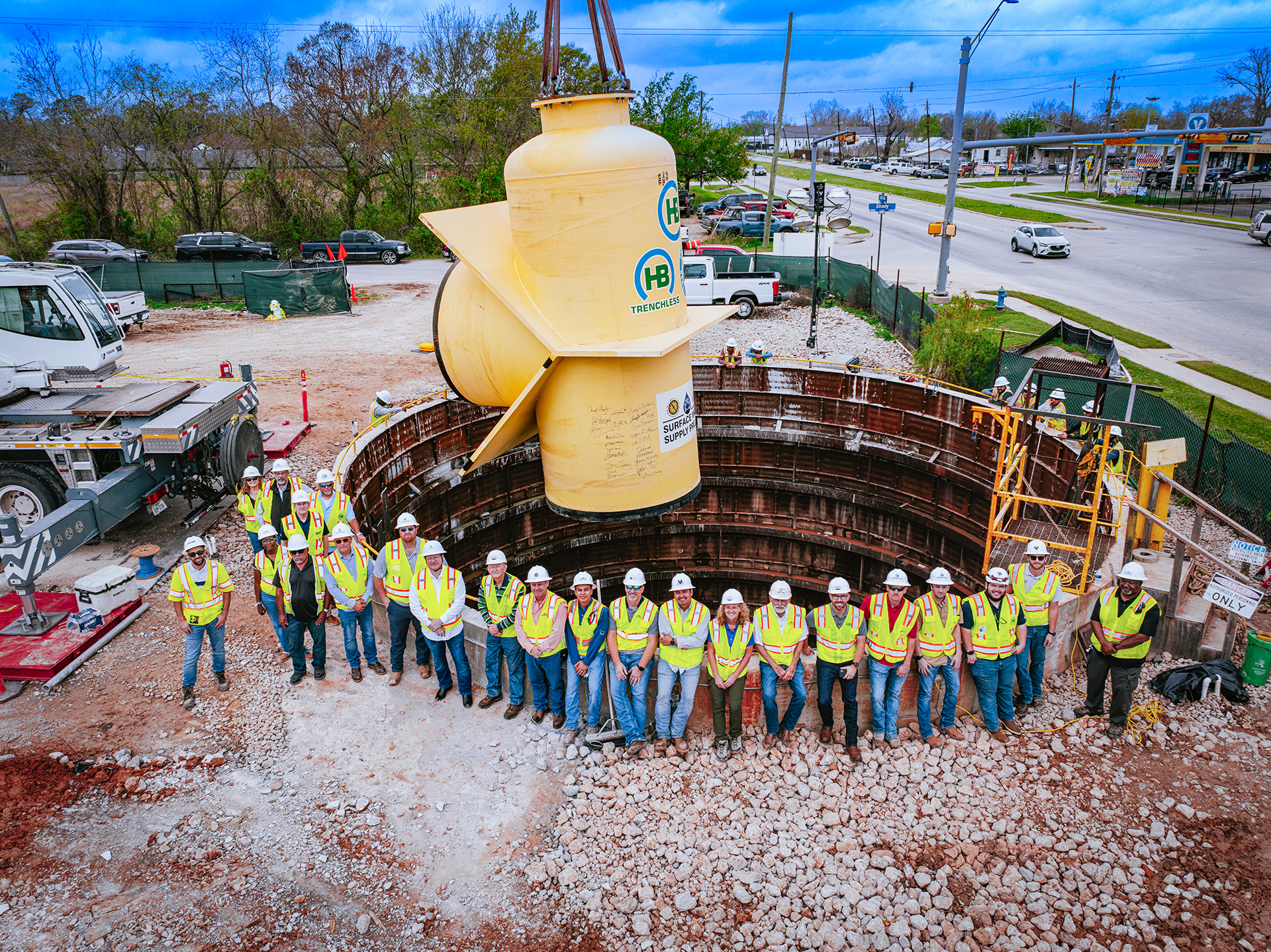
Final Pipe Installed for Segment A of Surface Water Supply Project Marks Major Milestone for Greater Houston Water Infrastructure
Residents across West Harris County and North Fort Bend County are now closer to a more reliable, sustainable water future as the West Harris County Regional Water Authority (WHCRWA), in partnership with the North Fort Bend Water Authority (NFBWA), continues advancing construction on the Surface Water Supply Project (SWSP)—a key milestone in one of the region’s largest infrastructure investments.
This milestone is more than just a construction update. For homeowners, families, and businesses, it represents progress toward reducing groundwater dependence, limiting land subsidence, and securing water supply for decades of continued population growth.
Segment A serves as a foundational link in the system that will ultimately deliver treated surface water from Lake Houston, through the City of Houston’s Northeast Water Purification Plant (NEWPP), and into neighborhoods throughout the region.
What Segment A Completion Means for the Community
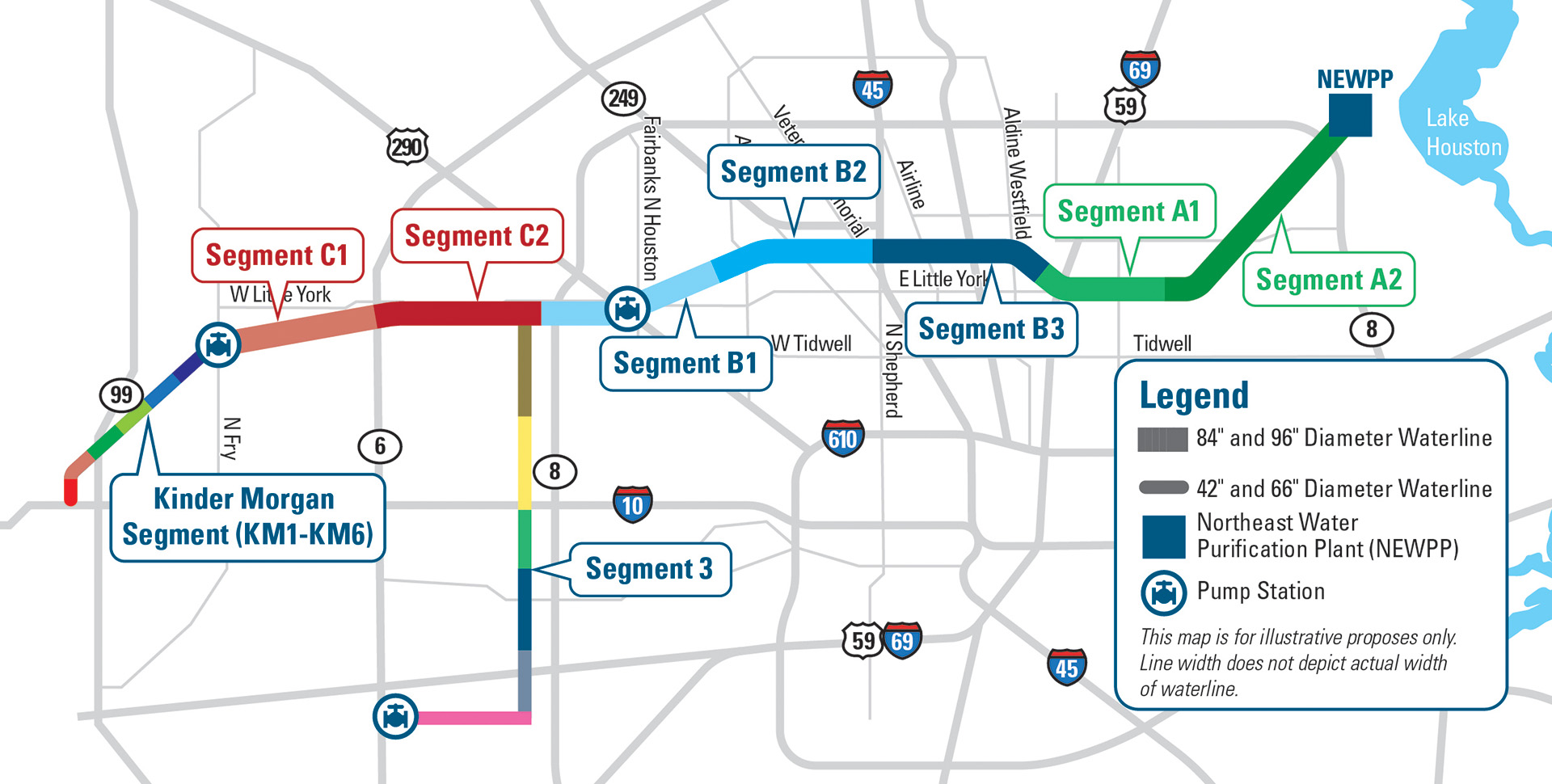
Segment A includes approximately 10.7 miles of 96-inch-diameter pipeline, making it one of the largest transmission components of the entire project. It is divided into two sections:
- Segment A1: Hopper Road to west of the Union Pacific Railroad (4.7 miles)
- Segment A2: Union Pacific Railroad to the Northeast Water Purification Plant (6 miles)
Together, these pipelines form a direct connection between the NEWPP and the broader regional water distribution network, ensuring that treated surface water can move efficiently into local systems.
According to the latest construction updates, installation across Segment A has steadily progressed toward completion, with nearly the full pipeline length installed and final testing and surface restoration activities underway.
A Regional Project Designed for Growth and Stability
The Surface Water Supply Project is not just a local improvement—it is a $1.2 billion regional infrastructure effort designed to meet the demands of one of the fastest-growing metropolitan areas in the country.
The project is funded and managed through a partnership between the WHCRWA and NFBWA, with each authority responsible for delivering surface water to their respective service areas through municipal utility districts, cities, and other local providers.
With the Greater Houston area projected to grow from 6.5 million residents to more than 9.2 million by 2030, expanding water infrastructure has become essential to maintaining quality of life, property values, and economic stability.
The SWSP will ultimately include:
- More than 55 miles of large-diameter pipeline (42” to 96”)
- Two major pump stations, including a central pump station and a 160 MGD repump facility with dual 10-million-gallon tanks
- Multiple meter stations, including the Northeast Meter Station and I-10 Meter Station
- Integration with major segments like B1, B2, B3, and the Kinder Morgan corridor connections
These components are visible in the project overview map, where Segment A connects directly to the NEWPP and feeds into downstream segments extending west across the region.
 (Source: WHCRWA & NFBWA)
Why This Project Matters: Addressing Subsidence and Water Demand
For many residents, the importance of this project comes down to one critical issue: land subsidence.
Decades of groundwater pumping have caused parts of northwest Harris County to sink by as much as seven feet, increasing flood risk and infrastructure strain.
To address this, the Harris-Galveston Subsidence District (HGSD) and Fort Bend Subsidence District (FBSD) have mandated significant reductions in groundwater usage—requiring areas like West Harris County to shift heavily toward surface water sources by 2025 and beyond.
To meet these requirements, the WHCRWA—serving much of western Harris County—and the NFBWA—serving northern Fort Bend County—have jointly developed the SWSP as their long-term strategy for transitioning away from groundwater dependence.
By transitioning to treated surface water from Lake Houston, the project aims to:
- Reduce reliance on groundwater wells
- Help stabilize land elevation
- Support long-term flood resilience
- Ensure compliance with state-mandated water regulations
Built With Community Impact in Mind
While large-scale infrastructure projects often raise concerns about disruption, project leaders have emphasized minimizing impact on neighborhoods.
Most of the pipeline has been installed within existing utility corridors, helping reduce interference with homes, businesses, and roadways.
Construction has been phased in segments—typically lasting six to nine months in any given area—to limit prolonged disruption, while maintaining access to schools, churches, and local businesses.
Ongoing coordination with emergency services and local agencies has also helped ensure safety and accessibility throughout construction.

What Happens Next
With the final pipe now installed in Segment A, the focus will shift toward:
- Final system testing and inspections
- Tie-ins to adjacent segments
- Surface restoration and roadway repairs
- Preparation for operational integration with the NEWPP
Construction across the broader SWSP remains ongoing, with multiple segments and facilities progressing toward a projected full completion timeline in 2026.
A Milestone That Reflects a Larger Transformation
For many residents, this moment represents more than infrastructure—it signals a transition in how the region sustains its future.
The completion of Segment A is a visible sign of long-term planning, regional cooperation, and investment in essential systems that often go unnoticed until they are needed most.
As growth continues across West Houston and Fort Bend County, projects like the Surface Water Supply Project are quietly shaping the foundation that supports daily life—from the water that flows through taps to the stability beneath the ground itself.
Residents are encouraged to stay informed as construction progresses and additional milestones are reached across the region.
For continued updates on major infrastructure projects and how they impact your neighborhood, stay connected with My Neighborhood News.

 Tiffany Krenek has been on the My Neighborhood News team since August 2021. She is passionate about curating and sharing content that enriches the lives of our readers in a personal, meaningful way. A loving mother and wife, Tiffany and her family live in the West Houston/Cypress region.
Local business spotlight
Grow your business
where trust already lives.
Let’s introduce your business to the neighbors nearby.
Have a local favorite?
Let’s make an introduction.
Leave your email and our team will reach out with ways to promote your business.
Give a local favorite a little love.
Know a business your neighbors should discover? Tell us who they are.
We couldn’t send that just yet. Please try again.