







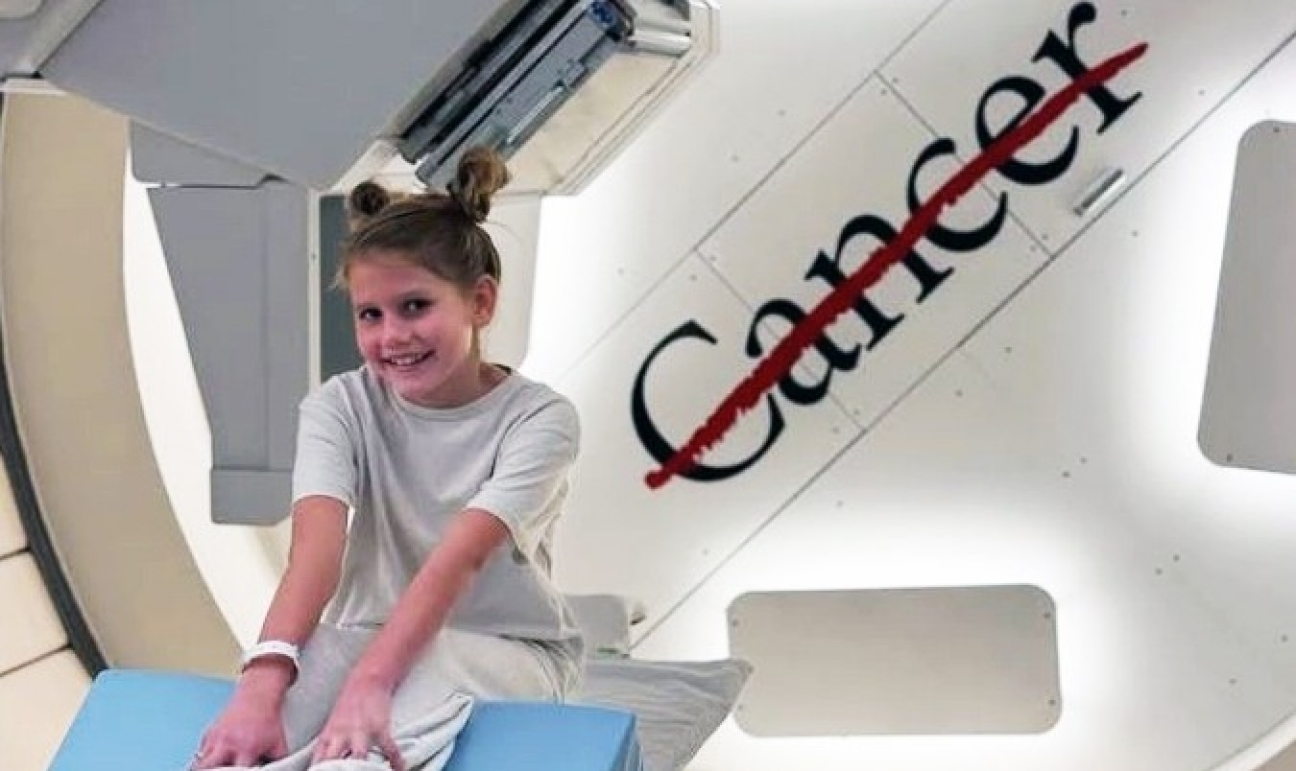
Tomball Cheerleader Audrey Yerian Shows Strength Through Pediatric Brain Tumor Battle
For one Tomball family, competitive cheerleading took on a deeper meaning over the past year — becoming not just a sport, but a symbol of resilience, faith and community strength.
Audrey Yerian, known to friends and teammates as “Audge,” is a 10-year-old competitive cheerleader from Tomball, Texas. When she was diagnosed with a rare and aggressive pediatric brain tumor, she faced it with the same perseverance she brings to the mat. For many in Tomball, her journey has become a reminder of how quickly life can change — and how powerful local support can be when it does.
Her story is one that resonates with families across Tomball and Northwest Harris County: persistent symptoms, advocacy for answers, advanced pediatric cancer treatment in Houston’s world-renowned medical community, and ultimately, hope.
A Delayed Diagnosis and a Life-Changing MRI
For years, Audrey experienced debilitating migraines and episodes that were initially believed to be daydreaming. They were later identified as focal seizures — a potential warning sign of a brain tumor in children.
Despite her parents’ continued advocacy, early imaging was delayed. In October 2024, a CT scan was interpreted as a sinus infection. But when Audrey began experiencing six or more seizures a day, her parents pushed for further testing.
An MRI revealed the diagnosis: Grade 3 anaplastic pleomorphic xanthoastrocytoma (APXA), a rare and aggressive form of childhood brain cancer.
For Tomball parents, her story highlights a difficult but important lesson often searched online: what are early symptoms of pediatric brain tumors? Headaches, seizures, nausea and behavioral changes can sometimes be overlooked — making parental advocacy critical.
Surgery at Texas Children’s Hospital
On November 11, 2024, Audrey underwent a craniotomy at Texas Children’s Hospital in Houston. A craniotomy is the most common surgical procedure used to remove brain tumors.
Because of strict clinical trial timelines, Audrey was quickly referred to the MD Anderson Proton Therapy Center, where she began targeted proton therapy under pediatric radiation oncologist Gohar Manzar, M.D., Ph.D. She later began a two-year oral chemotherapy regimen through a clinical trial with the Children’s Oncology Group (COG) at Texas Children’s Hospital.
Proton therapy for pediatric brain tumors is often recommended because it allows physicians to precisely control radiation, limiting exposure to surrounding growing tissues in the brain, spinal cord, eyes and ears — a key consideration for children.
Manzar recalls their first meeting fondly. “She noticed my Swiftie status on my badge pin and requested that I play ‘Shake It Off’ on my guitar for her last weekly visit,” says Manzar. “It is the first time I ever played guitar for one of my patients as opposed to ukulele, and it was such a magical experience for all of us. The whole family sang along, and we got into the lyrics, which was so encouraging for Audrey.”
With the help of child life specialist Ellen Reynolds, Audrey completed six weeks of proton therapy without sedation — including a nearly three-hour MRI where she had to remain completely still.
Ringing the Gong and Moving Forward
On January 28, 2025, Audrey rang the gong to mark the end of 30 proton therapy treatments at MD Anderson’s Proton Therapy Center. She handed out flowers and handwritten notes to her care team.
“The staff made it such a special and emotional day,” recalls Melissa Yerian, Audrey’s mother.
Treatment was not without challenges. Hair loss, fatigue, mild memory loss, nausea and migraines tested her patience — especially as she longed to keep up with friends and siblings back home in Tomball.
“Despite everything she’s been through, Audrey is doing amazingly well,” Melissa says. “Nurse Tenna Vogel, Ellen and Dr. Manzar became like friends to us and helped make each day a little easier.”
Tomball Cheer Community Rallies Behind “DIFA — Do It for Audrey”
Even during treatment, Audrey remained connected to her Tomball cheer gym. She attended practices when she could, encouraging teammates from the sidelines. During recovery, she was named an honorary coach.
Her gym added “DIFA — Do It for Audrey” to their music, a tribute that quickly became a rallying cry among teammates.
After missing the entire 2024 season, Audrey is now back on the mat — rebuilding strength, flexibility and confidence. For many in the Tomball youth sports community, her return represents more than athletic perseverance; it represents hope.
Her family now plans to launch a foundation to give back to the community that supported them throughout pediatric cancer treatment — a gesture reflecting the gratitude they feel toward Tomball neighbors, prayer groups, teammates and medical teams alike.
A Mother’s Perspective on Pediatric Cancer
Audrey’s journey has changed her family’s perspective on life and resilience.
“Audrey is so strong and brave with more faith than I have seen in anyone,” Melissa says. “When she beats this for good, she is going to do big things. We cannot wait to watch her grow up and change the world.”
She also shares advice for other parents navigating childhood cancer.
“The key is to make each appointment an adventure,” she says. “Make friends with the staff. Laugh often. Pray hard and have faith!”
The Future of Pediatric Cancer Care in Houston
Beginning in spring 2026, UT MD Anderson Cancer Center and Texas Children’s Hospital will expand pediatric oncology care through the Kinder Children’s Cancer Center, a joint venture created by a $150 million gift from the Kinder Foundation. The center aims to unite scientific innovation and clinical excellence to improve outcomes for children facing cancer.
Patients requiring Radiation Oncology services, including proton therapy, will continue receiving care at UT MD Anderson.
For Tomball families, proximity to some of the nation’s leading pediatric cancer treatment centers — including Texas Children’s Hospital and MD Anderson — offers access to advanced therapies, clinical trials and specialized care without leaving the region. Learn more at KinderChildrensCancerCenter.org.
Audrey’s story is still being written. But for now, in gyms across Tomball and living rooms throughout the community, her determination serves as a powerful reminder: even in the face of a rare pediatric brain tumor, courage, faith and local support can carry a family forward.
Stay tuned to My Neighborhood News for continued coverage of stories impacting Tomball families.

 Tiffany Krenek has been on the My Neighborhood News team since August 2021. She is passionate about curating and sharing content that enriches the lives of our readers in a personal, meaningful way. A loving mother and wife, Tiffany and her family live in the West Houston/Cypress region.