







Texas Wildlife Wednesday: What Morningside Trails Residents Should Do If They See a Coyote Nearby
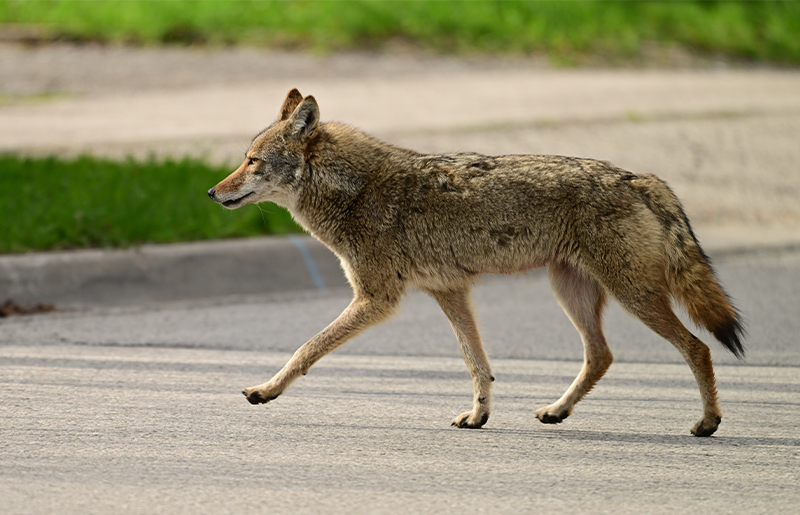
For many Texans, spotting a coyote is something expected on a country road or hiking trail. Seeing one trot across a neighborhood street, however, can feel a little different.
Coyotes are found throughout Texas, and they have proven remarkably capable of living alongside expanding cities and suburbs. Texas Parks and Wildlife Department officials say the animals have adapted as housing and commercial development have moved into areas that once provided open wildlife habitat. That means an occasional coyote sighting in or around Morningside Trails does not necessarily indicate an unusual wildlife problem.
Still, knowing how to react matters — particularly for families with small dogs, outdoor cats or children who spend time outside.
Why Are Coyotes Showing Up in Texas Neighborhoods?
Coyotes are opportunistic animals. Their natural diet includes rabbits, rodents and carrion, but they can also take advantage of food sources people unintentionally provide, including unsecured garbage, outdoor pet food, fallen fruit and rodents attracted to spilled birdseed.
That adaptability is one reason coyotes can live successfully near people.
Texas Parks and Wildlife describes coyotes as common throughout the state. They can be active at any hour, although residents may be more likely to see them around dawn and dusk. They sometimes live alone and sometimes travel in small groups.
In other words, seeing one passing through a greenbelt, drainage corridor, park edge or neighborhood street does not automatically mean it is aggressive.
The more important question is how the animal behaves.
What Should You Do If You See a Coyote?
If a coyote is simply passing through at a distance, residents should give it space and avoid approaching or feeding it.
People should never attempt to lure a coyote closer for a photograph, leave food for it or encourage it to become comfortable around homes. Wildlife officials caution that coyotes are naturally wary of humans, but repeated access to human-provided food can cause them to lose that caution.
When a coyote lingers around people or appears unusually comfortable in a residential setting, wildlife professionals commonly recommend making the area feel less welcoming rather than quietly allowing the animal to remain nearby.
That can include standing tall, making loud noises, shouting or otherwise clearly encouraging the coyote to leave while maintaining a safe distance. The goal is to reinforce the animal's natural tendency to avoid people, not to corner or physically confront it.
Residents should never run toward a coyote, attempt to capture one or allow children to approach it.
Pet Owners Should Take a Few Extra Precautions
For many neighborhood families, pets are the biggest reason a nearby coyote deserves attention.
Texas Parks and Wildlife recommends keeping pets indoors or securely confined and supervising them outdoors, particularly at night. Dogs should be walked on a leash rather than allowed to roam, and small pets should not be left outside unattended.
That advice is particularly useful for Morningside Trails homeowners whose properties border trails, undeveloped land, drainage areas or other spaces wildlife may use as travel corridors.

Pet food and water bowls should also be brought indoors. Outdoor feeding can create an easy food source for wildlife, either by attracting coyotes directly or by drawing rodents and other small animals that coyotes hunt.
Outdoor cats can face additional risk. Texas wildlife officials specifically discourage feeding feral cats outdoors because both the cats and leftover food may attract coyotes.
Your Yard May Be More Inviting Than You Realize
One of the simplest ways to reduce coyote activity around a home is to remove easy meals.
Texas Parks and Wildlife recommends keeping garbage securely closed, covering compost piles, cleaning up fallen fruit and keeping birdseed off the ground. Homeowners can also reduce thick vegetation near homes and children's play areas where rodents and small mammals may shelter.
Those measures do more than address coyotes. They reduce the overall concentration of food and prey that can draw a variety of wildlife toward homes.
It is an important distinction: a resident does not have to intentionally feed a coyote to make a property attractive to one.
Sometimes the invitation is a trash can with a loose lid, a bowl of dog food on the patio or seed accumulating beneath a bird feeder.
Should Residents Be Afraid of Coyotes?
A coyote sighting can be unsettling, especially when it happens close to home, but wildlife agencies generally emphasize awareness rather than panic.
Coyotes normally try to avoid people. The greater concern arises when an animal repeatedly approaches occupied areas, loses its fear of humans or exhibits unusual or aggressive behavior.
Residents who encounter a coyote behaving unusually — particularly one that repeatedly approaches people, appears sick or injured, or presents an immediate safety concern — should contact the appropriate local animal control, wildlife or law enforcement agency.
Texas Parks and Wildlife provides guidance on urban wildlife issues, while nuisance coyote response varies by city and county. Texas Wildlife Services also works with some local governments on nuisance coyote management.
Living Alongside Texas Wildlife
Coyotes are not newcomers to Texas. What has changed in many places is the landscape surrounding them.
As neighborhoods expand and natural areas become increasingly intertwined with subdivisions, parks, greenbelts and roadways, encounters between residents and native wildlife become more likely. Wildlife officials say removing individual coyotes alone cannot eliminate that reality; reducing attractants and teaching communities how to respond appropriately are an important part of long-term coexistence.
For residents of Morningside Trails, that means a little preparation can go a long way: supervise pets, secure potential food sources, give wildlife space and make sure coyotes do not learn that homes and people offer easy meals.
A coyote passing through the neighborhood may be surprising, but understanding why it is there — and knowing what to do next — can turn an uneasy wildlife encounter into a manageable part of living in Texas.
Stay tuned to My Neighborhood News for more Texas Wildlife Wednesday features and practical information about the animals that share our communities.

 Tiffany Krenek has been on the My Neighborhood News team since August 2021. She is passionate about curating and sharing content that enriches the lives of our readers in a personal, meaningful way. A loving mother and wife, Tiffany and her family live in the West Houston/Cypress region.
Local business spotlight
Grow your business
where trust already lives.
Let’s introduce your business to the neighbors nearby.
Have a local favorite?
Let’s make an introduction.
Leave your email and our team will reach out with ways to promote your business.
Give a local favorite a little love.
Know a business your neighbors should discover? Tell us who they are.
We couldn’t send that just yet. Please try again.