






Westheimer Lakes Household Hazardous Waste Guide: What Best Trash Can Collect at the Curb
Household hazardous waste often starts with ordinary products stored in a garage, bathroom cabinet, garden shed or utility room. Leftover paint, gasoline, pesticides, fluorescent bulbs and pool chemicals may seem harmless while sitting on a shelf, but they require special handling when it is time to get rid of them.
For households in Westheimer Lakes served by Best Trash, knowing what qualifies as household hazardous waste can help protect children, pets, sanitation workers, local waterways and the broader community. These products should not be placed loosely in regular garbage, poured down household drains, emptied into storm sewers or dumped on the ground.
What Is Household Hazardous Waste?
Household hazardous waste, commonly called HHW, includes products containing ingredients that are toxic, flammable, corrosive or reactive.
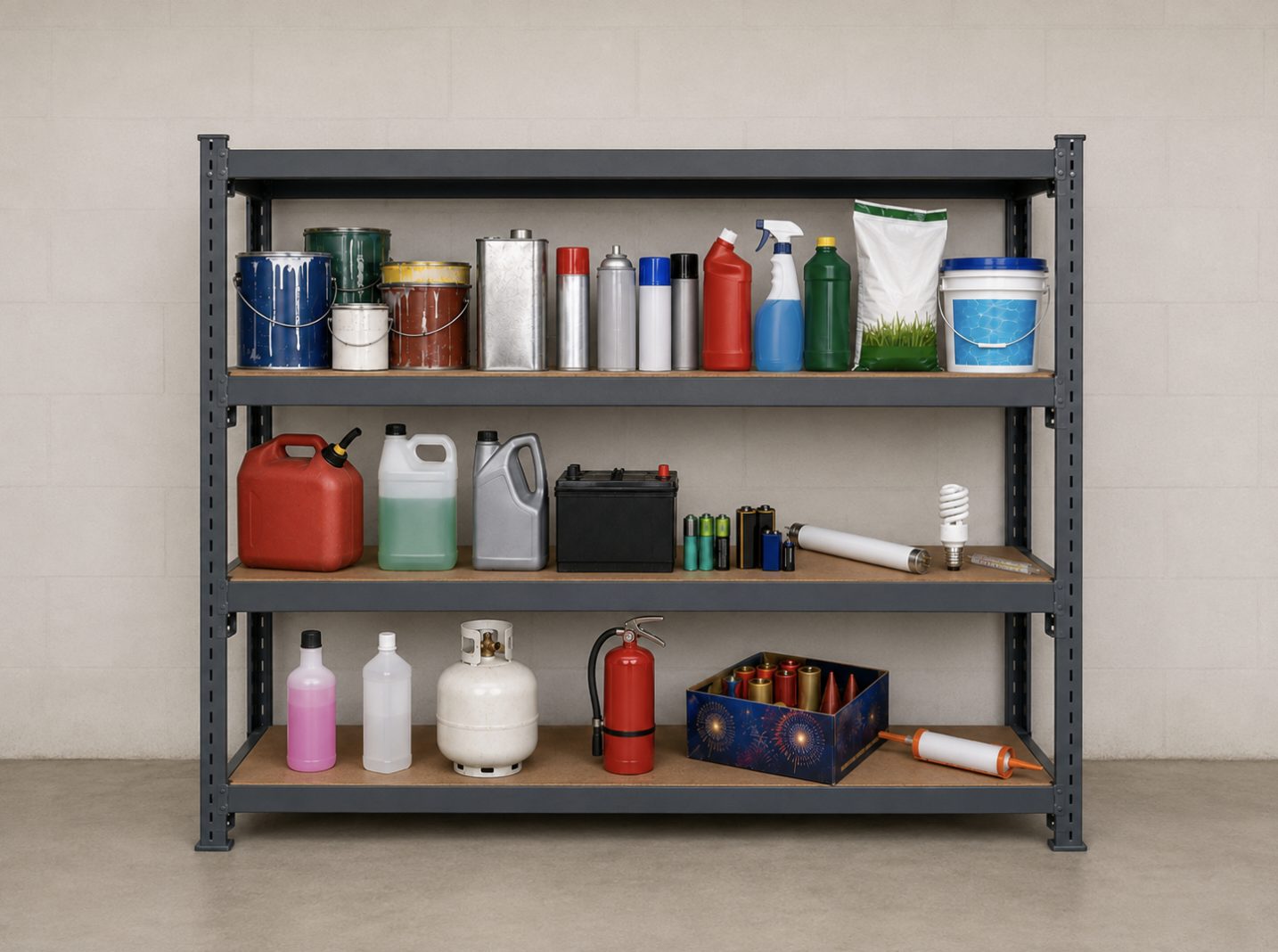
Common examples include paint thinner, pool chemicals, pesticides, fluorescent lamps, car batteries, gasoline and certain household cleaners. Improper disposal can create risks for people, wildlife and the environment, particularly when chemicals leak, mix together or enter drainage systems.
Hazardous products should also be stored where children and pets cannot reach them.
Household Hazardous Waste Best Trash Can Collect
Best Trash identifies several categories of household hazardous waste that may be accepted for curbside collection. Residents should follow all applicable collection instructions, quantity limits and community-specific scheduling requirements before placing materials out for pickup.
Household Products
Accepted household products include:
- Adhesives, drain openers, aerosols, pest-control products, cleaners and solvents.
Paint and Stain Products
Best Trash lists paint, stain and solvents among eligible paint-related products.
Paint and stain collections have a minimum of 1 gallon and a maximum of 4 gallons.
Mercury Lamps and Devices
Accepted mercury-containing items include:
- Compact fluorescent lamps, commonly known as CFLs; fluorescent lamps; mercury thermometers; and mercury thermostats.
The collection limit is a minimum of one item and a maximum of eight items.
Lawn and Yard Products
Residents may prepare certain outdoor maintenance products for collection, including:
- Fertilizers, herbicides, pesticides and poisons.
Because some lawn and garden chemicals can react when combined, containers should remain closed and separated.
Personal Care Products
Some personal care and household medical cabinet products are also included, such as:
Nail polish remover, peroxides and rubbing alcohol.
Automotive Products
Accepted automotive materials include:
- Antifreeze, diesel fuel, gasoline, motor oil, waxes, cleaners and polishes.
Best Trash lists a minimum of 1 gallon and a maximum of 8 gallons for automotive liquids.
Ammunition, Fireworks and Flares
Ammunition, fireworks and flares are listed as household hazardous waste collection items.
Residents should never place these materials loose in a regular trash cart. They should be kept away from heat, flames, sparks and children while awaiting proper handling instructions.
Pool and Spa Products
Accepted pool and spa materials include chemicals and cleaners used to maintain swimming pools and hot tubs.
The collection amount is a minimum of 1 gallon and a maximum of 4 gallons.
Pool chemicals should never be mixed, even when they appear similar. Combining incompatible products can produce heat, fire, pressure or dangerous fumes.

Batteries
Best Trash accepts several types of batteries, including:
- Auto and marine batteries, lead-acid batteries and rechargeable batteries such as nickel-cadmium, lithium-ion, nickel-metal hydride and lithium batteries.
The listed collection limit is a minimum of one battery and a maximum of 20 batteries.
Single-use alkaline batteries, including common AA, C and D batteries, may be discarded in the regular trash under the guidance provided by Best Trash.
Propane Tanks, Helium Tanks and Fire Extinguishers
Accepted pressurized containers include:
- Propane tanks weighing 30 pounds or less, with a limit of two; helium tanks weighing 20 pounds or less; and fire extinguishers.
These containers should not be punctured, crushed or placed near heat before collection.
How to Transport Household Hazardous Waste Safely
Residents who need to move household hazardous waste should follow these precautions before loading materials into a vehicle:
- Never mix chemicals together.
- Do not smoke near hazardous materials.
- Keep products in their original containers with labels intact whenever possible.
- Only relabel containers if the contents are known with certainty.
- Do not guess unknown substances, combine them with other products or transfer them into food or beverage containers.
- Place leaking containers inside a second leak-proof container or a clear plastic bag.
- Pack materials upright in sturdy, non-leaking boxes or containers.
- Do not place all hazardous products together in one trash bag.
- Keep incompatible chemicals separated to prevent dangerous reactions.
- Transport materials in a ventilated area away from passengers, such as a trunk or truck bed.
- Secure containers so they cannot tip, roll or spill during transport.
Ways to Reduce Hazardous Waste at Home
The safest household hazardous waste is often the waste that is never created.
Residents can reduce unnecessary chemicals by purchasing smaller containers, selecting products with fewer harmful ingredients and buying only what is needed for a specific project.
Products should always be used for their intended purpose and according to label directions. Unused portions of common products may sometimes be shared with friends, relatives or community organizations that can use them safely and legally.
Expired or unwanted materials that cannot be reused should be recycled or collected through an approved household hazardous waste program rather than placed in household drains or stormwater systems.
A Safer Cleanup Starts With Preparation
Before preparing household hazardous waste for Best Trash collection, residents should review the limits for each category, check containers for leaks and separate products that could react with one another.
Residents of Westheimer Lakes should also confirm any neighborhood-specific collection procedures, registration requirements or pickup instructions provided by Best Trash or their community association. Items should not be placed curbside until the applicable collection directions have been reviewed.
A few extra minutes spent labeling, separating and securing hazardous materials can help prevent injuries, protect collection crews and keep harmful chemicals out of the local environment.
Stay tuned to My Neighborhood News for more practical community guides, service updates and information affecting Westheimer Lakes residents.

 Tiffany Krenek has been on the My Neighborhood News team since August 2021. She is passionate about curating and sharing content that enriches the lives of our readers in a personal, meaningful way. A loving mother and wife, Tiffany and her family live in the West Houston/Cypress region.
Local business spotlight
Grow your business
where trust already lives.
Let’s introduce your business to the neighbors nearby.
Have a local favorite?
Let’s make an introduction.
Leave your email and our team will reach out with ways to promote your business.
Give a local favorite a little love.
Know a business your neighbors should discover? Tell us who they are.
We couldn’t send that just yet. Please try again.