







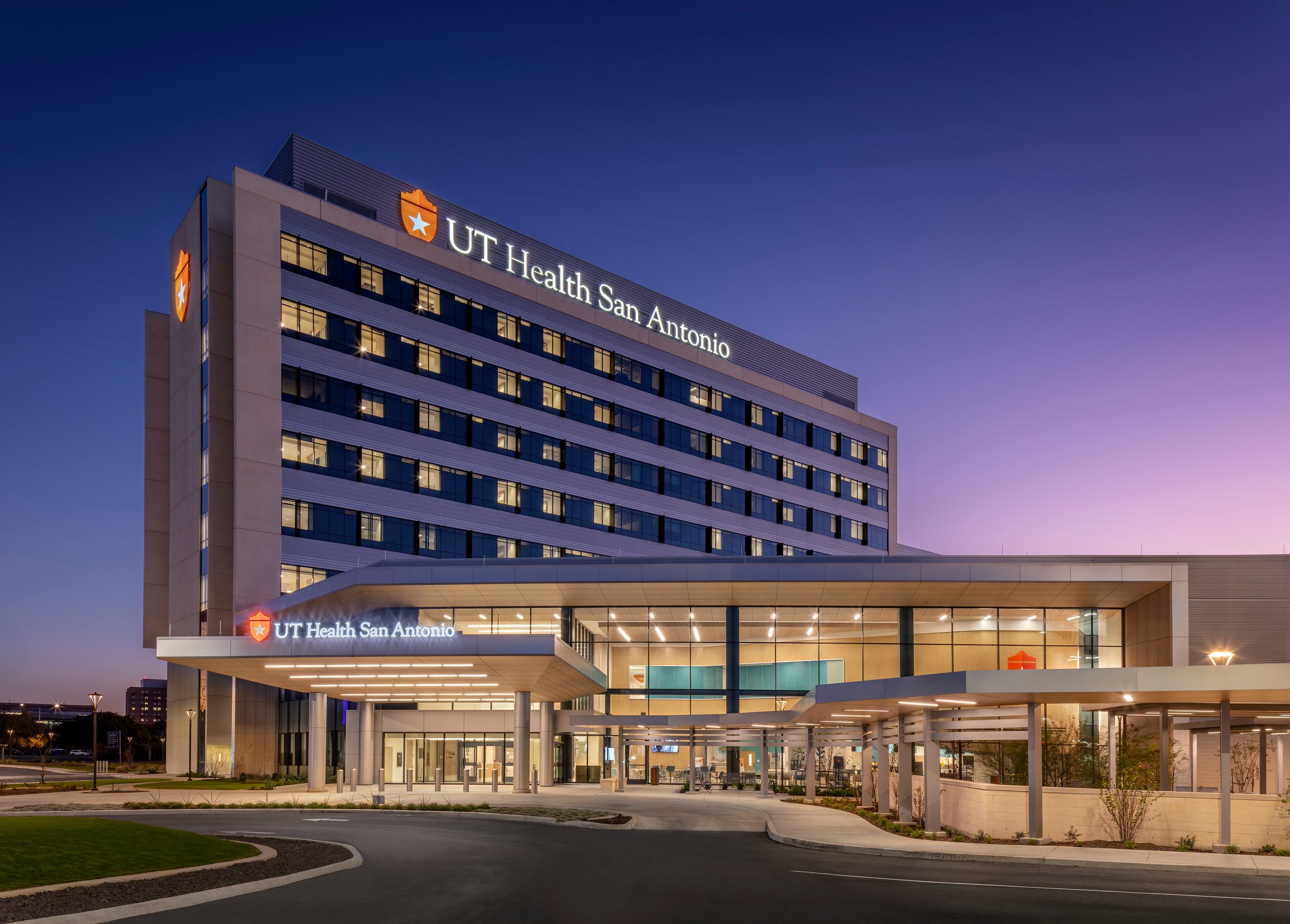
UT Health San Antonio Secures Nearly $3 Million in CPRIT Grants to Expand Cancer Research and Prevention Across South Texas
UT Health San Antonio has been awarded nearly $3 million in new grants from the Cancer Prevention Research Institute of Texas (CPRIT), marking another milestone in the region’s ongoing efforts to strengthen cancer prevention, research, and treatment for South Texas communities.
Announced Dec. 19, the funding supports three distinct projects focused on preventing ovarian cancer, advancing liver cancer research, and improving outcomes for women with therapy-resistant metastatic breast cancer. The awards are part of CPRIT’s latest funding cycle and bring the total investment awarded to UT Health San Antonio by the state agency to nearly $170 million since 2010.
As the academic health center of The University of Texas at San Antonio (UT San Antonio), UT Health San Antonio serves as the region’s only academic health center and supports more than 2.5 million patient visits annually. Its research mission, leaders say, is closely tied to the unique health challenges facing South Texas, including higher rates of obesity, diabetes, and related cancers.
Expanding Access to Ovarian Cancer Prevention in South Texas
One of the largest grants, totaling nearly $1.2 million, was awarded to Kate Lawrenson, PhD, associate professor in the Department of Obstetrics and Gynecology at the Joe R. and Teresa Lozano Long School of Medicine. Lawrenson also serves as director of the department’s Tissue Repository and Database and co-director of the Center for Inherited Oncogenesis.
The project focuses on expanding access to preventive salpingectomy — the removal of fallopian tubes — a procedure shown to significantly reduce the risk of ovarian cancer. Lawrenson is partnering with Georgia McCann, MD, clinical professor and chief of the Division of Gynecologic Oncology, who leads the gynecologic oncology program at Mays Cancer Center at UT Health San Antonio.
“The goal of this project is to maximize opportunities for fallopian tube removal in South Texas,” Lawrenson said. “We will work with pregnant patients who are planning to undergo a cesarean section and have requested to get their tubes tied. We will also work with individuals who are planning non-gynecologic abdominal surgery.”
She noted that the approach could have broad implications for cancer prevention. “Fallopian-tube removal during non-gynecologic abdominal surgery has huge potential for local and global impact on reducing ovarian cancer diagnoses, since abdominal surgery is very common and offers an untapped opportunity to prevent these deadly tumors,” she said.
Addressing Liver Cancer Linked to Metabolic Disease
Another $900,000 CPRIT academic research award was granted to Xiaoli Sun, MD, PhD, assistant professor in the Department of Pharmacology at the Long School of Medicine. Sun’s research centers on liver cancer, one of the most common and deadly cancers in the United States and a disease that disproportionately affects South Texas due to high rates of obesity, diabetes, and fatty liver disease.
Sun, a 2021 CPRIT Scholar in Cancer Research, is also affiliated with the Mays Cancer Center, the Sam and Ann Barshop Institute for Longevity and Aging Studies, and the UT Health San Antonio Transplant Center.
“Our research is focused on a type of harmful fat-like molecule called oxidized phospholipids (OxPLs),” Sun said. “These form when the liver is stressed by too much fat and inflammation. They build up in both damaged liver tissue and tumors.”
She explained that the buildup has wide-ranging consequences. “Our findings show that OxPLs can worsen liver disease. They increase inflammation, damage healthy cells, and disrupt the immune system’s ability to fight cancer. This makes it easier for cancer to grow and spread,” Sun said.
The project will explore whether blocking these molecules with an antibody known as E06 can help restore the immune system’s ability to fight cancer. “We hope our research will lead to new ways to prevent and treat liver cancer caused by obesity and metabolic disease,” she said. “This work is especially important in high-risk communities like those in South Texas, where new solutions are urgently needed.”
Improving Outcomes for Metastatic Breast Cancer Patients
A third CPRIT award, totaling $899,991, was given to Zhijie “Jason” Liu, PhD, a tenured professor in the Department of Molecular Medicine at the Long School of Medicine and a 2016 CPRIT Scholar in Cancer Research. Liu’s project focuses on endocrine-resistant metastatic breast cancer, a form of the disease that no longer responds to hormone therapy.
“Breast cancer is one of the most common cancers,” Liu said. “While treatments like hormone therapy help many women, some stop responding to these treatments, especially when the disease is more advanced.”
Liu’s research examines how specific mutations allow cancer cells to continue growing despite treatment. “For this project, we are studying specific mutations in the estrogen receptor α (ERα) that help cancer cells keep growing even when hormone therapy is used, which makes the cancer harder to treat and more likely to spread,” he said.
By understanding the molecular mechanisms behind treatment resistance, Liu hopes the research will lead to better options for patients with limited therapies available. “Our goal is to develop better treatments that help patients with hard-to-treat breast cancer live longer and healthier lives,” he said.
A Broader Impact for South Texas and Beyond
University leaders emphasized that the funding reflects both the scale of the cancer challenge in Texas and the collaborative research environment at UT Health San Antonio and the Mays Cancer Center, one of only four National Cancer Institute-designated Cancer Centers in Texas.
“CPRIT’s unwavering commitment to funding groundbreaking cancer research and vital prevention initiatives across Texas is nothing short of transformative,” said Jennifer Sharpe Potter, PhD, MPH, senior executive vice president for research and innovation at UT San Antonio. “It fuels the bold vision and relentless dedication of our world-class scientists and clinicians — leaders in their fields who have chosen UT Health San Antonio and the Mays Cancer Center as their home for discovery and impact.”
She added, “We are both proud and deeply humbled to serve this community. The spirit of collaboration and innovation here inspires us every day to push boundaries, accelerate breakthrough discoveries and deliver hope and healing to the people of South Texas and the world.”
Supported by schools of medicine, nursing, dentistry, health professions, graduate biomedical sciences, and public health, UT Health San Antonio continues to play a central role in advancing cancer research, prevention, and care close to home — while contributing discoveries with global reach.

 Tiffany Krenek has been on the My Neighborhood News team since August 2021. She is passionate about curating and sharing content that enriches the lives of our readers in a personal, meaningful way. A loving mother and wife, Tiffany and her family live in the West Houston/Cypress region.