







UT Austin Launches Bevo Lab With Dell, Google Cloud and SHI, Bringing AI Innovation to Texas Longhorns Athletics and Student Careers
For University of Texas students who dream of working in artificial intelligence, sports technology or professional athletics, a new opportunity is taking shape in Austin. And for Texas Longhorns fans, the same technology could eventually change how their favorite teams prepare for games, evaluate players and make decisions on the field.
The University of Texas at Austin has announced the launch of Bevo Lab, a sports intelligence and research initiative connecting Texas Athletics with the McCombs School of Business and three major technology companies: Dell Technologies, Google Cloud and SHI International.
Announced October 23, 2026, the initiative will bring artificial intelligence (AI), machine learning, advanced data analytics and real-world research into one collaborative environment. The goal is twofold: help Texas Longhorns coaches and student-athletes make better use of performance data while giving UT Austin students practical experience with technologies increasingly used across the sports and business worlds.
For Austin, where higher education, technology and entrepreneurship are closely connected, Bevo Lab represents another opportunity for university research and industry expertise to come together. The initiative will be housed in Innovation Tower, adjacent to the UT campus in Austin's Innovation District.
What Is Bevo Lab at UT Austin, and How Will It Work?
Named after the University of Texas' well-known live mascot, Bevo Lab will operate within the Business of Sports Institute (BOSI) at the McCombs School of Business.
The institute combines business education, athletic performance analytics, applied research and collaboration with industry partners. Bevo Lab will expand that work by creating a centralized environment where researchers can analyze athletic information and develop tools that coaches and teams can use.
The initiative is designed to serve all 21 University of Texas intercollegiate athletic teams and more than 500 student-athletes, although implementation will begin with football before expanding to other sports.
Chris Del Conte, vice president and Folger Family Athletics Director at The University of Texas, described the university's ambitions for the initiative.
"With the help of our nationally ranked academic leaders and cutting-edge technology brand sponsors, Bevo Lab will become the global benchmark for innovation in sports AI and data analytics, making Texas Athletics the most data-driven athletic program in the country," said Del Conte. "What starts here changes the world, and this vision will transform collegiate athletics. There is no bigger stage, no more powerful brand and no better time than now to lead in this new evolution of sports technology."
Del Conte was scheduled to formally introduce Bevo Lab during Texas' Business of College Sports Summit on October 23.
Although university officials have described the initiative as a first-of-its-kind collaboration, its long-term results will depend on how successfully the technology is integrated into daily athletic operations and student research.
How Artificial Intelligence Could Change Texas Longhorns Training and Game Preparation
One of the most significant components of Bevo Lab is its plan to bring information that has traditionally been stored across different systems into a unified platform.
Known as the Bevo Lakehouse, the system will combine sports-specific information, including game film and data collected through wearable technology.
Instead of analyzing separate sets of information independently, researchers and athletic staff will be able to work with connected datasets to identify patterns, evaluate performance and develop more informed strategies.
Bevo Lab's planned capabilities include:
-
Predictive AI and sports analytics: Machine learning models that help coaches evaluate players, analyze opponents and make decisions about game strategy and athlete development.
-
Roster evaluation technology: Specialized tools, including a concept described as "transfer AI," designed to support scouting and roster decisions.
-
Customized applications: Visual dashboards and natural-language interfaces tailored to the daily needs of coaches, athletes and athletic administrators.
-
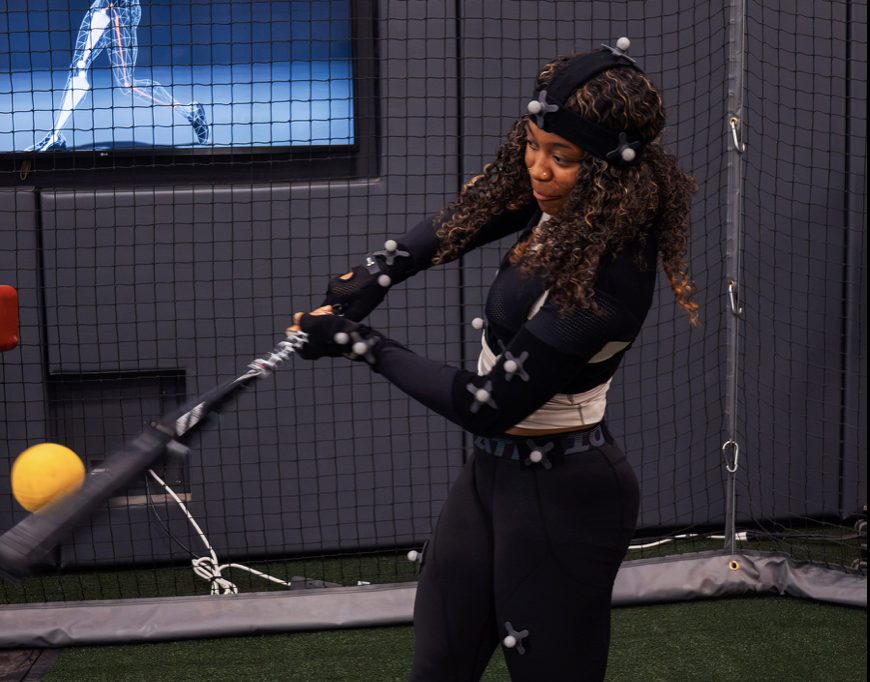
Human performance research: Technologies such as motion capture and wearable data analysis that can provide additional information about how athletes move, train and perform.
-
Student-developed technology: Opportunities for university researchers to build and deploy applications used in real athletic environments.
Texas softball athlete Kayden Henry demonstrated motion capture technology as an example of the tools that could be used to analyze athletic performance through Bevo Lab.
One early indication of the technology's potential has already emerged from the university's work with Google Public Sector. According to the announcement, AI-supported workflows developed through that collaboration are saving UT coaches more than 15 hours per week in game preparation.
That time savings could allow coaches to spend more time on strategy, player development and direct work with athletes. The figure reflects the university's reported early experience rather than a verified program-wide outcome.

UT Austin Students Could Gain Hands-On Experience in AI, Data Science and Sports Analytics
Beyond athletic performance, Bevo Lab will offer students an opportunity to work with real data and industry technology while completing their education.
Under the direction of Kirk Goldsberry, Ph.D., executive director of the Business of Sports Institute, the lab expects to engage as many as 40 student researchers annually.
Goldsberry, a sports data analyst and author, will oversee students working on modeling, analytics and research projects.
Unlike classroom exercises built around hypothetical scenarios, Bevo Lab projects are intended to address questions faced by actual university athletic teams.
Students could help develop predictive models, analyze game footage, build applications or explore ways to improve the efficiency of athletic operations.
"The AI and emerging technologies provided by our industry partners will empower our students and researchers to deliver improved efficiency and increased speed in data analysis to boost performance and improve success," Goldsberry said. "Bevo Lab will reinforce Texas as a leader in sports analytics and AI and will serve as the blueprint for the future of sports."
A particularly notable component is a new Google Public Sector ambassador program that will allow participating students to work directly with engineering teams.
Through that collaboration, students will gain exposure to professional technology development, AI applications and problem-solving in an environment where their work could have immediate practical uses.
For students pursuing careers in artificial intelligence, data science, software engineering, sports management or sports analytics, the experience could help connect their academic training with the expectations of future employers.
Dell Technologies, Google Cloud and SHI International Bring Industry Expertise to Austin
Three technology companies will provide different components of Bevo Lab's infrastructure, development and integration.
Each company has an established presence in enterprise technology, but their roles in the initiative are distinct.
Dell Technologies Will Provide the AI Infrastructure
Dell Technologies will serve as Bevo Lab's premier founding sponsor and Official Technology Infrastructure Sponsor.
The partnership extends a decadeslong relationship between Dell and The University of Texas, including work involving the Texas Advanced Computing Center and technology initiatives within Texas Athletics.
Dell will provide secure, AI-ready infrastructure to support the computing and data processing needs of Bevo Lab.
The company develops computers, servers, data storage systems and enterprise technology services used by organizations and individuals worldwide. Its growing portfolio of AI-related infrastructure is intended to help organizations manage increasingly complex computing demands.
"Bevo Lab represents the next chapter in Dell Technologies' longstanding relationship with The University of Texas and our shared commitment to innovation," said Geraldine Tunnell, chief marketing officer of Dell Technologies. "By providing the secure, AI-ready infrastructure that powers this initiative, we're enabling students, researchers, coaches and student-athletes to turn data into insight, accelerate innovation and unlock new possibilities for human performance. Together, we're helping shape the future of sports analytics, research and education."
Google Cloud Will Support AI Research and Real-Time Sports Intelligence
Google Cloud will serve as Bevo Lab's Official Cloud Provider and Enterprise AI Provider.
Its technology will help bring together large athletic datasets and support the development of applications that generate insights for coaches, researchers and athletic staff.
The collaboration will incorporate Gemini, Google's multimodal AI technology, which can work with different forms of information.
Google Cloud provides AI infrastructure, data management, cybersecurity, developer tools, AI models and cloud-based applications to organizations in more than 200 countries and territories.
For Bevo Lab, Google Public Sector's Rapid Innovation and Specialty Engineering Teams will work directly with university coaches and students to prototype sports technology applications.
Matt Renner, president and chief revenue officer of Google Cloud and a University of Texas alumnus, said the collaboration has personal significance.
"As a proud UT alum, I am thrilled to see my alma mater leading the charge at the intersection of collegiate sports, academic research, and artificial intelligence," Renner said. "Bevo Lab will establish a new global benchmark for sports innovation, directly enhancing how the Longhorns will train, game plan, and compete on the field while providing a premier launchpad for the next generation of tech and sports analytics leaders. By putting our advanced data analytics platforms and Gemini models into the hands of UT students, coaches, and researchers, we are building a secure foundation for sports intelligence that will define the future of the industry."
SHI International Will Connect the Technology Into One System
SHI International will serve as a founding sponsor and strategic technology and solutions integrator.
Its role will involve bringing together the infrastructure, cloud services, AI capabilities and cybersecurity components provided through the broader partnership.
The company will help develop a scalable technology architecture that can grow as additional University of Texas athletic programs begin using Bevo Lab.
SHI is a $16 billion technology solutions integrator serving more than 17,000 corporate, enterprise, public-sector and academic organizations. With more than 7,000 employees worldwide, the company identifies itself as the largest Minority and Woman Owned Business Enterprise in the United States.
Its services range from software licensing and workplace computing devices to cloud infrastructure, cybersecurity and advanced technology integration.
Jack Hogan, vice president of Advanced Growth Technologies at SHI International, said the partnership will bring together multiple technologies within one operating environment.
"For nearly four decades, customers have trusted SHI to bring together the right technologies, partners and expertise to build, manage and secure some of the world's most complex IT environments," Hogan said. "As the strategic technology and solutions integrator of Bevo Lab, we are thrilled to turn best-of-breed infrastructure, cloud, data, AI and security technologies into one trusted, scalable environment that enables Texas Athletics, coaches, student-athletes and researchers to achieve greatness on the playing field, in the lab, in the classroom and throughout their post-college careers."
Longhorn Sports Properties and Learfield Help Bring Bevo Lab Together
The development of Bevo Lab also involved Longhorn Sports Properties, the Austin-based division of Learfield.
Longhorn Sports Properties helped develop the initiative and secure its founding corporate sponsors.
Lucas Motta, vice president of Longhorn Sports Properties, said the collaboration is intended to benefit the university's athletic programs while preparing students for careers in technology.
"Bevo Lab is a cutting-edge collaboration that will make a tremendous positive impact on our coaches, our student-athletes and the university," Motta said. "We are excited to lock arms with Dell Technologies, Google Cloud and SHI as leaders within their industry, and together we will help power Texas Athletics to even more championships while preparing our students for the new era in the tech workforce."
Learfield is a college athletics media and technology company that works with more than 1,200 collegiate institutions and more than 12,000 local and national brand partners.
Its operations include digital media, sponsorships, licensed merchandise, ticketing, donor engagement, student-athlete marketing and technology platforms that help athletic departments connect with fans and generate revenue.
Since 2008, Learfield has also served as title sponsor of the Learfield Directors' Cup, which recognizes athletic department performance across collegiate divisions.
The company's involvement in Bevo Lab reflects the growing relationship between college athletics, corporate technology partnerships and university-based research.
Why Bevo Lab Matters for Austin's Technology Industry and University Students
Austin has long been home to a mix of technology companies, startups, university researchers and established employers. Bevo Lab adds a sports-focused research initiative to that environment.
Its location in Innovation Tower, near the UT Austin campus and within the city's Innovation District, places the program close to other academic and technology activity.
For the Austin community, one of the most meaningful aspects of the initiative may be its workforce development component.
Students will have opportunities to collaborate with engineers and technology professionals while learning how to apply AI and data analytics to practical challenges.
That experience is relevant beyond college sports. Skills involving machine learning, data management, cybersecurity, application development and predictive analytics are used in industries ranging from healthcare and finance to manufacturing and transportation.
The program also offers a different perspective on the role of university athletics. Rather than functioning solely as a competitive sports operation, Texas Athletics will provide a setting for academic research and technology development.
For families with students considering careers in technology or sports business, Bevo Lab is another example of how UT Austin is connecting academic programs with professional experience.
However, the university has not announced that the initiative will create a specific number of permanent jobs or guarantee employment for participating students.
What's Next for Bevo Lab and Texas Longhorns Athletics?
Bevo Lab will initially focus on integrating football data into its Bevo Lakehouse platform before expanding to the university's other 20 varsity sports.
As the initiative develops, student researchers will work alongside university personnel and technology partners to build applications, test analytical models and identify ways to improve athletic operations.
The university expects to involve up to 40 student researchers each year, creating recurring opportunities for students to participate in sports technology projects.
Additional information about Bevo Lab and its research will be available through the university's dedicated website at TexasLonghorns.com/BevoLab.
For Longhorns fans, the immediate impact may not be something they can see from the stands at Darrell K Royal-Texas Memorial Stadium or another UT athletic venue. Much of the work will happen behind the scenes, through research, data analysis and the daily preparation of coaches and athletes.
For participating students, however, the experience could become an important part of their education, offering a chance to contribute to real projects before entering the workforce.
And for Austin, Bevo Lab brings together two of the city's most recognizable strengths: The University of Texas and a technology industry that continues to influence how people work, learn and compete.
Stay connected with My Neighborhood News for more updates on University of Texas initiatives, Austin technology developments, higher education opportunities and the projects shaping Central Texas.

 Tiffany Krenek has been on the My Neighborhood News team since August 2021. She is passionate about curating and sharing content that enriches the lives of our readers in a personal, meaningful way. A loving mother and wife, Tiffany and her family live in the West Houston/Cypress region.

Local business spotlight
Grow your business
where trust already lives.
Let’s introduce your business to the neighbors nearby.
Have a local favorite?
Let’s make an introduction.
Leave your email and our team will reach out with ways to promote your business.
Give a local favorite a little love.
Know a business your neighbors should discover? Tell us who they are.
We couldn’t send that just yet. Please try again.