







The Everyday Charging Habits That Can Start a House Fire
A phone plugged in beside the bed. A power bank tucked into a bag. A cordless tool battery charging until the next weekend project. Rechargeable devices are part of everyday life, and the place, charger and conditions we choose for them deserve a closer look.
For Texas households, Fire Prevention Week, October 4–10, 2026, offers a timely reason to check those habits. This year’s campaign focuses on safe charging, but the changes families can make belong in their routines all year.
Start with the charger and the surface
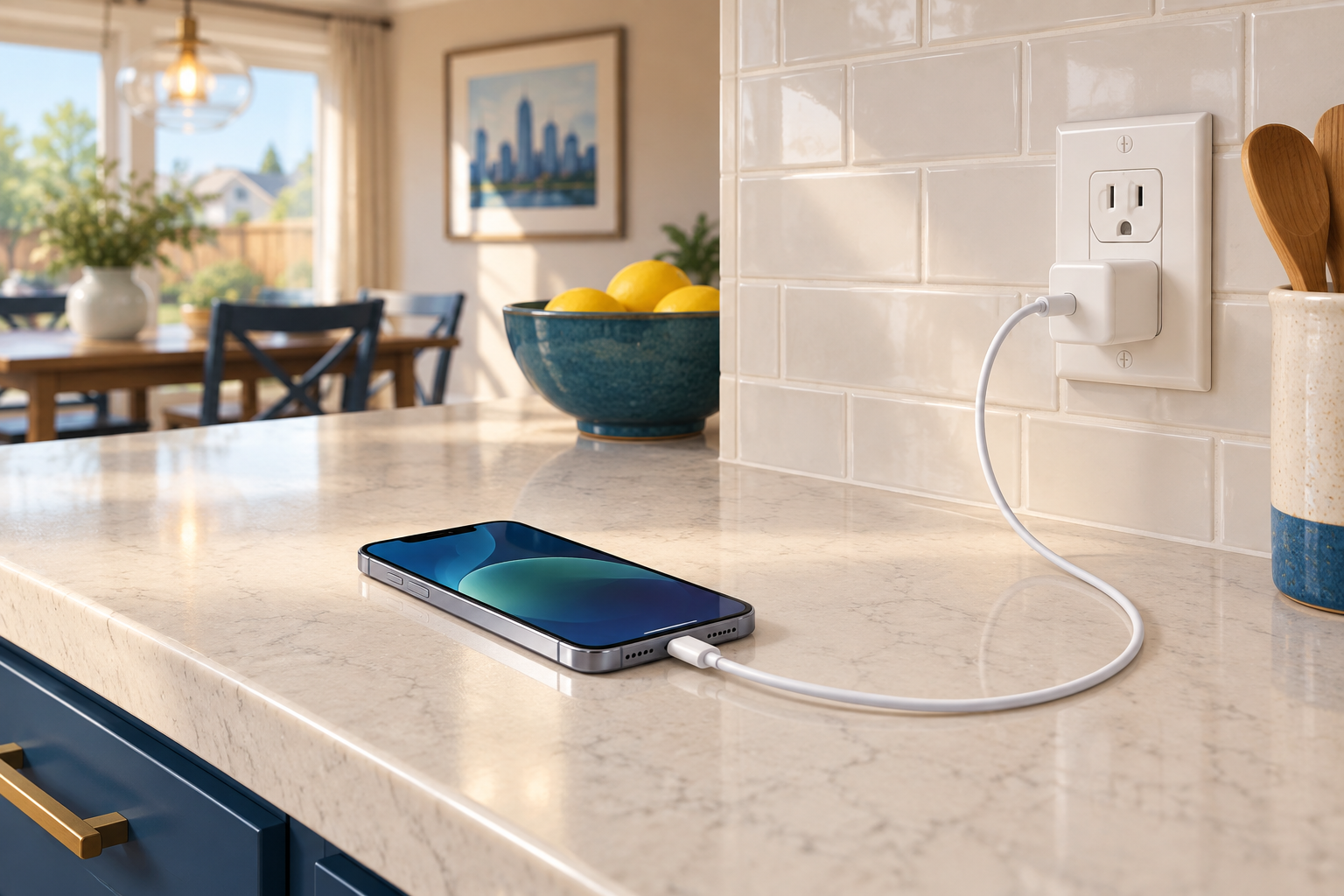
Use the charger supplied with a device or a replacement specifically approved by its manufacturer. A connector that fits does not, by itself, establish that a charger is appropriate. Incompatible charging equipment can cause overheating and increase fire risk.
The Texas Department of Insurance’s charging guidance recommends a hard, nonflammable surface, with devices kept away from beds, rugs, couches and other materials that can burn. Keep an eye on a device while it charges and disconnect it when charging is complete.
That makes the nightly phone routine a useful place to begin: move charging off bedding and upholstered furniture, choose an appropriate clear surface, and make charging something you can monitor.
Give charging equipment a suitable outlet
A crowded outlet deserves attention, too. The U.S. Fire Administration’s electronic-device safety guide advises plugging charging devices directly into an outlet rather than extension cords or multiplug adapters. Overloading outlets can create overheating and fire hazards.
Follow the instructions for the particular device, whether it is a phone, cordless tool or e-bike. If there is uncertainty about whether a home’s circuit can safely support the equipment, have a licensed electrician evaluate it.
Before buying rechargeable products, look for certification from a nationally recognized testing laboratory on the product and packaging, and check for recalls through the Consumer Product Safety Commission’s product-safety website. Battery-pack repairs belong with a certified repair facility.
Heat and warning signs matter
Texas residents have another reason to consider where batteries spend the day: heat. Leaving a rechargeable device in a hot vehicle or direct sunlight creates a fire risk. Store lithium-ion batteries at room temperature when possible, with spare batteries away from materials that can burn.
The U.S. Fire Administration’s battery guidance advises against charging below 32 degrees or above 105 degrees Fahrenheit. Follow the manufacturer’s limits for your equipment as well.
Stop using a battery if it develops an unusual odor, excessive heat, swelling or another change in shape, leaking, discoloration or odd noises. Those are warning signs to take seriously, even if the device still turns on.
If a fire starts, get outside, stay outside and call 911 from a safe location. Do not go back into the home to retrieve a phone, charger or other belongings.
Retire old batteries responsibly
A battery that has reached the end of its useful life should not go into household trash or curbside recycling. Lithium-ion batteries can ignite when damaged during collection or processing.
Use a battery-recycling or household hazardous-waste program that accepts the particular battery. TDI points residents to Call2Recycle’s collection-site locator; check a location’s requirements before making the trip. If a battery is damaged, ask the program how it must be handled before bringing it in.
A quick walk through the home can reveal where to start: the bedside phone, the family’s tablets, the portable power bank and the tool charger. Check the equipment, clear the charging surface and choose a time when someone can pay attention. Those are useful habits long after Fire Prevention Week ends.

 Johnny Krenek has been connected to community news since childhood, growing up alongside the family business his parents founded—Krenek Printing. Today, he serves as Vice President and lead developer for My Neighborhood News, where he drives the digital experience and supports the team across a variety of technical and operational roles. He is passionate about building tools that help connect neighbors and strengthen communities.
Local business spotlight
Grow your business
where trust already lives.
Let’s introduce your business to the neighbors nearby.
Have a local favorite?
Let’s make an introduction.
Leave your email and our team will reach out with ways to promote your business.
Give a local favorite a little love.
Know a business your neighbors should discover? Tell us who they are.
We couldn’t send that just yet. Please try again.