







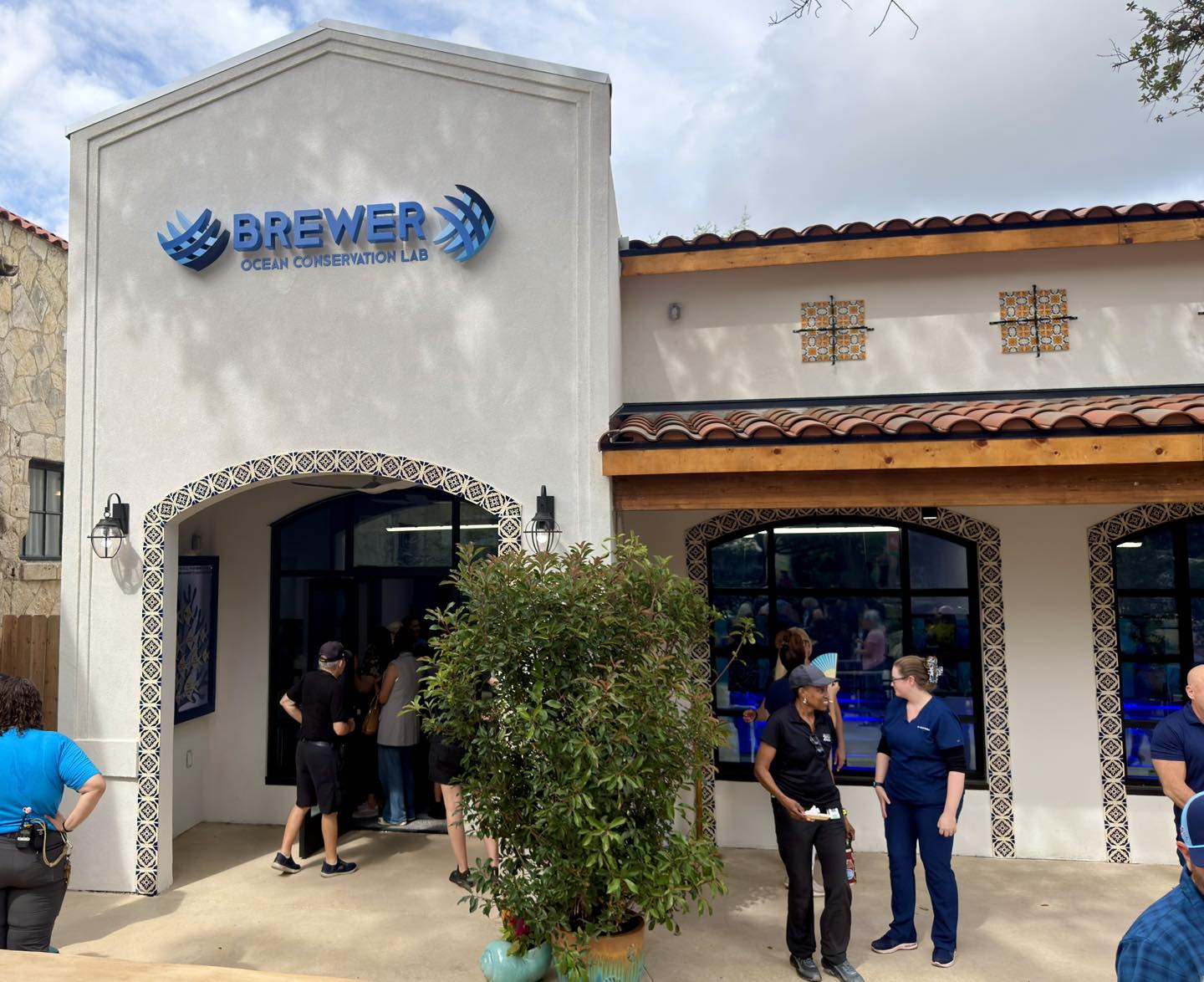
San Antonio Zoo Opens Brewer Ocean Conservation Lab to Advance Global Coral Reef Restoration
Visitors to the San Antonio Zoo can now witness coral conservation firsthand thanks to the opening of the new Brewer Ocean Conservation Lab, a state-of-the-art facility dedicated to coral research, restoration, education, and ocean conservation.
The zoo officially celebrated the grand opening and ribbon-cutting of the Brewer Ocean Conservation Lab on June 1, coinciding with World Reef Awareness Day. While San Antonio sits hundreds of miles from the nearest coastline, zoo leaders say the new facility demonstrates that protecting the planet’s oceans is a responsibility that extends far beyond coastal communities.
More than just a new exhibit, the Brewer Ocean Conservation Lab serves as a working conservation space where guests can observe coral restoration efforts while learning about the growing threats facing coral reefs around the world. The project was made possible through a generous gift from the Brewer family in honor of the late R.P. Brewer III, whose legacy now supports a new generation of conservation education and scientific research.
A New Home for Coral Conservation in Texas
The Brewer Ocean Conservation Lab focuses on cultivating and caring for coral species that support restoration efforts in partnership with the National Oceanic and Atmospheric Administration (NOAA) and the Association of Zoos and Aquariums’ Saving Animals From Extinction (SAFE) program.
Visitors can explore displays featuring both Texas and international coral species, interact with a touch tank, and gain a deeper understanding of the vital role coral reefs play in marine ecosystems.
The facility is designed to blend conservation science with public engagement, allowing guests to see firsthand how coral fragments are grown and maintained for future restoration projects. By creating a direct connection between visitors and conservation efforts, zoo officials hope to inspire greater awareness and action on behalf of the world’s oceans.
The grand opening event included remarks from San Antonio Zoo President and CEO Tim Morrow and Robert Brewer, along with members of the Brewer family who gathered to celebrate the lab’s opening and honor R.P. Brewer III’s commitment to conservation.

Why Coral Reefs Matter
Although coral reefs cover less than 1% of the ocean floor, they support approximately 25% of all marine life. These underwater ecosystems provide food, shelter, and breeding grounds for thousands of species, making them among the most biologically diverse habitats on Earth.
Their importance extends far beyond marine biodiversity.
According to NOAA, coral reefs contribute more than $3.4 billion annually to the United States economy through fisheries, tourism, recreation, and coastal protection. Healthy reefs also act as natural barriers that help reduce the impact of storms and erosion on coastal communities.
Globally, more than one billion people depend on coral reef ecosystems for food security, economic opportunities, and protection from severe weather.
Climate Change Remains the Greatest Threat
Scientists warn that coral reefs face mounting challenges from climate change, ocean warming, pollution, and disease.
NOAA identifies rising ocean temperatures as the leading threat to coral survival. Extended periods of heat stress can trigger coral bleaching, a phenomenon in which corals expel the algae they rely on for survival. Severe bleaching events can result in widespread coral mortality and long-term damage to reef ecosystems.
As these threats continue to intensify, conservation organizations are increasingly focused on restoration efforts, scientific research, and public education initiatives like those taking place at the Brewer Ocean Conservation Lab.
National Partnerships Driving Conservation Efforts
The lab's work aligns with the Association of Zoos and Aquariums’ SAFE Coral program, a nationwide conservation initiative that brings together accredited zoos and aquariums to protect threatened and endangered coral species.
SAFE Coral partners collaborate on conservation projects, restoration efforts, scientific research, and public outreach campaigns designed to increase awareness about coral reef decline and encourage action.
By participating in the program, San Antonio Zoo joins a growing network of institutions working to safeguard coral populations and help prevent species from disappearing from the wild.
The partnership also provides opportunities for visitors to learn how conservation efforts occurring in aquariums, laboratories, and reef habitats around the world contribute to protecting marine ecosystems for future generations.
A Zoo with a Long Conservation Legacy
The opening of the Brewer Ocean Conservation Lab represents another chapter in the San Antonio Zoo’s long history of wildlife conservation and public education.
Operated by the non-profit San Antonio Zoological Society, the zoo welcomes more than one million visitors annually and spans more than 50 acres in Brackenridge Park. Home to more than 700 species, including many endangered animals, the zoo has served as a conservation leader for generations.
Its roots date back to the early 1900s, when Colonel George W. Brackenridge donated land and a collection of animals that would become the foundation of today's San Antonio Zoo. Over the decades, the zoo gained national recognition for innovative exhibits such as the Barless Bear Terraces, Primate Paradise, the Richard Friedrich Aquarium, and the renowned Hixon Bird House.
Today, the zoo remains focused on its mission to inspire people to love, engage with, act for, and protect animals and the habitats they call home.
What Visitors Can Expect
Guests visiting the Brewer Ocean Conservation Lab can expect an immersive educational experience that combines science, conservation, and hands-on discovery. From learning about the intricate ecosystems supported by coral reefs to seeing restoration efforts in progress, the new facility offers a unique opportunity to connect with global conservation efforts without leaving Texas.
For families, students, and wildlife enthusiasts, the lab provides a powerful reminder that even communities far from the ocean can play a meaningful role in protecting one of the planet’s most important and vulnerable ecosystems.
As coral reefs continue to face unprecedented challenges, the Brewer Ocean Conservation Lab stands as both a center for conservation action and a place where future ocean advocates can be inspired to make a difference.
For more community-focused stories about conservation, education, family destinations, and wildlife initiatives across Texas, stay tuned to My Neighborhood News.

 Tiffany Krenek has been on the My Neighborhood News team since August 2021. She is passionate about curating and sharing content that enriches the lives of our readers in a personal, meaningful way. A loving mother and wife, Tiffany and her family live in the West Houston/Cypress region.