






Rolling Fork Channel Repairs Underway as HCFCD Tackles Erosion, Sediment Buildup and Aging Drainage Infrastructure
For Rolling Fork residents, work underway along a nearby drainage channel is addressing something that can be easy to overlook until heavy rain arrives: keeping stormwater infrastructure in working condition.
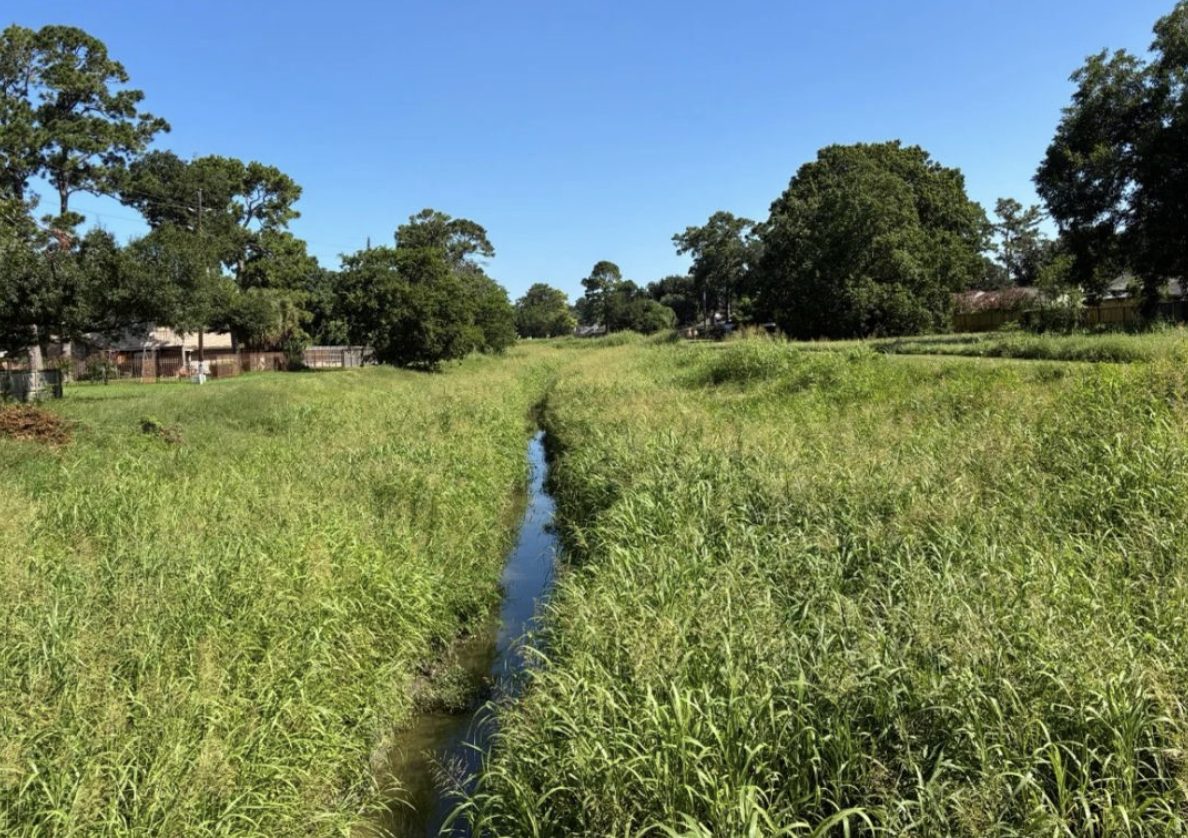
The Harris County Flood Control District announced Aug. 28 that crews are repairing the Rolling Fork channel, a tributary within the White Oak Bayou watershed in northwest Houston, after years of moving stormwater contributed to erosion, sediment buildup and deterioration along portions of the channel.
The project is taking place between Bobby Jack Lane and Rodney Ray Boulevard, putting the maintenance work close to homes and streets within the Rolling Fork community. Construction is anticipated to be completed during the first quarter of 2027.
What HCFCD Is Repairing Along the Rolling Fork Channel
According to the Flood Control District, years of stormwater flowing through the channel have contributed to erosion and sedimentation, conditions that can reduce how efficiently a drainage channel conveys water.
Crews are now addressing several of those problems at once.
Work includes repairing areas affected by erosion and slope failures, removing accumulated sediment, realigning portions of the channel and replacing damaged outfall pipes.
For residents, the significance is fairly straightforward: drainage channels are intended to move stormwater through the local drainage system, and keeping their slopes, pipes and channel bottoms in good condition helps that infrastructure continue functioning as designed.
HCFCD describes maintenance as a year-round part of its flood-control mission, with crews working across Harris County to keep channels and other infrastructure operating as intended and prepared for future storms.
The Rolling Fork project should not be interpreted as eliminating flood risk or guaranteeing that surrounding properties will not flood during severe weather. Rather, this type of maintenance restores deteriorated drainage infrastructure and helps preserve its intended stormwater-conveyance function.
Why Sediment and Erosion Matter in a Drainage Channel
Over time, moving water can wear away channel banks while soil, sand and other material settle along the bottom. If enough sediment accumulates or slopes deteriorate, the physical condition of the channel can change.
Removing that material and repairing erosion helps restore the channel closer to its intended configuration.
HCFCD has explained in connection with similar maintenance projects that sediment removal is intended to restore a channel's capacity to hold and convey stormwater rather than create additional downstream flooding risk. The district has also identified bank failures, erosion, sediment accumulation and damaged pipes among the conditions addressed through major maintenance work.
Replacing damaged outfall pipes is another important piece of the Rolling Fork project. Those pipes provide connections through which stormwater can discharge into the larger drainage channel, making their condition part of the overall drainage system residents depend on during rain events.

Rolling Fork Is Part of the Larger White Oak Bayou Watershed
The neighborhood drainage work connects to a much larger system.
Rolling Fork's channel ultimately forms part of the White Oak Bayou watershed, which stretches across central and northwest Harris County and includes portions of Houston and Jersey Village.
The watershed covers approximately 111 square miles, contains about 146 miles of open waterways and had a population of 464,933 based on 2020 Census data, according to HCFCD. Its primary waterways include White Oak Bayou, Little White Oak Bayou, Brickhouse Gully, Cole Creek and Vogel Creek.
Rain falling throughout the watershed ultimately drains toward White Oak Bayou, which flows southeast from northwest of FM 1960 before reaching Buffalo Bayou in downtown Houston. That interconnected system is why maintenance on neighborhood tributaries matters beyond the individual stretch where residents may see excavators or construction crews working.
Project Addresses Previously Deferred Maintenance
HCFCD characterized the Rolling Fork work as a deferred maintenance project, meaning repairs had previously been delayed because dedicated maintenance funding was not available.
The district says the project is part of an increased investment in maintaining and preserving existing Harris County flood-control infrastructure.
That broader push is occurring across the county. HCFCD has said that previous funding limitations forced it to prioritize maintenance where needs were greatest, leaving some work deferred. Additional funding has since allowed the district to accelerate maintenance and address repairs that had been postponed.
The approach differs from constructing an entirely new flood-control project. Major maintenance generally focuses on restoring existing infrastructure to its intended condition, while capital improvement projects may be designed to increase capacity or provide a different level of flood-risk reduction.
For Rolling Fork homeowners, that distinction is useful: the current work is about repairing and preserving a drainage channel the community already relies on.
Routine Channel Maintenance Has Also Continued
Maintenance activity in the area has not been limited to the larger rehabilitation project.
HCFCD records for channel unit E125-00-00 (4680) show a recent mowing cycle was completed in August. The work had a projected start date of Aug. 5, began Aug. 10 and was completed Aug. 14. The previous mowing date listed for the unit was May 26.
Vegetation management and mowing are among the routine tasks performed alongside larger repairs as HCFCD maintains its extensive network of drainage infrastructure.
What Rolling Fork Residents Can Expect Next
Residents near Bobby Jack Lane and Rodney Ray Boulevard may continue seeing construction activity as crews work through the channel repairs.
Barring changes to the construction schedule, HCFCD anticipates completing the Rolling Fork maintenance project during the first quarter of 2027.
For a community that has watched northwest Houston continue to grow, maintaining the drainage infrastructure already in place is an important part of protecting the system's long-term reliability. The work happening now may be less visible once construction equipment leaves, but the goal is to leave behind a channel better able to perform the job residents count on when the next heavy rain moves across the neighborhood.
My Neighborhood News will continue following drainage, flood-control and infrastructure projects affecting Rolling Fork and surrounding northwest Houston communities.

 Tiffany Krenek has been on the My Neighborhood News team since August 2021. She is passionate about curating and sharing content that enriches the lives of our readers in a personal, meaningful way. A loving mother and wife, Tiffany and her family live in the West Houston/Cypress region.

Local business spotlight
Grow your business
where trust already lives.
Let’s introduce your business to the neighbors nearby.
Have a local favorite?
Let’s make an introduction.
Leave your email and our team will reach out with ways to promote your business.
Give a local favorite a little love.
Know a business your neighbors should discover? Tell us who they are.
We couldn’t send that just yet. Please try again.