







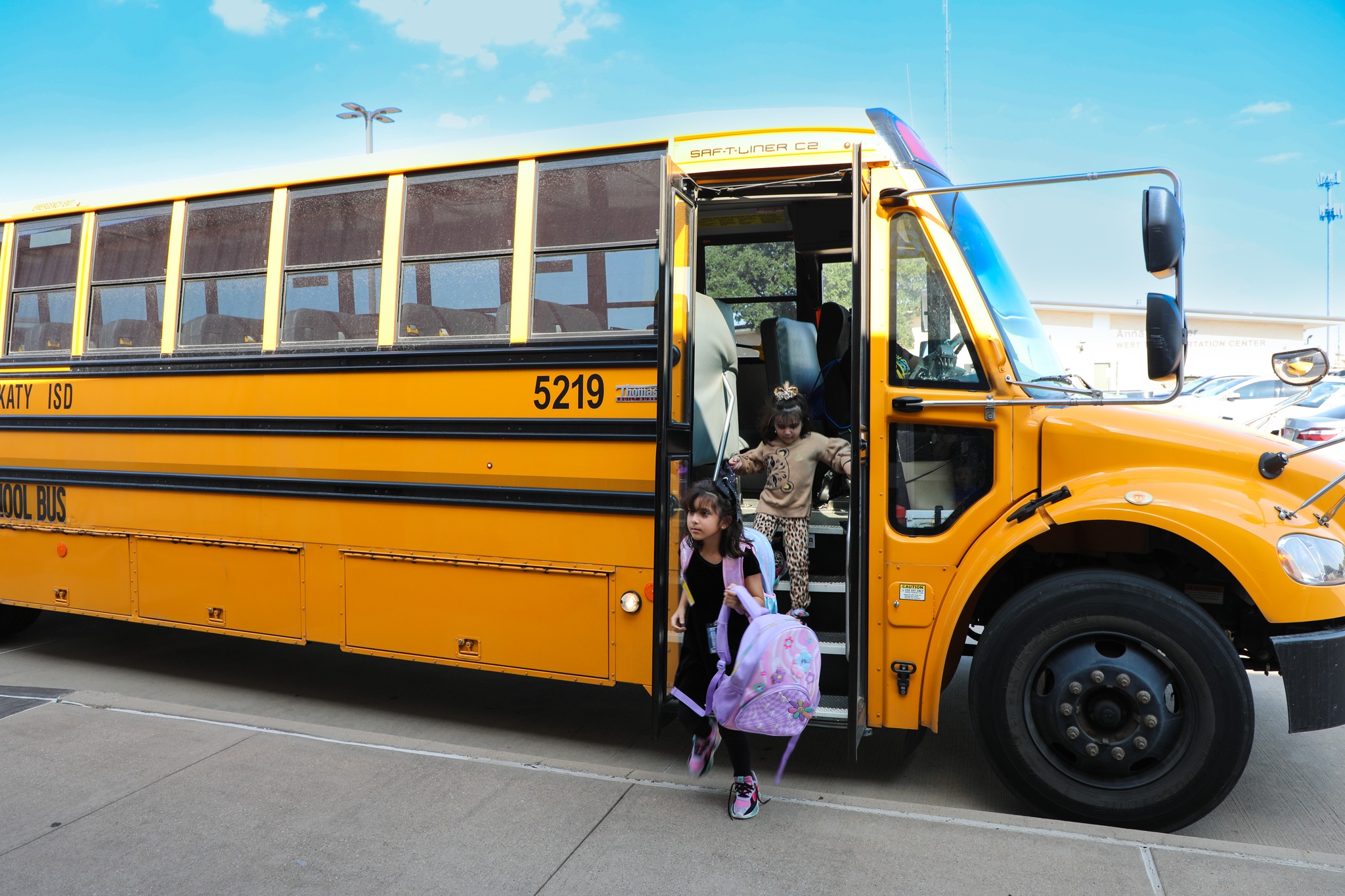
Katy ISD Back-to-School Safety: What Williamsburg Settlement Drivers Need to Know About School Buses, Students and Traffic
The return of school changes the daily rhythm of Williamsburg Settlement almost overnight.
Beginning Wednesday, Aug. 12, 2026, Katy Independent School District students will once again gather at neighborhood bus stops, walk and bike along community streets, and travel to campuses with parents and newly licensed teenage drivers. Roads that felt relatively quiet during the summer will become busier before sunrise and again throughout the afternoon.
For residents, that means leaving a little earlier, putting away the phone and expecting the unexpected—especially near crosswalks, school zones, neighborhood entrances and school bus stops.
A few extra seconds of patience can make a meaningful difference when a child is stepping off a bus, crossing a street or hurrying toward school.
Katy ISD School Hours Will Create Several Traffic Waves
Katy ISD’s staggered bell schedule means school traffic will not be limited to one brief morning or afternoon window.
High schools begin earliest, with the first bell at 7:08 a.m., a 7:15 a.m. tardy bell and dismissal at 2:35 p.m. Tier A elementary campuses begin at 7:43 a.m. and dismiss at 3 p.m., followed by mid-tier elementary schools from 8:03 a.m. to 3:20 p.m.
Tier B elementary campuses begin at 8:23 a.m. and dismiss at 3:40 p.m. Junior high campuses have an 8:48 a.m. first bell, an 8:55 a.m. tardy bell and a 4:05 p.m. dismissal.
Together, those schedules will create several periods of heavier traffic across the Katy area:
Morning high school traffic may begin before 7 a.m., when some students are still waiting for buses or walking in low-light conditions. Elementary traffic will continue through approximately 8:30 a.m., followed by junior high arrivals approaching 9 a.m.
In the afternoon, high school students will begin leaving campuses around 2:35 p.m., while elementary and junior high dismissals will keep buses and family vehicles moving through neighborhoods until after 4 p.m.
The first days of school are often especially busy as families learn new routes, bus schedules and campus drop-off procedures. Residents who do not have children in school may still want to allow additional travel time during these windows.
When Must Drivers Stop for a School Bus in Texas?
Texas law requires a driver approaching a stopped school bus from either direction to stop before reaching the bus when its required visual signals are operating.
The driver may not proceed until the school bus begins moving again, the bus driver signals motorists to continue or the bus’s visual signal is no longer operating. (FindLaw)
For drivers, the safest way to remember the rule is simple:
Flashing yellow lights mean slow down and prepare to stop. Flashing red lights and an extended stop arm mean stop.
Yellow lights indicate that the school bus is preparing to load or unload students. Red lights and the extended stop arm mean children may be entering the roadway, including from a direction a motorist cannot immediately see. Drivers should remain stopped until the red lights turn off, the stop arm is withdrawn and the bus begins moving—or until the bus driver directs them to proceed.
A driver should never attempt to pass simply because no child is immediately visible. A student may be crossing in front of the bus, walking from the opposite side of the street or standing in an area hidden by the vehicle.
Does Opposing Traffic Have to Stop?
On most neighborhood streets and undivided roads, traffic approaching a stopped school bus from both directions must stop when its red lights are flashing.
The primary exception involves a roadway that is divided into separate roadways by an intervening space or physical barrier. Under Texas law, drivers traveling on the opposite side of that divided roadway generally are not required to stop.
A center turn lane does not create the same separation as a physical median or barrier. Painted lines alone should not be treated as permission to continue past a stopped school bus.
When a driver is uncertain whether a roadway qualifies as divided, stopping is the safer choice. Children can move unpredictably, and the few moments saved by continuing are not worth the risk.
What Federal School Bus Law Does—and Does Not—Cover
There is not one federal traffic law that tells every driver in the country when to stop for a school bus. Those roadway rules are established and enforced primarily by individual states, including Texas Transportation Code Section 545.066.
Federal law instead focuses heavily on the construction and safety performance of school buses. The National Highway Traffic Safety Administration establishes federal motor vehicle safety standards for vehicles manufactured and sold as school buses, including requirements related to occupant protection, lighting and other safety equipment.
NHTSA notes that every state has stop-arm laws intended to protect children as they board and leave school buses. The federal agency advises drivers to slow down when a bus activates yellow lights and remain stopped when its red lights and stop arm are in operation.
In other words, federal standards help make the bus itself safer, while Texas law governs how motorists must behave around it.
Children May Be Harder to See Than Drivers Expect
A child walking to school may be small enough to disappear behind a parked vehicle, landscaping, a mailbox or a larger SUV. Younger students may also misjudge a vehicle’s speed or assume a driver sees them simply because they can see the vehicle.
NHTSA recommends that students use sidewalks whenever possible, cross at marked crosswalks and look left, right and left again before entering the street. Where no sidewalk exists, pedestrians should walk along the edge of the roadway facing traffic. Phones and other distractions should stay out of sight while children are walking or riding bicycles near moving vehicles.
Children waiting for the bus should arrive about five minutes early and remain at least 10 feet—or approximately five large steps—away from the curb. They should wait until the bus has stopped completely and the driver signals that it is safe to board or cross.
Drivers can help by scanning beyond the school bus itself. A backpack, bicycle wheel or pair of shoes visible beneath a parked vehicle may be the first indication that a child is nearby.
Parents Can Make Drop-Off and Pick-Up Safer
Campus traffic can become frustrating when lines are long, but improvised drop-offs can create risks for students and other drivers.
Parents should follow their campus’s designated traffic pattern, avoid stopping in crosswalks or travel lanes and never direct children to run between parked or idling vehicles. Families should also avoid dropping students across the street from campus unless there is a safe, designated crossing point.
Drivers backing out of driveways should take a second look for children on sidewalks, scooters and bicycles. That habit is particularly important in Williamsburg Settlement during the morning rush, when students may be moving between parked vehicles and approaching buses.
Leaving home five or 10 minutes earlier can reduce the temptation to speed, make sudden lane changes or rush through a school zone.
Teenage Drivers Need a Back-to-School Refresher, Too
For some Katy ISD students, the first day of school will also mark one of their first experiences driving to campus without an adult in the vehicle.
Teen drivers should review their route before leaving home, keep phones put away and expect traffic to stop suddenly near campuses and bus routes. Extra following distance is especially important behind school buses, which make frequent stops and may activate their warning lights with little advance notice.
Texas prohibits drivers younger than 18 from using a wireless communication device while operating a vehicle except in an emergency. The use of handheld devices in an active school zone is also prohibited.
Parents can help by discussing where students will park, how much time they should allow and what they should do if they are running late. Arriving a few minutes after the bell is safer than speeding, texting or taking an unsafe shortcut.
Katy ISD Families Can Use SMART Tag for Bus Information
Katy ISD families with bus riders can use the district’s SMART Tag system to receive transportation information and monitor a student’s bus activity.
The system uses identification technology and connected equipment aboard district buses to provide parents with near-real-time ridership and route information. Katy ISD also directs returning families to the SMART Tag app for bus route details and transportation notifications.
Parents should confirm their child’s bus stop and route before the first day, review who is authorized to meet younger students and make sure children understand where to go if a parent or bus is delayed. Visit katyisd.org for more information
A Safer School Year Begins on Neighborhood Streets
Texas recorded 2,358 crashes involving school buses in 2025, resulting in seven deaths and 85 serious injuries. TxDOT identified speeding and distracted driving as the leading contributing factors in those crashes.
Those statewide numbers are a reminder that back-to-school safety is not limited to campus property. It begins on the streets directly outside residents’ homes.
For Williamsburg Settlement, the most helpful steps are also among the simplest: expect more traffic, slow down before reaching a bus stop, keep crosswalks clear, put away the phone and give student drivers room to make careful decisions.
The morning commute may take a little longer once Katy ISD returns to class, but a little patience behind the wheel helps ensure that every neighborhood child has the opportunity to arrive at school—and return home—safely.
Residents can stay tuned to My Neighborhood News for additional Katy ISD updates, school information and community safety reminders throughout the 2026–2027 school year.

 Tiffany Krenek has been on the My Neighborhood News team since August 2021. She is passionate about curating and sharing content that enriches the lives of our readers in a personal, meaningful way. A loving mother and wife, Tiffany and her family live in the West Houston/Cypress region.