








How Homestead Estates Residents Can Keep Homes Cooler With Modern Attic Insulation
While summer temperatures bake communities across Central Texas, keeping a home comfortable can feel like a daily contest between the air conditioner and the sun. For families in Homestead Estates, one of the most important places in that contest is also one of the easiest to overlook: the attic.
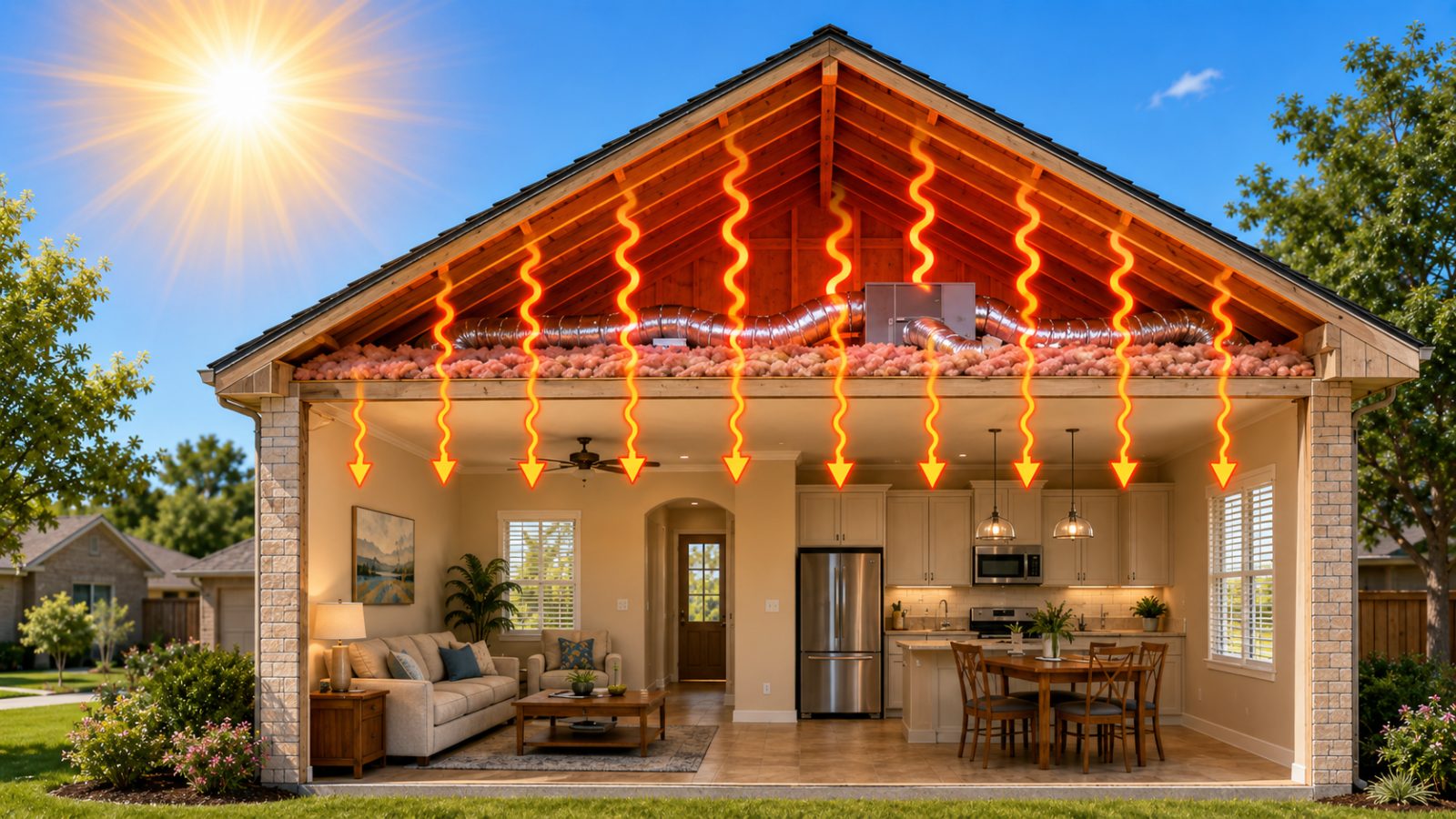
Attic insulation helps slow the movement of heat between the roof and the rooms below. When it is properly installed, evenly distributed and paired with effective air sealing, it can help a home maintain its desired temperature longer. That means the air-conditioning system may not need to work as hard to replace cool air escaping through the ceiling.
This matters in both established neighborhoods and recently developed communities across the greater Austin and San Antonio areas. A home does not need to be old to experience insulation gaps, duct leakage, moisture concerns or uncomfortable rooms during a Texas summer.
How modern attic insulation keeps Texas homes cooler
Insulation is rated by its R-value, which measures how well a material resists heat flow. Generally, a higher R-value provides greater resistance, but performance also depends on correct installation, continuous coverage and whether air can move around or through the material.
Traditional fiberglass remains common, but homeowners now have several modern attic insulation and heat-control options to consider.
Blown-in fiberglass or cellulose can be distributed across an attic floor to form a relatively continuous thermal layer. The material can reach around framing and into irregular spaces more easily than some batt products. Cellulose is commonly made from recycled paper fibers treated for fire and pest resistance, while blown fiberglass uses small glass fibers.
Spray polyurethane foam expands after application, allowing it to fill cracks and create both insulation and an air barrier. In some homes, foam is applied along the underside of the roof deck, bringing the attic into or closer to the home’s conditioned space.
This approach may help reduce heat and humidity around attic ductwork, but it requires careful planning and professional installation. Roof ventilation, moisture management, combustion appliances and fire-safety requirements should all be evaluated before changing a traditionally vented attic.
Radiant barriers use a reflective surface, usually installed beneath the roof, to reduce radiant heat moving from the roof toward the attic floor. They do not replace conventional insulation. Instead, they may provide an additional layer of heat control in hot, sunny climates such as Central Texas.
Smart attic sensors are also giving homeowners a newer way to monitor conditions above the ceiling. Connected temperature, humidity and moisture sensors can alert residents to unusually high heat, rising humidity or possible water intrusion through a phone application.
These devices do not improve insulation by themselves, but they may help identify roof leaks, ventilation problems or moisture concerns before visible damage spreads.
For most homes, the best solution is not necessarily the newest or most expensive material. It is the system that properly combines insulation, air sealing, moisture control and ventilation for the home’s specific construction.
Newer homes can benefit from an attic inspection, too
Even recently constructed homes may benefit from an attic inspection. New construction generally must meet the building and energy codes in effect when the home was permitted, but code compliance does not guarantee that insulation remains evenly distributed or that every air leak, duct connection and attic access point performs as intended.
Installation gaps, compressed insulation and small areas left uncovered can affect comfort from the first summer onward. Insulation may also be moved during electrical, plumbing, security, internet or HVAC work performed after the initial installation.
Homeowners in newer developments should inspect before automatically paying to add more insulation. The existing material may be sufficient in quantity but limited by installation problems elsewhere in the attic.
Owners of recently completed homes can review builder documents for the stated insulation type and R-value, compare that information with visible attic conditions and document concerns with photographs. Before making changes, they should also determine whether an insulation, roofing, HVAC or workmanship issue may still be covered by a builder warranty.
A professional blower-door test or infrared inspection may be helpful when a newer home has unusually warm rooms, inconsistent temperatures, high humidity or utility bills that appear excessive for the home’s size and age.
What homeowners should look for during an attic inspection
Late summer and early fall can be useful times for Homestead Estates residents to assess how well their attic insulation has held up. However, attic temperatures can become dangerous during the day. Residents should avoid entering an attic during extreme heat and consider hiring a qualified professional when access is difficult or conditions are uncertain.
From a safe position near the attic entrance, homeowners can look for several warning signs.
Insulation below the floor joists: If the insulation is level with or below the attic floor joists, the home may benefit from additional material, depending on the insulation type and current R-value.
Thin, uneven or compressed areas: Storage boxes, foot traffic, repair work and animals can flatten or displace loose-fill and batt insulation. Compressed insulation generally does not provide its original level of thermal resistance.
Bare or exposed ceiling areas: Missing insulation around framing, wiring, plumbing or recessed fixtures can create pathways for heat to move into the living space.
Dark or dirty streaks: Dirty insulation may reveal air movement through gaps in the ceiling below. These leaks can allow conditioned air to escape into the attic while hot attic air moves toward the home’s interior.
Water stains, damp material or musty odors: Roof leaks, condensation and improperly vented bathroom or kitchen exhaust fans can damage insulation and contribute to mold or wood deterioration.
Pest or animal damage: Rodents and other animals may tunnel through insulation, leave waste or disturb electrical wiring. Contaminated material may require professional removal rather than simply being covered with new insulation.
Blocked soffit vents: Loose insulation should not prevent designed airflow near the roof’s edges. Baffles may be needed to keep insulation away from intake vents while maintaining coverage over the ceiling.
An unsealed attic hatch or pull-down staircase: Attic access points can function like large openings between the conditioned living space and the hot attic. Weatherstripping, rigid insulation or a properly fitted insulated stair cover may help reduce leakage.
Residents should also consider the age and condition of the material. Fiberglass, cellulose and foam can remain useful for many years when they stay dry and undisturbed. Insulation does not necessarily need replacement simply because it is old. It generally needs attention when it is wet, contaminated, damaged, compressed, missing or no longer providing adequate coverage.

Air sealing should come before adding insulation
Adding more insulation without first sealing major air leaks may leave much of the underlying problem unresolved. Common leak locations include plumbing and electrical penetrations, recessed lighting, duct chases, wall top plates, dropped soffits and gaps around attic access doors.
Air sealing and insulation work best as a coordinated system. Sealing gaps helps prevent conditioned air from escaping, while insulation slows heat transfer through the ceiling.
Some sealing projects may be suitable for experienced homeowners, but caution is important around electrical wiring, recessed fixtures, chimneys, flues and combustion appliances. Certain fixtures require clearance from insulation, and some foam products must be protected by approved fire barriers.
A home energy auditor, insulation contractor or building-performance professional can help identify these conditions before work begins.
Do not overlook attic ductwork
Many Austin- and San Antonio-area homes have air-conditioning ducts running through the attic. Even when the attic floor is well insulated, damaged or disconnected ductwork can release cooled air into one of the hottest parts of the house.
Homeowners should look for torn duct insulation, loose connections, crushed flexible ducts and sections that appear to have separated. Rooms that stay warmer than the rest of the home may point to duct leakage, airflow restrictions or inadequate insulation nearby.
Duct repairs should be completed with materials intended for HVAC systems rather than standard household tape. A qualified technician can also test duct leakage and determine whether the system is properly balanced.
More ways to reduce summer cooling costs
Attic improvements are most effective when they are part of a broader home energy plan. Residents can also take several practical steps to improve comfort and reduce unnecessary energy use:
- Replace dirty HVAC filters according to the manufacturer’s recommendations.
- Schedule professional maintenance if the system runs continuously or struggles to reach the thermostat setting.
- Use a programmable or smart thermostat to manage temperatures consistently.
- Close blinds or curtains during the hottest part of the day, especially on west-facing windows.
- Add weatherstripping around exterior doors and seal appropriate gaps around windows.
- Use ceiling fans in occupied rooms, remembering that fans cool people rather than empty spaces.
- Keep outdoor air-conditioning equipment clear of leaves, weeds and debris.
- Avoid using heat-producing appliances during the hottest afternoon hours when practical.
- Check that bathroom and kitchen exhaust fans vent outdoors rather than into the attic.
- Consider exterior shade, solar screens or carefully placed trees to reduce direct sunlight on windows.
Homeowners should also pay attention to changes over time. A sudden increase in electricity use, a room that becomes harder to cool or condensation appearing near vents may signal a developing problem rather than normal summer heat.
Choosing the right attic upgrade
Before hiring a contractor, homeowners may want to request an attic inspection or home energy assessment that covers insulation depth, approximate R-value, air leakage, duct condition, moisture levels and ventilation.
Written estimates should identify the insulation product, proposed installed R-value, application depth, areas receiving air sealing and any warranties. Residents considering spray foam should ask how the proposed design will address moisture, ventilation, HVAC equipment and fuel-burning appliances.
Homeowners should be cautious of anyone who promises a specific reduction in utility bills without inspecting the property. Energy savings depend on several factors, including square footage, thermostat habits, HVAC efficiency, roof exposure, window performance, duct leakage and the home’s existing insulation.
Residents should also obtain more than one estimate for major projects and ask contractors to explain why a particular product or attic design is appropriate for the home. The best recommendation for a recently built house may be very different from the best approach for a home that has been standing for several decades.
For Homestead Estates, an attic inspection may not be the most visible home project, but it can make a meaningful difference in everyday comfort. A well-sealed, dry and properly insulated attic helps protect the home from Central Texas heat while giving the air conditioner a better chance to keep up.
Residents can stay tuned to My Neighborhood News for more seasonal home-maintenance guidance, community information and practical ways to prepare for life in the greater Austin and San Antonio areas.

 Tiffany Krenek has been on the My Neighborhood News team since August 2021. She is passionate about curating and sharing content that enriches the lives of our readers in a personal, meaningful way. A loving mother and wife, Tiffany and her family live in the West Houston/Cypress region.
Local business spotlight
Grow your business
where trust already lives.
Let’s introduce your business to the neighbors nearby.
Have a local favorite?
Let’s make an introduction.
Leave your email and our team will reach out with ways to promote your business.
Give a local favorite a little love.
Know a business your neighbors should discover? Tell us who they are.
We couldn’t send that just yet. Please try again.