







Harris County Tests Recycled Tire Road Repair in Precinct 3 to Reduce Potholes and Save Taxpayer Dollars
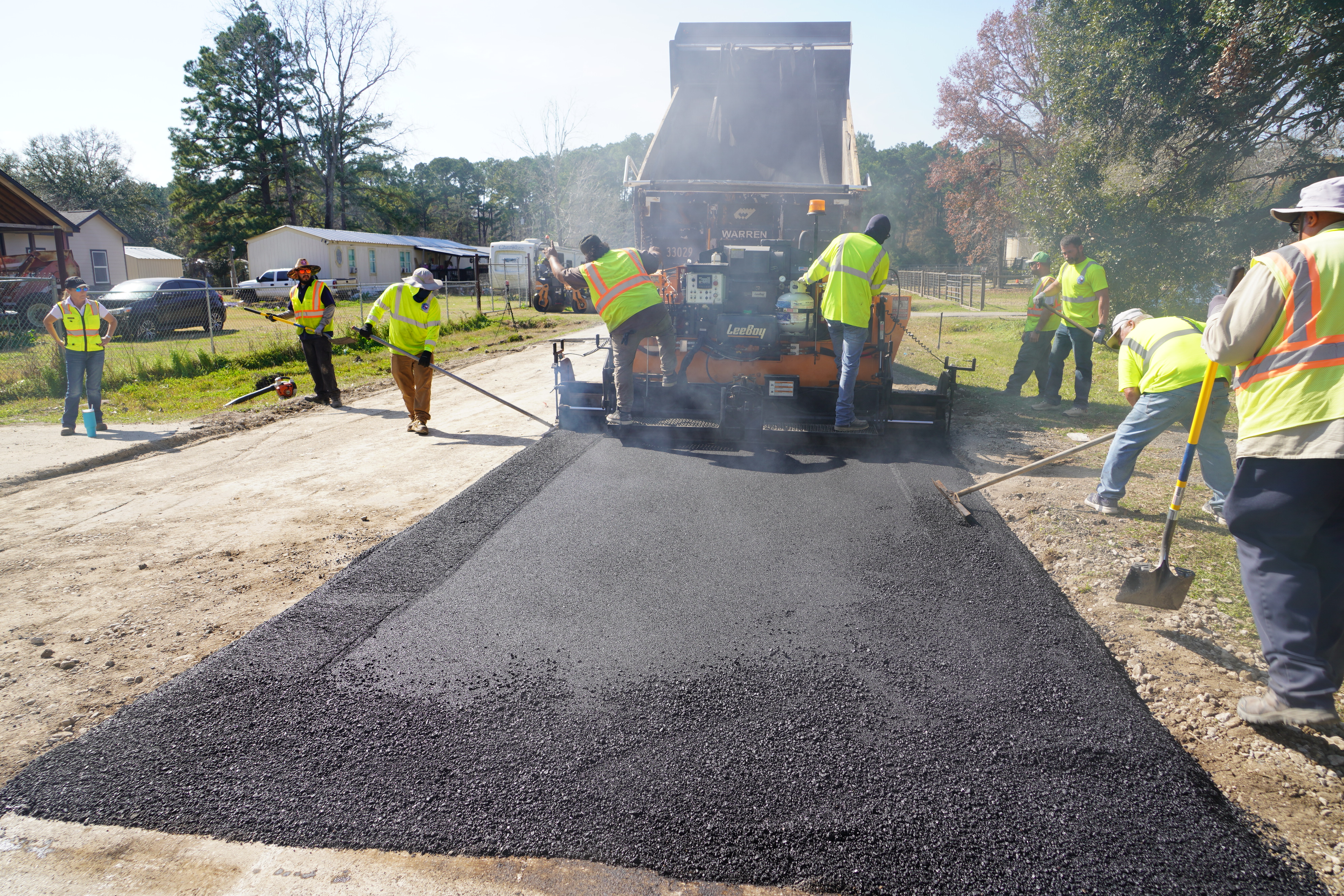
For residents across Harris County, where road wear and potholes can disrupt daily commutes and impact vehicle safety, a new pilot project in Harris County Precinct 3 is testing a different approach—one that could reshape how local streets are built and maintained.
The Office of Precinct 3 Commissioner Tom Ramsey has launched an innovative road repair method using recycled tires as part of the roadway foundation. The effort is designed not only to extend the lifespan of neighborhood streets but also to reduce long-term maintenance costs and improve sustainability across one of the largest precincts in Texas.
The project addresses a familiar concern for homeowners, commuters, and taxpayers alike: how to build roads that last longer while making smarter use of public funds.
How the Recycled Tire Road System Works
The pilot program introduces a structural layer beneath asphalt that incorporates repurposed tire rings filled with gravel. These tire-based units are placed within the base layer of the road, creating a reinforced foundation that is more resistant to shifting.
The concept is rooted in a simple engineering principle: stabilize the base, and the surface lasts longer.
Traditional road failures—such as cracking and potholes—often begin below the surface, where soil movement and moisture cause instability. By using the steel-reinforced structure of tires to hold base materials in place, the system aims to reduce that movement and improve durability over time.
This method has been explored in other regions as a form of geotechnical reinforcement, particularly in areas with unstable soils. The elasticity and strength of tire materials can help distribute loads more evenly, reducing stress on the asphalt above.

A Practical Approach to Infrastructure Challenges
Commissioner Tom Ramsey, a licensed professional engineer with more than four decades of experience, framed the initiative as a practical solution to ongoing infrastructure challenges.
“As a licensed professional engineer for over 40 years, my job is to solve problems in a practical way,” said Ramsey. “If we can build roads that last longer, require fewer repairs, and make use of recycled materials at the same time, that’s a win for taxpayers. I’m looking forward to seeing how this holds up and determine if it’s a viable long-term option for our area.”
The financial implications are significant. According to Precinct 3 estimates, reducing the frequency of pothole repairs could save approximately $63,000 per pothole over a 10-year period. For a region managing thousands of miles of roadway, those savings can quickly scale.
Why This Matters for Harris County Communities
Precinct 3 is responsible for maintaining Harris County’s largest unincorporated area, covering more than 6,800 miles of roadway. The precinct serves over 1.2 million residents across roughly 1,000 neighborhoods and 15 school districts—making road reliability a daily concern for families, students, and local businesses.
For many residents, smoother and longer-lasting roads translate into fewer disruptions, reduced vehicle wear and tear, and improved safety on neighborhood streets.
At the same time, fewer repair cycles allow road crews to shift focus toward broader infrastructure improvements rather than repeated fixes in the same locations.
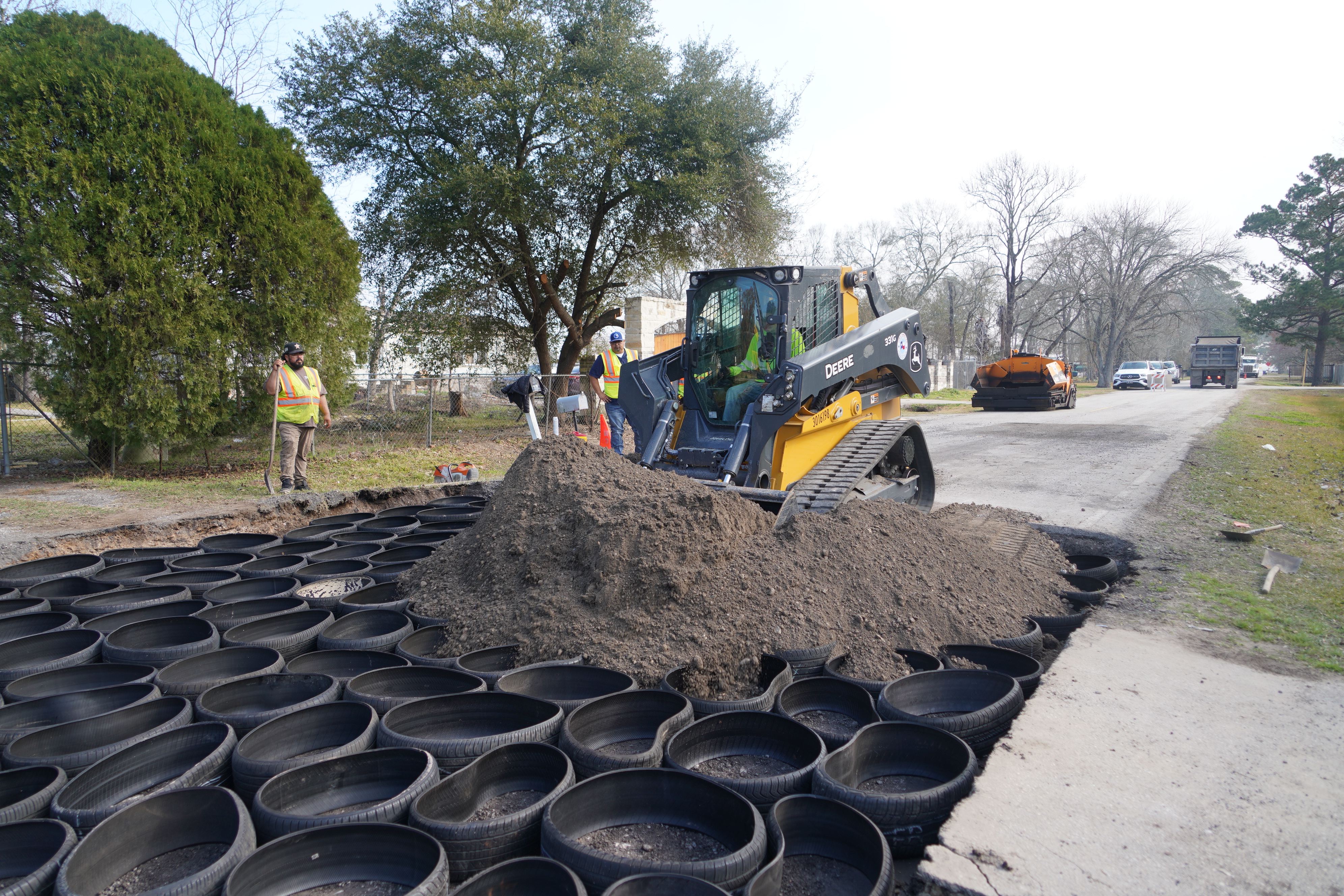
| Road and Bridge crews utilize an innovative road repair method using recycled tires as part of the roadway foundation in Harris County Precinct 3. (Source: HCP3) |
Environmental Benefits: Giving Tires a Second Life
Beyond cost and durability, the pilot project also taps into a growing focus on sustainable infrastructure—particularly when it comes to managing used tires, which remain a persistent environmental challenge across the United States.
According to data from the U.S. Environmental Protection Agency (EPA) and the U.S. Tire Manufacturers Association, the United States generates approximately 290 million scrap tires each year. While the majority are repurposed for uses such as rubberized asphalt, construction materials, or tire-derived fuel, a portion still requires long-term management. Improperly managed tire stockpiles can pose environmental and public health risks, including fire hazards and mosquito breeding grounds.
By incorporating recycled tires directly into road base construction, Harris County Precinct 3 is exploring a practical, local solution that keeps materials in use longer while reducing waste. Even small shifts in materials and methods can create meaningful environmental impact at scale.
What Happens Next
The pilot program is currently being evaluated by Precinct 3’s Road and Bridge team, who will monitor how the reinforced road sections perform over time under real traffic conditions and weather exposure.
Key factors under review include:
- Resistance to cracking and pothole formation
- Longevity compared to traditional road bases
- Maintenance frequency and cost savings
If the pilot proves successful, this approach could represent a step toward more sustainable road construction practices—where everyday infrastructure not only serves residents more reliably but also reduces the long-term environmental footprint of growth across Harris County.
A Broader Shift in Local Infrastructure Thinking
As communities across Texas continue to grow, the demand for resilient, cost-effective infrastructure solutions is increasing. Projects like this reflect a shift toward innovation at the local level—where engineering, environmental responsibility, and fiscal management intersect.
For Harris County residents, the outcome of this pilot could shape not just how roads are repaired, but how future infrastructure investments are prioritized.
And for a precinct already managing thousands of miles of roadway and dozens of public spaces, even incremental improvements can have a wide-reaching impact.
Residents can expect updates as testing continues and results become available.
Stay connected with My Neighborhood News for ongoing coverage of infrastructure improvements and community developments across Harris County.

 Tiffany Krenek has been on the My Neighborhood News team since August 2021. She is passionate about curating and sharing content that enriches the lives of our readers in a personal, meaningful way. A loving mother and wife, Tiffany and her family live in the West Houston/Cypress region.