







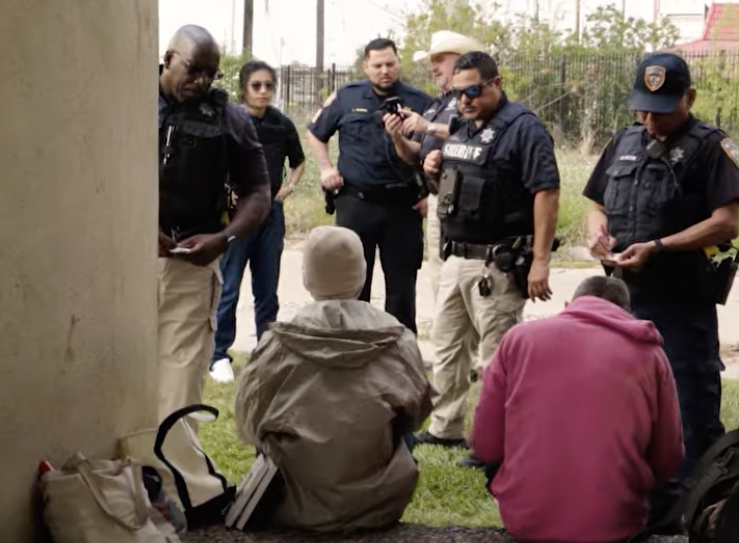
Harris County Precinct 3 Task Force Targets Homelessness and Crime Along FM 1960 Corridor
As concerns over crime, homelessness, and public safety continue to grow along the FM 1960 corridor, Harris County Precinct 3 officials say a recent coordinated operation is showing what can happen when residents, law enforcement, healthcare providers, and community organizations work together toward a common goal.
Between March 28 and April 2, 2026, a multi-agency task force launched at the request of Harris County Precinct 3 Commissioner Tom Ramsey worked across portions of the FM 1960 corridor in response to ongoing complaints from residents and business owners about criminal activity, encampments, and safety concerns in the area.
The operation combined law enforcement enforcement efforts with outreach services aimed at connecting unhoused individuals to healthcare, shelter resources, and support programs — a balance county leaders say is increasingly necessary as homelessness expands beyond central Houston into suburban Harris County communities.
According to Harris County Precinct 3, the initiative resulted in:
- 230 homeless individuals connected to resources
- 29 felony arrests
- 32 misdemeanor arrests
- 3 illegally owned firearms seized
- 1 stolen vehicle recovered
- 198 grams of drugs seized
“This is what happens when people raise their hands and say, ‘well, I know what we can do,’” Ramsey said during the operation. “We can cooperate and collaborate.”
The effort involved the Harris County Sheriff’s Office, Harris County Constable Precinct 5, Houston Police Department, METRO Police Department and CARE units, Harris County Public Health, Harris Health’s Mobile Health Unit, Avenue 360, and the Coalition for the Homeless, among other partners.
Local hospitals and businesses also supported the operation through meal sponsorships, including Chick-fil-A’s Walters and Cutten locations, HCA Houston Healthcare Northwest, and Houston Methodist Willowbrook Hospital.
FM 1960 Reflects a Growing Regional Challenge
The operation comes months after increasing public attention surrounding homelessness along FM 1960 and Louetta Road, where tents, RVs, and encampments have become more visible in recent years.
A December 2025 Hoodline report, “Tents on FM 1960, Houston’s Homeless Crisis Crashes the Suburbs,” documented growing concerns from residents and business owners across north Harris County as encampments expanded farther into suburban areas. The report noted that unincorporated Harris County has become increasingly vulnerable as homelessness spreads outward from Houston’s urban core amid shrinking shelter capacity across the region.
The Hoodline article cited research from Rice University’s Kinder Institute showing the Houston area’s temporary shelter bed supply had dropped to its lowest point in more than two decades, even as the number of unsheltered individuals continued to rise. The report also highlighted concerns from business owners who said recurring encampments near shopping centers were affecting customers and creating ongoing public safety concerns.
Ramsey acknowledged those broader pressures during the recent task force effort.
“There’s more people living in unincorporated Harris County than live in the City of Houston,” Ramsey said. “For so long, it’s been ignored. And I think at this point, with the focus with the task force, with a group of people that can show if we do patrol, and if we deal with the crime, things will improve.”
Balancing Enforcement With Outreach
The FM 1960 operation reflects a growing strategy among local governments across the Houston region: combining enforcement actions with direct outreach and healthcare access rather than relying solely on encampment cleanups.
County officials emphasized that the recent initiative was designed not only to address criminal activity but also to connect vulnerable individuals with services that could help stabilize their situations long-term.
Healthcare and outreach organizations participating in the operation provided medical support, resource navigation, and referrals to shelter and recovery services. Community advocates have increasingly argued that long-term solutions will require expanded mental health treatment, affordable housing options, addiction recovery resources, and additional shelter capacity throughout Harris County.
The Hoodline report similarly noted that nonprofit organizations and housing advocates have warned that without additional long-term housing and shelter investments, encampments cleared from one location often reappear nearby.
That reality has become especially visible along major suburban commercial corridors like FM 1960, where rapid population growth, large stretches of unincorporated land, and limited local government infrastructure create unique challenges for public safety agencies and outreach providers alike.
Why This Matters to Residents and Businesses
For many residents living near FM 1960, the issue has become deeply personal.
Families commuting through the area daily have increasingly voiced concerns about public safety, while business owners have reported disruptions tied to recurring encampments and criminal activity. At the same time, community organizations continue pushing for compassionate solutions that recognize the human realities behind homelessness and addiction.
The recent task force effort signals that county leaders are attempting to respond to both concerns simultaneously — improving safety while also expanding access to support services.
For homeowners, businesses, and residents throughout north Harris County, the operation also represents a broader shift in how suburban communities are adapting to challenges once viewed primarily as urban issues.
As Houston-area leaders continue debating long-term housing strategies, shelter expansion, and regional homelessness response plans, corridors like FM 1960 are increasingly becoming central to those conversations.
What Happens Next
County officials have not announced whether the FM 1960 task force operation will become a recurring initiative, but leaders indicated the recent collaboration could serve as a model for future efforts in unincorporated Harris County.
The broader regional conversation surrounding homelessness is also expected to continue throughout 2026 as local governments, nonprofits, healthcare providers, and law enforcement agencies work to address rising demand for services and limited shelter capacity across the Houston area.
For now, Precinct 3 leaders say the operation demonstrates what can happen when residents speak up and agencies coordinate resources around a shared goal of improving community safety and quality of life.
Stay tuned to My Neighborhood News for continuing updates on public safety, development, and community initiatives across Harris County and the Greater Houston area.

 Tiffany Krenek has been on the My Neighborhood News team since August 2021. She is passionate about curating and sharing content that enriches the lives of our readers in a personal, meaningful way. A loving mother and wife, Tiffany and her family live in the West Houston/Cypress region.