







Harris County Moves $3.1 Billion FY2027 Budget Forward as Higher Tax Rates Head to Sept. 17 Final Vote
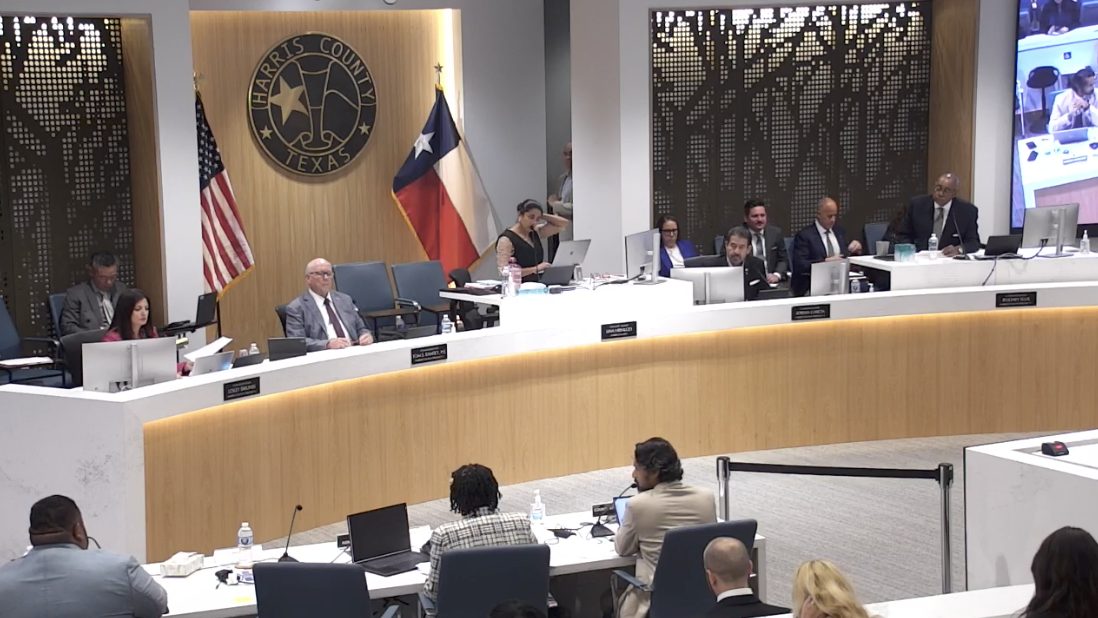
For Harris County residents trying to understand what happened during the roughly five-hour September 8 budget meeting, the simplest answer is this: Commissioners Court moved a significantly larger FY2027 spending plan forward, placed higher proposed property tax rates on the path to a public hearing and added funding for a number of community programs — but the budget and tax rates are not final yet.
That final decision is scheduled for Thursday, September 17 at 9 a.m., when Commissioners Court is expected to hold the required public hearing and consider adoption of the FY2027 Harris County budget and 2026 property tax rates. The meeting will be held at 1001 Preston Street, first floor, in downtown Houston. The county's FY27 budget calendar identifies September 17 as the public hearing and adoption date for the tax rates and budget.
For homeowners, taxpayers and families across Harris County, the debate is about more than a percentage on a tax-rate table. It is about how quickly county spending is growing, how much of that growth is tied to rising costs and previously approved commitments, which local services residents want maintained, and how much taxpayers should be asked to support in a county approaching 5 million people.
Harris County General Fund spending would rise by roughly $326 million
The September 8 version of Harris County's proposed FY2027 General Fund appropriations totals approximately $3.095 billion. The same budget document shows FY2026 adopted departmental appropriations of approximately $2.769 billion.
That is an increase of approximately $326 million, or 11.8%, when comparing departmental General Fund appropriations year over year.
Harris County Precinct 3 Commissioner Tom Ramsey focused on that comparison near the end of the meeting.
“We did a budget increase, spending increase today with the votes of 325 million. That's 12% increase.”
There is, however, another official percentage residents may encounter in Harris County's published tax documents.
Under the county's required Texas Tax Code budget disclosure, Harris County lists an FY2026 budget of $3.114 billion and an FY2027 budget of approximately $3.351 billion, an increase of $236.9 million, or 7.6%. The apparent discrepancy comes from the different accounting bases being compared: the budget book's departmental appropriation table lists $2.769 billion in FY26 departmental spending plus approximately $345 million in working capital, while the statutory disclosure uses the larger $3.114 billion FY26 figure.
In other words, both percentages appear in official county materials, but they answer somewhat different questions. Residents evaluating Harris County's FY2027 budget should understand which comparison is being used rather than treating 7.6% and roughly 12% as competing descriptions of the exact same calculation.
Why the FY2027 budget is growing
County budget officials have described FY2027 as an unusually difficult year, pointing to rising healthcare expenses, law enforcement compensation, indigent defense, jail costs, state mandates and declining federal support.
Healthcare is one of the largest pressures. Harris County's contribution toward employee healthcare is projected to increase by roughly $100 million in FY2027, with the cost per employee rising from $20,228 to $25,342 — about a 25% increase. The revised September budget removed previously contemplated increases to employee premiums and deductibles, meaning the county would absorb more of that cost.
The budget also reflects the second year of law enforcement pay parity and the first full year of implementation of the county's pay-equity study. It includes no recommended layoffs or reduction in force and seeks to maintain priority county services at their current level.
Public safety and criminal justice remain major cost centers. The proposed Harris County Sheriff’s Office detention budget rises from approximately $324.3 million in FY2026 to $353.1 million in FY2027, according to the department-level budget tables. At the same time, the county plans to reduce reliance on outsourced jail beds by bringing more inmates back into county facilities, an effort officials project could produce net savings after staffing costs.
Indigent defense costs have also climbed sharply. The county reports spending $142 million in FY2024 and $171 million in FY2025, with approximately $184 million projected in FY2026 for court-appointed attorneys and the Public Defender's Office. FY2027 includes an additional $15 million investment in the Public Defender's Office as Harris County continues a multi-year effort to increase the percentage of cases handled there.

A proposed Harris County tax rate higher than last year
Commissioners Court voted to place a maximum Harris County tax rate of $0.41750 per $100 of taxable value before the public at the September 17 hearing. That amount consists of $0.36396 for maintenance and operations and $0.05354 for debt service. The 2025 adopted Harris County rate was $0.38096.
The Court may ultimately adopt that rate or a lower one.
During the September 8 meeting, Ramsey proposed keeping the Harris County rate at the previous year's $0.38096. Budget officials told the Court that doing so would require roughly $243.6 million less revenue than the higher proposal. That alternative did not prevail.
County Judge Lina Hidalgo, while expressing support for many of the community programs being discussed, raised her own concerns about spending decisions made by the Court in prior years.
“I think that the fair thing to do, the right thing to do because we have been irresponsible with our spending, we cannot ask the taxpayers for a tax rate increase.”
Ultimately, Commissioners Court voted to set the September 17 public hearing on a Harris County rate of up to $0.41750.
The combined county-related rate would also climb
Residents' tax bills involve more than the Harris County General Fund rate.
The county's budget documents show a proposed Flood Control District rate of $0.05266, compared with $0.04966 in 2025. Commissioners Court unanimously advanced that rate for the September 17 hearing.
The Port of Houston Authority rate under consideration is $0.00603.
Harris Health was also a substantial part of the September 8 discussion. Commissioners advanced a Harris Health tax rate of up to $0.19528, with the Court voting 4-1 to schedule that rate for consideration on September 17.
Taken together, the Office of Management and Budget presentation placed the combined proposed county, Flood Control, Port and Harris Health rate at approximately $0.67147 per $100 of taxable value.
At $0.67147, that combined rate would still be higher than every adopted combined rate listed in the county's budget comparison for 2017 through 2025. The highest adopted combined rate during that period was $0.62998 in 2017 and 2018.
Harris County's General Fund tax rate by itself, however, has been slightly higher in the recent past. The county's budget book lists rates of $0.41801 in 2017 and $0.41858 in 2018, both above the proposed $0.41750 county rate for 2026.
Harris County Precinct 1 Commissioner Rodney Ellis described the FY2027 process as particularly difficult.
“I would say this is the toughest budget that I've ever worked on.”
The county's budget book also shows how unusual the recent direction has been. After more than a decade of relatively steady rates, Harris County lowered its combined tax rate each year between 2019 and 2023, in part as rapidly rising property valuations generated additional revenue and state revenue limits took effect. The combined rate then increased in 2024 and again in 2025.
For homeowners, that distinction matters: a higher tax rate does not translate into an identical dollar increase for every household because individual taxable values, homestead exemptions, appraisal caps and other exemptions vary.
Harris County continues to provide a 20% residential homestead exemption, along with additional exemptions for qualifying senior and disabled homeowners.
Commissioners added community programs before advancing the budget
September 8 was also about what residents would receive in return for those tax dollars.
After hours of public testimony, Commissioners considered a series of service enhancements totaling roughly $14.4 million. Amendments added to the proposed FY2027 budget included additional funding for Pollution Control, the HEART public health response program, the RISE violence-prevention program, domestic violence prevention and intervention, wastewater disease monitoring, Harris County Public Library, eviction defense and rental assistance, enhanced pretrial supervision, election staffing, community safety functions and Children's Assessment Center needs.
A $107,000 Veterans Services suicide mortality review proposal did not initially advance, but commissioners later reconsidered the item and approved it unanimously.
The Court also voted to include additional future Current Level of Service funding for HEART, RISE and centralized community safety functions, effectively placing those costs into the county's future budget baseline unless a future Court changes course.
Harris County Precinct 4 Commissioner Lesley Briones framed the budget as an attempt to balance those investments against rapidly growing service demands in unincorporated Harris County.
“So we're doing the hard work of trying to find these ways we can streamline and be more efficient and meanwhile we have these competing priorities and growth.”
The county says its unincorporated population grew 8.9% between 2020 and 2025, faster than Harris County overall, increasing demand for roads, drainage, parks, public safety and other services that county government often provides in areas without municipal governments.

How this budget differs from the Harris County budgets residents have seen before
Several factors make FY2027 stand out.
The General Fund departmental appropriation increase of roughly 11.8% is considerably faster than the recent growth rate in the county's tax base. Certified taxable value rose only about 0.8% for tax year 2026, after increases of 12.4% in 2022 and 12.2% in 2023. Existing-property taxable value actually declined approximately 1%, according to the county's budget analysis.
That means Harris County cannot rely on the kind of rapid appraisal growth that helped generate additional revenue earlier in the decade.
At the same time, the county says it faces costs that are difficult to reduce quickly — healthcare, law enforcement compensation, indigent defense, jail operations, debt payments and state-mandated spending among them.
Federal pandemic-era money is also winding down. Harris County received $915.5 million through the American Rescue Plan Act, but those funds have been fully obligated, and the county is approaching federal expenditure and closeout deadlines.
That combination helps explain why this year's discussion sounded different from many recent Harris County budget debates: elected officials were not simply deciding which new programs to add. They were wrestling with how to fund a larger permanent cost structure as some temporary revenue sources disappear.
What the proposed Harris County budget could mean for residents
For residents, the implications fall on both sides of the ledger.
A higher adopted tax rate could mean higher Harris County property tax bills for many homeowners, depending on taxable value and exemptions. Renters may also feel indirect effects when property owners face higher operating costs, although the degree to which those costs are passed through varies by property and market conditions.
At the same time, the additional revenue supports services residents encounter directly: sheriff and constable operations, the jail and court system, public health, pollution monitoring, libraries, roads and drainage, domestic violence programs, eviction assistance, mental health services and disaster preparedness.
For residents in the vast unincorporated areas around Cypress, Spring, Klein, Katy, Humble, Atascocita and other parts of Harris County, Commissioners Court plays an especially significant role because the county provides infrastructure and other municipal-type services in areas without city government.
More than 2 million people live in unincorporated Harris County, according to the proposed budget.
That is what makes the September 17 vote particularly consequential. The argument is not simply higher taxes versus lower taxes. Commissioners are deciding how much government Harris County can sustainably fund, which services should be treated as priorities and how much of the cost should be carried forward into future years.
What happens next: September 17 is the meeting to watch
Commissioners Court unanimously voted September 8 to schedule a September 17, 2026 public hearing at 9 a.m. on the proposed FY2027 Harris County budget as amended. The county's budget calendar identifies that meeting as the point when Commissioners Court is scheduled to consider adoption of the FY2027 budget and 2026 tax rates.
The meeting is scheduled for 1001 Preston Street, first floor, Houston.
Residents can follow meeting information, agendas and supporting documents through the Harris County Commissioners Court agenda system. The September 8 agenda also notes that members of the public may attend meetings in person, watch Court proceedings online and submit written comments to Commissioners Court. Instructions for speaking can vary by meeting, so residents should review the September 17 public notice and agenda when posted.
For homeowners wondering what Harris County property taxes could look like next year, residents concerned about county spending, or families who rely on public health, public safety, flood control, libraries, mental health and other county services, September 17 is when the numbers under debate become decisions.
Until then, the rates discussed September 8 remain proposed maximum rates — not final adopted tax rates.
Stay tuned to My Neighborhood News for updates on the September 17 Harris County Commissioners Court budget and property tax vote and what the final decisions could mean for local taxpayers and neighborhoods across Harris County.

 Tiffany Krenek has been on the My Neighborhood News team since August 2021. She is passionate about curating and sharing content that enriches the lives of our readers in a personal, meaningful way. A loving mother and wife, Tiffany and her family live in the West Houston/Cypress region.
Local business spotlight
Grow your business
where trust already lives.
Let’s introduce your business to the neighbors nearby.
Have a local favorite?
Let’s make an introduction.
Leave your email and our team will reach out with ways to promote your business.
Give a local favorite a little love.
Know a business your neighbors should discover? Tell us who they are.
We couldn’t send that just yet. Please try again.