







Fulshear Adopts FY2027 Budget, Lowers Final Property Tax Rate to $0.1905 as Parks Debt and Growth Costs Rise
Fulshear homeowners now have a clearer picture of what the city’s next budget year will mean for their wallets — and the final number is slightly lower than what residents were initially asked to consider.
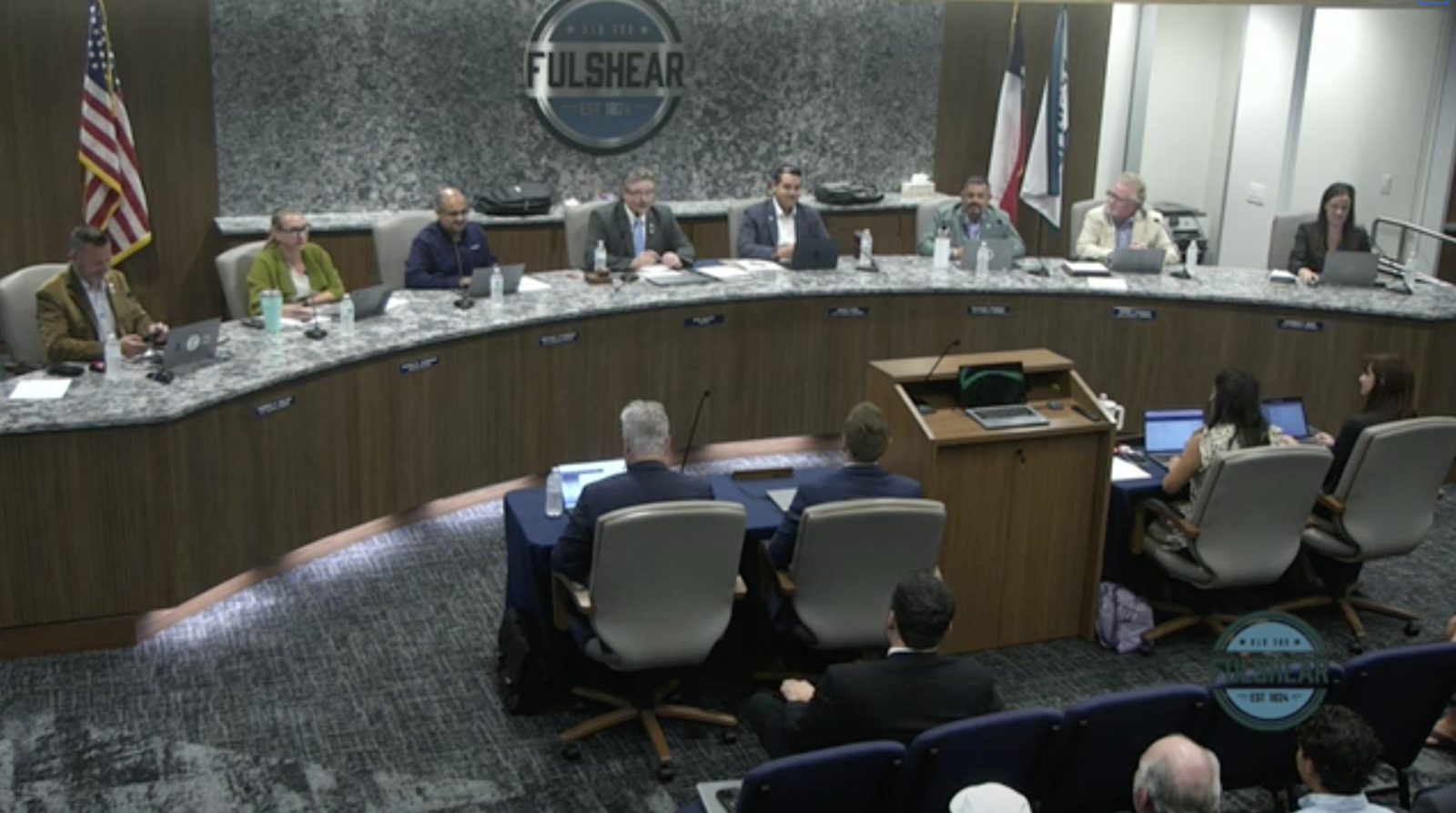
After months of budget discussions and public hearings, Fulshear City Council voted Sept. 1 to adopt the Fiscal Year 2027 budget around a property tax rate of $0.1905 per $100 of taxable value, below the $0.193100 rate the city had proposed in August.
The final rate is still an increase from Fulshear’s current $0.167903 rate, but Council’s decision trimmed the increase while maintaining funding for voter-approved debt, city operations and selected investments intended to keep pace with a community that continues to grow even as some of the revenue generated by new development begins to moderate.
For residents, that distinction matters. The conversation is not simply about a higher tax rate. It is also about how Fulshear pays for parks voters already authorized, keeps police and public works services aligned with population growth, maintains infrastructure and prepares for the next stage of the city’s development.
What Fulshear’s New $0.1905 Tax Rate Could Mean for Homeowners
The adopted $0.1905 per $100 valuation rate is approximately 13.5% higher than the current $0.167903 rate.
That does not mean every Fulshear homeowner’s City property tax bill will rise by 13.5%. A homeowner’s actual bill depends on taxable value, homestead and other exemptions, and any changes in the property’s value from one year to the next.
Using the same taxable value for comparison, the difference between the current and adopted rates works out to about $22.60 more per year for every $100,000 of taxable value, or roughly $1.88 per month.
The City’s public-hearing materials used an average 2026 homestead taxable value of $527,823. At the newly adopted $0.1905 rate, the City portion of the tax bill on that value would be approximately $1,005.50. At the current $0.167903 rate applied to the same taxable value, the bill would be about $886.23 — a difference of approximately $119.27 per year, or $9.94 per month.
Because the average taxable homestead value also increased from the prior year, a comparison with the City’s 2025 average tax bill produces a somewhat larger difference. The City reported an average 2025 homestead taxable value of about $518,800 and a City tax of $871.22.
The final rate also came in below what residents saw in the formal tax-increase notice. At the originally proposed $0.193100 rate, the City estimated a $1,019.23 tax bill on the $527,823 average taxable homestead. At $0.1905, that same example falls by roughly $13.73 annually.
An earlier City taxpayer-impact example used a different measure — a median-valued homestead — with a projected FY2027 taxable value of $492,498. The original $0.1931 proposal would have generated an estimated $951.01 City tax bill. At the final $0.1905 rate, the same taxable value would result in approximately $938.21.
Those examples involve only the City of Fulshear portion of a property tax bill. School districts, Fort Bend County, municipal utility districts and other taxing entities establish their own rates separately.
Why Is Fulshear Raising Its Property Tax Rate?
Much of the discussion leading to the final FY2027 budget centered on a reality familiar to fast-growing communities: Fulshear still has more residents, roads, parks, infrastructure and service demands to support, but some of the rapid growth in new taxable property and development fees that helped finance earlier years is beginning to cool.
City budget materials show new taxable property declining from approximately $375 million to $180.2 million.
Development-related revenues are also projected to soften. FY2027 license and permit revenue was projected at approximately $2.11 million, about $548,670 less than the FY2026 projection. Service revenue — including plan review, plat review and subdivision infrastructure fees — was projected at about $871,000, a decline of approximately $321,690.
Transfers into the General Fund were also projected to decrease by about $588,666.
Taken together, those changes illustrate an important shift for Fulshear. Growth has not stopped, but the City cannot necessarily expect the same level of building-permit, inspection and development-related revenue that accompanied earlier stages of rapid construction.
That leaves City Council weighing how to maintain services for a larger population without assuming that development revenue will continue climbing indefinitely.
Voter-Approved Parks Bonds Are a Major Part of the Tax Increase
Another major driver is debt Fulshear voters themselves authorized in May 2025.
Voters approved two General Obligation bond propositions totaling $13.5 million for parks and parkland.
Proposition A authorized $10.75 million for Primrose Park Phase 3, while Proposition B authorized $2.75 million to acquire land for future parks and green space.
Once bonds are issued, the City is obligated to make the required principal and interest payments. In other words, the debt-service portion is not the same as a discretionary new program that Council can simply remove from the budget after the bonds have been sold.
Budget materials indicate approximately $828,933 in FY2027 principal and interest is associated with those voter-approved General Obligation bond obligations.
The City’s financial presentation also showed that the debt-service impact of the parks bonds came in below what had been estimated for voters in 2025. At the time of the election, the combined estimated maximum tax-rate impact was approximately $0.018672 per $100 valuation, or about $74.69 per year on $400,000 of taxable value.
The FY2027 debt-service increase associated with the overall debt picture was approximately $0.01691 per $100 — about $67.64 annually on $400,000 — with City officials attributing part of the difference to a lower-than-projected all-in interest cost on the bonds.
For homeowners trying to understand why Fulshear property taxes are rising, that history is important: part of the increase arriving in FY2027 reflects a park investment voters approved more than a year earlier.

Primrose Park Phase 3 and New Parkland Continue Moving Forward
Those bond dollars are already shaping Fulshear’s future park system.
Design work for Primrose Park Phase 3 continues. The project had previously been expected to go to bid in spring 2026, but as design progressed, the anticipated bid schedule shifted to fall 2026.
The City has also acted on the parkland-acquisition portion of the bond program.
In 2026, Fulshear purchased approximately 4.14 acres from Living Word Lutheran Church – Katy for $1.5 million. The property sits adjacent to Primrose Park along Dixon Road and is intended to expand the park site and support future public recreation opportunities.
For families who supported the 2025 bond, FY2027 marks the point when the financial side of that decision becomes more visible on the tax roll while the physical projects continue moving from planning toward construction.
A Second Voter Decision Is Reshaping the General Fund
The 2025 parks bond is not the only recent election influencing Fulshear’s new budget.
In May 2026, voters approved reallocating 0.25% of the City’s existing local sales tax from the Type A Economic Development Corporation to Fulshear’s General Fund.
The measure did not increase the overall local sales tax rate. Instead, it changed where a portion of the money already being collected goes.
FY2027 General Fund sales and use tax revenue is projected at approximately $6.2 million, including roughly $1.2 million associated with the voter-approved reallocation.
City budget materials indicated that much of that additional ongoing funding is intended to help support public safety, including approximately $800,000 for a Police Department market adjustment, with roughly another $400,000 connected to parks, landscaping, drainage and other General Fund priorities.
Together, the 2025 parks bond and 2026 sales-tax election demonstrate how two separate voter decisions are now showing up on opposite sides of Fulshear’s financial ledger: one created debt obligations for parks, while the other redirected existing sales-tax revenue to help support everyday municipal services.
Police, Public Works and Parks Remain Major FY2027 Priorities
For residents wondering where Fulshear’s budget dollars go beyond debt payments, the FY2027 plan places substantial funding into the services people encounter most directly.
The proposed Police Department budget was approximately $6.71 million, supporting personnel, equipment, technology and vehicle replacement. The plan includes three new police vehicles and associated outfitting.
Public Works was budgeted at approximately $2.45 million, including funding for three additional employees as Fulshear expands the workforce responsible for maintaining infrastructure, parks and other public assets.
Facilities and Parks was proposed at roughly $1.19 million, covering needs such as park supplies, landscaping, maintenance and improvements.
The budget also incorporates significant capital spending. The General Fund plan included approximately $3.23 million in transfers for capital projects, supporting transportation improvements, an operations facility, technology infrastructure and implementation of the City’s Parks Master Plan.
Broader capital planning for FY2027 includes work tied to drainage, streets, parks, technology and transportation — areas that become increasingly important as development spreads across Fulshear and more residents rely on the same municipal network every day.

Council Weighed Projects Against the Tax Rate
One of the more consequential parts of the Sept. 1 discussion was Council’s effort to connect additional spending directly to the tax rate rather than treating the proposed $0.1931 rate as a predetermined outcome.
City staff presented Council with a menu of possible strategic projects and a model showing how adding or removing projects would change the tax rate.
At the original proposed rate, up to approximately $723,000 was available for Council-directed priorities — $400,000 already contemplated for strategic projects plus roughly $323,000 in additional capacity.
Potential projects presented for consideration included Walker Lane drainage work, improvements involving the Penn Lane and Lea area, Dixon Road design, Eagle Landing Park shade structures, a Primrose Park fieldhouse design, a possible parklet, building repairs, utility backup equipment and other drainage, street and park needs.
Not every item on that list was automatically funded. Council’s task was to decide which needs were important enough to justify additional tax-rate capacity.
That exercise ultimately contributed to the decision to settle at $0.1905 rather than $0.1931.
Final Budget and Tax Rate Pass 5-2
The final decisions also showed how Council members’ positions evolved during the budget process.
The earlier public-hearing notice for the $0.193100 proposal listed Mayor Pro Tem Sarah Johnson and Councilmembers Abhijeet Utturkar, Richard Russell, Randy Connor, Camron Miller and Kimberly Bow as supporting the proposal when the maximum rate was set for public consideration, with Councilmember Omar Pena opposed. Mayor Don McCoy was listed as present and not voting.
By Sept. 1, after Council worked through the budget and reduced the final rate, the alignment had changed.
The FY2027 budget tied to the $0.1905 rate passed 5-2, with Johnson, Pena, Russell, Connor and Bow voting in favor and Miller and Utturkar voting against.
Council subsequently voted by the same 5-2 margin to ratify the property-tax increase reflected in the budget.
The final tax-rate motion also passed 5-2, adopting $0.1905 per $100 of taxable value. During the required motion, the rate was described as approximately 19.4% above Fulshear’s no-new-revenue rate of $0.159522.
That 19.4% figure is an important point of clarification: it compares the adopted rate with the statutory no-new-revenue rate, not with Fulshear’s current $0.167903 tax rate. Compared directly with the current adopted rate, $0.1905 represents an increase of approximately 13.5%.
The final rate also remains below the City’s $0.204901 voter-approval rate, the statutory threshold above which voter approval would generally be required.
Public Hearings Draw No Speakers, While One Resident Supports Increase Earlier
The Sept. 1 meeting included separate public hearings on the FY2027 budget and tax rate.
According to the City’s meeting transcript, no residents stepped forward to speak during either hearing.
Earlier in the meeting, however, resident Bill Clifford addressed Council during citizen comments and expressed support for a tax increase, pointing to moderating growth in the property-tax base, rising expenses and the City’s history of reducing its tax rate in prior years.
The absence of speakers during the formal hearings does not necessarily indicate broader community agreement or opposition, but it does mean Council moved into its final deliberations without public testimony offered from the floor during those two hearings.
What Happens Next for Fulshear Residents?
Fulshear’s new fiscal year begins Oct. 1, 2026, putting the adopted budget into effect as the City begins another year of balancing rapid community growth with a maturing revenue base.
For homeowners, the most useful next step will be to look at their own taxable value and exemptions rather than relying solely on citywide examples. Multiplying taxable value by $0.1905 per $100 will provide the City of Fulshear portion of the property tax before accounting for any nuances in an individual account.
Residents should also remember that the City represents only one line on a Fort Bend County-area property tax bill.
Beyond the numbers, FY2027 is a telling point in Fulshear’s growth story. The city is no longer simply adding rooftops and collecting the revenue that comes with rapid construction. It is increasingly responsible for maintaining the parks, roads, drainage systems, public safety services, facilities and infrastructure those years of growth created.
That transition is likely to remain part of Fulshear’s budget conversation well beyond this fiscal year.
My Neighborhood News will continue following Fulshear’s FY2027 spending, property tax implementation, Primrose Park Phase 3, infrastructure projects and other decisions affecting local residents as the new budget year moves forward.

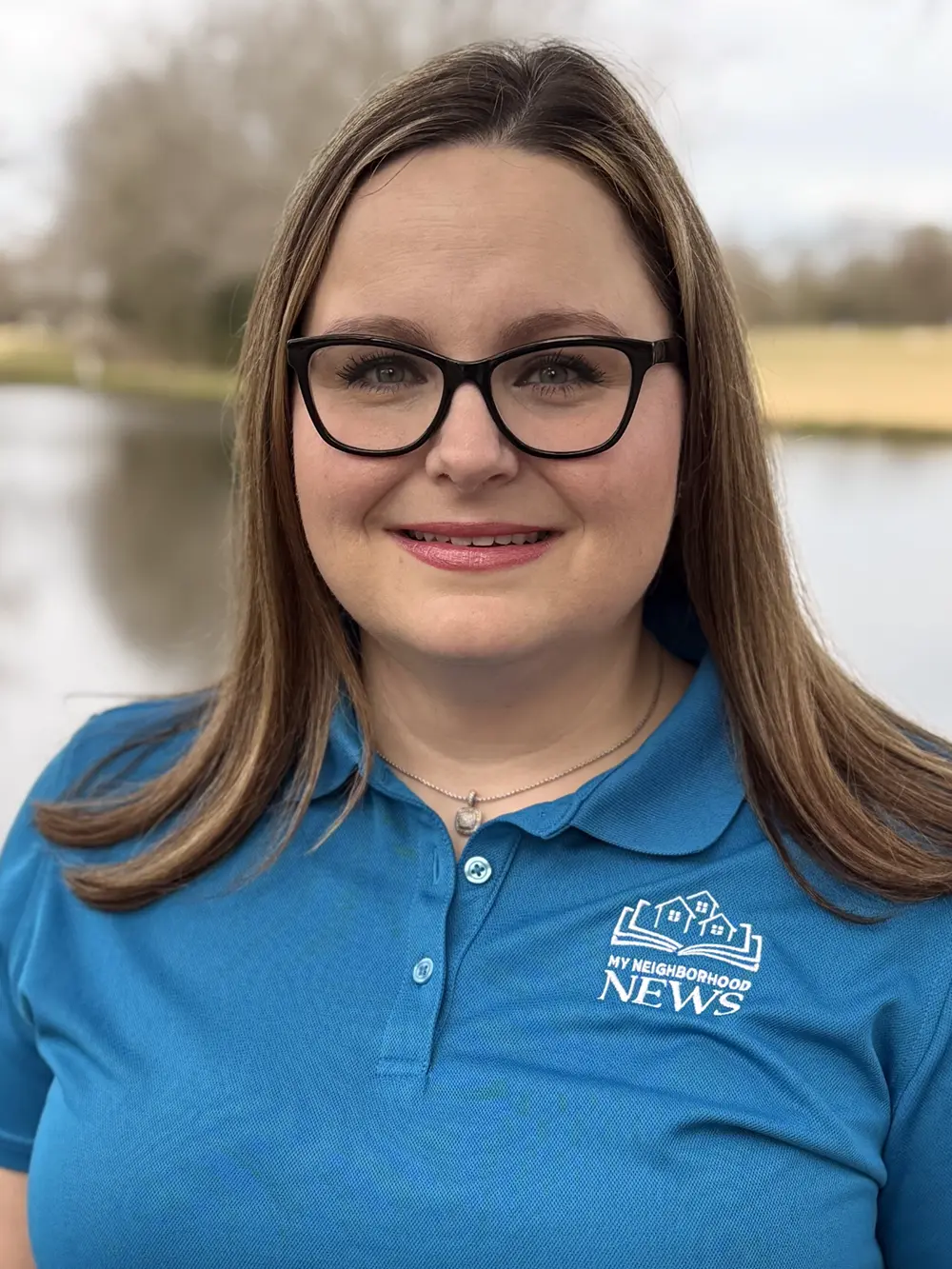 Tiffany Krenek has been on the My Neighborhood News team since August 2021. She is passionate about curating and sharing content that enriches the lives of our readers in a personal, meaningful way. A loving mother and wife, Tiffany and her family live in the West Houston/Cypress region.
Local business spotlight
Grow your business
where trust already lives.
Let’s introduce your business to the neighbors nearby.
Have a local favorite?
Let’s make an introduction.
Leave your email and our team will reach out with ways to promote your business.
Give a local favorite a little love.
Know a business your neighbors should discover? Tell us who they are.
We couldn’t send that just yet. Please try again.