







Four Cannonballs From 1836 Battle of the Alamo Discovered During Historic San Antonio Archaeological Excavation
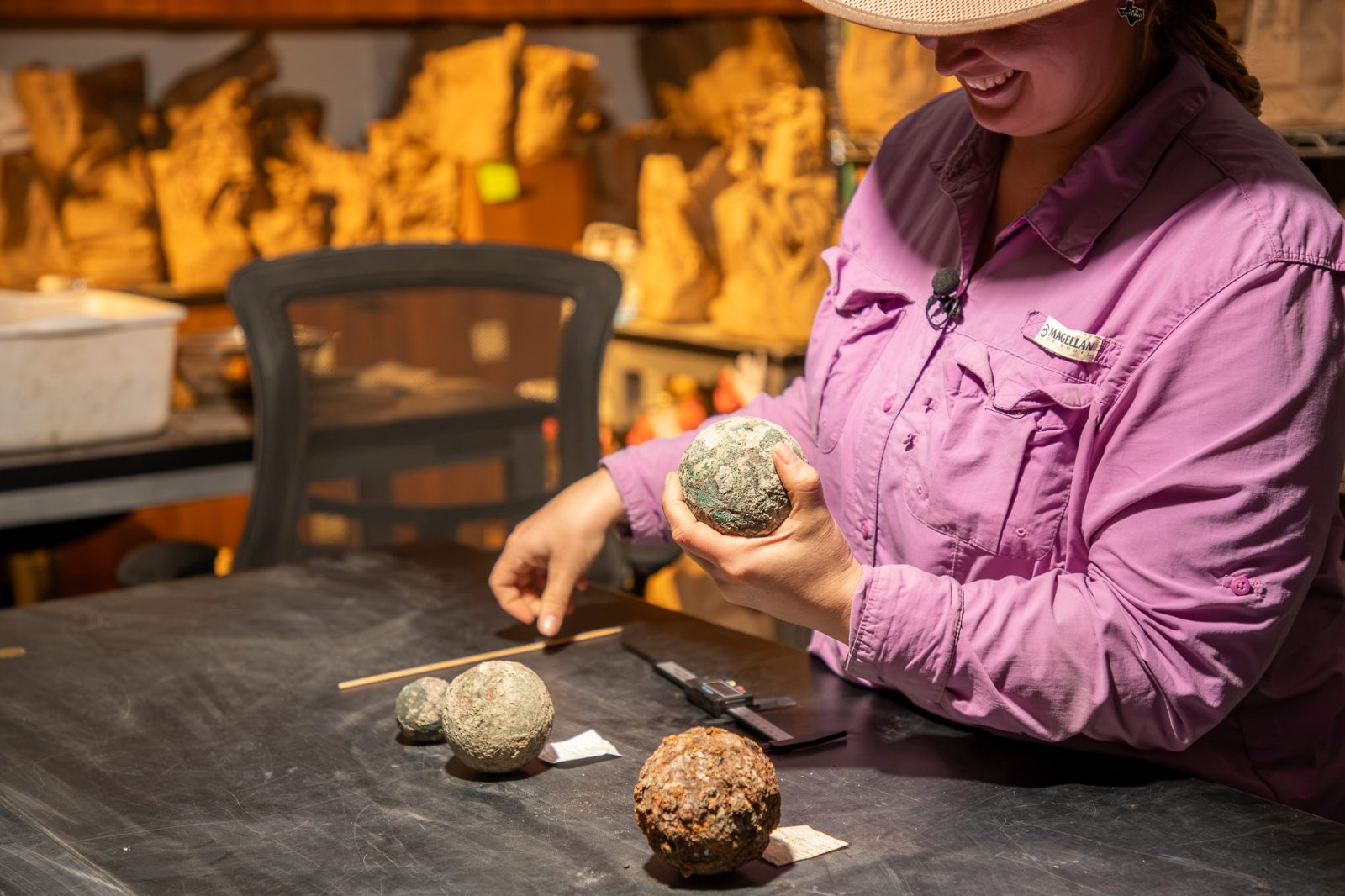
Nearly 190 years after the Battle of the Alamo, the ground surrounding one of Texas' most recognizable historic landmarks is still revealing pieces of the past. Archaeologists working around the Alamo Church in downtown San Antonio have uncovered four cannonballs believed to have been fired during the 1836 siege, a discovery that offers new clues about the battle and the people who experienced it.
The rare findings are among hundreds of thousands of artifacts recovered during an extensive archaeological excavation that began in March 2025 and concluded in October 2026, coinciding with Texas Archaeology Month.
For San Antonio residents and Texans who grew up learning about the Alamo, the discoveries are a reminder that the history preserved within the landmark's walls extends well beneath the ground. Nearly two centuries later, researchers are still piecing together what happened during one of the most consequential events in Texas history.
Four Historic Cannonballs Found Near Alamo Church
The four solid-shot cannonballs were discovered outside the northeast corner of the Alamo Church, approximately two-and-a-half to three feet below the surface.
According to the Alamo's archaeology team, the projectiles were found at roughly the same depth. Their locations, the surrounding soil layers, and the types of artillery used during the battle have led historians to connect all four to the 13-day Siege and Battle of the Alamo in 1836.
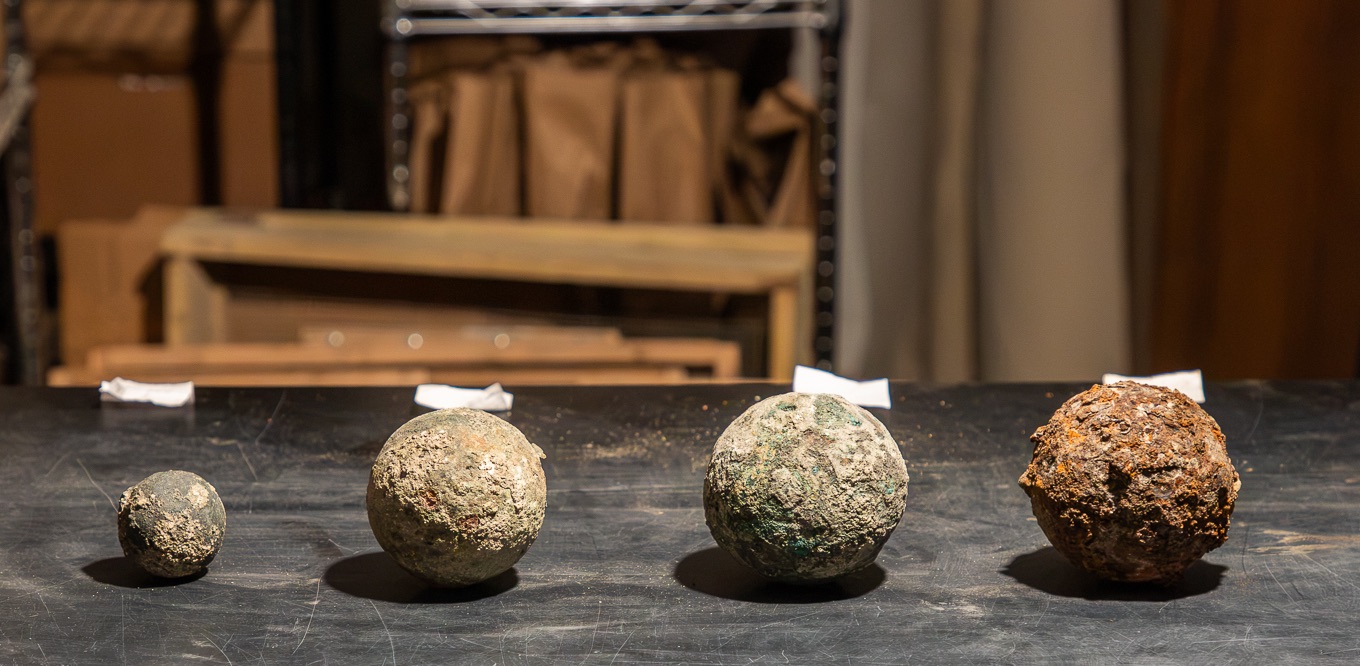
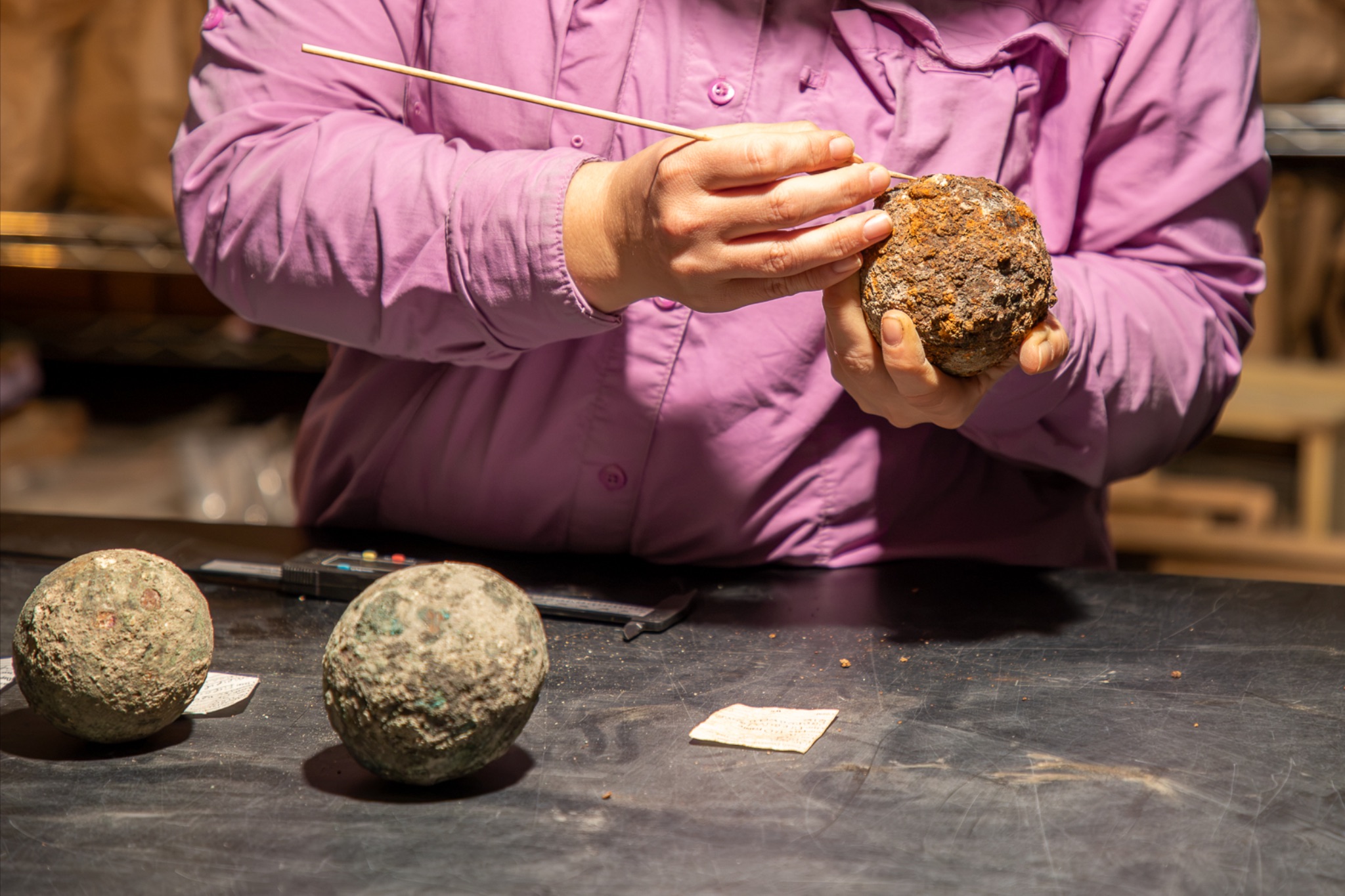
The first cannonball was discovered on March 5, 2026, just one day before the 190th anniversary of the battle. Made of bronze, it measures 2.97 inches in diameter and fits a 4-pounder cannon.
A second cannonball, discovered in June 2026, is made of iron and measures 3.28 inches in diameter, corresponding to a 6-pounder cannon.
The third projectile is considerably smaller, measuring just 1.8 inches in diameter. Made of bronze, it fits a 1-pounder cannon.
The fourth cannonball is also bronze, measuring 3.26 inches in diameter and fitting a 6-pounder cannon.
Together, the discoveries offer archaeologists additional physical evidence to study alongside historical battle maps, military records, and other artifacts recovered from the site.
For Dr. Tiffany Lindley, the Alamo's Director of Archaeology, the significance goes beyond the historical information the cannonballs may provide.
"Having a piece of history and holding it in your hand, when the last person who touched this possibly died during the Battle, that carries a lot of emotional weight to it," Dr. Lindley said.

Why Finding Cannonballs From the Battle of the Alamo Is So Rare
While cannonballs might seem like an expected discovery at a historic battlefield, archaeologists say finding projectiles that have remained buried for nearly two centuries is unusual.
During the 19th century, ammunition and metal were valuable resources. Following battles, soldiers frequently recovered cannonballs for reuse or melted down the metal for other purposes.
That practice makes the four newly discovered cannonballs particularly noteworthy.
Kolby Lanham, the Alamo's Historian and Director of Research, explained the rarity of the discoveries during a recent episode of Stories Bigger Than Texas: The Alamo Podcast.
"Cannonballs were picked up after battles. They were re-used. That metal was semi-precious. And you would be able to reuse these cannonballs or melt them down and use them again down the road for other things," Lanham told the Alamo Podcast. "So these weren’t just things that were just scattered along the battlefield and just left there. They were mostly picked up. So to find one is very rare."
Researchers have also examined the possible trajectories of the cannonballs and compared their locations with known artillery positions during the siege.
The evidence provides another opportunity to better understand how the battle unfolded around the Alamo Church, one of only two structures from the historic compound that remain standing today.
Were the Cannonballs Fired by Mexican or Texan Forces?
One of the questions surrounding the discoveries is which army fired the cannonballs.
Three of the projectiles are bronze, a material commonly associated with Mexican artillery during the period. The fourth is iron, which historians associate more closely with Texan forces.
However, determining who fired each cannonball is not as straightforward as identifying the metal.
The Alamo changed hands twice during the Texas Revolution, first in December 1835 and again in March 1836. Military equipment and ammunition could be captured, exchanged, and reused as control of the site shifted.
As a result, researchers cannot definitively assign the newly discovered cannonballs to one side based solely on their composition.
Lanham believes the location of the discoveries and historical artillery positions may help narrow the possibilities.
“There is a trading - unintentional, but it’s trading - between these two armies and sharing each other’s stuff. And so it’s difficult to say," Lanham said. "But my guess would be, based off the Battle maps and where the artillery positions were being set up, the northern part of the battlefield, they’re firing cannonballs at the Church. And those bronze cannonballs have a higher likelihood of being made in Mexico and being used by that army.”
Although the evidence points toward possible connections with Mexican artillery positions, historians continue to distinguish between what the artifacts suggest and what can be established with certainty.
That distinction is important in archaeological research, particularly at a site where military activity, occupation, rebuilding, and preservation have occurred over several centuries.
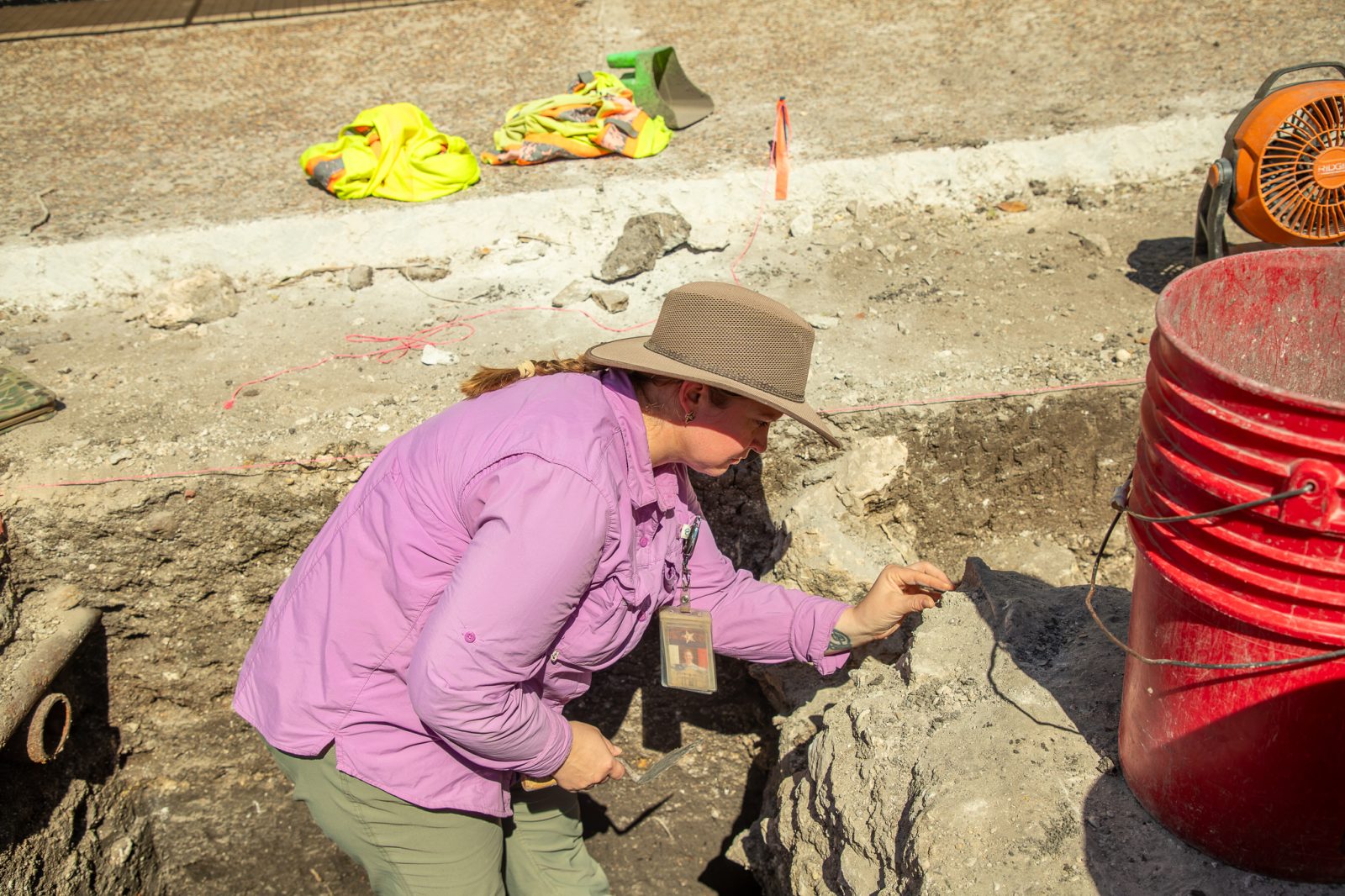
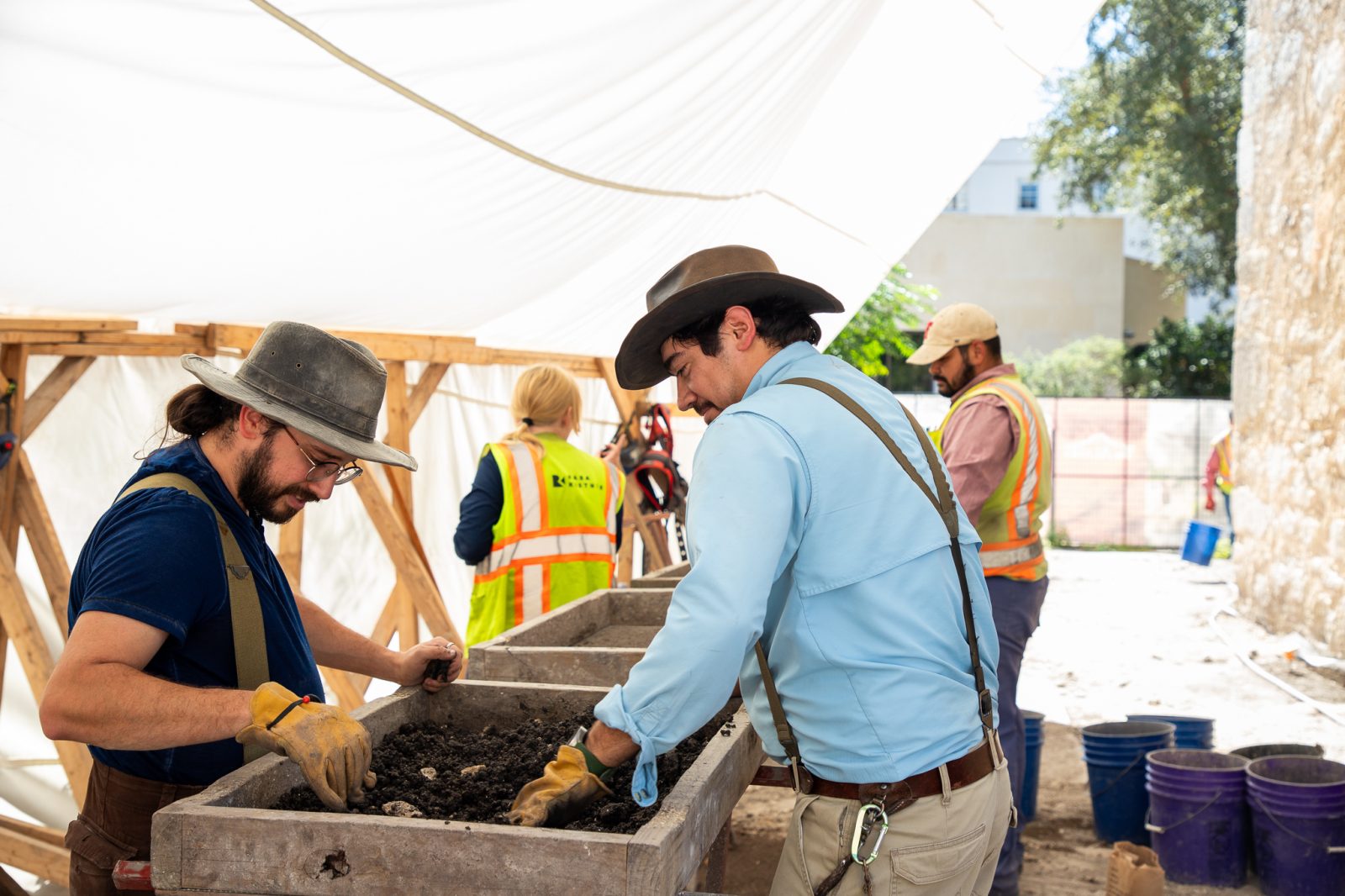
Up to 750,000 Artifacts Unearthed During 18-Month Alamo Excavation
The four cannonballs are only a small part of what archaeologists have uncovered during the landmark excavation surrounding the Alamo Church.
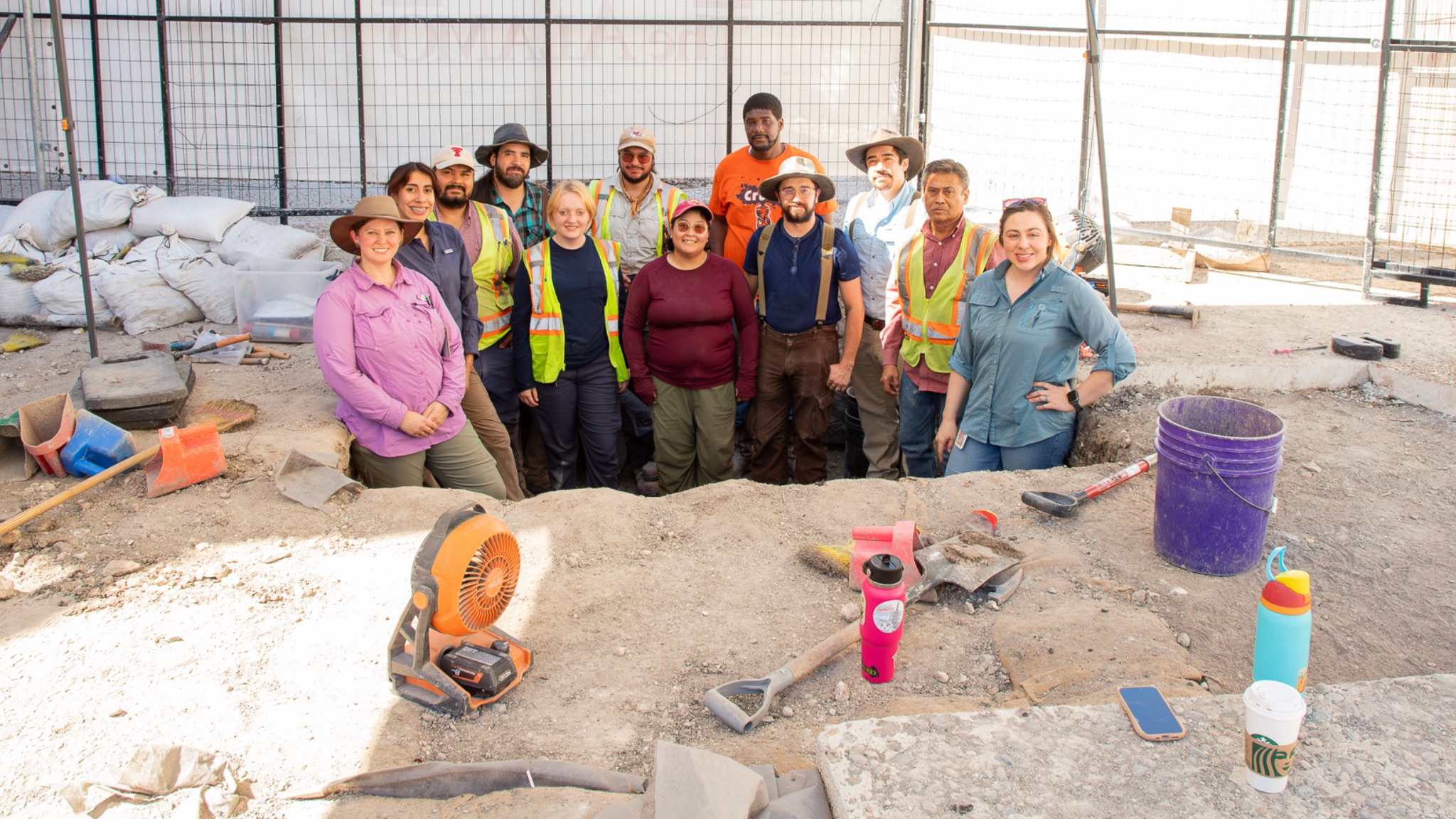
Beginning in March 2025, the project was undertaken ahead of planned preservation work at the historic structure. Archaeologists spent approximately a year and a half carefully excavating, documenting, and examining the soil around the church.
Although field excavations concluded in October 2026, the work of studying the discoveries is far from finished.
Dr. Lindley estimates that between 500,000 and 750,000 artifacts were unearthed during the project. The archaeology team is still processing the recovered materials, meaning the final artifact count and additional findings have yet to be determined.
Among the discoveries are everyday household objects, including a tea kettle, forks, spoons, and bottles.
Unlike cannonballs, which provide evidence of military activity, these domestic artifacts offer insight into daily life at the Alamo and the people who occupied the site during different periods of its history.
The Alamo's history extends well beyond the famous 1836 battle. Originally established as a Spanish mission in the 18th century, the site served religious, residential, and military purposes long before becoming one of Texas' most visited historical destinations.
For archaeologists, even an ordinary household item can help explain how people lived, worked, and interacted within the compound.
"The Battle was not just an event," Dr. Lindley said. "These were people. They were individuals. They had lives before they came to the Battle. They had families that lived after them. And remembering those individuals, that’s what important."
Her remarks reflect an important part of the excavation's purpose: preserving the stories of individuals whose lives were connected to the Alamo, including those whose names may never appear in history books.
How Alamo Trust, Inc. Helps Preserve San Antonio's Most Famous Landmark
The archaeological discoveries are part of a larger effort to preserve and interpret the Alamo's history for future generations.
That work is overseen in part by Alamo Trust, Inc. (ATI), a 501(c)(3) nonprofit organization responsible for the Alamo's daily operations and implementation of the Alamo Plan.
The organization plays a central role in caring for the historic site, supporting preservation initiatives, coordinating educational experiences, and helping visitors better understand the Alamo's more than 300 years of history.
The Alamo Plan is a broader preservation and redevelopment initiative intended to protect historic resources while improving how the site's history is presented to the public.
Archaeological investigations are particularly important when preservation or construction work is planned around historic structures. Excavations allow researchers to identify, document, and recover significant materials before the ground is disturbed.
The Alamo is also a major part of San Antonio's cultural identity and visitor economy.
According to Alamo Trust, more than 1.6 million people visit the landmark annually, making it the most visited destination in Texas based on the organization's figures.
The Alamo received designation as a United States National Historic Landmark in 1960. In 2015, it became part of the San Antonio Missions UNESCO World Heritage Site, the only UNESCO World Heritage Site in Texas.
That international recognition reflects the historical importance of San Antonio's Spanish colonial missions, their architecture, and the communities whose histories are connected to them.
For local residents, preservation efforts also help protect a landmark that has shaped San Antonio's identity for generations.
Why These Discoveries Matter to San Antonio and Texas History
The Battle of the Alamo took place following a 13-day siege that ended on March 6, 1836, when Mexican forces under General Antonio López de Santa Anna overwhelmed the defenders occupying the former mission.
The battle became one of the defining events of the Texas Revolution, and its legacy remains deeply connected to the state's history.
Yet the Alamo's archaeological record tells a much broader story than the battle alone.
The site was home to Indigenous communities, Spanish missionaries, soldiers, and civilians across different periods. Its surviving structures and buried artifacts offer evidence of those overlapping histories.
The discovery of the four cannonballs adds another piece to that record, helping researchers examine the physical battlefield rather than relying exclusively on written accounts.
For San Antonio families, students, teachers, and history enthusiasts, findings like these also create opportunities to connect classroom lessons with tangible evidence of the past.
A cannonball recovered from beneath the ground where a battle took place can make an event from nearly two centuries ago feel less distant, while also raising new questions about the people involved and the circumstances they faced.
What's Next for the Alamo Archaeological Discoveries?
Although the excavation around the Alamo Church has officially ended, archaeologists will continue processing and studying the hundreds of thousands of artifacts recovered during the project.
The findings may provide additional information about military activity, everyday life, and the changing uses of the historic site over time.
The excavation also marks an important step ahead of upcoming preservation work at the Alamo Church.
Visitors can explore information about the historic site, educational opportunities, and preservation initiatives through the Alamo's official website at theAlamo.org.
With hundreds of thousands of artifacts still being examined, the excavation's final discoveries may take time to fully understand. What is already clear is that the ground surrounding the Alamo Church continues to hold evidence of the people and events that shaped San Antonio and Texas.
Stay connected with My Neighborhood News for more updates on San Antonio history, historic preservation projects, and community news across the region.

 Tiffany Krenek has been on the My Neighborhood News team since August 2021. She is passionate about curating and sharing content that enriches the lives of our readers in a personal, meaningful way. A loving mother and wife, Tiffany and her family live in the West Houston/Cypress region.

Local business spotlight
Grow your business
where trust already lives.
Let’s introduce your business to the neighbors nearby.
Have a local favorite?
Let’s make an introduction.
Leave your email and our team will reach out with ways to promote your business.
Give a local favorite a little love.
Know a business your neighbors should discover? Tell us who they are.
We couldn’t send that just yet. Please try again.