






After the Winter Storm: Texas A&M AgriLife Extension Shares Expert Guidance on How to Care for Freeze-Damaged Plants
As an arctic blast continues to blanket Texas with extreme cold, many residents are waking up to a grim sight—gardens filled with blackened banana trees, drooping roses, and crispy palms. But before you reach for the pruning shears, experts from the Texas A&M AgriLife Extension Service have a simple message: do not act too soon.
With temperatures plunging and wind chills below zero across much of the state, many plants are suffering, even with precautionary measures taken. Yet the real damage may come later—if homeowners rush to clean up too early.
“Learn to Live with Ugly”: Why Patience is Critical After a Freeze
“There is a tendency to want to spruce things up, but if we do that too quickly, we can predispose the plants to even more freeze damage,” said Dr. Michael Arnold, director of The Gardens at Texas A&M University and professor of landscape horticulture. “My advice is to be patient and learn to live with ugly.”
According to Arnold and fellow expert Greg Grant, it’s best to resist any urge to prune or remove freeze-damaged growth until well after the last average frost date in your region—especially when forecasts still call for possible freezing temperatures in the coming weeks.
Premature pruning can:
- Remove dead plant material that is actually insulating the living parts of the plant.
- Stimulate new growth during a brief warm-up, which can then be killed by the next cold snap.
- Lead to more extensive damage, particularly for plants that are only marginally cold-hardy.

Plant-by-Plant Freeze Care: What to Know About Popular Texas Landscaping Favorites
The Texas A&M AgriLife guide “Dealing with Freeze Damage on Plants” offers detailed advice. Here’s what residents need to know about specific plant types affected by this winter’s freeze:
Crape Myrtles
Crape myrtles often survive freezes, but they should not be cut back until new growth is clearly emerging—even if the top looks dead. According to the guide, “There will be different amounts of damage on different cultivars in different microclimates. Don’t do anything until they start to sprout, then cut back to where new growth is occurring—even if it’s at the ground.” Historic freezes in Texas have caused some to regrow from the base. Be patient and wait for sprouting to guide your pruning.
Palm Trees & Sago Palms
Palms are among the most dramatic-looking casualties. Most freeze-damaged palms should not be removed right away. The guide recommends cutting off dead fronds only, then waiting—possibly months—to see if the plant will resprout. Only a few palm species like Mexican/Texas sabal and dwarf palmetto are reliably cold-hardy in Texas.
Ornamental Grasses & Perennials
For grasses such as purple fountain grass, lemon grass, and vetiver—cut them back to the crowns and wait until early summer to see what returns. Many perennials (Mexican petunia, Mexican heather) may appear dead now but could resprout later. Avoid trimming before April 1 in most of Texas.
Roses
Roses in the South have experienced varying degrees of damage. The AgriLife guide suggests waiting until it’s clear which stems are dead (brown/black) and which are still green and alive. “Cut them back with loppers or hand pruners, sprinkle a bit of lawn fertilizer, and they should look nice again by fall.”
|
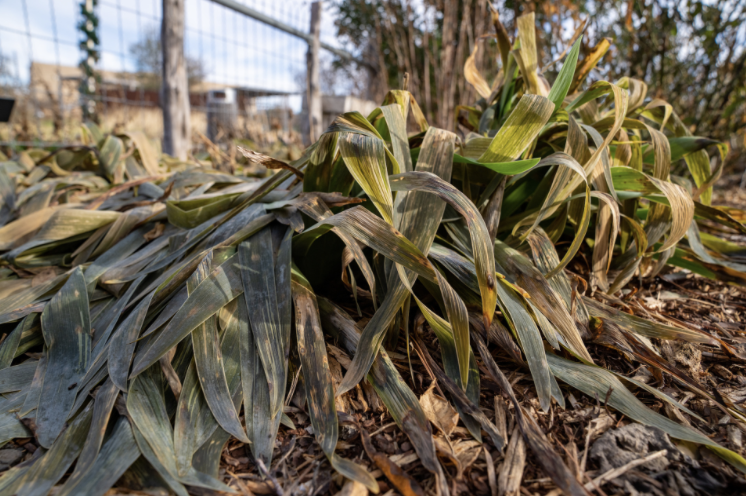
Be patient with plants that took the brunt of recent freezing temperatures. It may be an eyesore, but cleaning and pruning at this point could do more harm than good.
(Texas A&M AgriLife photo by Sam Craft and Courtney Sacco)
|
Tropicals, Bananas & Houseplants
These plants are especially sensitive and often don’t survive extended freezes. However, experts advise to leave the dead mush in place until mid-spring. Dig up and replace only once the weather warms and no new growth appears. For tropicals like bananas, mid-to-late April is the earliest you should assess.
Lawns (St. Augustine and Centipede)
Freeze damage may cause dead patches, but fertilizing or watering too early can harm recovery. Hold off on fertilizing until mid-April, and begin watering only in June, July, or August.
Vegetables & Herbs
Most winter veggies like lettuce and cabbage can still be planted, but wait until after March 15 to plant peppers and tomatoes. Cold-sensitive herbs like rosemary may need to be replaced, especially if grown in pots.
Bulbs
Most spring bulbs will survive, though bloom output may be reduced due to damaged foliage. Tulips and daffodils may still flower, but summer bloomers like canna and spider lilies should be evaluated after the soil warms.
Live Oaks & Pines
Live oaks may lose all foliage—but that’s normal. Pines may look brown now but are often just experiencing needle freeze. “Do nothing,” the guide says, as these trees are long adapted to cold weather.

Why the Damage May Still Be Hiding
“Some damage doesn’t show up for months,” said Grant. “Some plants that appear dead come back to life from the root system. Some with green stems like roses will show what’s dead even quicker and can be cut back sooner. The stems on others will split to show that they are damaged.”
He adds: “There is absolutely nothing you can do to speed up this freeze damage/healing process. Watering, pruning, or fertilizing won’t make it happen any quicker… Most work now is purely cosmetic.”
Timing by Region: Know Your Local Frost Date
Understanding your local climate is key:
- South Texas (e.g., Laredo, RGV) – Final frost: Late January to early February.
- Central Texas (Austin, San Antonio) – Final frost: Mid- to late March.
- Southeast Texas (Houston, Galveston) – Final frost: Mid-March.
- North Texas (DFW and beyond) – Final frost: Late March to early April.
Plan to delay major pruning until after your average final frost date—or longer if extended cold snaps are in the forecast.
In Summary: Do Less, Let Nature Heal
If your garden looks more like a wasteland this week, you’re not alone. But don’t let panic or impatience make things worse. As temperatures slowly begin to rise in the coming weeks, your plants will reveal what’s dead, what’s damaged, and what’s surprisingly resilient.
Until then, let the brown leaves and drooping stems remain in place. They’re not just cosmetic flaws—they’re protection.
“That dead material is Mother Nature’s insulation,” said Arnold. “Cutting plants back too soon can do more harm than help.”
Recommended Reading
- Dealing with Freeze Damage on Plants, by Greg Grant, Texas A&M AgriLife Extension Service (2021) – View full guide
- Texas A&M AgriLife Extension Service Educational Materials - Visit the website

 Tiffany Krenek has been on the My Neighborhood News team since August 2021. She is passionate about curating and sharing content that enriches the lives of our readers in a personal, meaningful way. A loving mother and wife, Tiffany and her family live in the West Houston/Cypress region.
Local business spotlight
Grow your business
where trust already lives.
Let’s introduce your business to the neighbors nearby.
Have a local favorite?
Let’s make an introduction.
Leave your email and our team will reach out with ways to promote your business.
Give a local favorite a little love.
Know a business your neighbors should discover? Tell us who they are.
We couldn’t send that just yet. Please try again.