






Tomball ISD Back-to-School Safety: What Lakewood Forest North Drivers Need to Know Before Aug. 18
The return to school will quickly change the daily pace of Lakewood Forest North.
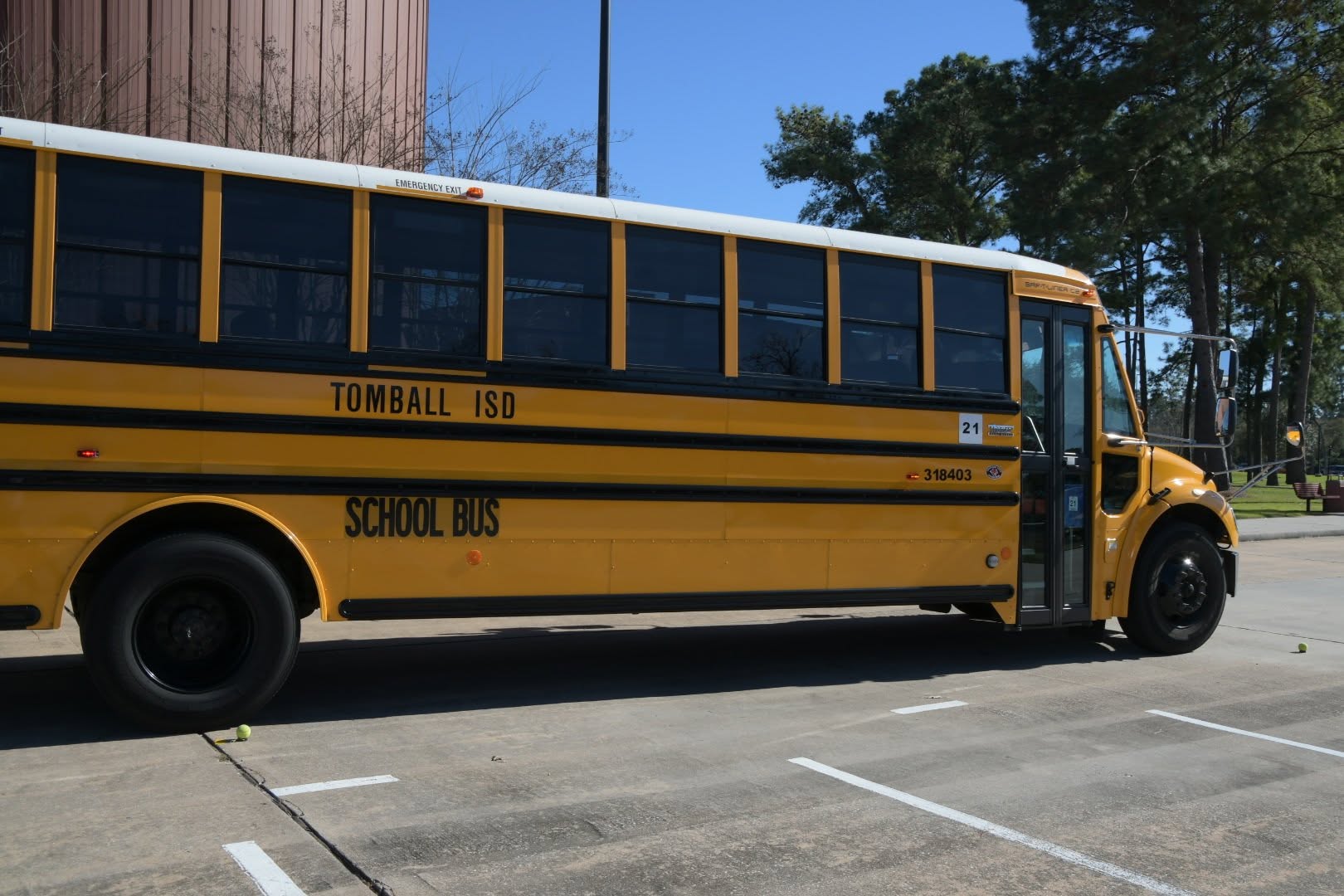
Tomball Independent School District begins the 2026-2027 school year on Tuesday, Aug. 18. School buses will return to subdivision streets, students will gather near neighborhood corners and community mailboxes, and parents and teenage drivers will add more vehicles to the morning and afternoon commute.
For residents, including those without children attending Tomball ISD, the first weeks of school call for a little more time and patience. Drivers should expect sudden stops, slower traffic and children walking or biking in places where they were rarely seen during the summer.
A student may emerge from behind a parked SUV, cross from the opposite side of a school bus or misjudge the speed of an approaching vehicle. Slowing down for a few seconds can protect a child and spare a neighborhood family from a life-changing tragedy.
Tomball ISD Traffic Will Begin Before 7 a.m.
Tomball ISD’s staggered bell schedules mean school traffic will arrive in several waves, beginning with some students traveling before sunrise and continuing through elementary dismissal after 4 p.m.
Tomball Star Academy has the district’s earliest first bell at 6:50 a.m., followed by Tomball High School and Tomball West High School at 7 a.m. Tomball Memorial High School begins at 7:05 a.m. High school dismissal ranges from 2:20 p.m. at Tomball Star Academy to 2:40 p.m. at Tomball High School.
Grand Lakes, Tomball and Willow Wood junior high schools also begin shortly after 7 a.m. Creekside Park Junior High has a 7:30 a.m. first bell and dismisses at 3:10 p.m. Connections Academy begins at 7 a.m. and dismisses at 2:30 p.m.
The district’s four intermediate schools begin at 7:40 a.m. and dismiss at 3:10 p.m. Tomball Intermediate has an 8 a.m. tardy bell, while Northpointe, Oakcrest and West intermediate schools have 8:10 a.m. tardy bells.
Elementary campuses begin later. Canyon Pointe, Creekside Forest, Decker Prairie, Lakewood, Rosehill, Timber Creek and Tomball elementary schools have 8:10 a.m. first bells and dismiss at 3:50 p.m.
Creekview, Grand Oaks, West, Wildwood and Willow Creek elementary schools begin at 8:25 a.m. and dismiss at 4:05 p.m. Early Excellence Academy begins at 8:45 a.m. and dismisses at 4:05 p.m.
For Lakewood Forest North, those schedules create a long traffic window. High school and junior high vehicles may be on the road before 6:30 a.m., while elementary buses and family vehicles may continue moving through neighborhood streets after 4 p.m.
When Must Texas Drivers Stop for a School Bus?
Texas drivers approaching a stopped school bus must stop when its red warning lights are flashing or its stop arm is extended.
Motorists should remain stopped until the bus begins moving again, its flashing lights stop or the bus driver signals that traffic may proceed. Texas transportation officials advise drivers to stop regardless of which direction they are traveling unless the bus is on the opposite roadway of a divided highway.
The easiest way to remember the rule is:
Flashing yellow lights mean slow down and prepare to stop. Flashing red lights and an extended stop arm mean stop completely.
Yellow lights indicate that the bus is preparing to load or unload children. Red lights and the extended stop arm mean students may be boarding, exiting or crossing the roadway. Drivers should not move again until the red lights stop, the arm retracts and the bus begins moving.
A driver should never pass simply because no child is immediately visible. A student may be crossing in front of the bus, approaching from the opposite side of the street or standing in an area hidden by the vehicle.
Does Traffic in Both Directions Have to Stop?
On a typical two-lane neighborhood street, traffic approaching a stopped school bus from both directions must stop.
The same rule generally applies on an undivided road with several lanes. Drivers behind the bus must stop, and opposing traffic must also stop unless it is traveling on a separate roadway divided by an intervening space or physical barrier.
A painted center line or shared turn lane should not be treated as a physical divider. When there is no true separation between the directions of travel, motorists should be prepared to stop on both sides.
The distinction can matter on the larger roads connecting Tomball, Creekside Park, Rosehill and surrounding northwest Harris County communities. When a driver is uncertain whether a roadway legally qualifies as divided, stopping is the safer choice.
Passing a Stopped School Bus Can Carry a Heavy Penalty
Failing to stop is not only dangerous. It can also be costly.
TxDOT states that a first offense for illegally passing a stopped school bus can result in a fine of up to $1,250. The agency also reported 2,480 Texas crashes involving school buses in 2024, resulting in 11 deaths and 93 serious injuries. Driver inattention and speed were the leading contributing factors.
Those figures are a reminder that school-bus safety extends beyond the children seated inside the vehicle. Students are especially vulnerable while waiting at a stop, boarding, getting off or crossing the road.
NHTSA notes that fewer than 1% of traffic fatalities involve children riding in school transportation vehicles, but children face greater risk while approaching or leaving a bus.

What Federal School Bus Rules Cover
There is no single federal traffic law telling every motorist exactly when to stop for a school bus. Those roadway requirements are established primarily through state law.
Federal regulations focus largely on the construction and equipment of school buses. NHTSA establishes safety standards governing features such as warning lights, stop arms, mirrors, emergency exits, rollover protection and occupant safety.
All states prohibit drivers from passing a stopped school bus when its red lights are flashing and stop arm is deployed, although the precise rules for divided and multilane roads can vary.
In practical terms, federal standards help make the bus safer, while Texas law determines what drivers in Lakewood Forest North must do when that bus stops.
Tomball ISD Bus Stops May Be Away From a Student’s Home
Tomball ISD bus stops are typically located at street corners or recognizable landmarks, including community parks and mailboxes. Some stops may be assigned to specific addresses, but regular buses generally do not provide curbside service at every student’s home.
Students may be required to walk approximately 0.35 miles to their assigned stop. Longer walks may be necessary in areas that buses cannot safely access, including gated communities, dead-end roads and other restricted locations.
That means drivers should watch for groups of students near community entrances, parks, mail kiosks and neighborhood corners, even when a bus is not yet visible.
Residents who regularly travel past an active stop should begin slowing before reaching it. Children may approach from several directions and can be difficult to see around parked vehicles, landscaping, fences and construction equipment.
Bus Stop Safety Begins Before the Bus Arrives
Tomball ISD directs students to arrive at their stop at least seven to 10 minutes before their scheduled pickup. Students should wait in a safe location at least 10 feet from the roadway and should not approach until the bus comes to a complete stop.
Families can reduce first-day anxiety by visiting the stop before Aug. 18. Children should know exactly where to wait, which direction the bus will approach and whether they must cross a street.
Students who need to cross should walk approximately 15 feet in front of the bus, wait for the driver’s signal and look both ways before entering the road. Tomball ISD cautions students not to assume that surrounding traffic will stop.
Children should never walk behind a school bus. A student who drops a phone, book, water bottle or other item near the vehicle should tell the driver instead of trying to retrieve it because the driver may not be able to see a child close to the bus.
Younger Students Must Be Met at the Stop
Tomball ISD transportation procedures require a guardian to receive prekindergarten, kindergarten and first-grade students at the bus stop unless the appropriate student release form has been completed.
Parents can identify authorized adults and older siblings through the Stopfinder application. An unfamiliar person meeting a child may be asked to show identification.
When no approved person is available, the child may be returned to campus, leaving the parent responsible for pickup.
Families should create a backup plan before the first day in case a parent becomes delayed. That plan may include an authorized relative, older sibling, trusted neighbor or family friend who understands the district’s procedures.
Drivers Need to Watch Beyond the Bus
A stopped bus is only one part of the scene.
Children may approach from driveways, sidewalks, parks or the opposite side of the street. Younger students may become distracted by friends or siblings, while older students may look at their phones instead of approaching traffic.
Drivers should scan the entire area around the bus rather than focusing only on the vehicle. A backpack, bicycle wheel or pair of shoes visible beneath a parked car may be the first sign that a child is nearby.
Even when a bus’s warning lights are not flashing, NHTSA advises motorists to watch for children during school arrival and dismissal times, particularly while backing from driveways or driving through neighborhoods, school zones and bus-stop areas.
Walking and Biking Students Need Room to Be Seen
Tomball Star Academy begins at 6:50 a.m., and several other secondary campuses begin at or shortly after 7 a.m. That means some students will travel while it is still dark or during low-light morning conditions.
Families should encourage walking students to use sidewalks and marked crosswalks whenever possible. Before entering a street, children should look left, right and left again while continuing to watch for turning vehicles.
Phones and earbuds should remain put away while students are crossing. Bright or reflective clothing can make students easier to see during darker morning hours.
Drivers should avoid blocking sidewalks, crosswalks and curb ramps while waiting in school traffic. A vehicle stopped across a pedestrian route may force a child into the road or hide the student from a turning driver.
Parents Can Help Reduce Campus Congestion
The first week of school often produces longer arrival and dismissal lines as families learn traffic patterns, parking procedures and campus entrances.
Parents should follow the designated campus route instead of creating unofficial drop-off points. Children should exit on the curb side whenever possible and should never be directed to run between parked or idling vehicles.
Drivers should also avoid blocking neighborhood driveways, intersections and crosswalks while waiting for dismissal. Those areas may be needed by pedestrians, buses, emergency vehicles or residents trying to reach their homes.
Leaving five or 10 minutes earlier can reduce the pressure that leads to speeding, abrupt lane changes, unsafe U-turns or hurried drop-offs.

Teenage Drivers Need a First-Week Safety Conversation
For some Tomball ISD students, Aug. 18 will be one of their first days driving to school without an adult in the vehicle.
Teen drivers will be traveling early, navigating crowded parking lots and sharing the road with buses, parents and classmates on foot. They should review their route before leaving, allow additional travel time and maintain more following distance behind school buses and other vehicles.
Parents can help by discussing where their student will park, which campus entrance to use and what to do when running late. Arriving after the tardy bell is safer than speeding, texting or making an unsafe turn.
Teenagers should also remember that the school traffic cycle continues long after high schools dismiss. Elementary students and buses will remain on area roads until after 4 p.m.
Tomball ISD Families Can Use Stopfinder
Tomball ISD uses Stopfinder to help families monitor school buses and receive transportation notifications.
Students who use district bus service are required to have their Stopfinder ID and scan it when boarding and leaving the bus. The system allows drivers to confirm that students are riding the correct bus and exiting at their assigned stops.
The Stopfinder application can provide parents with bus status information and transportation communications, including certain delay notifications. Parents must register through the application to receive those alerts.
Prekindergarten through second-grade students are directed to attach the ID to the upper-right side of a backpack strap. Students in grades three through 12 are expected to wear it on a breakaway lanyard.
Students are only permitted to ride their assigned bus and leave at their assigned stop. Tomball ISD does not generally issue temporary passes allowing students to use a different route.
How to Find Tomball ISD Bus Routes
Tomball ISD’s Transportation webpage provides access to bus registration, bus routes, rider rules, daycare transportation, Stopfinder information and frequently asked questions. The department’s main telephone number is 281-357-3193, with dispatch available through extensions 6101 and 6115.
Families can use InfoFinder to search for transportation information associated with a physical address. When no route appears, parents should contact the Transportation Department because a new stop may need to be added. That process can take up to 10 school days, during which the family is responsible for transportation.
Families should confirm routes, stops and authorized guardians before the first day and should not assume that a previous year’s bus assignment remains unchanged.
First-Week Delays Are Possible
School buses may run later than expected during the opening days as drivers adjust to traffic, construction, student counts and new routes.
Tomball ISD notes that traffic, road closures, weather, mechanical issues and delays on earlier routes can all affect arrival times. Stopfinder may be used to send notifications in certain circumstances, although the Transportation Department cannot call every family individually.
Residents should expect buses to remain stopped longer while younger students learn procedures and drivers confirm riders and assigned stops.
A delayed bus is not an invitation to pass or drive around it. Extra time may be needed to ensure that every child boards and exits safely.
A Safer School Year Begins on Neighborhood Streets
Back-to-school safety does not begin at the campus entrance. It begins in driveways, at subdivision corners and along the streets children use to reach their buses.
For Lakewood Forest North, the return of Tomball ISD means a daily traffic cycle stretching from before 7 a.m. through elementary dismissal after 4 p.m.
The most helpful actions are straightforward: leave earlier, slow down, put away the phone, keep sidewalks and crosswalks clear, stop completely for school buses and give young or inexperienced drivers room to make careful decisions.
The first few mornings may take longer than residents would prefer. That extra patience helps neighborhood students arrive ready to learn and return safely to the people waiting for them.
Stay tuned to My Neighborhood News for additional Tomball ISD updates, transportation information and community safety reminders throughout the 2026-2027 school year.

 Tiffany Krenek has been on the My Neighborhood News team since August 2021. She is passionate about curating and sharing content that enriches the lives of our readers in a personal, meaningful way. A loving mother and wife, Tiffany and her family live in the West Houston/Cypress region.
Local business spotlight
Grow your business
where trust already lives.
Let’s introduce your business to the neighbors nearby.
Have a local favorite?
Let’s make an introduction.
Leave your email and our team will reach out with ways to promote your business.
Give a local favorite a little love.
Know a business your neighbors should discover? Tell us who they are.
We couldn’t send that just yet. Please try again.