







Texas Drought, HOA Lawn Rules, and HB 517: What Homeowners Need to Know for Spring and Summer 2026
As spring takes hold across Texas, the familiar expectation of lush, green lawns is colliding with a much harsher reality—widespread drought, ongoing water restrictions, and a growing need to rethink what responsible property maintenance looks like.
Recent data from Drought.gov and the U.S. Drought Monitor shows that 81.7% of Texas is currently experiencing drought conditions, affecting an estimated 18.1 million residents. Large portions of the state fall into severe, extreme, or even exceptional drought categories, meaning that water availability is not just limited—it is under sustained pressure.
House Bill 517 (H.B. 517), which took effect September 1, 2025, limits when homeowners’ associations can fine residents for brown or discolored grass during periods of drought-related watering restrictions. For many homeowners, that means a brown lawn this spring and summer may not just be expected—it may be protected.
This isn’t just a seasonal inconvenience. It directly impacts how often lawns can be watered, how landscapes respond to stress, and increasingly, how HOA rules are applied and enforced.
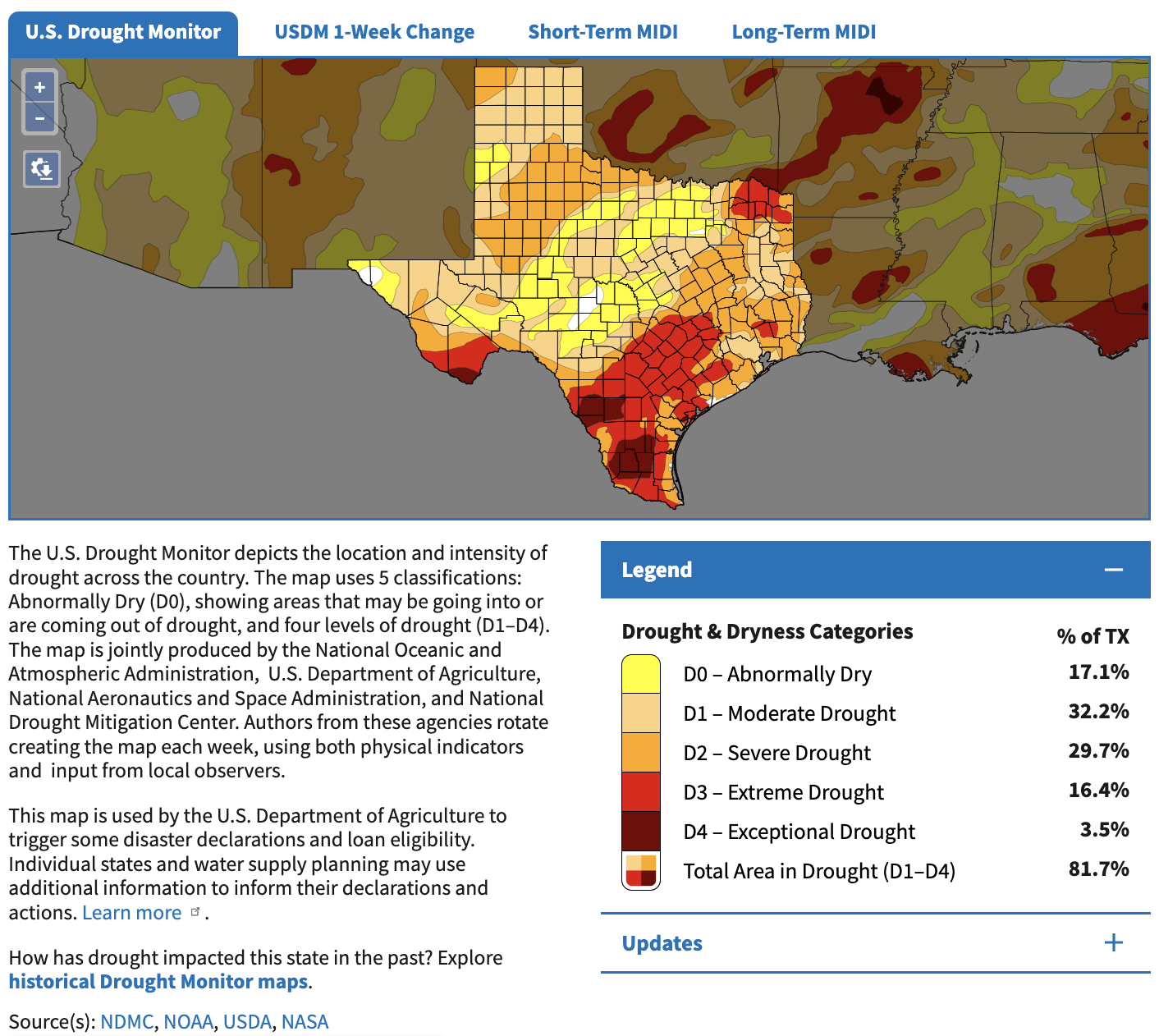
| U.S. Drought Monitor map, issued on March 17, 2026, shows widespread drought conditions across Texas, with over 80% of the state experiencing moderate to exceptional drought. (Source: Drought.gov) |
Texas Has Been Here Before—And That History Still Shapes Today
Drought is not new to Texas, and its long history continues to shape how the state prepares for and responds to water shortages.
The Texas Water Development Board (TWDB) traces modern water planning back to the devastating drought of the 1950s, a prolonged event that reshaped policy, infrastructure, and long-term planning across the state. Since then, Texas has faced repeated cycles of severe dryness, including the 2010–2014 drought—one of the longest in state history—and the widespread drought conditions that returned in 2022, rivaling the intensity of 2011.
These recurring patterns underscore a critical point: drought is not a one-time event. It is a persistent risk that affects water supply, property conditions, economic stability, and quality of life.
Experts define drought as more than just a lack of rain. It is a slow-moving imbalance in water availability that can affect soil moisture, reservoirs, groundwater, and ultimately, everyday life. In some cases, rapid “flash droughts” can intensify conditions quickly due to extreme heat and low precipitation—something Texans have experienced in recent years.
What the 2026 Outlook Signals for the Months Ahead
Looking ahead, current forecasts suggest that these conditions are not likely to ease in the near term.
The National Weather Service’s Seasonal Drought Outlook, released March 19, 2026, indicates that drought is expected to persist and, in some areas, expand across Texas and the Southern Great Plains through early summer. Forecast models point to above-normal temperatures and a tendency toward drier conditions during the spring months.
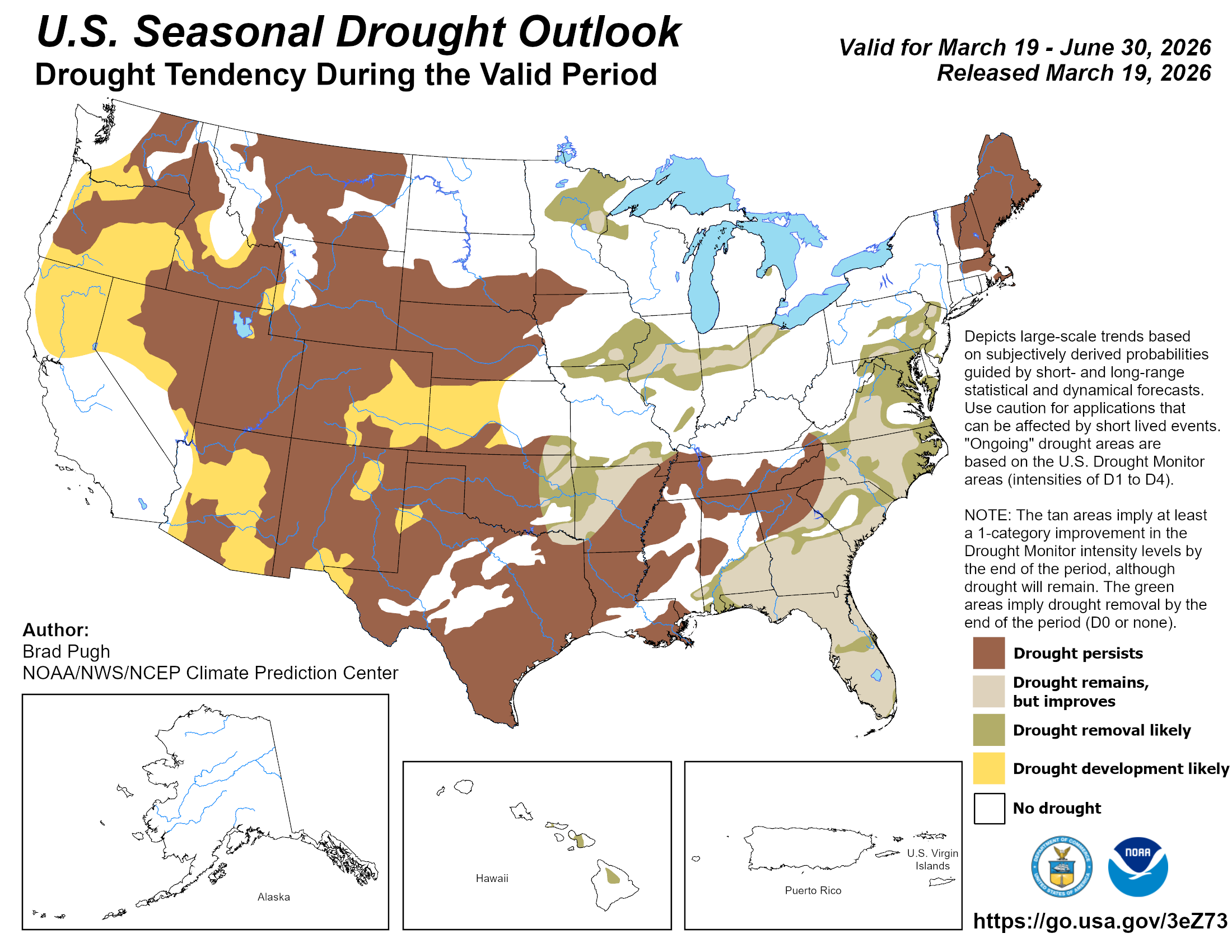
| NOAA’s U.S. Seasonal Drought Outlook forecasts widespread drought persistence across Texas and the southern U.S. through June 2026. (Source: NOAA) |
This matters at the neighborhood level because it increases the likelihood of continued or repeated watering restrictions—policies that directly influence how homeowners maintain their landscapes.
In other words, the brown patches many residents are already seeing may not be temporary.
H.B. 517: A Law Built Around Texas Reality
It is within this context that House Bill 517 (H.B. 517) becomes especially relevant.
Effective September 1, 2025, the law amended the Texas Property Code to limit an HOA’s ability to fine homeowners for brown or discolored vegetation when that condition is tied to water conservation rules.
Specifically, HOAs cannot issue fines for lawn discoloration during periods of mandatory watering restrictions, nor can they issue fines for up to 60 days after those restrictions are lifted. The intent is straightforward: homeowners should not be penalized for complying with water-saving measures that are often required by local governments or utilities.
For many Texans, this represents a meaningful shift. It acknowledges that during drought, appearance is often a reflection of compliance—not neglect.
A Shift in Expectations Across Texas Communities
H.B. 517 is also prompting a broader conversation within HOA communities.
For years, many associations emphasized consistent visual standards, often requiring green, well-irrigated lawns. But as drought conditions have become more frequent and severe, those expectations have grown harder—and sometimes impossible—to maintain without violating water restrictions.
The new law does not remove HOA authority, but it does require a more balanced approach. Communities are increasingly recognizing that environmental conditions must be part of the equation when evaluating property maintenance.
This shift is gradually changing how neighborhoods define curb appeal, placing greater emphasis on sustainability and adaptability rather than uniform appearance.
What Homeowners Are Still Responsible For
Even with the protections under H.B. 517, homeowners are not exempt from maintaining their property.
HOAs may still enforce standards related to overall upkeep, including issues like unmanaged weeds, hazardous vegetation, or landscaping problems unrelated to drought conditions. The law is specific to discoloration caused by watering restrictions, not general neglect.
That distinction is important. It reinforces that while the state has introduced flexibility, it has not removed the expectation that homeowners care for their property responsibly. Homeowners should also review their neighborhood’s governing documents and reach out to their HOA board or community management team with any questions to better understand how these requirements are applied within their specific community.

Practical, Water-Smart Lawn Care That Works in Texas
As drought conditions continue, lawn care across Texas is evolving from a focus on appearance to a focus on resilience.
The Texas A&M AgriLife Extension Service emphasizes that maintaining a healthy lawn during drought is less about frequent watering and more about creating conditions that allow grass to survive stress and recover over time. One of the most important shifts homeowners can make is moving away from shallow, frequent watering. Instead, watering deeply and less often encourages roots to grow deeper into the soil, making grass more tolerant of heat and dry conditions.
Mowing practices also play a significant role. Keeping grass slightly taller helps shade the soil, reducing evaporation and protecting roots from extreme temperatures. At the same time, limiting fertilizer use during drought conditions can prevent unnecessary stress, as fertilization often increases a lawn’s demand for water.
Soil health is another critical factor that is often overlooked. Compacted or nutrient-poor soil struggles to retain moisture, meaning even well-timed watering may not be effective. Aeration and organic matter improvements can help soils hold water longer, making every irrigation cycle more efficient.
In some cases, homeowners are also beginning to rethink the types of grass and landscaping they use altogether. Drought-tolerant grass varieties and native plants are gaining attention not only because they require less water, but because they are better suited to Texas’ long-term climate patterns. But before resodding your lawn, check your community's governing documents to ensure compliance with guidelines that have been established to protect the overall beauty and value of your community.
Ultimately, the goal is not to maintain a perfectly green lawn at all times, but to create a landscape that can withstand periods of drought without long-term damage. Learn more about Texas A&M AgriLife Extension Service's expert guidance on how to keep your lawn alive during drought here.
Why Communication Still Matters
Even with clear legal protections, communication between homeowners and HOA boards remains essential.
Water restrictions can vary by location and can change quickly depending on local supply conditions. HOA policies may also evolve as boards interpret and implement H.B. 517 within their communities.
Reaching out to your community management team or HOA board can help clarify expectations, prevent misunderstandings, and ensure that both homeowners and associations are operating with the same understanding of current rules.
A New Normal for Texas Lawns
With more than four out of five Texans currently living in drought-affected areas and forecasts pointing toward continued dry conditions, this spring reflects a broader shift across the state.
Lawns may not always look the way they have in the past—but that change reflects a larger reality. Water conservation is becoming a central part of daily life in Texas, and laws like H.B. 517 aim to help communities adapt to that reality in a more balanced and practical way.
For homeowners, the takeaway is not just about compliance—it’s about adjustment. Understanding the conditions, following local restrictions, and adopting more sustainable lawn care practices will be key to navigating the months ahead.
Stay tuned to My Neighborhood News for continued updates on Texas drought conditions, HOA regulations, and practical guidance for homeowners across the state.

 Tiffany Krenek has been on the My Neighborhood News team since August 2021. She is passionate about curating and sharing content that enriches the lives of our readers in a personal, meaningful way. A loving mother and wife, Tiffany and her family live in the West Houston/Cypress region.
Local business spotlight
Grow your business
where trust already lives.
Let’s introduce your business to the neighbors nearby.
Have a local favorite?
Let’s make an introduction.
Leave your email and our team will reach out with ways to promote your business.
Give a local favorite a little love.
Know a business your neighbors should discover? Tell us who they are.
We couldn’t send that just yet. Please try again.