







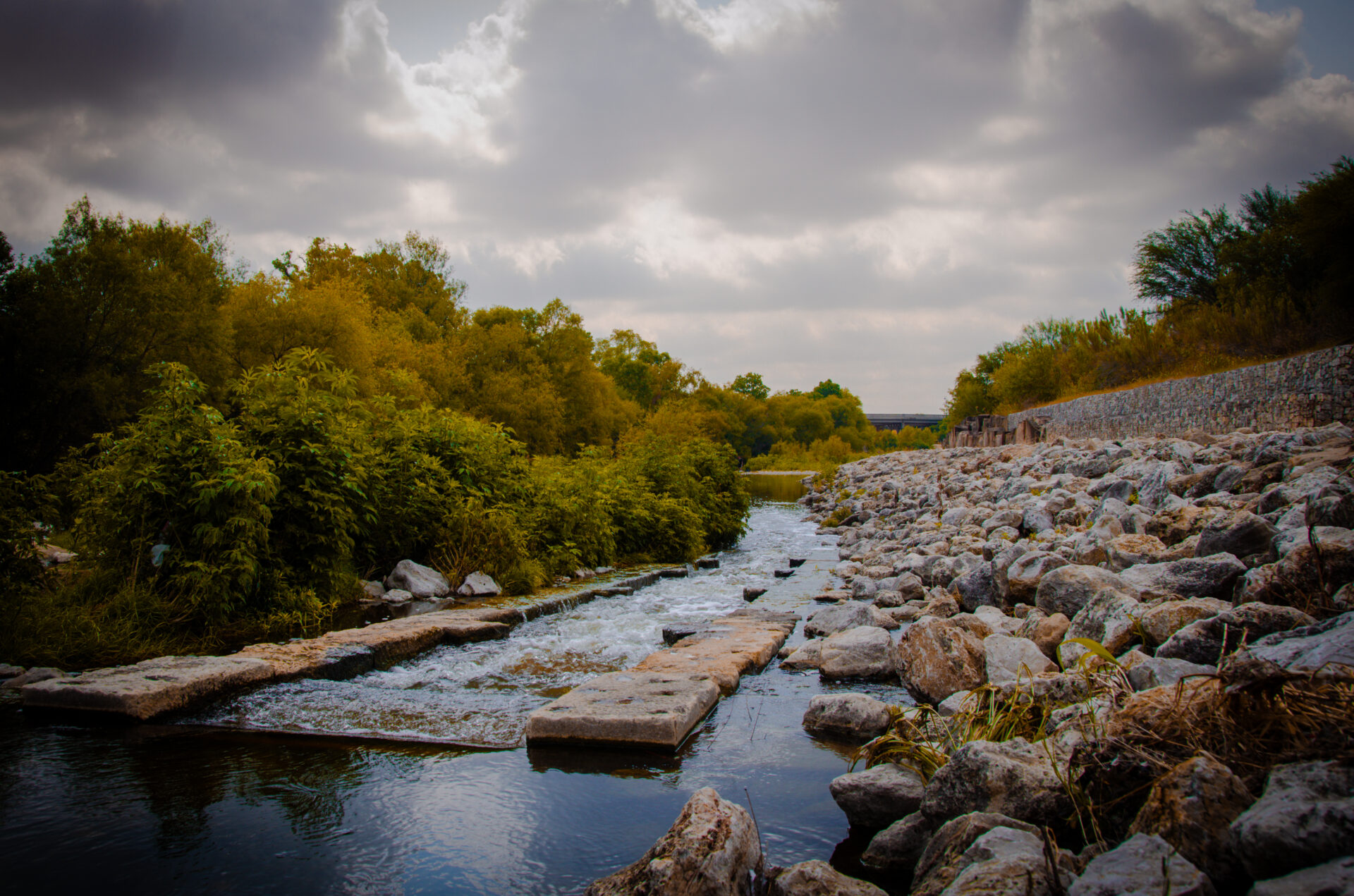
San Antonio River Authority Reimagines Local Creeks as Living Infrastructure for Flood Resilience, Cleaner Water and Community Spaces
For generations, many urban creeks were engineered with one overriding goal: move stormwater away from homes, streets and neighborhoods as quickly as possible. Concrete channels and other traditional drainage systems accomplished that job, but often at a cost to the natural functions that once made those waterways healthier, cooler and more useful to both people and wildlife.
The San Antonio River Authority is now working toward a different model — one recently outlined by Mikel Wilkins, senior engineer with the River Authority, in an agency blog examining how nature-based design could reshape local waterways.
Wilkins, an environmental engineer with more than 32 years of experience in stormwater management, stream restoration, parks and public open space planning, described a shift that has been taking shape across the agency's work over the past three years. The River Authority has been developing master plans for the Upper San Antonio River, Leon Creek and Salado Creek watersheds, with an emphasis on what are known as Nature-based Solutions, or NbS.
Rather than treating creeks simply as drainage corridors, the River Authority is looking at them as living pieces of infrastructure that can help manage runoff while also filtering pollution, supporting wildlife, reducing heat and creating more appealing places for people to spend time outdoors.
For residents across Bexar, Wilson, Karnes and Goliad counties, that shift could eventually mean stormwater projects that do more than move water from one place to another.
What are Nature-based Solutions?
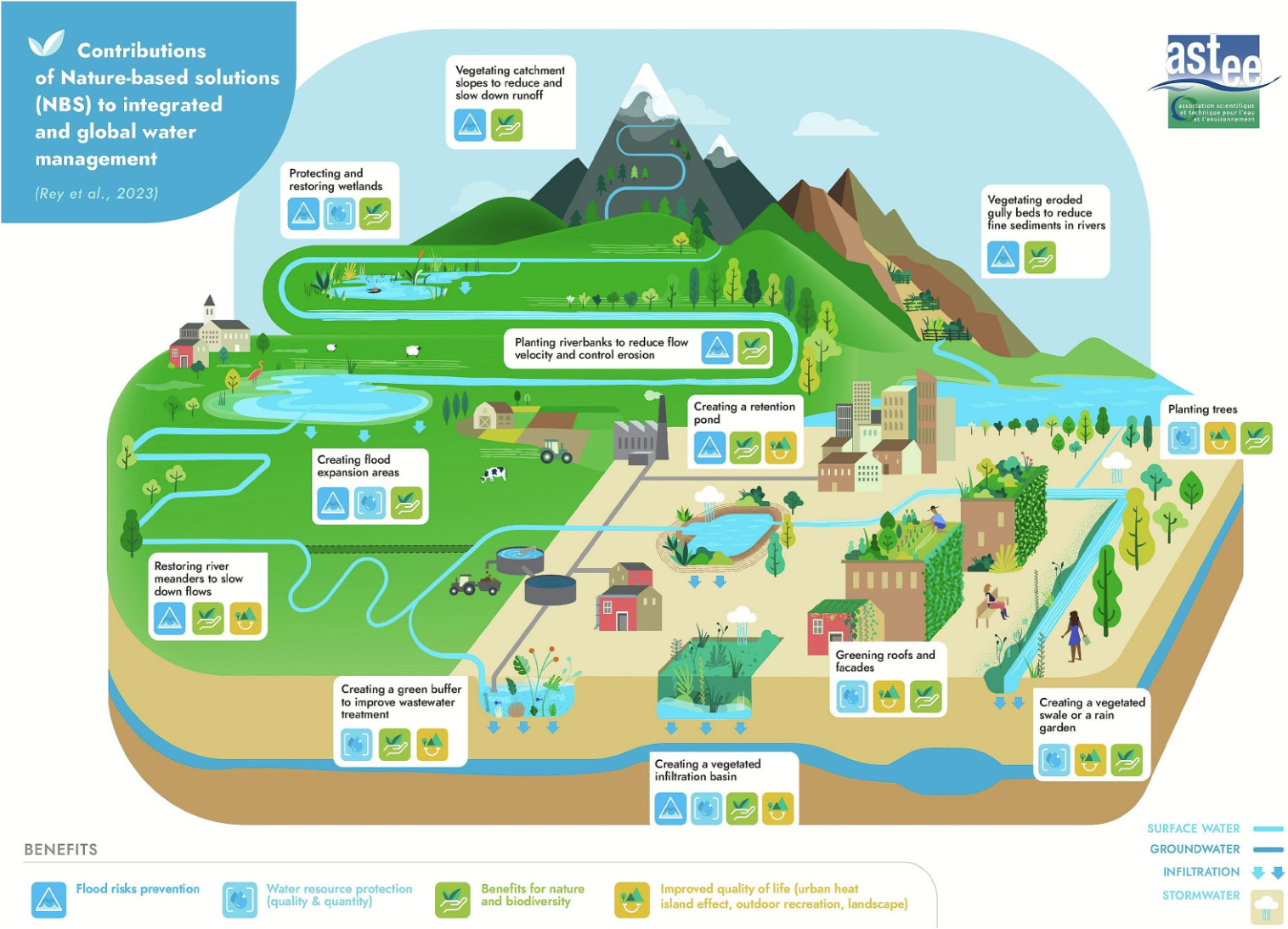
As Wilkins noted in a recent River Authority overview, Nature-based Solutions bring natural systems back into the way cities manage stormwater.
The term includes approaches such as Green Infrastructure, Low Impact Development, Stormwater Best Management Practices and natural channel design. Depending on the site, those strategies can include vegetation, swales, restored creek features and other engineered systems designed to slow, absorb and filter runoff.
That distinction matters because conventional concrete drainage structures generally serve one primary purpose: conveyance. Nature-based projects are intended to perform several jobs at the same time.
In practical terms, a drainage corridor can still help manage stormwater while also becoming healthier habitat, improving water quality and making surrounding public land more inviting.
The River Authority describes that transition as moving from single-purpose infrastructure toward a more connected stormwater management ecosystem — an approach that reflects Wilkins' decades of work at the intersection of drainage, environmental design and public space.
Cleaner runoff can mean healthier San Antonio waterways
Water quality is a major piece of the River Authority's strategy.
Stormwater washing across roads, parking areas, rooftops and developed land can carry bacteria, nutrients, sediment, oil, grease and metals into area waterways. During hot weather, runoff can also enter creeks at elevated temperatures, which can reduce dissolved oxygen and create additional stress for fish and other aquatic life.
Nature-based systems are designed to slow that runoff and give plants, soil and other natural features more time to filter it before it reaches larger creeks and rivers.
Wilkins' overview points to several water-quality concerns these systems are intended to address.
High bacteria levels can restrict recreational use, while excessive nutrients may contribute to algae growth and lower oxygen levels. Total suspended solids can limit the amount of light reaching aquatic environments and are often associated with higher bacteria levels. Oils, grease and metals can also become toxic to aquatic life at elevated concentrations.
The benefits can extend beyond the water itself. Adding vegetation to drainage systems can help reduce localized heat and create additional habitat for birds, pollinators and other wildlife.
For communities already balancing development, drainage needs and environmental concerns, that combination is one reason nature-based stormwater infrastructure is receiving greater attention.
Trails and parks could become part of the solution
One of the River Authority's more practical strategies involves looking first at land the public already owns.
In the blog contribution, Wilkins highlighted how planning for the Upper San Antonio River, Leon Creek and Salado Creek has focused in part on publicly owned properties near existing greenway trail systems where nature-based projects could potentially be incorporated.
That approach can reduce some of the complications and costs associated with purchasing additional property while placing water-quality improvements in areas residents already use.
The goal is to make the same piece of land work harder.
A stormwater project near a trail or park, for example, may help slow runoff and capture pollutants while simultaneously adding shade, habitat and visual interest to a recreational area.
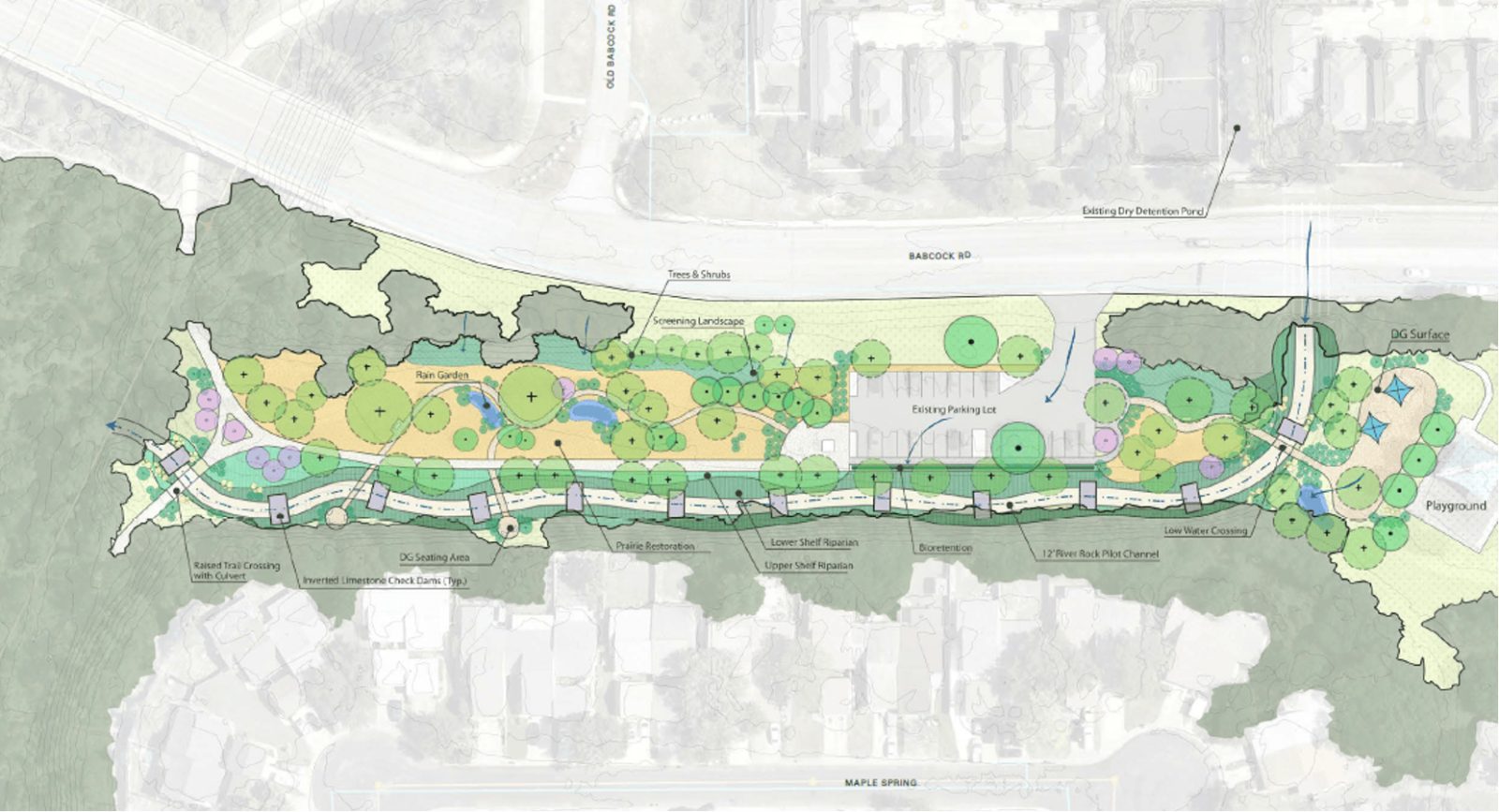
One concept developed for the Buddy Caulk Trailhead would use nature-based features to slow stormwater coming from a neighborhood and roadway. By reducing the speed of runoff, pollutants would have more opportunity to settle while plants could use some of the additional rainwater. The concept could also help cool and beautify the surrounding City of San Antonio park.
At Friendship Park, another concept includes a rock swale designed to slow stormwater, encourage infiltration and allow pollutants to settle before water continues downstream.
Those examples illustrate the broader idea behind the River Authority's planning: drainage improvements do not necessarily have to remain visually or physically separate from the places where residents walk, bike, gather and spend time outdoors.

A different way to think about flood resilience
The shift toward Nature-based Solutions does not mean conventional drainage infrastructure disappears. Instead, the River Authority is exploring a hybrid approach that combines engineering with natural systems where those strategies make sense.
That distinction is particularly important in a growing region.
As development expands, more rooftops, streets, driveways and parking lots can mean more impervious surface — land where rain cannot soak naturally into the ground. Managing that runoff while protecting homes, transportation systems and waterways becomes increasingly important.
Wilkins' perspective is especially relevant here. His professional background includes post-construction stormwater management policy and design, stream restoration, parks and trails — disciplines that increasingly overlap as communities look for infrastructure solutions that can serve more than one purpose.
Nature-based infrastructure offers another tool for doing that while producing benefits traditional drainage channels were never designed to provide.
For residents, the long-term value could show up in several ways: cleaner creeks, better-connected parks and trails, healthier wildlife habitat and stormwater systems designed with both resilience and quality of life in mind.
A new blueprint for the San Antonio River Basin
The River Authority's master planning for the Upper San Antonio River, Leon Creek and Salado Creek represents a broader change in how local waterways are being viewed.
Instead of asking only how quickly stormwater can be moved downstream, planners are increasingly asking what else that same creek corridor can accomplish along the way.
Can it help filter pollution?
Can it provide habitat?
Can it cool a neighborhood?
Can it connect to a trail?
Can it remain an effective part of the region's flood-management system while becoming a more useful public asset?
Those are the kinds of questions at the center of the approach Wilkins described for the River Authority. His contribution gives residents a closer look at the thinking behind projects that, on the surface, might simply appear to be drainage or landscaping improvements but are intended to serve a much broader role.
As San Antonio and surrounding communities continue to grow, the River Authority's work suggests the next generation of local infrastructure may look considerably greener than the last.
The larger challenge will be finding the right balance between continued development and stewardship of the river system that connects communities throughout the basin. The approach outlined by Wilkins offers one possible path — one in which creeks are not simply channels to move water through a city, but working community assets woven into the places people call home.
Residents can stay tuned to My Neighborhood News for future updates on San Antonio River Authority projects, watershed planning, stormwater improvements and other changes shaping communities across the San Antonio River Basin.

 Tiffany Krenek has been on the My Neighborhood News team since August 2021. She is passionate about curating and sharing content that enriches the lives of our readers in a personal, meaningful way. A loving mother and wife, Tiffany and her family live in the West Houston/Cypress region.
Local business spotlight
Grow your business
where trust already lives.
Let’s introduce your business to the neighbors nearby.
Have a local favorite?
Let’s make an introduction.
Leave your email and our team will reach out with ways to promote your business.
Give a local favorite a little love.
Know a business your neighbors should discover? Tell us who they are.
We couldn’t send that just yet. Please try again.