







New Dinosaur Trackways Building Coming to UT Austin Will Preserve One of Texas’ Most Important Fossil Discoveries
One of Texas’ most remarkable prehistoric treasures is getting a new home in Austin, ensuring that future generations will be able to experience a piece of the state's ancient past while expanding educational opportunities for students, families, and visitors.
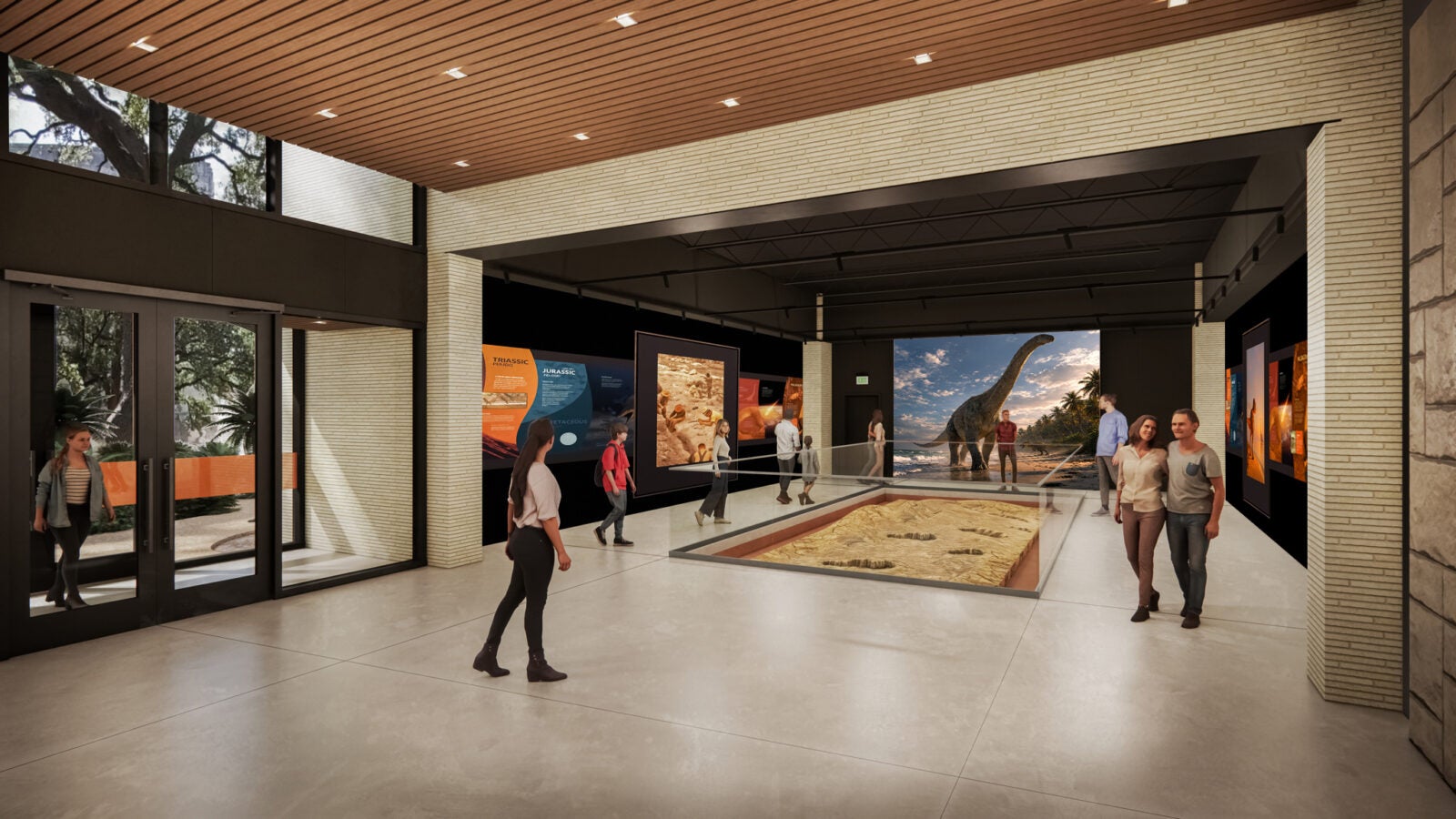
Construction is scheduled to begin in August 2026 on the new Dinosaur Trackways Building at the Texas Science & Natural History Museum on The University of Texas at Austin campus. The $4.2 million project will create a 2,100-square-foot museum building dedicated to preserving and displaying some of the most significant dinosaur footprints ever discovered in North America.
Located at 2402 Trinity Street in Austin, the new facility is expected to open in October 2027 and will serve as a centerpiece of the museum’s ongoing revitalization efforts.
Preserving a Texas Scientific Treasure
The fossilized trackways housed at the museum date back approximately 113 million years to the Early Cretaceous period, when dinosaurs roamed what is now Texas.
The footprints were discovered near present-day Glen Rose, Texas, along the Paluxy River and were first identified in the 1930s by renowned paleontologist Roland T. Bird. In 1940, Bird supervised the removal of two massive limestone slabs containing the trackways. One slab was sent to the American Museum of Natural History in New York, while the other was brought to Austin through a Work Projects Administration project and installed at what was then the Texas Memorial Museum.
The preserved trackways include footprints from a massive sauropod dinosaur as well as a theropod predator. The sauropod impressions were later scientifically described as Brontopodus birdi, named in honor of Bird. The fossils continue to serve as important reference specimens for paleontological research and remain among the most studied dinosaur footprints in the world.
For decades, the Austin slab was displayed inside a small stone structure adjacent to the museum. However, that building closed to the public in 2013 due to structural concerns and environmental conditions that threatened the long-term preservation of the fossils.

A Once-in-a-Generation Conservation Effort
Museum leaders describe the project as far more than a building initiative—it is a long-term preservation effort designed to protect an irreplaceable piece of Texas history.
“This project represents a once-in-a-generation opportunity to safeguard one of Texas’ most iconic fossil discoveries,” said Carolyn Connerat, managing director of Texas Science & Natural History Museum. “With the Butlers’ support, we will preserve these remarkable fossils while creating new ways for visitors, students and researchers to engage with Texas’ deep natural history.”
Following recommendations from a national conservation firm in 2024, museum staff began relocating the fossil slabs to a controlled laboratory environment where specialists could begin the careful conservation process.
In May 2025, teams from UT Planning, Design and Construction began deconstructing the original stone building. Fossil-bearing limestone blocks salvaged from the structure are being preserved and incorporated into the design of the new facility, creating a physical connection between the museum’s past and future.
New Visitor Experience Will Bring Dinosaurs Closer Than Ever
One of the most anticipated features of the new Dinosaur Trackways Building is the visitor experience itself.
For the first time since the trackways were removed from the Paluxy River more than eight decades ago, visitors will be able to walk around the conserved fossils and view them from multiple angles in a modern, climate-controlled environment designed specifically for their protection.
The project has been made possible in part through a lead philanthropic gift from Austin philanthropists Sarah and Ernest Butler. In recognition of their support, the facility will be named the Sarah and Ernest Butler Dinosaur Trackways Building.
Museum officials say the new building will not only safeguard the fossils but also transform how the public experiences them.
Expanding STEM Education in Austin
Beyond conservation, the project is expected to significantly enhance science, technology, engineering, and mathematics (STEM) learning opportunities for Central Texas students and visitors.
The new facility will expand educational programming for preK-12 learners, families, university students, and lifelong learners. New exhibits will help connect Texas’ prehistoric past to modern scientific research while providing hands-on learning opportunities tied to geology, paleontology, ecology, and natural history.
The surrounding grounds will also become part of the educational experience.
Plans include interpretive programming focused on the museum’s unique campus setting, including its historic heritage oak trees and juniper grove. Outdoor gathering spaces will allow visitors to learn about sustainability, native Texas plants, and the relationship between today’s ecosystems and those that existed millions of years ago.
Why This Matters for Texas
For many Texans, dinosaur trackways found in Glen Rose represent some of the state's most recognizable fossil discoveries. Protecting these artifacts ensures they remain available for scientific study while creating new opportunities for public engagement with Texas history.
The project also highlights the growing role museums play in preserving natural heritage while supporting tourism, education, and community learning.
As Austin continues to attract students, researchers, and visitors from around the world, the new Dinosaur Trackways Building is expected to become a destination that celebrates both scientific discovery and Texas pride.
What Happens Next
Construction on the new Dinosaur Trackways Building is scheduled to begin in August 2026, with completion anticipated in October 2027.
In the meantime, conservation experts will continue preparing the fossilized trackways for installation in their permanent home. Museum leaders are also seeking additional philanthropic support to complete restoration efforts and fully realize the new visitor experience.
When the doors open in 2027, visitors will be able to encounter a rare piece of prehistoric Texas in a setting designed to protect these fossils for generations to come—connecting today's Texans with creatures that walked across the state more than 113 million years ago.
For continued updates on major developments, educational projects, and community investments across Austin, stay tuned to My Neighborhood News.

 Tiffany Krenek has been on the My Neighborhood News team since August 2021. She is passionate about curating and sharing content that enriches the lives of our readers in a personal, meaningful way. A loving mother and wife, Tiffany and her family live in the West Houston/Cypress region.