







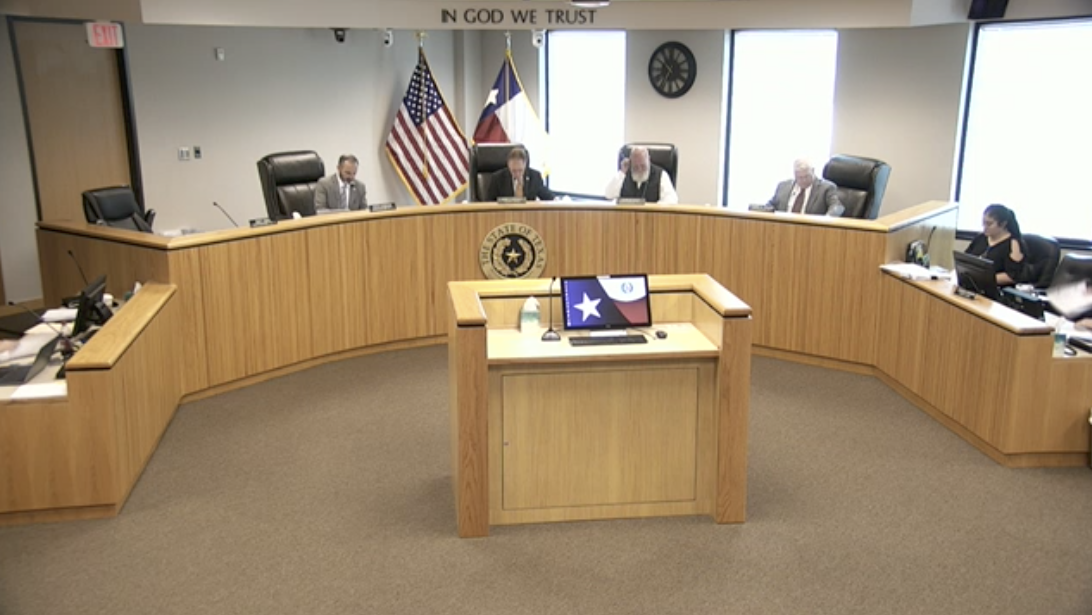
Montgomery County Court Recap for Cielo: $35 Million in Road Bonds, Courthouse Plans and Updates Affecting Tavola, Granger Pines and Caney Mills
For families living in Cielo, decisions made at Montgomery County Commissioners Court can influence everything from the roads they travel to the public services they rely on. On November 19, 2026, county leaders addressed several matters tied to the area's continued growth, including $35 million in road bond funding, subdivision development, roadway safety and a proposed new courthouse that could carry a price tag approaching half a billion dollars.
The day included a regular Commissioners Court meeting, a brief Montgomery County Toll Road Authority session and a considerably longer workshop on the proposed Montgomery County Justice Center. Most items brought forward for approval during the regular and Toll Road Authority sessions passed, although commissioners postponed one historic courthouse-related item and approved a traffic technology contract conditionally. The Justice Center workshop was devoted to discussion and planning, with no final project approval.
For residents of growing Montgomery County neighborhoods, including Tavola, Granger Pines and Caney Mills, the meetings provided another look at how county officials are balancing infrastructure needs, expanding public services and the cost of preparing for future population growth.
Montgomery County Secures $35 Million for Road Improvement Projects
One of the most significant updates involved Montgomery County's latest road bond sale, which will make another $35 million available for transportation projects.
During the regular meeting, county financial representatives reported that approximately $34.64 million in Series 2026 unlimited tax road bonds had been sold on November 18. The transaction generated additional premium proceeds, resulting in approximately $35 million available for road bond projects after financing expenses and other adjustments.
The bonds carry an all-in interest cost of 4.837% over a 25-year financing period. County officials described the sale as a favorable outcome, particularly given recent fluctuations in the municipal bond market.
The county expects to close the transaction and receive the funds on December 17, 2026.
For homeowners and commuters, the significance lies in the county's ability to continue financing road improvements as new neighborhoods, businesses and residential developments add traffic to existing corridors.
The financing does not, by itself, establish which individual roads will receive improvements. Those decisions are governed by the county's approved road bond projects and subsequent project expenditures.
Tavola, Granger Pines and Caney Mills: Why Subdivision Road Decisions Matter
Residents of Tavola, Granger Pines and Caney Mills have a particular interest in how Montgomery County handles subdivision road construction, development approvals and long-term maintenance responsibilities.
During the November 19 regular session, commissioners approved the consent agenda with one item removed for separate consideration. The broader agenda included subdivision plats, road acceptances and other development-related matters.
These administrative actions can have lasting consequences for growing residential communities.
When Montgomery County accepts qualifying subdivision roads into its maintenance system, responsibility for maintaining those roads may shift from the developer to the county under the terms of the acceptance. Plat approvals, meanwhile, establish or modify legally recorded subdivision layouts, including lots, streets and certain development areas.
For Tavola and Tavola West residents, decisions involving subdivision development and transportation infrastructure are especially relevant as the New Caney area continues to accommodate residential and commercial activity.
For Granger Pines residents, county decisions about neighborhood streets, road connections and public infrastructure are important to the community's continued development and the services available to homeowners.
For Caney Mills residents, road-maintenance arrangements and development approvals are likewise worth monitoring because they can determine how newly constructed streets become part of the surrounding transportation network.
The available November 19 meeting transcript does not identify the specific subdivision sections, streets or plats involving Tavola, Granger Pines or Caney Mills. Consequently, individual neighborhood road acceptances or plat approvals cannot be confirmed from that transcript alone.
For homeowners, the important distinction is that approving a subdivision plat, accepting a maintenance bond and formally accepting a road into county maintenance are separate actions. One does not automatically establish that the others have occurred.

Road Safety Improvements Approved on Hayden Road
Commissioners also approved establishing a no-through-trucks zone on Hayden Road between FM 242 and Fire Tower Road in Precinct 4.
The action includes placement of signage informing drivers of the restriction.
For those who live along or regularly use this corridor, the decision is intended to address through-truck traffic on a roadway that also serves local motorists. The available meeting record does not specify when the signs will be installed.
The court additionally approved a traffic signal detection upgrade contract, subject to final concurrence from the Texas Department of Transportation (TxDOT). County officials explained that TxDOT must complete its review of the contractor selection before the award can proceed.
The court also approved an agreement for up to $150,000 in on-call construction management, testing and inspection services for Precinct 3, along with several construction and engineering contract changes.
Toll Road Authority Approves Engineering Contracts Near SH 249
The Montgomery County Toll Road Authority held a shorter session following the regular Commissioners Court meeting, approving its business items without extended debate.
Among the approvals was a $50,000 agreement with LJA, Inc., for on-call planning and feasibility services.
The authority also approved a $158,486 agreement with Geoscience Engineering and Testing, Inc., for materials testing and inspection during construction of Project #26-31.
That project involves improvements to Decker Prairie/Hardin Store Road, extending from approximately 0.086 miles west of State Highway 249 to 0.285 miles east of the highway.
Although this project is in a different part of Montgomery County from Tavola, Granger Pines and Caney Mills, it represents another part of the county's ongoing transportation investment.
The authority also approved its September 17 meeting minutes and accepted the final arbitrage rebate and yield restriction analysis associated with its $87.68 million Series 2018 toll road revenue bonds.
According to the financial analysis in the agenda packet, no final rebate or yield reduction payment is owed to the federal government for those bonds, which have been fully redeemed.
The board also addressed previously authorized financial actions and the allocation of bond proceeds.
Proposed Montgomery County Justice Center Draws Concern Over $496 Million Estimate
Perhaps the most consequential discussion for county taxpayers came during the workshop devoted to the proposed Montgomery County Justice Center.
Representatives of Brinkley Sargent Wiginton Architects presented four preliminary building configurations designed to accommodate the county's anticipated judicial needs through 2050.
The largest planning scenario outlined a facility of approximately 481,000 square feet, with capacity for 42 regular courtrooms and two additional specialty courtrooms. Depending on the design, the proposed building could range from eight to 13 stories.
The estimated total cost for Option C, the most expensive preliminary scenario, was approximately $496 million.
Commissioners expressed significant concerns about that number, particularly because earlier discussions had centered on a project costing roughly $300 million to $350 million.
Precinct 2 Commissioner Charlie Riley was especially direct about the estimate.
"I'm still having a hard time with the $496,000,000 of any of it," Riley said.
The $496 million figure was not an approved project budget. It represented a preliminary, full-buildout estimate incorporating construction, furnishings, equipment, contingencies, projected cost increases and other anticipated expenses.

Commissioners Question Population Growth and Building Size
A major part of the discussion focused on how much courthouse space Montgomery County will actually need.
The architects used a planning population of approximately 1.35 million residents by 2050 and reviewed projected increases in court filings, judicial staffing and courtroom demand.
Precinct 3 Commissioner Ritch Wheeler questioned the growth assumptions used to develop those estimates, emphasizing the importance of understanding how future population projections translate into building requirements.
County representatives also discussed the possibility of constructing a building with unfinished interior space on some floors, allowing the county to expand operations later rather than paying to finish every courtroom immediately.
Other considerations included relocating underground utilities, preserving or relocating the county employee wellness center, providing adequate parking and separating public entrances from secure prisoner transportation areas.
The four concepts also differ in how they would use the downtown Conroe site, including whether portions of North San Jacinto Street would need to close or underground utilities would need to be relocated.
Could Montgomery County Voters Face a Courthouse Bond Election in 2027?
A potential bond election was another major discussion point.
County officials considered the possibility of placing a courthouse bond proposal before voters in May 2027 or November 2027, although no election was called during the workshop.
Supporters of moving forward sooner pointed to existing court space shortages and the possibility of additional judicial needs in coming years.
Other commissioners expressed concern about asking taxpayers to approve such a large financial commitment before receiving more complete cost estimates and considering less expensive alternatives.
The discussion included the possibility of seeking a smaller project, reducing the number of immediately finished courtrooms or separating certain county offices from the courthouse proposal.
For residents of Cielo, the eventual decision could carry long-term implications for county finances and property taxes. However, any future tax impact will depend on the final project cost, financing plan and decisions made by commissioners and voters.
Historic Courthouse Preservation Item Postponed
While the county continues planning a new Justice Center, commissioners also addressed the future of Montgomery County's historic courthouse.
During the regular meeting, Wheeler requested that an item authorizing the county to advertise for architectural design services for historic courthouse preservation be postponed.
He explained that county leaders needed to consider the larger courthouse project before moving forward with that separate architectural services process.
The court approved his motion to table the item.
The action does not mean historic courthouse preservation has been abandoned. Rather, that particular authorization remains on hold pending additional discussion.

Local Students and County Employees Recognized for Their Contributions
The November 19 meeting also included a moment of recognition for young people making a difference in Montgomery County.
Commissioners honored the Mitchell Intermediate School Pond Club for earning first place in the Native Plant Society of Texas 2025-2026 Force of Nature Competition.
The students' project, Natives Versus Invasives: Impact of Invasive Plants on the Environment, examined how invasive plant species affect native vegetation.
Their work highlighted the importance of protecting native plants, supporting wildlife habitats and encouraging environmentally responsible landscaping.
County leaders recognized the fifth- and sixth-grade students for their research and encouraged continued environmental education.
Commissioners also recognized Natasha Wheatley of the Precinct 2 Constable's Office as the November Employee of the Month.
For December, recognition went to members of the 359th District Court staff, including Alexis Wall, Terry Lynn Hale, Darlene Florville, Yolanda Alatori and Josie Urichetta. The presentation acknowledged their work supporting court operations and helping residents, attorneys and others navigate the judicial system.
These recognitions offered a reminder that behind the county's budgets, infrastructure projects and public meetings are employees and students contributing to their community in meaningful ways.
What Happens Next for Montgomery County Residents?
Several developments from November 19 will continue into the coming months.
The county expects the $35 million in road bond proceeds to become available December 17, 2026, providing additional resources for approved transportation projects.
Architects working on the proposed Justice Center were also asked to return December 17 with more detailed cost comparisons, including less expensive designs, options for unfinished floors and estimates showing the effect of removing certain building components.
Commissioners will then have additional information to evaluate whether the courthouse proposal should move toward a bond election in 2027.
Meanwhile, county departments will continue administering approved road projects, subdivision development matters, engineering contracts and public infrastructure improvements.
For residents of Tavola, Granger Pines, Caney Mills and other growing Montgomery County communities, these decisions are part of a much larger picture. New homes and neighborhoods bring opportunities, but they also increase demand for reliable roads, public safety, courts and other county services.
The challenge for local officials is to meet those needs while remaining accountable for how public money is spent.
Stay tuned to My Neighborhood News for continued coverage of Montgomery County Commissioners Court, local road improvements, subdivision development and other decisions shaping the communities residents call home.

 Tiffany Krenek has been on the My Neighborhood News team since August 2021. She is passionate about curating and sharing content that enriches the lives of our readers in a personal, meaningful way. A loving mother and wife, Tiffany and her family live in the West Houston/Cypress region.