







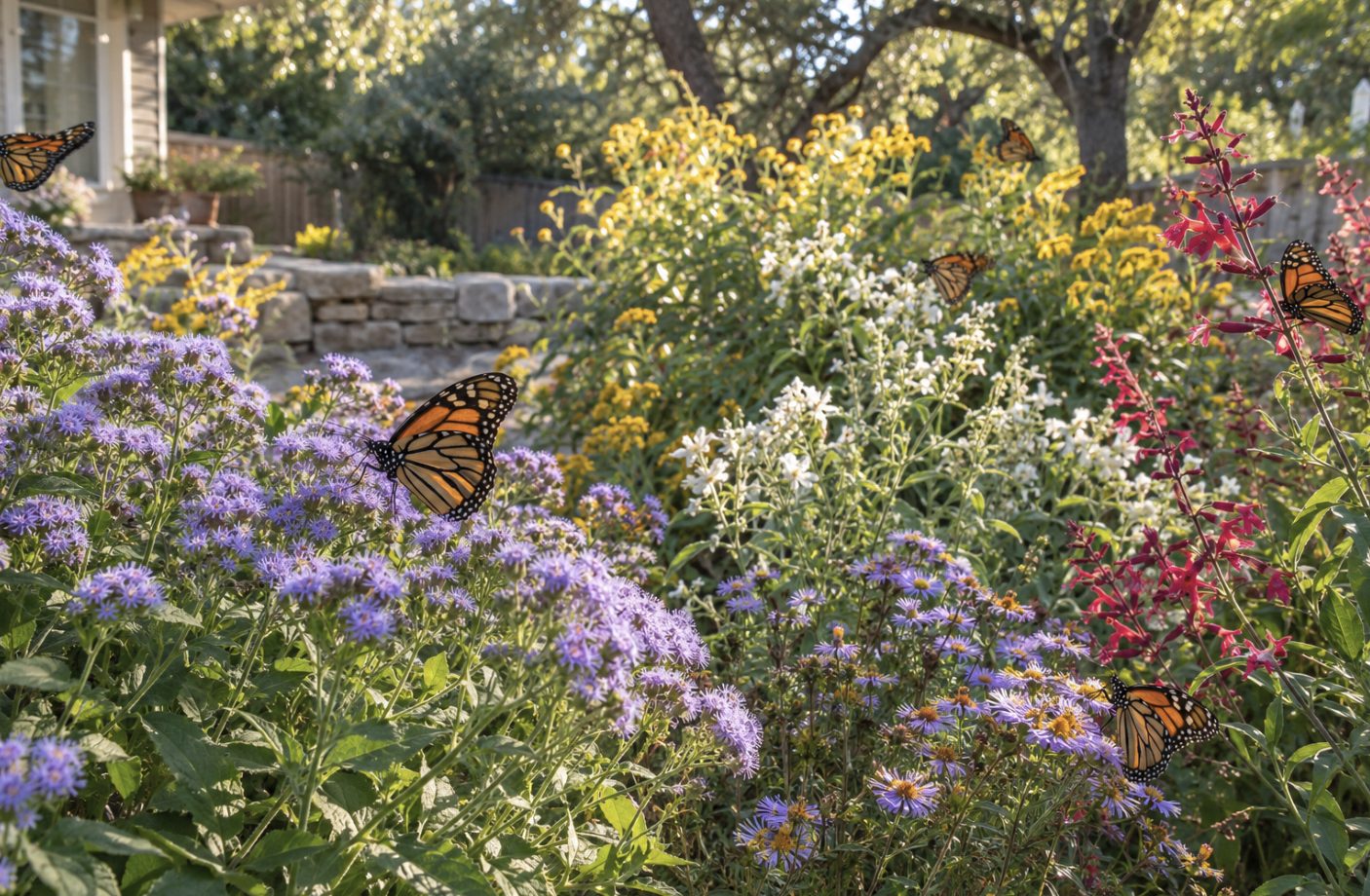
Monarchs Are Heading Through Central Texas: How Preserve at Medina River Residents Can Turn Their Yards Into Migration Rest Stops
Each fall, one of North America’s most remarkable natural journeys passes through Central Texas—sometimes close enough to watch from the backyard.
Monarch butterflies traveling south toward their wintering grounds in central Mexico begin entering a broad Texas migration corridor during the final days of September. The movement continues through October, and most monarchs have crossed the state by early November, according to the Texas Parks and Wildlife Department.
That puts neighborhoods such as Preserve at Medina River in a valuable position. A flower bed, patio garden or even a few well-chosen containers can become a temporary refueling station for butterflies making a journey that may span thousands of miles.
Homeowners do not need a sprawling garden—or an entirely new landscape—to help. The most useful contribution may be as simple as keeping the right flowers blooming when the monarchs arrive.
Why Monarch Butterflies Pass Through Central Texas
Texas sits between the monarchs’ principal breeding grounds in the United States and Canada and their winter habitat in Mexico. During the fall migration, many of the butterflies funnel through a roughly 300-mile-wide corridor extending from Wichita Falls toward Eagle Pass.
Unlike the monarchs seen in spring, which move north in search of milkweed on which to lay eggs, fall migrants are focused on reaching Mexico. To complete the trip, they need dependable sources of nectar along the way.
Think of a blooming garden as a roadside stop: a place to land, feed and regain enough energy for the next leg of the journey. One yard may seem small, but a series of usable habitats across neighborhoods and communities can provide a meaningful chain of resources.
What Do Migrating Monarchs Need in a Backyard?
For fall travelers, nectar-rich flowers are the priority.
Milkweed remains essential to the monarch life cycle because it is the only type of plant monarch caterpillars eat. During the southbound migration, however, adult butterflies are largely passing through rather than establishing a new generation. Late-blooming nectar plants provide the energy they need for continued flight.
Homeowners can help by choosing several types of flowers with overlapping bloom periods. A cluster of plants is generally easier for passing butterflies to locate than a single flower tucked into a large landscape.
Several Central Texas-friendly possibilities include:
- Gregg’s mistflower
- White mistflower
- Frostweed
- Fall aster
- Goldenrod
- Cowpen daisy
- Maximilian sunflower
- Autumn sage
- Scarlet sage
- Flame acanthus
- Turk’s cap
- Zexmenia
- Plateau goldeneye
Plant availability and performance can vary with soil, sunlight, drainage and location. Even neighboring properties can have different growing conditions depending on the depth of the soil, amount of afternoon sun and how quickly water drains after a storm.
Local native-plant nurseries and county Texas A&M AgriLife Extension offices can help residents of Preserve at Medina River match plants to their properties.
The Lady Bird Johnson Wildflower Center also offers resources for supporting monarch migration, while the Xerces Society’s monarch nectar plant guides provide regionally appropriate recommendations.

Frostweed Is Especially Well-Timed for the Journey
Despite its chilly-sounding name, frostweed is one of the most useful fall nectar plants for Central Texas.
The native plant grows particularly well beneath or near the filtered shade of live oaks, a familiar condition in many Central Texas neighborhoods. Its clusters of white flowers appear around the time monarchs are moving through the region.
Gregg’s mistflower is another strong choice. Its soft blue-purple flowers regularly attract monarchs, queens and other butterflies. Homeowners looking for a more traditional, orderly flower-bed appearance may find it easier to incorporate into an established landscape.
Other fall-blooming options can help homeowners create a garden that remains colorful while also providing food for migrating monarchs. Combining several varieties is especially helpful because weather, rainfall and growing conditions can affect when an individual plant begins and stops flowering.
Can a Patio or Small Yard Help Monarchs?
Yes. A monarch-friendly space does not have to occupy the entire backyard.
Residents can group several flowering plants in large containers on a sunny patio, establish a narrow bed along a fence or add nectar plants to an existing garden. Even a small planting can help if it is easy to see, pesticide-free and blooming at the right time.
For a simple container arrangement, homeowners could combine an upright plant such as autumn sage with a lower-growing nectar plant. Placing several pots together creates a more visible patch of color than scattering individual containers around the property.
Butterflies need warmth to remain active, so a sunny location protected from heavy wind is generally preferable. A nearby shrub or small tree can also provide a place to pause during poor weather.
New plants will still need regular attention while their roots become established. “Native” and “drought-tolerant” do not mean a plant can be placed in dry soil and forgotten immediately.
Hold Off on Cutting Down Every Fall Flower
A tidy fall cleanup can unintentionally remove food just as migrating butterflies arrive.
If frostweed, mistflower, asters, goldenrod or other nectar plants are still blooming, consider leaving them in place until flowering ends. Homeowners do not have to allow the entire yard to become overgrown. Keeping one defined bed or corner in bloom can preserve a polished landscape while still supporting wildlife.
Seed heads left after flowering may also provide food for birds later in the season. Gardeners can trim selectively rather than clearing every plant at once.
Before creating a new bed or making visible landscape changes, residents in deed-restricted communities should review their association’s architectural and landscaping guidelines. A bordered, intentionally designed pollinator garden is likely to look more neighborhood-friendly than an undefined patch of tall vegetation.
Use Pesticides Carefully Around Butterfly Plants
A garden meant to attract butterflies should not expose them to insecticides when they arrive.
Homeowners should avoid spraying open blooms or applying broad insect treatments to the pollinator area. Plants purchased from a nursery can also be checked for information about systemic insecticide use, since some products may remain within plant tissue after the plant comes home.
When pest problems arise, begin by identifying the insect. Not every caterpillar, beetle or leaf blemish requires treatment. Hand removal, targeted treatments and other integrated pest-management practices can address specific problems while reducing unnecessary exposure for butterflies and beneficial insects.
Mosquito control may require particular care in yards designed for wildlife. Residents using a pest-control service can ask what products are being applied, where they will be used and whether flowering plants can be excluded from treatment.
Families Can Follow—and Document—the Migration
The migration can also turn a backyard garden into a simple family nature project.
Residents can record the date of the first monarch sighting, count how many visit at one time or note which flowers receive the most activity. Photos taken from the same location each week can show how both the garden and butterfly traffic change through the season.
Texas Parks and Wildlife links residents to Journey North, where members of the public can report monarch sightings and follow migration observations on interactive maps. These community-submitted reports help show how the migration progresses across the country.
Observers should give resting or feeding monarchs room rather than handling them. A phone camera or pair of binoculars can provide a closer look without interrupting their limited feeding time.
A Small Central Texas Garden Can Be Part of a Much Larger Journey
No single backyard will sustain the monarch migration by itself. The value comes from many yards, gardens, parks and natural spaces collectively providing places to feed and rest.
For homeowners, that makes helping surprisingly approachable. There is no requirement to redesign the entire landscape, install an elaborate habitat or become an expert butterfly gardener. A sunny cluster of fall-blooming native plants—and the decision to let those flowers remain through migration season—can make one small piece of Preserve at Medina River more welcoming.
Then, sometime between late September and early November, residents may look outside and discover that their yard has become a brief stop on an extraordinary journey.

 Tiffany Krenek has been on the My Neighborhood News team since August 2021. She is passionate about curating and sharing content that enriches the lives of our readers in a personal, meaningful way. A loving mother and wife, Tiffany and her family live in the West Houston/Cypress region.
Local business spotlight
Grow your business
where trust already lives.
Let’s introduce your business to the neighbors nearby.
Have a local favorite?
Let’s make an introduction.
Leave your email and our team will reach out with ways to promote your business.
Give a local favorite a little love.
Know a business your neighbors should discover? Tell us who they are.
We couldn’t send that just yet. Please try again.