







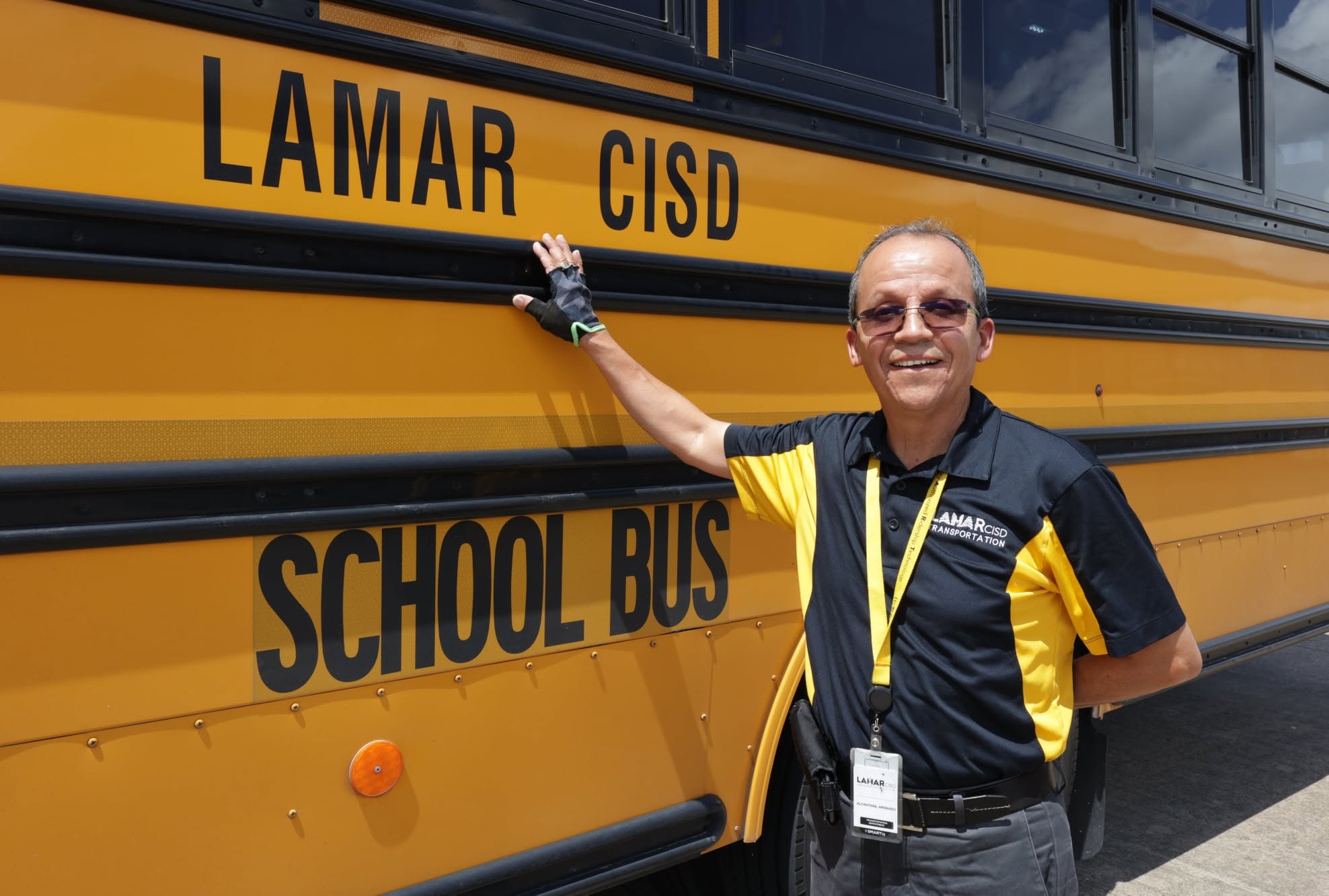
Lamar CISD Back-to-School Safety: What Bella Terra Drivers Need to Know Before Aug. 11
The first day of school will bring more than backpacks and new routines to Bella Terra. It will also bring an immediate change to neighborhood traffic.
Lamar Consolidated Independent School District begins the 2026-2027 school year on Tuesday, Aug. 11. Children will once again gather near curbs for school buses, walk and bike through neighborhood streets, and travel to campuses with parents and newly licensed teenage drivers.
For everyone behind the wheel, the safest approach is also the most neighborly: leave a little earlier, slow down before reaching bus stops and crosswalks, put away the phone and expect children to do something unexpected.
A student may step from behind a parked vehicle, misjudge the speed of an approaching car or cross from the opposite side of a stopped school bus. A few extra seconds of patience can prevent a moment that changes several lives.
Lamar CISD School Hours Will Create Several Traffic Waves
Lamar CISD’s staggered school hours mean morning and afternoon traffic will build and clear at different times across Bella Terra.
Group A elementary schools operate from 7:15 a.m. to 2:40 p.m. These campuses include Adolphus, Arredondo, Austin, Beasley, Bentley, Campbell, Carter, Culver, Haygood, Hubenak, Hutchison, Lindsey, Morgan, Phelan, V. Randle, Ray, Seguin and Velasquez elementary schools.
Group B elementary schools operate from 7:45 a.m. to 3:10 p.m. These campuses include Bowie, Dickinson, Fagert, Frost, Gray, Huggins, Jackson, Long, McNeill, Melton, Meyer, Pink, Smith, Tamarron, Terrell, Thomas, Travis and Williams elementary schools.
High schools and special sites operate from 8:25 a.m. to 3:50 p.m., while middle and junior high campuses operate from 9:05 a.m. to 4:30 p.m. Times at special sites may vary because of transportation needs.
Those schedules create a long traffic window rather than one brief school rush. Elementary buses and families may be on the road before 7 a.m., while middle and junior high dismissal traffic may continue through late afternoon.
On early-dismissal days, Group A elementary students leave at 11:15 a.m., Group B elementary students leave at 11:45 a.m., high schools and special sites dismiss at 12:25 p.m., and middle and junior high campuses dismiss at 1:05 p.m.
Residents who work from home, schedule appointments or make daytime trips should keep those early-release times in mind. A neighborhood street that is usually quiet at noon may suddenly fill with buses, pedestrians and family vehicles.
When Must Texas Drivers Stop for a School Bus?
Texas law requires a motorist approaching a stopped school bus from either direction to stop before reaching the bus when its required visual warning signals are operating.
A driver must remain stopped until one of three things happens: the school bus begins moving again, the bus driver signals that traffic may proceed or the bus’s visual signal is no longer operating.
The easiest way to remember the rule is:
Flashing yellow lights mean slow down and prepare to stop. Flashing red lights and an extended stop arm mean stop completely.
Yellow warning lights indicate that the school bus is preparing to load or unload students. Red lights and an extended stop arm indicate that children may be entering or crossing the roadway. Drivers should not move again until the red lights stop flashing, the stop arm retracts and the bus begins moving, unless the bus driver directs them to proceed.
Motorists should never assume it is safe to pass simply because no child is immediately visible. A student may be crossing in front of the bus or approaching from a driveway, sidewalk or side of the road hidden from view.
Does Traffic in Both Directions Have to Stop?
On an ordinary two-lane neighborhood road, traffic approaching a stopped school bus from both directions must stop when the bus is displaying its required visual signals.
The same rule generally applies on an undivided multilane road. Drivers traveling behind the bus must stop, and approaching traffic on the other side must also stop unless the roadway is legally separated into distinct roadways.
Texas law provides an exception when opposing traffic is traveling on a different roadway separated by an intervening space, physical barrier or clearly separate road structure. A painted center line or center turn lane does not necessarily create a separate roadway.
That distinction matters on the larger roads connecting communities across Fort Bend County. When there is no physical separation between opposing lanes, motorists should be prepared to stop in both directions.
When uncertain, stopping is the safer decision.
What Federal School Bus Rules Cover
There is no single federal traffic rule telling every American motorist exactly when to stop for a school bus. Those roadway requirements are primarily established and enforced through state laws, including the Texas Transportation Code.
Federal school bus regulations focus largely on vehicle design and safety standards. The National Highway Traffic Safety Administration establishes requirements involving school bus visibility, mirrors, warning lights, stop arms, occupant protection, rollover protection and other equipment.
NHTSA also notes that every state has laws prohibiting motorists from passing a school bus while its red lights are flashing and its stop arm is extended.
In practical terms, federal standards help make the bus safer, while Texas law determines what drivers on Bella Terra roads must do when that bus stops.
Bus Stop Safety Starts Before the Bus Arrives
Parents can reduce morning stress by visiting the assigned bus stop with their children before the first day of school. Young riders should know where to stand, how to approach the bus and where to go if something changes.
NHTSA recommends that students arrive at least five minutes before the scheduled bus time and wait approximately 10 feet, or five large steps, from the curb. Children should remain in place until the bus comes to a complete stop, the door opens and the driver indicates that it is safe to approach.
Children should never walk behind a school bus. When they must cross in front, they should move far enough ahead of the bus to be visible, make eye contact with the driver and wait for the driver’s signal before entering the road.
A child who drops a phone, book, water bottle or other item near the bus should tell the driver rather than bend down to retrieve it. The area immediately around a school bus contains several blind spots where a student can disappear from the driver’s view.
Drivers Should Watch Beyond the Bus
A stopped school bus is only one part of the scene.
Drivers should scan sidewalks, driveways, parked vehicles and the opposite side of the street for children approaching the bus. Younger students may run after a sibling, return for something they forgot or cross at a place where a motorist does not expect them.
Even when a bus is not displaying flashing lights, motorists should remain alert near neighborhood bus stops during school arrival and dismissal periods. NHTSA specifically advises drivers to watch for children while backing out of driveways and traveling through neighborhoods, school zones and bus-stop areas.
In Bella Terra, that may mean reducing speed before turning into a residential street, pausing an extra moment before backing out and checking both directions again before crossing a sidewalk.
Walking and Biking Students Need More Space
Children walking or biking to school can be difficult to see around tall vehicles, mailboxes, landscaping and construction activity.
Families should encourage students to use sidewalks when available and cross at marked crosswalks or intersections. Before crossing, children should look left, right and left again while also watching for vehicles turning into their path.
Phones, earbuds and other distractions should stay put while students are crossing streets. Children traveling in lower-light morning conditions should wear bright or reflective clothing when possible.
Drivers should avoid stopping across sidewalks or crosswalks while waiting in a school line. Blocking those areas may force a child into the roadway or place them where turning drivers cannot see them.
Parents Can Make Campus Drop-Off Less Stressful
The first week of school often produces longer lines as families learn new routes, parking arrangements and campus procedures.
Parents should follow their campus’s designated arrival and dismissal pattern rather than creating an unofficial drop-off point. Children should exit on the curb side when possible and should never be instructed to run between waiting vehicles or cross multiple traffic lanes alone.
Drivers should also avoid blocking neighborhood driveways, intersections and crosswalks while waiting for dismissal. Those spaces may be needed by pedestrians, buses, emergency vehicles or residents trying to reach their homes.
Leaving five or 10 minutes earlier can remove much of the pressure that leads to speeding, abrupt lane changes or unsafe U-turns.
Teenage Drivers Need a First-Week Reminder
For some Lamar CISD high school students, Aug. 11 will also be one of their first days driving to campus without an adult in the vehicle.
Teen drivers should review their route before leaving, allow extra time for school traffic and maintain more following distance behind buses and parent vehicles. School buses stop frequently, and traffic near a campus can slow without much warning.
Parents can help by discussing the expected route, parking location and what their student should do when running late. Missing the bell or arriving a few minutes behind schedule is always safer than speeding or using a phone while driving.
Students should also expect younger children to be present well beyond high school arrival and dismissal times. Lamar CISD middle and junior high campuses begin later and dismiss at 4:30 p.m., keeping buses and young pedestrians on area roads through much of the afternoon.
Lamar CISD Bus Routes and Transportation Services
Lamar CISD requires parents and guardians to complete a student transportation form confirming the student’s primary method of transportation and formally requesting bus service when needed.
For the 2026-2027 school year, the district says families seeking first-day bus service must submit the form by Aug. 2. Forms submitted from Aug. 3 through Aug. 21 will result in transportation beginning Aug. 24.
Bus route and assigned-stop information is scheduled to become available through the district’s Versatrans platform beginning Aug. 3. Lamar CISD’s MyStop mobile application is expected to provide real-time bus tracking beginning Aug. 11.
Families can find transportation forms, bus-stop information, route resources and tracking instructions through the Lamar CISD Transportation webpage at lcisd.org/transportation.
Parents should confirm the assigned stop before the first day, review who will meet younger children and establish a backup plan in case a student or parent is delayed.
A Safer First Day Begins in the Neighborhood
Back-to-school safety does not begin at the campus entrance. It begins at the end of each driveway and on the streets where students wait, walk, ride and cross.
For Bella Terra, the return of Lamar CISD means heavier traffic over a wider portion of the day, from early elementary bus routes through the 4:30 p.m. middle and junior high dismissal.
The most useful steps are simple: allow more travel time, watch for children near parked vehicles, keep sidewalks and crosswalks clear, stop fully for school buses and remain patient with parents and teenage drivers learning new routines.
The first few mornings may move more slowly than residents would prefer. That extra time, however, helps ensure that neighborhood students arrive ready to learn and return home safely.
Stay tuned to My Neighborhood News for additional Lamar CISD updates, school information and community safety reminders throughout the 2026-2027 school year.

 Tiffany Krenek has been on the My Neighborhood News team since August 2021. She is passionate about curating and sharing content that enriches the lives of our readers in a personal, meaningful way. A loving mother and wife, Tiffany and her family live in the West Houston/Cypress region.
Local business spotlight
Grow your business
where trust already lives.
Let’s introduce your business to the neighbors nearby.
Have a local favorite?
Let’s make an introduction.
Leave your email and our team will reach out with ways to promote your business.
Give a local favorite a little love.
Know a business your neighbors should discover? Tell us who they are.
We couldn’t send that just yet. Please try again.