






If You Can’t Get Home Tonight, Who Knows What to Do? A Backup Plan for The Lakes Residents
An unexpected hospital visit, a travel delay or a family emergency can leave someone unable to return home when planned. While relatives and friends may be willing to help, they may not know who needs to be picked up from school, when a dependent family member expects a caregiver or how to get inside the house with permission.
For The Lakes households, putting a trusted-person backup plan in place can make an unexpected absence easier to manage. The goal is simple: identify who can step in, make sure that person knows what matters most and give them the information they need before an emergency occurs.
Choose a Trusted Person and a Backup
A nearby relative, friend or neighbor may be a good first contact, but willingness and availability matter as much as proximity. Have a conversation about what helping would involve, whether the person can realistically handle those responsibilities and who could take over if they are unavailable.
The American Red Cross guidance on building a support network for older adults emphasizes agreeing on arrangements in advance, practicing communication and making necessary keys and supplies accessible. These principles can also help households prepare for an ordinary, unexpected absence.
Make sure a family member or coworker knows whom to contact if the person managing the household becomes unreachable. The CDC's emergency communication guidance recommends planning how to stay connected and having alternative communication methods. Keeping important phone numbers on paper can help when a phone is unavailable.
Put Children and Dependent Family Members First
Families with school-age children or children in daycare should check their provider's authorized pickup procedures before relying on a backup caregiver. Being listed as an emergency contact should not be assumed to grant pickup permission. Confirm whether the designated person needs to be added to an approved list and what identification is required.
The CDC's school emergency preparedness guidance encourages families to understand school emergency and reunification plans and maintain current contact information. Backup caregivers should also know the child's usual schedule and where to go if normal arrangements change.
For an older relative or another dependent household member, record established care contacts, daily routines and time-sensitive needs. Identify who can provide appropriately qualified assistance and who should notify the regular caregiver. A trusted neighbor may be able to coordinate help without being equipped to perform medical or specialized care tasks.
Arrange Home Access and Essential Household Tasks
Privately agree on how the designated helper can enter the home with permission. Walk through the house together, showing where essential supplies are kept and explaining which doors need to be secured afterward. Access arrangements should not be posted publicly or shared beyond those who need them.
Once people and animals are accounted for, other responsibilities might include bringing in a time-sensitive delivery or contacting the appropriate service provider about a leak or alarm. Leave contact information for relevant professionals rather than expecting an untrained helper to repair gas or electrical systems. Each household's list should reflect its own routines, not every conceivable task.
Include Pets in the Household Backup Plan
The ASPCA's pet planning guidance recommends identifying a willing temporary caregiver, periodically confirming arrangements and keeping care information available. A short pet care profile can include feeding routines, temperament, veterinary contact information, existing medication instructions from the veterinarian and the location of leashes or carriers.
A One-Page Household Backup Checklist
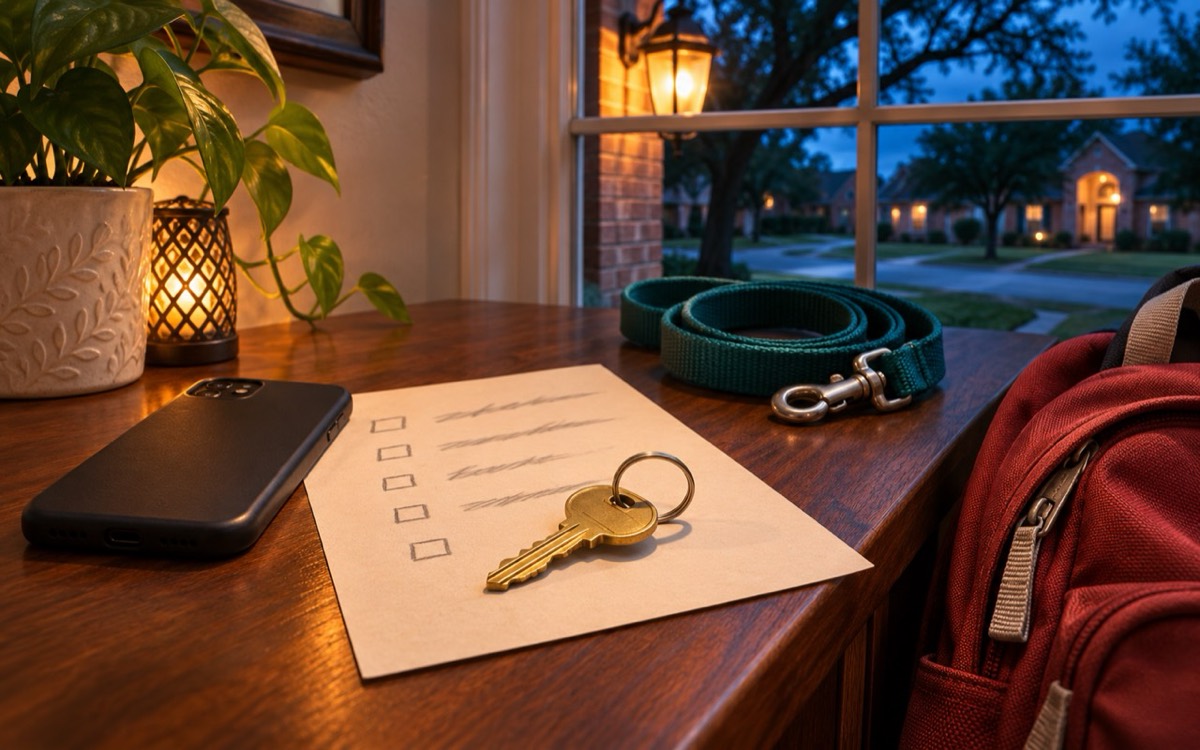
Residents can copy the following checklist and fill it in privately, keeping only information their designated helpers actually need:
- Primary and alternate helpers: names, phone numbers and agreed responsibilities.
- Household members and pets: time-sensitive needs and daily routines.
- Approved school pickup and established care arrangements.
- Safe home access: arrangements confirmed privately.
- Locations of essential supplies.
- Caregiver, school, service provider and veterinary contacts, as applicable.
- First actions to take and whom to notify.
- Date the plan was last reviewed.
Store the completed sheet securely and share it only with trusted helpers as appropriate. Keep private access codes, account credentials and financial information off the checklist.
Keep the Plan Current
A short walkthrough can reveal missing details while everyone has time to address them. Revisit the arrangements whenever caregivers, phone numbers, school schedules or household routines change. Confirm that both designated helpers remain comfortable with their responsibilities.
A clear household backup plan gives trusted people the information they need to help when everyday responsibilities cannot wait.

 Johnny Krenek has been connected to community news since childhood, growing up alongside the family business his parents founded—Krenek Printing. Today, he serves as Vice President and lead developer for My Neighborhood News, where he drives the digital experience and supports the team across a variety of technical and operational roles. He is passionate about building tools that help connect neighbors and strengthen communities.