







Hays County Officials Urge Residents to Stay Vigilant About Rabies: What You Need to Know to Protect Your Family and Pets
As Hays County continues to grow, so does interaction between neighborhoods and local wildlife — and with that comes renewed attention to rabies prevention in San Marcos, Kyle, Buda and across the county.
The Hays County Sheriff’s Office, in partnership with the Hays County Health Department (HCHD), is reminding residents that rabies remains a serious public health concern in Texas. While human cases are rare, the virus is almost always fatal once symptoms appear — making prevention, vaccination and early response essential for protecting families, pets and livestock.
For homeowners, parents and pet owners, the message is clear: understanding what rabies is, how it spreads and what to do after potential exposure can prevent tragedy.
What Is Rabies? Understanding the Risk in Hays County
Rabies is a viral disease that attacks the brain and nervous system. It spreads primarily through the saliva of an infected animal — most commonly through bites, but also when saliva enters a fresh scratch or open wound.
Health officials emphasize that rabies is not easily spread through contact with surfaces. Transmission almost always involves direct exposure to infected saliva.
In Texas, rabies is most commonly found in wildlife such as:
- Skunks
- Bats
- Coyotes
- Raccoons
- Foxes
All warm-blooded animals — including humans, dogs, cats and livestock — can contract rabies.
Although fewer than 10 people die from rabies each year in the United States due to effective post-exposure treatment, officials stress that prevention is still the strongest defense.
Signs of Rabies in Animals: What Residents Should Watch For
The Hays County Sheriff’s Office Animal Control Division urges residents to contact local animal control if they observe unusual wildlife or domestic animals displaying concerning behavior.
Warning signs of rabies in animals may include:
- Acting strangely, including being unusually aggressive or overly friendly
- Sudden seizures or convulsions
- Trouble moving, weakness or paralysis
- Confused or disoriented behavior
- Excessive drooling or foaming at the mouth
If you see a suspicious animal in your neighborhood, officials recommend being prepared to share:
- The exact location
- The time the animal was seen
- Whether it had contact with people or pets
- Any unusual behavior observed
Avoid approaching or attempting to handle wild or stray animals.

Rabies Symptoms in Humans
Rabies symptoms in humans can begin with fever, headache, nausea and vomiting. As the disease progresses, individuals may experience agitation, anxiety, confusion and difficulty swallowing.
Residents who are experiencing symptoms after an animal bite or exposure should seek immediate medical attention.
Once symptoms begin, rabies is nearly always fatal. However, prompt medical treatment after exposure — known as post-exposure prophylaxis — is highly effective in preventing illness.
What To Do If You or Your Pet Is Bitten
If a person or pet is bitten or scratched by an animal:
- Wash the wound immediately and thoroughly with soap and water.
- Identify the type of animal involved and the type of exposure (bite, scratch, saliva contact).
For humans:
- Seek medical care immediately. Post-exposure prophylaxis involves a series of shots that can prevent rabies if administered promptly.
For pets:
- Contact a veterinarian immediately.
Vaccinated pets that are exposed should be revaccinated and restrained (confined or leashed) for 45 days.
Unvaccinated pets should be vaccinated immediately and placed in strict isolation for 90 days, receiving booster vaccinations during the third and eighth weeks of isolation. If isolation is not possible and the animal was bitten by a known rabid animal, public health regulations may require humane euthanasia.
Officials emphasize that vaccination is the best way to prevent this outcome.
How to Protect Your Pets in Hays County
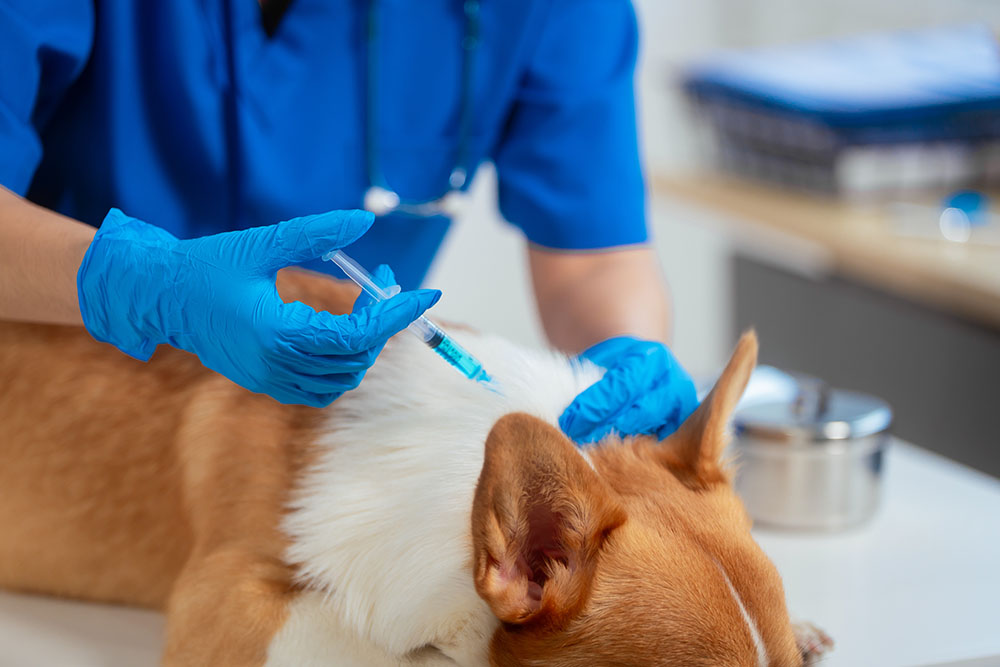
Texas law requires all dogs and cats to be vaccinated against rabies. In Hays County, pets must receive their first rabies vaccination by four months of age. Vaccines expire, and veterinarians may recommend a one-year or three-year booster schedule.
Additional protective steps include:
- Keeping pets indoors at night when possible
- Supervising pets when outside
- Using a leash when walking in unsecured areas
- Preventing contact with wildlife
- Spaying or neutering pets to reduce roaming behavior
Spaying and neutering can lower the likelihood of pets wandering and encountering wild animals that may carry rabies.
Who to Contact in Hays County
Residents with general questions about rabies in humans may contact:
Hays County Health Department (HCHD)
101 Thermon Drive
San Marcos, Texas 78666
Phone: 512-393-5520
Email: HCHDGeneral@hayscountytx.gov
To report animals suspected of having rabies:
Hays County Sheriff’s Office Animal Control Division
810 S. Stagecoach Trail
San Marcos, Texas 78666
Phone: 512-393-7896
City-specific contacts include:
San Marcos Animal Shelter and Animal Services
750 River Road
San Marcos, Texas 78666
Phone: 512-805-2650
City of Kyle Animal Control
Kyle Public Safety Center
1700 Kohler’s Crossing
Kyle, Texas 78640
Phone: 512-268-3232
City of Buda Animal Control
405 E. Loop Street, Building 100
Buda, Texas 78610
Phone: 512-312-0084
Why This Matters for Hays County Families
With neighborhoods expanding into rural and wooded areas across San Marcos, Kyle and Buda, encounters between pets and wildlife are more likely than in past decades. Proactive vaccination, responsible pet ownership and quick reporting help protect not only individual households but the entire community.
Rabies prevention is a shared responsibility — one that safeguards children playing in backyards, families walking neighborhood trails and livestock owners in rural areas of Hays County.
Residents are encouraged to review their pets’ vaccination records, talk with their veterinarian and save local animal control numbers in their phones.
For continued updates on public health advisories and community safety information in Hays County, stay connected with My Neighborhood News.

 Tiffany Krenek has been on the My Neighborhood News team since August 2021. She is passionate about curating and sharing content that enriches the lives of our readers in a personal, meaningful way. A loving mother and wife, Tiffany and her family live in the West Houston/Cypress region.
Local business spotlight
Grow your business
where trust already lives.
Let’s introduce your business to the neighbors nearby.
Have a local favorite?
Let’s make an introduction.
Leave your email and our team will reach out with ways to promote your business.
Give a local favorite a little love.
Know a business your neighbors should discover? Tell us who they are.
We couldn’t send that just yet. Please try again.