







Harris County Town Hall Highlights How HB 26 and Police Pay Raises Are Reshaping Neighborhood Safety
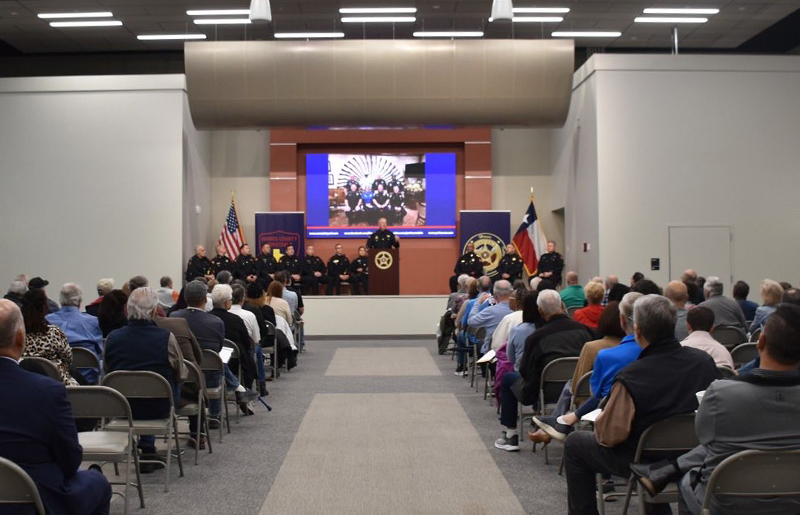
As Harris County continues to navigate changes in public safety policy and funding, a recent town hall hosted by Harris County Precinct 4 Constable Mark Herman is bring those shifts closer to home.
During the April 21, 2026 meeting, community leaders and residents gathered to discuss new law enforcement strategies made possible by Texas House Bill 26 (HB 26)—a law that has been in effect since December 4, 2025. The conversation also touched on broader public safety concerns, giving residents a chance to ask questions and share feedback directly with local law enforcement.
“All members of the Precinct 4 Constable’s Office remain committed to serving the community,” Herman said. “We are dedicated to working every day to ensure residents and visitors within our precinct feel safe—at home, in parks, while shopping, and while driving, biking or even walking our streets.”
The meeting also served as an early step in preparing for the upcoming Harris County budget season, which begins October 1, 2026—an important timeline as the county continues adjusting to recent policy and financial changes.
What Is Texas House Bill 26? Understanding the Law Now in Effect
Texas House Bill 26 applies to counties with populations exceeding 3.3 million, including Harris County, and introduces a significant change in how law enforcement services can be contracted.
The law allows sheriffs and constables to directly enter into agreements with:
- Homeowners associations (HOAs)
- Municipal utility districts (MUDs)
- School districts
- Property owners and landowners
- Other local government entities
These contracts can provide law enforcement services within and around those areas, serving both residents and visitors.
A key shift under HB 26 is that these agreements no longer require approval from the Harris County Commissioners Court. Instead, constables and the sheriff’s office can negotiate and determine contract terms independently.
Why This Law Is Gaining Attention Now: The Role of Pay Raises
While HB 26 is now active, its real-world impact is closely tied to another major development in Harris County: law enforcement pay increases approved in 2025.
The county moved to raise salaries for deputies and constables to better align with the Houston Police Department, aiming to improve recruitment and retention in a competitive market.
That decision, while focused on strengthening public safety staffing, also increased the cost of maintaining contract deputy programs—the same programs that many HOAs, MUDs, and local districts rely on for additional patrol services.
This is where HB 26 becomes especially relevant today.
By allowing law enforcement agencies to negotiate contracts directly, the law creates a pathway for departments and communities to adjust agreements more quickly in response to rising personnel costs—without going through the Commissioners Court approval process.
At the same time, the combination of higher salaries and decentralized contracting has raised important questions about how costs will be managed across different communities.

A Neutral Perspective: Oversight, Budgets, and Long-Term Planning
During the legislative process, Harris County officials outlined a neutral position on HB 26 while highlighting key considerations for implementation.
“The Harris County Commissioners Court remains neutral on HB 26 but seeks to provide relevant background and key considerations should the bill be enacted,” said Katelyn Caldwell of the Harris County Commissioners Court.
Her comments pointed to several important factors:
-
Scale of existing contracts: In Fiscal Year 2024, more than 350 contracts generated over $104 million in revenue.
-
Previous oversight structure: Contracts were historically reviewed by the County Auditor and County Attorney to ensure compliance and transparency.
- Budget coordination challenges: The interaction between HB 26 and laws like Senate Bill 23—requiring voter approval for certain funding changes—remains unclear.
These considerations are becoming more immediate as the county balances rising law enforcement costs with evolving contracting authority.
What This Means for HOAs, MUDs, and Harris County Neighborhoods
For residents, the intersection of HB 26 and increased law enforcement pay could influence how safety services are structured in their communities.
Possible changes include:
-
More direct partnerships: HOAs and MUDs may work directly with constable offices or the sheriff
-
Contract adjustments: Pricing and service levels may shift as departments respond to higher personnel costs
-
Tailored policing: Communities may have more flexibility to shape services based on local needs
-
Ongoing discussions: HOA meetings and local boards may increasingly focus on public safety contracts
For many neighborhoods—especially in unincorporated areas—these decisions could directly impact both safety services and community budgets.
What Happens Next: Budget Season and Community Conversations
As Harris County approaches its next fiscal year, the combined impact of HB 26 and law enforcement pay increases is expected to play a central role in budget discussions.
Residents may begin to see:
- New or updated law enforcement service proposals
- Increased communication from HOAs and MUD boards
- Continued community meetings focused on public safety planning
The April 21 town hall is one example of how these conversations are already unfolding at the local level—bringing policy decisions into real, neighborhood-focused discussions.
As these changes continue to take shape, staying informed will help residents better understand how public safety is funded, delivered, and evolving across Harris County.
Stay tuned to My Neighborhood News for ongoing coverage of local legislation, public safety updates, and the decisions shaping your community.

 Tiffany Krenek has been on the My Neighborhood News team since August 2021. She is passionate about curating and sharing content that enriches the lives of our readers in a personal, meaningful way. A loving mother and wife, Tiffany and her family live in the West Houston/Cypress region.
Local business spotlight
Grow your business
where trust already lives.
Let’s introduce your business to the neighbors nearby.
Have a local favorite?
Let’s make an introduction.
Leave your email and our team will reach out with ways to promote your business.
Give a local favorite a little love.
Know a business your neighbors should discover? Tell us who they are.
We couldn’t send that just yet. Please try again.