







Harris County Challenges EPA Rollback While Solar Program Lawsuit Continues: Why It Matters for Local Health and Energy Costs
Residents across Harris County may not immediately feel the impact of federal environmental policy—but county leaders say the decisions being made now could influence air quality, health outcomes, and energy costs for years to come.
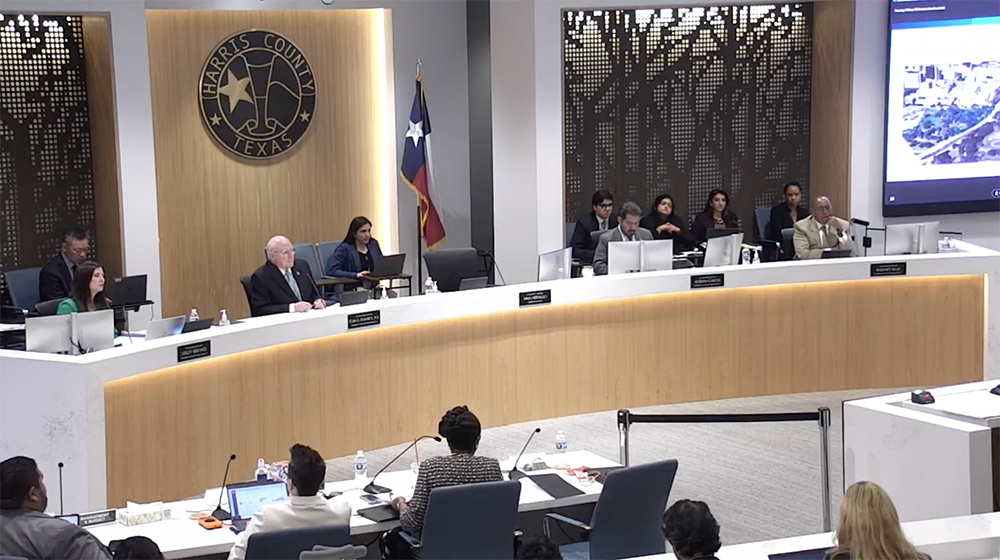
At its March 19, 2026 meeting, the Harris County Commissioners Court authorized legal action tied to a major shift in federal climate regulation, while also continuing its ongoing fight to restore solar energy funding intended to benefit low-income households.
Together, these efforts highlight a broader shift in how local government is approaching infrastructure, public health, and environmental accountability—not as separate issues, but as deeply connected parts of community growth.
Harris County Challenges EPA’s Rescission of Key Climate Finding
In a 3-1 vote, the Harris County Commissioners Court approved legal action challenging the U.S. Environmental Protection Agency’s rescission of the 2009 Greenhouse Gas “Endangerment Finding.”
Originally established in 2009, the Endangerment Finding gave the federal government authority under the Clean Air Act to regulate greenhouse gas emissions, including those from vehicles and power plants. Its removal could significantly limit federal oversight of emissions tied to air pollution.
County Attorney Jonathan Fombonne said the rollback disregards established science and weakens long-standing public health protections. Commissioner Rodney Ellis also raised concerns about how pollution impacts are distributed across communities, noting that areas already facing environmental burdens could be disproportionately affected.
Commissioner Tom Ramsey voted against the measure.
While the legal challenge will ultimately be decided in federal court, the decision signals Harris County’s growing role in national environmental policy debates—especially when local health outcomes may be at stake.
Local Cancer Data Brings the Issue Closer to Home
Just days after the vote, Harris County Public Health released a new Cancer Assessment Report that adds local context to the broader environmental conversation.
The report analyzed cancer patterns across 66 census tracts in East Harris County and found elevated rates of lung, bronchus, and liver cancers compared to the rest of the county. Brain cancer rates were also elevated in more than 15 tracts when compared to statewide Texas data.
What makes this report different is its precision. Instead of looking at large regions, researchers used tract-level data—Standardized Incidence Ratios (SIRs)—to identify specific neighborhoods where cancer rates are higher than expected.
The findings do not establish direct causation but point to environmental exposure as an ongoing concern, particularly in areas near industrial activity and known contamination sites.
The report also notes that Harris County Public Health is expanding environmental exposure assessments and has launched a Cancer Data Explorer tool, allowing residents to better understand conditions in their communities.

“Solar for All” Lawsuit Remains Ongoing
Separate from the March 19 vote, Harris County is continuing its federal lawsuit related to the “Solar for All” program.
Filed in October 2025, the lawsuit seeks to restore a $54 million grant awarded to Harris County as part of the larger $249.7 million Texas Solar for All Coalition effort. The program was designed to expand access to solar energy for low-income households and reduce electricity costs.
County officials argue the federal government’s decision to terminate the program and reclaim funds was unlawful because the funding had already been approved by Congress.
As of early 2026, the case is moving through federal court in Washington, D.C., with Harris County requesting a ruling that could reinstate the funding.
At the same March 19 meeting, Commissioners Court also advanced implementation-related items tied to the program, reflecting continued planning efforts even as the legal case proceeds.
Why This Matters for Residents Across Harris County
While much of the health data highlighted in the recent Harris County Public Health Cancer Assessment Report focuses on East Harris County, the implications reach communities across the entire county.
From urban neighborhoods inside Beltway 8 to rapidly growing suburban areas like Cypress, Katy, Spring, and Tomball, these decisions influence:
- Air quality near major roadways, industrial corridors, and ongoing construction
- Long-term environmental oversight tied to both new and existing development
- Energy affordability, especially as households navigate rising utility costs
- How future infrastructure projects account for environmental and public health impacts
The March 19 Harris County Commissioners Court agenda reflects that broader balancing act—where infrastructure investments, public health priorities, and environmental considerations are increasingly connected.
As Harris County continues to grow in both population and development intensity, the intersection of environmental policy, infrastructure planning, and community health is becoming more relevant to everyday life for residents countywide.
A Shift Toward More Connected Decision-Making
What’s emerging in Harris County is a more integrated approach to governance.
Rather than treating infrastructure, environmental policy, and public health as separate conversations, county leaders are increasingly connecting them through:
- Localized health data to guide decisions
- Environmental monitoring tied to development
- Legal action aimed at preserving regulatory protections
- Programs designed to lower energy costs while expanding access
For residents, this may show up gradually—in the form of cleaner air initiatives, energy programs, or more transparency around environmental risks.
What Happens Next
Both the EPA-related legal challenge and the Solar for All lawsuit are still working their way through federal courts.
Key developments to watch include:
- Court rulings on the EPA’s rescission of the Endangerment Finding
- Updates on the Solar for All case and potential restoration of funding
- Continued rollout of Harris County’s Cancer Data Explorer and environmental monitoring efforts
- Future Commissioners Court decisions that tie infrastructure to long-term health outcomes
For now, Harris County’s actions reflect a broader effort to shape how growth, health, and environmental responsibility come together across one of the nation’s largest counties.

 Tiffany Krenek has been on the My Neighborhood News team since August 2021. She is passionate about curating and sharing content that enriches the lives of our readers in a personal, meaningful way. A loving mother and wife, Tiffany and her family live in the West Houston/Cypress region.