







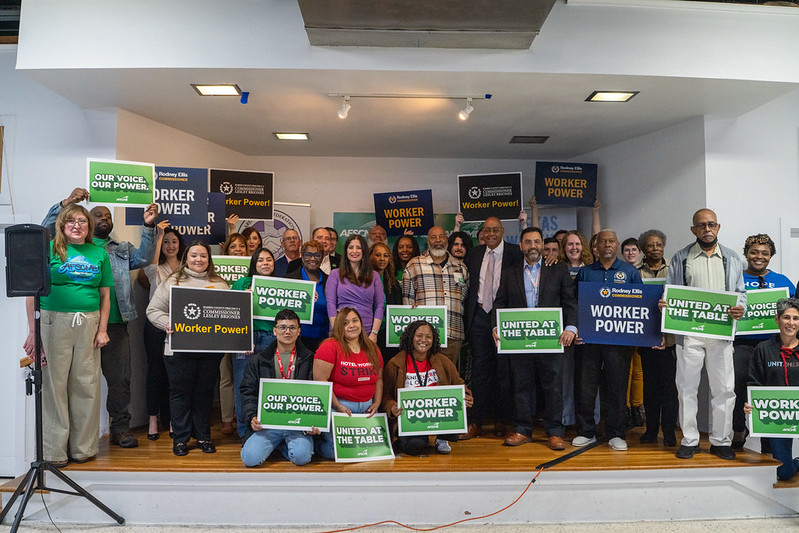
Harris County Approves First-Ever Worker Consultation Policy, Expanding Employee Voice Across Departments
For thousands of Harris County employees—and the residents who rely on their work—the way decisions are made inside county government may soon look different.
In a move described as a structural shift in workplace engagement, Harris County Commissioners Court has approved a first-of-its-kind Consultation Policy designed to create a formal pathway for employees to raise concerns, contribute ideas, and participate in shaping workplace policies. The policy, approved March 19, 2026, is expected to impact nearly 20,000 county workers and, by extension, the delivery of public services across one of the nation’s largest counties.
Why This Matters for Harris County Residents
From road maintenance crews to administrative staff, county employees are responsible for services residents interact with daily—transportation infrastructure, public health programs, permitting, and more. Supporters of the policy say creating clearer communication channels between workers and leadership could lead to more responsive government operations and improved service delivery.
For families and businesses in Harris County, the change is less about internal policy and more about outcomes: how efficiently roads are repaired, how quickly services are delivered, and how effectively departments respond to community needs.
A New Structure for Employee Input
At the center of the Harris County Consultation Policy is a framework intended to formalize collaboration between employees and management without establishing collective bargaining, which is restricted under Texas law.
The policy introduces several key components:
- A Consultation Agent, selected by eligible employees, to represent worker interests
- A Consultation Team with equal representation from employees and management
- Regular meetings to review workplace concerns and policy recommendations
- Support for employees navigating grievance and disciplinary processes
- A structured process for bringing employee-informed recommendations to Commissioners Court
Implementation is scheduled for October 2026, when employees will begin selecting their Consultation Agent and participating in the consultation process.

Leadership Perspective on Organizational Change
Commissioner Lesley Briones framed the policy as both an internal improvement and a broader investment in public service delivery.
“As a former Chief Talent Officer, I know strong, effective organizations put their people first. This is the first time Harris County has adopted a Consultation Policy; it is a win for our employees and for our community. By empowering workers’ voices and creating a pathway for employee-centered input, we build trust, strengthen our organization, and deliver better results for the Harris County families we serve,” Briones said.
Her comments reflect a wider effort within Harris County government to modernize workplace practices and address evolving workforce expectations.
Worker Advocacy and Broader Labor Context
The policy also aligns Harris County more closely with other major Texas cities, such as Austin and San Antonio, where similar consultation-style frameworks have been used to elevate employee input without formal collective bargaining.
Guillermo Vazquez, Deputy Director of the Harris County Workers’ Union, emphasized the significance of creating a consistent platform for employee voices.
"We have the power to make the voices of 5000+ public servants heard. Like the city workers in San Antonio and Austin, now county workers will have the platform to address working conditions and other issues workers care about. This is simply a unity table between labor and management, and it is good business too. It improves our public services and the working conditions of both frontline workers and management. It’s what Harris County residents and public servants deserve,” Vazquez said.
Advocates argue that policies like this can help local governments remain competitive in recruiting and retaining employees, particularly as workforce expectations continue to evolve nationwide.
Connecting Frontline Experience to Policy Decisions
For employees working in the field, the policy represents an opportunity to translate day-to-day experience into actionable improvements.
Leonard Washington, a Harris County Road & Bridge Foreman, described how frontline insight can shape better outcomes.
“Every day, my crew of six maintains 200 miles of infrastructure. We are the boots on the ground who see the gaps before they become issues. As a Foreman II, I encourage training and open communication of my crew members. They find the machines they are most comfortable with and learn quickly the best strategies for working with them. Guiding and listening to my team brings me the best results. I’ve spent 27 years keeping this county moving forward. As a frontline worker, I believe all of us that serve Harris County deserve a county that gets the job done right,” Washington said.
His perspective highlights a central premise of the policy: that employees closest to the work may offer insights that improve efficiency, safety, and service quality.
A Broader Push for Workforce Investment
The Consultation Policy is part of a wider set of workforce-focused initiatives underway in Harris County. Recent efforts include establishing a $20 minimum wage for county employees, higher wage standards for contractors, and ongoing work on a Countywide Pay Equity Initiative.
Commissioner Rodney Ellis connected the policy to broader economic and social goals.
“Everyone deserves dignity at work and the chance to build a decent life through their labor,” Ellis said. “Today’s vote honors the workers who keep Harris County running and takes another step toward a more affordable, fairer, and more just future for working people.”
County leaders have also been working with the Harris County Essential Workers Board to elevate frontline concerns and identify long-term improvements.
What Happens Next
With implementation set for October 2026, the coming months will focus on developing procedures for selecting Consultation Agents and establishing the first consultation meetings. How actively employees participate—and how recommendations are incorporated—will likely shape the policy’s long-term impact.
For residents, the effectiveness of the policy may ultimately be measured in everyday experiences: smoother services, improved communication, and a workforce that feels more connected to the decisions shaping their work.
As Harris County continues to grow, the policy represents one approach to aligning internal operations with the needs of a rapidly evolving community.
Residents can stay tuned to My Neighborhood News for updates on how this policy unfolds and what it means for Harris County neighborhoods, services, and families.

 Tiffany Krenek has been on the My Neighborhood News team since August 2021. She is passionate about curating and sharing content that enriches the lives of our readers in a personal, meaningful way. A loving mother and wife, Tiffany and her family live in the West Houston/Cypress region.