







Final Beam Signals Major Progress on New Alamo Visitor Center and Museum in San Antonio
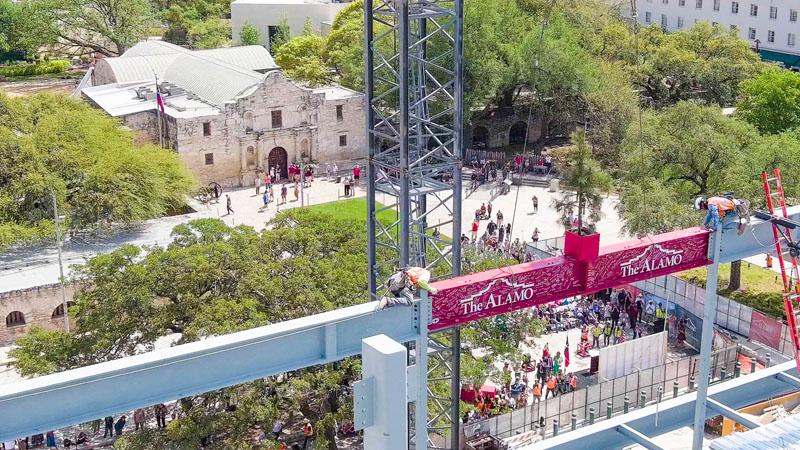
A major milestone in one of Texas’ most ambitious historic preservation efforts was reached as the final structural beam was placed atop the future Alamo Visitor Center and Museum, signaling visible progress in a project that will reshape how residents and visitors experience one of the state’s most meaningful landmarks.
For Texans, the Alamo is more than a historic site—it is a symbol of identity, sacrifice, and shared heritage. The new Visitor Center and Museum, scheduled to open in spring 2028, is designed to deepen that connection by telling the full 300-year story of the Alamo in a way that is immersive, accessible, and historically comprehensive.
Located across from the iconic Alamo Church in downtown San Antonio, the facility will transform the historic Crockett and Woolworth buildings through adaptive reuse, blending preservation with modern storytelling.
A Community Investment in Texas History
Texas Land Commissioner Dr. Dawn Buckingham joined Alamo Trust, Inc. President and CEO Secretary Hope Andrade and community stakeholders to mark the beam placement—often referred to as a “topping out” ceremony in construction—highlighting the collaborative effort behind the project.
“Every day, visitors ask us about one of the most treasured documents in Texas, The Travis Letter, written in a small house that used to sit where the Visitor Center and Museum is now being built,” Secretary Andrade said. “The letter has only returned to Alamo grounds twice since leaving Travis’ hands in 1836, but I’m proud to say it’s soon coming home, for good, to go on display inside this museum.”
The return of the Travis Letter—one of the most significant artifacts from the Battle of the Alamo—is expected to be a centerpiece of the museum, offering visitors a rare and permanent connection to a defining moment in Texas history.
“Today marks an exciting milestone in preserving and sharing the story of our beloved Alamo. The new Alamo Visitor Center and Museum will ensure that the full 300-year history of this sacred site - from its earliest days as a mission to the heroic stand in 1836, and how it continues to influence Texan culture today - can be experienced by future generations,” Commissioner Buckingham said. “It is a tremendous honor to help protect the Shrine of Texas Liberty, so every visitor understands the courage, sacrifice, and spirit that shaped the Lone Star State. The Alamo is where Texas' story changed forever, and this world-class museum will ensure that story continues to inspire the world for centuries to come.”

What the New Alamo Museum Will Offer Visitors
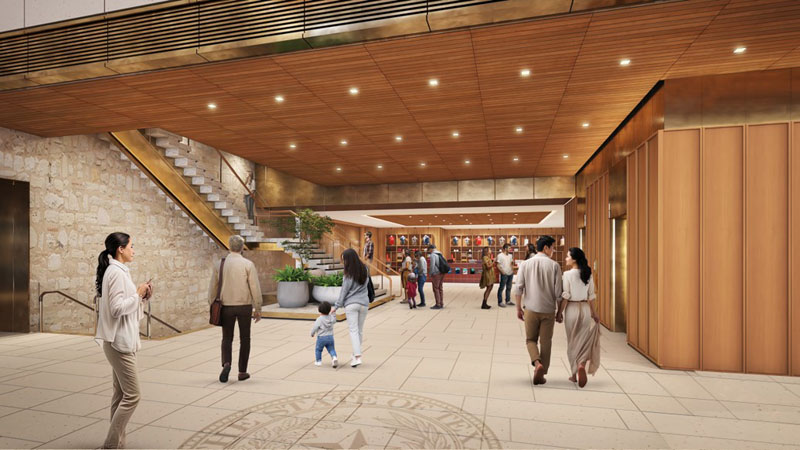
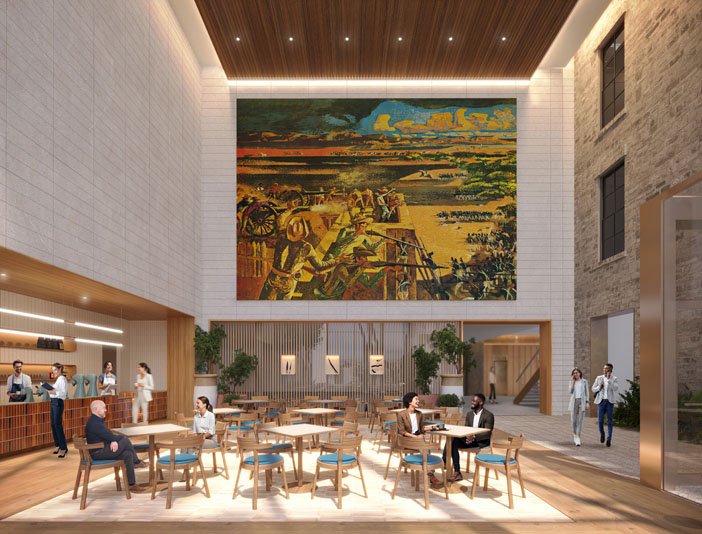
The future Alamo Visitor Center and Museum is being designed as a world-class cultural destination, incorporating both education and experience. Planned features include:
- Chronological galleries covering the Alamo’s full 300-year history
- A 4D theater experience bringing historical events to life
- A café featuring Texas-inspired cuisine
- A large event space overlooking the Alamo Church
These additions aim to create a more complete and engaging visitor experience for the more than 1.6 million people who visit the Alamo annually.
How the Alamo Plan Is Reshaping San Antonio
The new museum is a central component of the broader Alamo Plan, a long-term, state-supported initiative focused on restoring the historical integrity of the Alamo and its surrounding footprint.
Led by the Texas General Land Office in partnership with Alamo Trust, Inc., the plan is built around three core goals: preserving the original Alamo Church and Long Barrack, recapturing the historic mission site and battlefield footprint, and creating a world-class museum to tell the full story of the site.
The effort reflects a significant public investment, with more than $400 million approved by the Texas State Legislature to support restoration, preservation, and redevelopment.
As San Antonio has grown over the decades, much of the original battlefield was lost to urban development. The Alamo Plan seeks to reverse that impact by reestablishing the historic footprint—closing nearby streets to vehicle traffic, expanding pedestrian areas, and creating a cohesive Alamo District that connects to the River Walk.




Preserving the Shrine of Texas Liberty
While new construction is underway, preservation remains a central focus of the Alamo Plan—especially when it comes to protecting the Alamo Church and Long Barrack, the only surviving structures from the 1836 Battle of the Alamo. These historic limestone buildings have faced decades of gradual deterioration, largely due to rising damp from the ground seeping into the foundation, causing sections of the stone to weaken, flake, and crumble over time.
To address this, preservation teams have implemented a series of scientific and highly specialized conservation efforts. Moisture and temperature monitoring systems are now in place throughout the structures, allowing experts to track environmental conditions in real time and recommend targeted solutions. Borescope inspections—small camera probes inserted into the walls—are being used to identify hidden voids and structural concerns within the historic stonework, while cleaning and stabilization protocols are actively underway to protect the integrity of the Long Barrack walls.
At the same time, restoring dignity and reverence to the site has become a visible priority for visitors. Following the reunification of key portions of the original 1836 battlefield, steps have been taken to remove modern-day distractions from within the historic footprint. Activities such as protests, street preaching, and large gatherings have been relocated to nearby areas, allowing the Alamo grounds to better reflect their historical significance as a place of remembrance.
Safety enhancements are also part of this effort. The installation of security bollards and other protective measures helps safeguard both the structures and the millions of visitors who walk the grounds each year.
Guiding all of this work is Alamo Trust, Inc., the nonprofit organization charged with overseeing daily operations and implementing the Alamo Plan. Working alongside historians, archaeologists, preservation specialists, and museum consultants from across Texas and the United States, the Trust is ensuring that every step—from structural conservation to exhibit planning—honors both historical accuracy and the diverse narratives tied to the Alamo’s 300-year history.
What This Means for Texans and Visitors
For Texans, the continued progress on the Alamo Visitor Center and Museum represents more than a construction milestone—it reflects a long-term investment in how the state’s story is preserved, understood, and shared.
For many families, visiting the Alamo is a tradition passed down through generations. The expanded museum experience will allow those visits to become more immersive and educational, helping both longtime Texans and first-time visitors better understand not only the Battle of 1836, but also the site’s earlier role as a Spanish mission and its evolution through centuries of change in San Antonio.
The return of historically significant artifacts—most notably the Travis Letter—combined with new exhibition spaces and storytelling technologies, will create opportunities for deeper engagement. Visitors will be able to experience history where it happened, with a clearer understanding of the full battlefield footprint that once extended far beyond the Alamo Church itself.
Equally important, the Alamo Plan’s efforts to reclaim and redefine the surrounding district will reshape how people move through and experience downtown San Antonio. Expanded pedestrian areas, improved sightlines, and historically informed design elements will help visitors visualize the scale and reality of the original mission and fortress—something that has been difficult to grasp amid modern urban development.
For residents across Texas and the millions who visit each year, these changes are about connection—connecting past to present, honoring those who lived and died at the Alamo, and ensuring that future generations can engage with this defining chapter of Texas history in a meaningful and lasting way.
What Happens Next
Construction on the Alamo Visitor Center and Museum will continue over the next two years, with a grand opening targeted for spring 2028. As the Alamo Plan advances, additional updates are expected on expanded public spaces, new exhibits, and ongoing preservation work throughout Alamo Plaza.
For those who have visited before—and those planning their first trip—the transformation underway in San Antonio is set to redefine what it means to experience the Alamo.
Residents and visitors alike are encouraged to stay tuned to My Neighborhood News for continued updates on the Alamo Visitor Center and Museum, the Alamo Plan, and other developments shaping communities across Texas.

 Tiffany Krenek has been on the My Neighborhood News team since August 2021. She is passionate about curating and sharing content that enriches the lives of our readers in a personal, meaningful way. A loving mother and wife, Tiffany and her family live in the West Houston/Cypress region.