








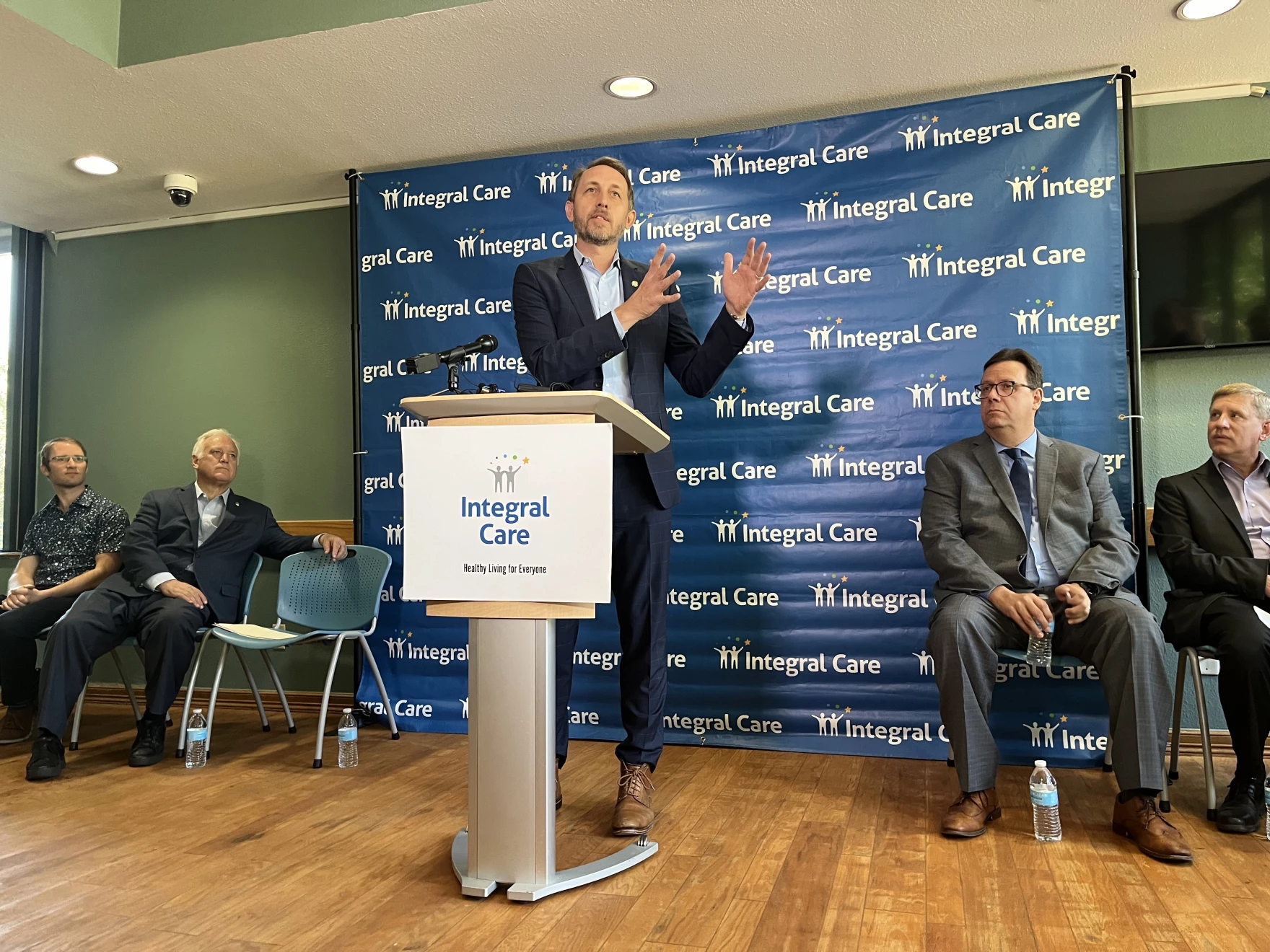
Early Results Show Travis County Mental Health Diversion Program Reducing Arrests and Crisis Episodes
For communities across Travis County, the conversation around public safety and mental health is increasingly focused on one question: what happens when people experiencing a mental health crisis receive treatment instead of jail time?
Newly released data suggests Travis County’s mental health diversion pilot program may be providing an answer.
According to reporting by KUT 90.5, a service of the Moody College of Communication at the University of Texas at Austin, early results from the county’s partnership with Integral Care indicate that participants in the program are experiencing fewer arrests, fewer emergency department visits, and fewer recurring mental health crises after receiving services designed to address the underlying causes of their involvement with the justice system.
The pilot program, launched in October 2024, was created through a collaboration between Travis County and Integral Care, the county’s local mental health authority. The initiative was developed in response to findings from a study conducted by Dell Medical School at The University of Texas at Austin, which found that at least 40% of people in the Travis County Jail had a mental health diagnosis. The study also highlighted a recurring pattern of individuals with mental illness cycling through the jail system for low-level offenses.¹
Early Data Points to Positive Outcomes
During a presentation to the Travis County Commissioners Court, Integral Care officials shared data from the program’s first year of operation.
Among individuals discharged from the program’s Psychiatric Emergency Services clinic—a 24-hour facility providing immediate mental health care—66% did not experience another crisis episode with Integral Care within 30 days, 94% were not arrested, and 72% did not visit an emergency department.¹
Marisa Malik, Director of Crisis Services and Justice Initiatives at Integral Care, said the findings demonstrate the value of connecting individuals to care before their situations escalate.
“The data really is supporting that through [2025] we have seen benefits of connection to care for individuals, reduction in arrests [and] emergency department utilization in crisis episodes,” Malik told Commissioners Court, according to KUT.¹
The county also reported encouraging results from its Therapeutic Diversion Program (TDP), which offers participants up to 90 days of support services, including assistance with health insurance, medications, employment training, and stable housing.
Within 30 days of discharge from the TDP, 91% of participants were connected to behavioral health care, 99% had not experienced another mental health crisis episode through Integral Care, 80% had not been arrested, and 87% had not visited an emergency department.¹
Beyond Crisis Response
Researchers say the program’s benefits may extend beyond reducing interactions with law enforcement.
According to KUT's reporting, Deborah Cohen, a mental health researcher with Dell Medical School, told county officials that some participants were able to secure employment during their stay in the Therapeutic Diversion Program.¹

Those outcomes are particularly significant as communities nationwide continue searching for solutions that balance public safety, mental health support, and responsible use of taxpayer resources.
For Travis County residents, the program represents a broader effort to address mental health challenges through treatment and support services rather than relying solely on incarceration for individuals accused of low-level offenses.
Challenges Remain as Demand Grows
Despite the promising results, officials caution that the program is still in its early stages.
Cohen noted there are limitations in the data, including the absence of a control group and the fact that participation is currently voluntary. Researchers also hope to study long-term outcomes beyond the initial 30-day window.¹
Meanwhile, demand continues to exceed available capacity.
According to Malik, more than 50 individuals are currently waiting to enter the Therapeutic Diversion Program, with average admission wait times ranging from six to eight weeks. Most referrals currently come after individuals have already entered the jail system, though officials are working to increase earlier intervention opportunities.¹
The program currently operates with only 25 available beds, creating ongoing challenges for expansion.
What Happens Next
Travis County leaders continue searching for a permanent facility that would allow the program to serve more residents.
KUT reported that Travis County Judge Andy Brown has previously sought state approval to purchase unused buildings at the Austin State Hospital campus for the program. While legislation supporting that effort received bipartisan backing, it did not advance during the last legislative session. Brown indicated he plans to revisit the issue during the 2027 Texas Legislative Session.¹
As communities across Texas grapple with rising mental health needs, Travis County’s early results are drawing attention as a potential model for reducing repeat arrests and connecting vulnerable residents with care before crises escalate.
For local families, first responders, healthcare providers, and taxpayers, the program’s early outcomes suggest that investments in mental health services may offer benefits that extend well beyond the justice system.
Stay tuned to My Neighborhood News for continued coverage of local government, public health initiatives, and community developments impacting Central Texas residents.
¹ McAfee, Katy. “Early data shows Travis County's jail diversion program reduces arrests, mental health crises.” KUT 90.5, May 22, 2026.

 Tiffany Krenek has been on the My Neighborhood News team since August 2021. She is passionate about curating and sharing content that enriches the lives of our readers in a personal, meaningful way. A loving mother and wife, Tiffany and her family live in the West Houston/Cypress region.
Local business spotlight
Grow your business
where trust already lives.
Let’s introduce your business to the neighbors nearby.
Have a local favorite?
Let’s make an introduction.
Leave your email and our team will reach out with ways to promote your business.
Give a local favorite a little love.
Know a business your neighbors should discover? Tell us who they are.
We couldn’t send that just yet. Please try again.