








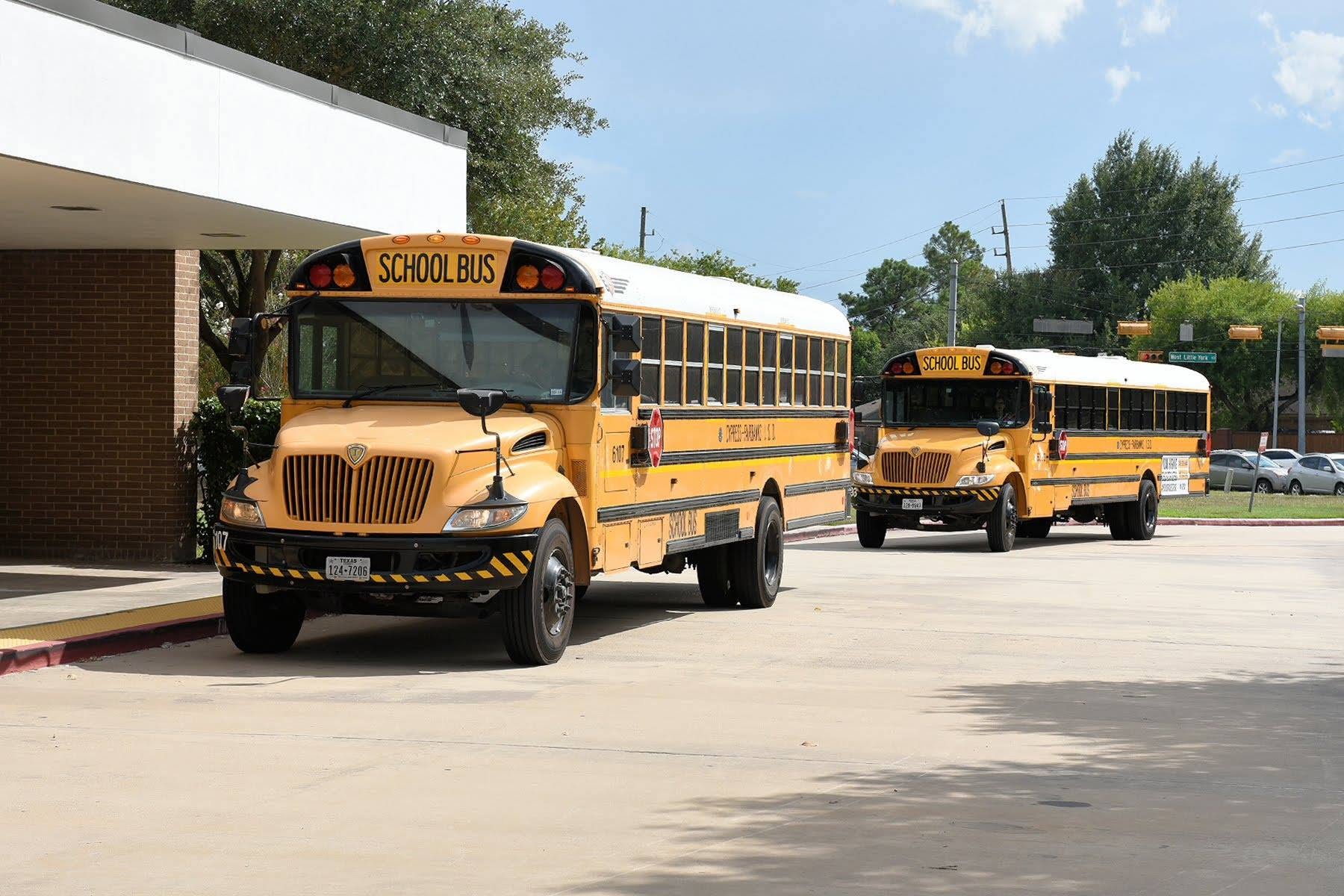
Cy-Fair ISD Back-to-School Safety: What Sydney Harbour Drivers Need to Know Before Aug. 12
The first day of school will quickly change the pace of daily life in Sydney Harbour.
Cypress-Fairbanks Independent School District begins the 2026-2027 school year on Wednesday, Aug. 12. School buses will return to neighborhood streets, children will gather near curbs and community entrances, and family vehicles will fill campus drop-off and pickup lines from before sunrise until late afternoon.
For residents, including those without school-age children, the return to class is a reminder to allow more travel time, slow down near bus stops and school zones, and watch carefully for students walking or biking between home and school.
A child can be difficult to see behind a parked SUV, mailbox, landscaping or construction equipment. A few extra seconds of patience at an intersection or behind a school bus can make a lasting difference for a neighborhood family.
Cy-Fair ISD School Hours Will Stretch Traffic Across the Day
Because Cy-Fair ISD campuses operate on several different schedules, back-to-school traffic will arrive in waves rather than during one brief morning and afternoon period.
Most district high schools, including Bridgeland, Cy-Fair, Cypress Creek, Cypress Falls, Cypress Lakes, Cypress Park, Cypress Ranch, Cypress Ridge, Cypress Springs, Cypress Woods, Jersey Village and Langham Creek high schools, operate from 7:15 a.m. to 2:35 p.m.
The Carpenter Center, Alternative Learning Center East, Alternative Learning Center West and Carlton Center follow the same 7:15 a.m. to 2:35 p.m. schedule. The Leonard Brautigam Center operates from 8:10 a.m. to 3:35 p.m., while Virtual Pathways maintains a flexible schedule.
Most Cy-Fair ISD middle schools operate from 7:45 a.m. to 3:05 p.m. Goodson Middle School has an extended schedule of 7:20 a.m. to 3:35 p.m.
Elementary school schedules vary more widely. Many campuses operate from either 8:15 a.m. to 3:35 p.m. or 8:45 a.m. to 4:05 p.m.
Holbrook and Metcalf elementary schools operate from 8:05 a.m. to 4:20 p.m., while Jowell Elementary School, serving grades three through five, operates from 8:40 a.m. to 4 p.m.
Parents should remember that the listed school hours do not necessarily indicate when children may enter the building. Cy-Fair ISD advises families to check with their individual campus for student arrival procedures.
For the broader community, these schedules mean school-related traffic may begin before 7 a.m. and continue past 4:30 p.m. as buses complete routes and families leave campuses.
The earliest morning wave will involve high school students, teenage drivers and Goodson Middle School families. Middle school traffic will follow, while elementary arrivals will keep neighborhood roads busy through approximately 9 a.m.
In the afternoon, high schools begin dismissing at 2:35 p.m., most middle schools dismiss at 3:05 p.m., and elementary dismissal continues through 4:20 p.m. Residents may encounter buses and young pedestrians for much of the afternoon.
When Must Texas Drivers Stop for a School Bus?
Texas law requires drivers approaching a stopped school bus from either direction to stop before reaching the bus when its required visual warning signal is operating.
Motorists may not proceed until the school bus resumes moving, the bus driver signals traffic to continue or the visual warning signal is no longer operating.
The easiest rule to remember is:
Flashing yellow lights mean slow down and prepare to stop. Flashing red lights and an extended stop arm mean stop completely.
Yellow lights warn that the bus is preparing to load or unload students. Red lights and an extended stop arm mean children may be entering or crossing the roadway.
Drivers should remain stopped until the red lights stop flashing, the stop arm is withdrawn and the bus begins moving again, unless the bus driver signals that motorists may proceed.
A motorist should never pass because no child is immediately visible. A student may be walking in front of the bus, crossing from the opposite side of the road or approaching from an area hidden by the bus itself.

Does Traffic in Both Directions Have to Stop?
On ordinary two-lane neighborhood roads, drivers approaching a stopped school bus from both directions must stop when the red lights and stop arm are activated.
The same rule generally applies on an undivided multilane road. Vehicles behind the bus must stop, and opposing traffic must also stop unless the bus is on a separate roadway divided by an intervening space or physical barrier.
Under Texas law, a driver traveling on a separate roadway is not required to stop for a bus positioned on the other roadway.
A painted center line or center turn lane should not be treated as a physical divider. TxDOT advises motorists to stop regardless of their direction of travel unless the school bus is on the opposite roadway of a divided highway.
That distinction can matter on the larger roads running through Cypress, Jersey Village and northwest Harris County. When drivers are uncertain whether a road is legally divided, stopping is the safer choice.
Ignoring a School Bus Stop Arm Can Be Costly
Passing a stopped school bus is not only dangerous. It can also result in a significant fine.
TxDOT states that a first offense can lead to a fine of up to $1,250. The agency also identifies driver inattention and speed as leading contributing factors in Texas crashes involving school buses.
In 2024, Texas recorded 2,480 crashes involving school buses. Eleven people were killed and 93 suffered serious injuries in those crashes.
Those numbers include more than children riding inside buses. The greatest danger often occurs while students are waiting at a stop, boarding, getting off or crossing the road.
NHTSA reports that less than 1% of traffic fatalities involve children aboard school transportation vehicles, but children face greater risk while approaching or leaving a school bus.
What Federal School Bus Rules Cover
There is no single federal roadway law telling every driver in the country exactly when to stop for a school bus. Those traffic requirements are established largely through state law, including the Texas Transportation Code.
Federal regulations primarily govern how school buses are built and equipped. NHTSA establishes Federal Motor Vehicle Safety Standards addressing features such as stop arms, warning lights, mirrors, occupant protection and rollover safety.
Every state has laws prohibiting drivers from illegally passing a stopped school bus when its red lights and stop arm are activated, although the rules for opposing traffic on divided roads vary by state.
In practical terms, federal standards help make the vehicle safer, while Texas law tells drivers in Sydney Harbour when they must stop.
Bus Stop Safety Begins Before the Bus Arrives
Families can reduce first-week anxiety by visiting the assigned bus stop before school begins and showing children exactly where they should wait.
NHTSA recommends that students arrive at least five minutes before the scheduled pickup and remain approximately 10 feet, or five large steps, away from the curb. Bus stops should not become places for running, pushing or playing.
Cy-Fair ISD advises students to arrive at their assigned stop five to 10 minutes early and wait in the designated area away from the roadway.
Students should wait until the bus stops completely, the door opens and the driver indicates that it is safe to approach. When crossing in front of the bus, they should walk far enough ahead to remain visible to the driver and check traffic in both directions.
Cy-Fair ISD teaches students to follow a 10-foot rule when crossing. Children should remain on their side of the road until the bus stops, wait for the driver’s signal, check traffic in both directions and cross directly in front of the bus.
Children should never walk behind a school bus. A student who drops a phone, book or water bottle near the vehicle should alert the driver instead of bending down to retrieve it because the driver may not be able to see the child.
Drivers Need to Watch Beyond the Bus
A stopped bus is not the only thing motorists should be watching.
Children may approach from a driveway, sidewalk, park, community center or the opposite side of the street. Middle and high school students may also gather at centralized neighborhood stops rather than directly in front of their homes.
Cy-Fair ISD says elementary bus stops may be placed at intermittent street corners, while stops for older students may be located at common gathering places such as parks or community centers.
Drivers should slow down before reaching these locations, even when a bus is not yet present. A group of students near a park entrance or corner may indicate an active bus stop.
Motorists backing from driveways should pause before crossing a sidewalk and check carefully for small children, bicycles and scooters. NHTSA advises drivers to remain alert for children in neighborhoods, school zones and bus-stop areas even when a bus’s warning lights are not flashing.

Walking and Biking Students Need Room to Be Seen
Children walking or biking to school may be especially difficult to see during the earliest morning commute.
High schools begin at 7:15 a.m., while Goodson Middle School starts at 7:20 a.m. Depending on weather and seasonal light conditions, students may be traveling while visibility is limited.
Families should encourage children to use sidewalks and designated crosswalks whenever possible. Students should look left, right and left again before entering a street and continue watching for vehicles while crossing.
Drivers should avoid blocking crosswalks, sidewalks and curb ramps while waiting in school traffic. A vehicle stopped across a pedestrian path may force a child into the road or hide the child from a turning motorist.
Phones and earbuds should remain put away while children cross streets. Drivers should also eliminate their own distractions before entering a school zone or residential area.
Parents Can Make Campus Drop-Off Safer
The first week of school often brings longer arrival lines as families learn new procedures and staff members help students find the correct entrances.
Parents should follow the designated campus traffic pattern rather than creating unofficial drop-off locations. Children should exit on the curb side when possible and should not be directed to run between parked or idling vehicles.
Drivers should avoid blocking neighborhood driveways, intersections and crosswalks while waiting for dismissal. Those areas may be needed by pedestrians, school buses, emergency vehicles or residents trying to reach their homes.
Leaving home five or 10 minutes earlier can reduce the pressure that leads to speeding, unsafe U-turns or sudden lane changes.
Families should also confirm when students are allowed to enter the building. Cy-Fair ISD notes that student arrival times may vary by campus even when campuses share the same official instructional hours.
Teenage Drivers Should Prepare for a Busier Commute
Cy-Fair ISD’s high schools begin at 7:15 a.m., placing student drivers on area roads during one of the earliest traffic periods of the day.
For some teenagers, Aug. 12 will be one of their first times driving to school without an adult in the vehicle. They may be navigating a new parking lot, unfamiliar traffic flow and a line of vehicles moving at different speeds.
Teen drivers should review their route before leaving, allow extra time and maintain a greater following distance behind buses and parent vehicles. School buses make frequent stops, and traffic near a campus can slow suddenly.
Parents can help by discussing where their student will park, which entrance to use and what to do when running late. Arriving after the bell is safer than speeding, texting or making an unsafe turn.
Teen drivers should also remember that the school day does not end when high schools dismiss at 2:35 p.m. Younger students and school buses will remain on the road until well after 4 p.m.
CFISD Families Can Use My Ride K-12
Cy-Fair ISD families can use the district’s My Ride K-12 system to find personalized transportation information.
The My Ride K-12 website provides a student’s assigned bus stop along with expected morning and afternoon pickup and drop-off times. The mobile app also allows guardians to track the assigned bus and view when a student scans on or off.
Cy-Fair ISD says bus stop times and route numbers are expected to be loaded during the week before school starts.
Families should make sure “District Bus” is selected as the student’s transportation method when registering or updating enrollment information. Parents changing an already-enrolled child from another transportation method to bus service should contact the campus.
Students are required to scan their district identification card when entering and exiting their assigned bus. Cy-Fair ISD says students without an RFID card or a temporary card issued by the campus will not be allowed to use afternoon bus transportation.
Families should use the route number displayed on the black signs along the sides and rear of the bus rather than the vehicle number on the bumper, since the physical bus assigned to a route may change.
Younger Students Must Be Met at the Bus
Parents of prekindergarten and kindergarten students should pay particular attention to afternoon drop-off procedures.
Cy-Fair ISD requires a caregiver designated by the parent or guardian to meet a prekindergarten or kindergarten student at the school bus. The caregiver may be an older sibling but should approach the front step of the bus to receive the child.
The district recommends that caregivers arrive at the stop five to 10 minutes before the expected drop-off time. When no eligible person is available, the student may be returned to campus.
Families should create a backup plan before the first day in case a parent is delayed. That may include an approved caregiver, trusted neighbor or other arrangement consistent with district rules.
Students are generally permitted to ride only their assigned bus and use their assigned stop. Temporary changes are limited to emergency circumstances and require written parental approval through campus personnel.
First-Week Bus Delays Are Possible
The first days of school can be difficult to predict.
Cy-Fair ISD notes that bus delays may occur as traffic adjusts, student assignments are confirmed, seating is organized and route directions are refined. Campuses may also need additional time to ensure every child boards the correct afternoon bus.
Parents may want to build extra flexibility into the first several afternoons and avoid assuming that a late bus means the route has been missed.
Consistent ridership helps the district confirm student and seating assignments. Cy-Fair ISD encourages students who plan to use bus transportation to begin riding on the first day.
For bus routes, transportation guidelines, My Ride K-12 information and district assistance, families can visit the Cy-Fair ISD Transportation website.
A Safer School Year Begins on Neighborhood Streets
Back-to-school safety does not begin at a campus entrance. It begins in driveways, at neighborhood corners and along the roads children use to reach their buses.
For Sydney Harbour, Aug. 12 will bring a longer daily traffic cycle stretching from early high school arrivals through elementary dismissals after 4 p.m.
The most helpful actions are straightforward: leave earlier, reduce speed, put down the phone, keep sidewalks and crosswalks open, stop fully for school buses and give inexperienced drivers room to make careful decisions.
The first few mornings may require a little more patience than usual. That patience helps ensure that students from across the neighborhood arrive at school safely and return home to their families at the end of the day.
Stay tuned to My Neighborhood News for additional Cy-Fair ISD updates, transportation information and community safety reminders throughout the 2026-2027 school year.

 Tiffany Krenek has been on the My Neighborhood News team since August 2021. She is passionate about curating and sharing content that enriches the lives of our readers in a personal, meaningful way. A loving mother and wife, Tiffany and her family live in the West Houston/Cypress region.
Local business spotlight
Grow your business
where trust already lives.
Let’s introduce your business to the neighbors nearby.
Have a local favorite?
Let’s make an introduction.
Leave your email and our team will reach out with ways to promote your business.
Give a local favorite a little love.
Know a business your neighbors should discover? Tell us who they are.
We couldn’t send that just yet. Please try again.