







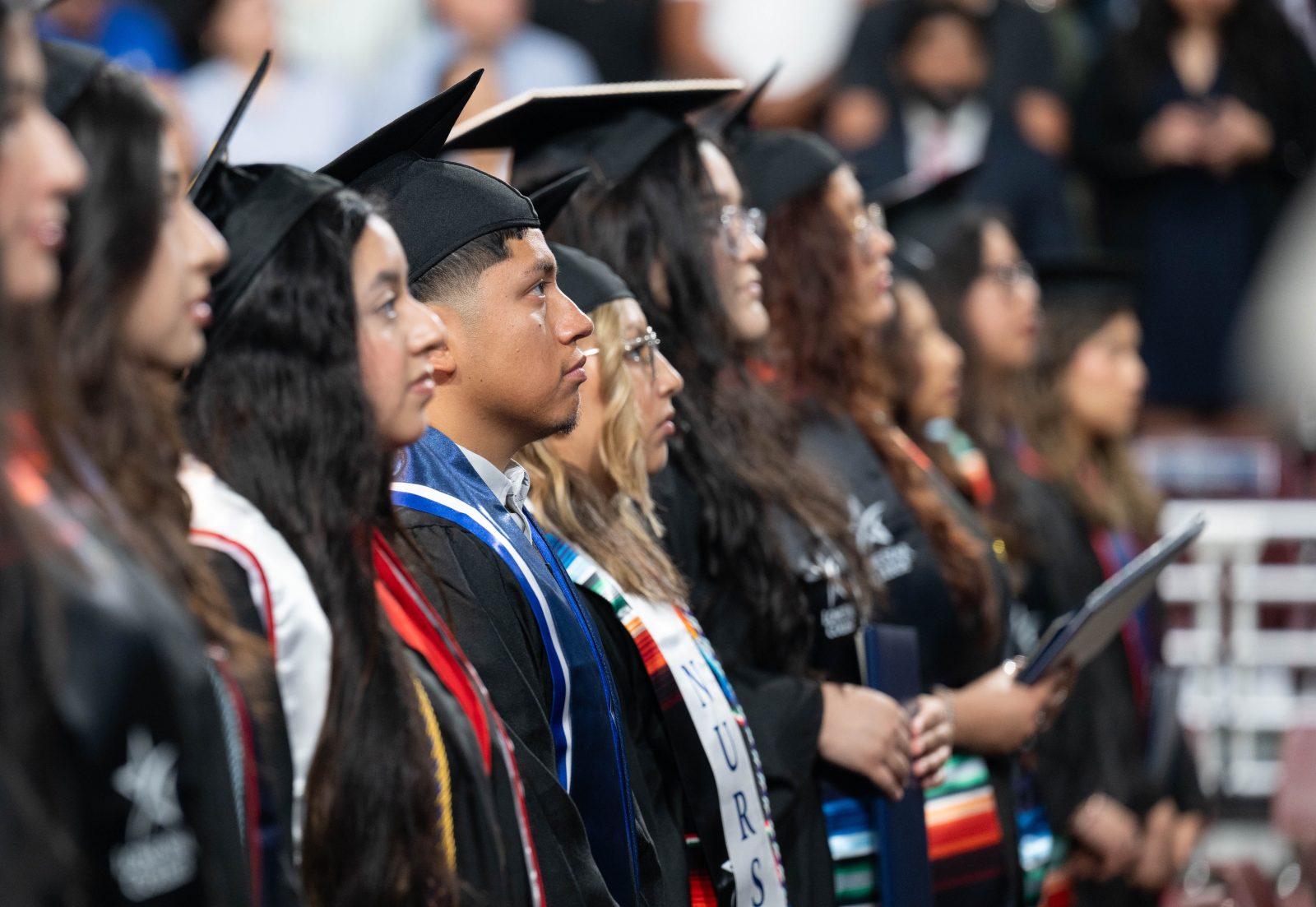
Lone Star College System Receives $4.9 Million Houston Endowment Grant to Help Houston-Area Students Graduate and Transfer to Universities
For thousands of Houston-area students, getting into college is only the beginning. Staying enrolled, completing required courses, managing financial pressures and navigating the transition to a four-year university can present challenges that sometimes stand between students and the degrees they hope to earn. A new $4.9 million grant from Houston Endowment aims to help Lone Star College System address those challenges by providing more consistent support throughout a student's educational journey.
Announced October 29, 2026, the multi-year investment will support Lone Star College System's Building Bridges to Credentials and Careers (BB2CC) initiative, a program designed to strengthen the connections between high school dual credit courses, community college completion and university transfer opportunities.
For families across Greater Houston, including those served by Aldine and Klein Independent School Districts, the initiative could make it easier for students to understand their college options, receive guidance when challenges arise and stay on track toward credentials that can lead to meaningful career opportunities.
How the $4.9 Million Grant Will Help Lone Star College Students Succeed
The Building Bridges to Credentials and Careers initiative will bring together academic advising, mentoring, student support services and technology to help students navigate their education from high school through college and, for those pursuing a bachelor's degree, into a four-year university.
Rather than relying on students to navigate each transition independently, the program establishes a coordinated system in which designated staff members help guide students through important academic milestones.
“Every student who comes to Lone Star College System brings aspirations for a better future. Our responsibility is to make the path toward that future clear and to provide consistent support as students move from one stage of their education to the next,” said Rigoberto J. Rincones Gómez, Ph.D., LSCS vice chancellor of Academic Affairs and project lead. “Through Building Bridges to Credentials and Careers, we are strengthening the connections among our schools, colleges and university partners so students have someone who knows their goals, helps them navigate challenges and follows through on their progress.”
The initiative will use a shared student success platform to connect mentors, academic advisors and university transfer navigators. This technology will help participating staff coordinate their efforts and maintain continuity as students move between institutions.
The grant will also support additional staffing and data analysis across Lone Star College campuses, helping the college system identify where students may need assistance before academic setbacks become obstacles to graduation.
From High School Dual Credit to University Transfer: How BB2CC Will Work
For students who begin earning college credits while attending high school, BB2CC is designed to provide support well before they officially enroll at Lone Star College.
The program follows students through three important stages of their education.
During high school dual credit enrollment, a dual credit academy mentor will help students navigate their coursework and prepare for the transition to college. Dual credit programs allow eligible high school students to earn college credit while completing high school requirements, potentially reducing the time and cost needed to earn a college credential.
After enrolling at Lone Star College System, students will transition to a campus advisor who will oversee their academic advising. A retention and gateway success director will provide additional support as students complete first-semester English and mathematics courses, which are important early milestones in many college degree plans.
When students prepare to transfer to a university, a transfer navigator will assume responsibility for helping them through the application process and transition to a four-year partner institution.
These planned transitions between support staff are intended to reduce gaps in advising that can occur when students move from one stage of their education to another.
For parents helping their teenagers plan for college, the approach offers the prospect of more consistent guidance. For students balancing classes with employment or family responsibilities, having someone familiar with their academic progress could make it easier to find assistance when needed.

Aldine ISD, Klein ISD and Three Houston-Area Universities Join Initiative
The BB2CC initiative already includes partnerships with two Houston-area public school districts and three universities.
Aldine Independent School District and Klein Independent School District are confirmed partners, creating opportunities to strengthen the connection between high school dual credit programs and postsecondary education.
Three universities have also committed to participating:
-
Sam Houston State University
-
Prairie View A&M University
-
University of Houston-Downtown
These partnerships will help Lone Star College System coordinate academic pathways and transfer support for students who plan to continue their education beyond an associate degree.
The college system has indicated that additional partners could be added depending on demand.
For students and families in the Klein and Aldine communities, participation by their local school districts is particularly relevant. Students considering dual credit courses or planning to attend Lone Star College after graduation may eventually benefit from a more coordinated pathway between their high schools, community college and participating universities.
Specific student eligibility requirements and enrollment procedures for BB2CC were not detailed in the announcement.
Supporting Students Who Face Additional Barriers to College Completion
While BB2CC is designed to strengthen student success across Lone Star College System, the initiative will place particular emphasis on students who may face additional challenges completing their education.
These include students eligible for federal Pell Grants, students who need additional academic preparation in English or mathematics, and adults returning to college after spending time in the workforce.
Pell Grants are federal financial aid awards generally available to undergraduate students with significant financial need. Unlike student loans, Pell Grants typically do not have to be repaid.
For many students, however, financial assistance alone does not resolve every challenge associated with completing a degree. Academic preparation, access to advising, work schedules and the process of transferring credits between institutions can all influence whether a student remains enrolled.
“Many students arrive at Lone Star College System with great ambition but end up leaving before they earn credentials that could transform their economic trajectories,” said Nicole Robinson Gauthier, CFRE, LSCS associate vice chancellor of Foundation Advancement and Donor Engagement. “This grant will allow the college system to build people and technology capacity to propel those students forward when they most need our support.”
The initiative's emphasis on adult learners is also significant for Greater Houston's workforce. Residents who previously attended college without completing a degree, or who want to develop new skills for a career change, are among the groups the program intends to support.
By helping students complete certificates, associate degrees and transfer pathways, Lone Star College hopes to improve access to educational credentials that employers recognize and value.
Houston Endowment Builds on Earlier $500,000 Planning Grant
The newly announced $4.9 million implementation grant follows a $500,000 planning grant awarded by Houston Endowment in fall 2025.
Together, the two grants represent $5.4 million in support for the development and implementation of the initiative.
The earlier funding helped lay the groundwork for BB2CC, while the latest investment will support the staffing, technology and data capabilities needed to put the program into practice across Lone Star College System.
Houston Endowment has a long history of investing in education and community development throughout the region.
Established in 1937 by Houston civic leaders Jesse H. Jones and Mary Gibbs Jones, the nonpartisan private foundation works to improve quality of life across Greater Houston. Today, the organization manages more than $2 billion in assets and invests approximately $100 million annually in initiatives supporting public education, civic engagement, arts and culture, greenspaces and emerging regional needs.
The foundation's investment in Lone Star College reflects a broader focus on expanding educational opportunity and helping residents participate in the region's economy.
“Houston isn’t short of jobs. It’s short of rungs on the ladder, and credentials of value can be those rungs,” said Elisa Villanueva Beard, president and CEO of Houston Endowment. “Community colleges form the biggest on-ramp to economic mobility in our region, and the people closest to the work are the experts. Our role is to help create the conditions for them to design solutions and learn from one another so that students across our region benefit.”
More information about the foundation and its work is available at HoustonEndowment.org.

Lone Star College System's Role in Higher Education and Workforce Development
With approximately 100,000 students enrolled each semester, Lone Star College System is a major provider of higher education and workforce training in the Houston area.
The system operates eight main campuses and more than 20 locations throughout the region, offering academic transfer programs, career and technical education, workforce training and other educational opportunities.
Its programs serve a wide range of students, including recent high school graduates, working adults, students preparing to transfer to universities and residents pursuing certifications for specialized careers.
Under Chancellor Mario K. Castillo, J.D., Lone Star College System's strategic priorities focus on financial resilience, academic excellence, talent development and building bridges to prosperity.
The college system was also recognized as a 2026 Great Colleges to Work For institution by The Chronicle of Higher Education.
The BB2CC initiative fits into the system's broader efforts to improve academic outcomes while responding to the educational and workforce needs of the Houston region.
For local employers, helping more students complete college credentials could contribute to a larger pool of qualified workers. For students, successful completion can open doors to additional education, professional advancement and career opportunities.
Lone Star College Foundation Has Awarded Nearly $33 Million in Scholarships
Alongside institutional initiatives such as BB2CC, Lone Star College Foundation plays an ongoing role in helping students overcome financial barriers to higher education.
Since its establishment in 1991, the Foundation has awarded nearly $33 million in scholarships and provided approximately $16 million in program support, benefiting more than 30,250 students.
Its assistance includes tuition scholarships, emergency financial relief and textbook funding, helping students manage educational expenses that can sometimes interfere with their ability to remain enrolled.
The Foundation's work complements the goals of Building Bridges to Credentials and Careers by addressing financial needs while the new initiative focuses on improving advising, academic progress and educational transitions.
Community members and businesses interested in supporting Lone Star College students can learn more about giving opportunities at LoneStar.edu/Giving.
What Happens Next for Houston-Area Students?
With the $4.9 million implementation grant announced, Lone Star College System will work to strengthen the staffing, technology and coordinated advising structure supporting BB2CC.
The initiative is expected to connect participating students with mentors and advisors throughout their educational pathways, beginning with dual credit opportunities and continuing through college completion or university transfer.
The announcement did not specify when students will begin participating in the fully implemented program, how many students will initially be served or when additional school and university partnerships may be announced.
For families interested in dual credit opportunities, college enrollment or transfer planning, contacting their high school counseling office or a Lone Star College academic advisor remains a practical starting point.
Ultimately, the significance of the Houston Endowment investment will be measured by how effectively the initiative helps students stay enrolled, complete their credentials and reach their educational goals.
For a high school student preparing for college, a parent trying to understand the cost of higher education or an adult considering a return to the classroom, those outcomes can have lasting implications.
More information about Lone Star College System, its academic programs and university transfer opportunities is available at LoneStar.edu.
Stay connected with My Neighborhood News for updates on Lone Star College System, local education initiatives, school district partnerships and opportunities affecting students and families throughout Greater Houston.

 Tiffany Krenek has been on the My Neighborhood News team since August 2021. She is passionate about curating and sharing content that enriches the lives of our readers in a personal, meaningful way. A loving mother and wife, Tiffany and her family live in the West Houston/Cypress region.

Local business spotlight
Grow your business
where trust already lives.
Let’s introduce your business to the neighbors nearby.
Have a local favorite?
Let’s make an introduction.
Leave your email and our team will reach out with ways to promote your business.
Give a local favorite a little love.
Know a business your neighbors should discover? Tell us who they are.
We couldn’t send that just yet. Please try again.