







Before the Next Freeze in Westheimer Lakes: Protect Pipes and Outdoor Faucets
This week’s cold front brought near-freezing temperatures to parts of Texas, offering homeowners in Westheimer Lakes a timely reminder to check exposed pipes, outdoor faucets and the household water shutoff before the next cold spell. Making those preparations now is considerably easier than trying to locate a shutoff valve in the middle of a winter plumbing emergency.
Temperatures in the Hill Country and Edwards Plateau dropped to 27 to 32 degrees Fahrenheit on November 25, as recorded in the National Weather Service’s November 25 forecast discussion. Houston’s major airports recorded lows in the upper 30s on November 26. Conditions varied across the state, and not every community experienced a freeze.
Water expands when it freezes, creating pressure that can rupture metal and plastic plumbing. While basic winterization reduces that risk, it cannot guarantee protection during a prolonged or severe freeze.
Which Water Pipes Need Protection Before a Freeze?
The American Red Cross identifies plumbing in unheated spaces and along poorly insulated exterior walls as particularly vulnerable. Homeowners should examine both hot and cold water lines in garages, attics, crawl spaces and cabinets along outside walls. Properly fitted pipe insulation can help protect accessible plumbing.
Gaps around plumbing penetrations and damaged attic insulation also deserve attention. A plumber can help assess pipes that are difficult to reach or repeatedly exposed to cold air.
Protect Outdoor Faucets, Sprinkler Systems and Pools
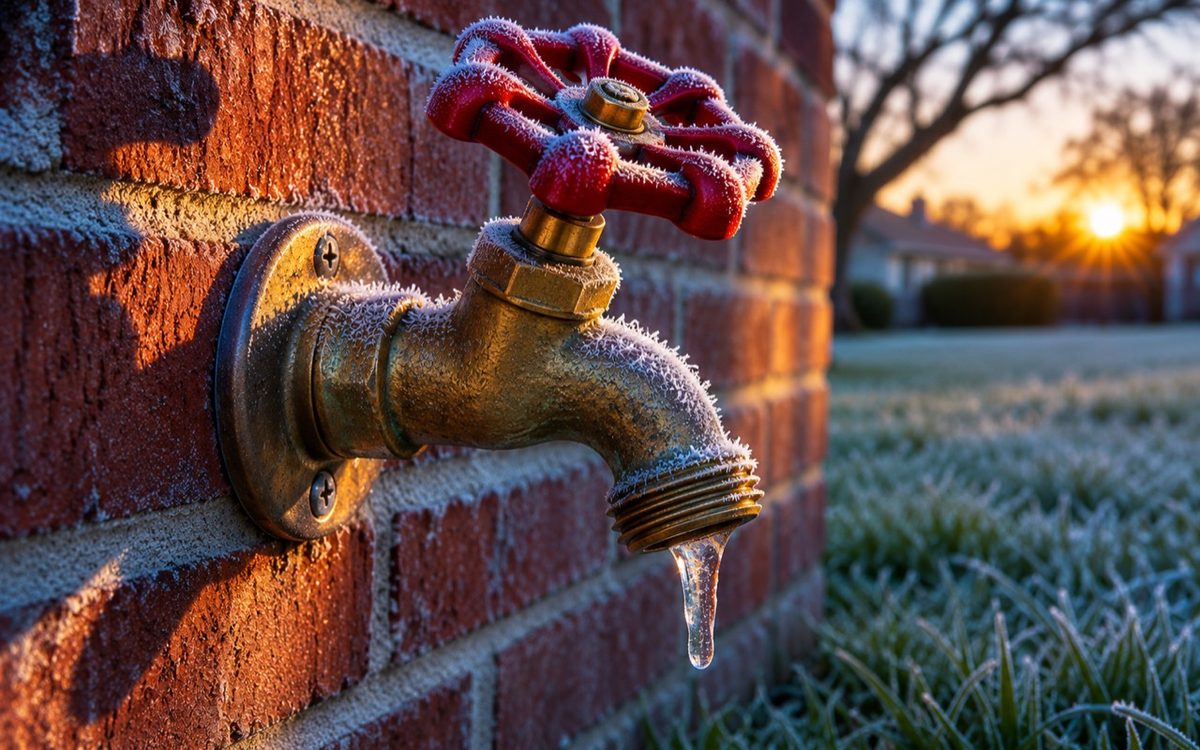
Garden hoses should be disconnected, emptied and stored, and exposed outdoor faucets should be protected with appropriate insulated covers. Homes equipped with dedicated indoor shutoffs for outdoor faucets may require additional draining according to their plumbing design.
Automatic irrigation systems, exposed backflow prevention assemblies and swimming pool equipment need individual attention. Homeowners should follow manufacturer or installer instructions for shutting down, draining or protecting each system. An irrigation or pool professional can help when the correct procedure is unclear, particularly if equipment requires specialized winterization.
Locate and Check the Household Water Shutoff
The Texas Department of Insurance’s home winter readiness guide recommends locating and testing the household water shutoff before an emergency. Everyone responsible for the home should know where it is and how to operate it safely.
If the valve is stuck, inaccessible or cannot be confidently identified, a licensed plumber can help. Residents should not attempt to operate utility-owned meter valves without authorization from their water provider.

Should Faucets Drip During Freezing Weather?
The answer depends on local conditions and water provider guidance. The Texas Department of Insurance’s winter storm guidance advises following local water-use instructions. Residents should check their utility’s recommendations about which faucets, if any, should drip and whether hot or cold water should be used.
During freezing weather, keeping garage doors closed and opening sink cabinet doors can help household warmth reach vulnerable plumbing. Cleaning products and other hazardous chemicals should first be moved somewhere children and pets cannot reach.
Households traveling during a cold spell should leave the heating system running. The Red Cross recommends setting the thermostat no lower than 55 degrees Fahrenheit when away. TDI also recommends shutting off the household water supply before leaving ahead of a freeze.
What to Do If Pipes Freeze or Burst
An unusually weak stream from a faucet during freezing weather may indicate ice inside a pipe, although water service interruptions can also cause low pressure. Residents should check with their provider about possible outages.
For suspected frozen or burst plumbing, TDI recommends closing the household water shutoff to limit leakage as ice melts. A licensed plumber should be contacted when the affected pipe is inaccessible or the extent of damage is uncertain. Open flames must never be used to thaw plumbing.
The cooler weather is also a good opportunity to schedule heating system maintenance, test smoke and carbon monoxide alarms according to manufacturer instructions, and replenish emergency water, shelf-stable food and batteries. Residents can follow My Neighborhood News for seasonal preparedness reminders and community updates.

 Johnny Krenek has been connected to community news since childhood, growing up alongside the family business his parents founded—Krenek Printing. Today, he serves as Vice President and lead developer for My Neighborhood News, where he drives the digital experience and supports the team across a variety of technical and operational roles. He is passionate about building tools that help connect neighbors and strengthen communities.