






Austin’s Congress Avenue Bat Bridge Gets a New Bat City Experience, Bringing Visitors Closer to the Story Behind the Colony
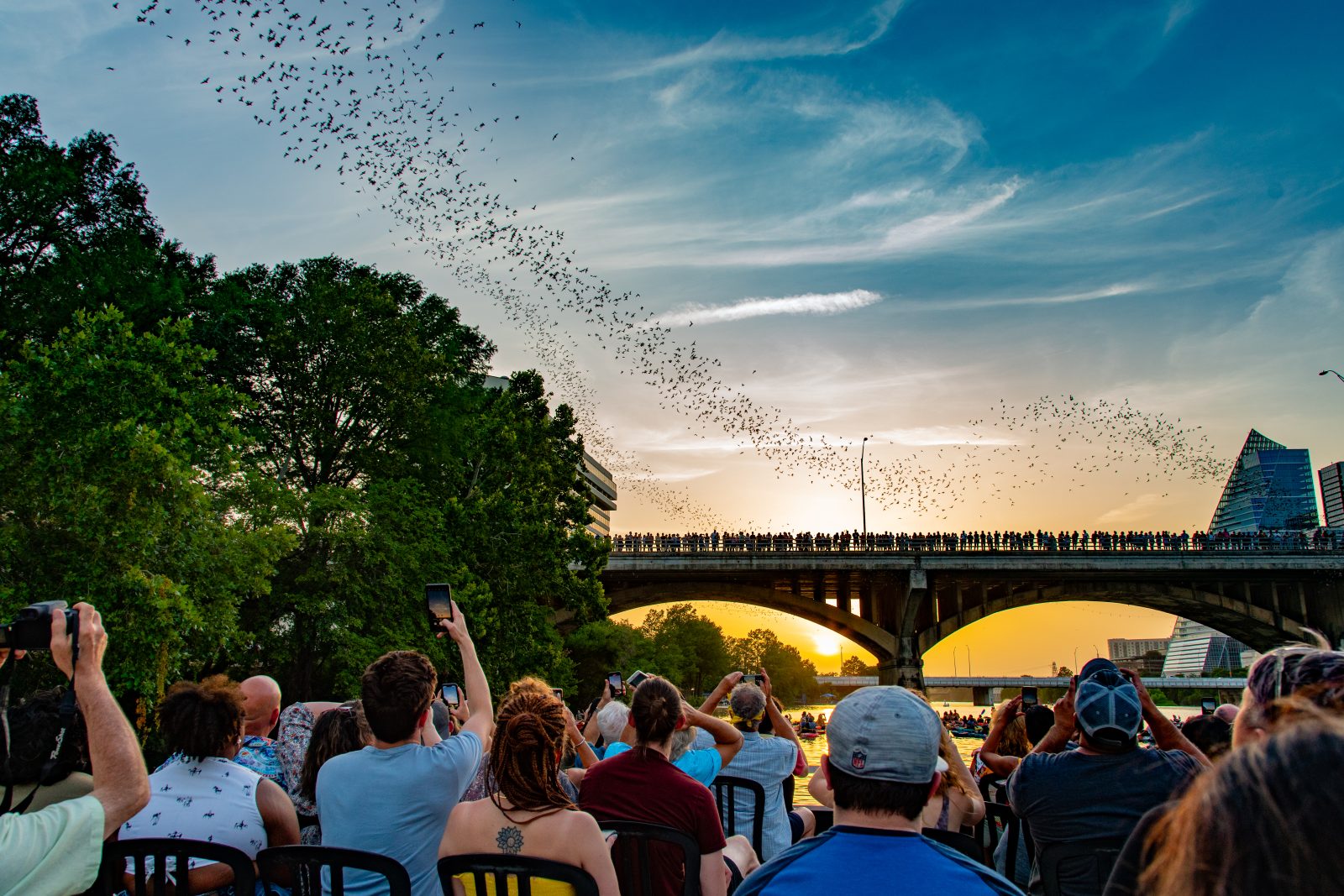
For generations of Austinites, watching the bats pour out from beneath the Ann Richards Congress Avenue Bridge has been one of those unmistakably local experiences — part nature show, part community gathering and part reminder that wildlife can thrive in the middle of a growing city.
Now, the experience comes with more of the story.
The new Bat City visitor experience is officially live at the Congress Avenue Bridge bat viewing area, adding educational signage, QR-linked digital content, short films, interactive activities and resources designed to help people better understand the Mexican free-tailed bats that have made downtown Austin internationally known.
The project launched Aug. 26 at the south viewing area near the Ann and Roy Butler Hike-and-Bike Trail, turning what has long been primarily a place to wait for the evening bat emergence into a more immersive destination for families, tourists, educators and longtime Austin residents.
Bat City Adds a New Layer to an Austin Tradition
During bat season, more than 1.5 million Mexican free-tailed bats can occupy the bridge, making the Congress Avenue colony one of the largest urban bat populations in the world. The evening emergence has become a signature Austin attraction, with spectators gathering along the bridge, shoreline and nearby trails around dusk.
Until now, however, visitors arriving at the popular Statesman viewing area had relatively little on-site information explaining what they were seeing or why the colony matters.
Bat City was developed to fill that gap.
Created by Emmy Award-winning Austin wildlife filmmaker Skip Hobbie, the project brings together Merlin Tuttle’s Bat Conservation, Austin Bat Refuge, Bat Conservation International, The Trail Conservancy and the Texas Parks and Wildlife Foundation.
“Bats are secretive, nocturnal animals that don’t always get the attention they deserve, yet in the heart of downtown Austin we have one of the most extraordinary wildlife spectacles in North America,” Hobbie said. “This project brings that work home and helps people better understand these incredible animals in my own city.”
New interpretive signs at the south viewing area include QR codes directing visitors to BatCity.info, where they can explore videos, bat facts and interactive material. The project’s English-language digital content launched Aug. 26, while Spanish-language content is scheduled to become available Sept. 16.
Meet Bootsy the Bat — and Learn While Waiting for Dusk
One of Bat City’s more playful features is “Bootsy the Bat,” a handmade textile puppet who narrates a series of short educational films.
Austin musician Carrie Rodriguez provides Bootsy’s voice in English and Spanish.
The videos address some of the questions commonly asked by people visiting the Congress Avenue Bridge bats, while also examining bat myths, conservation and the animals’ ecological role.
Visitors can also try a “Fact or Fiction” trivia activity, participate in a bat-themed scavenger hunt and explore additional family-friendly learning tools.
The project is intended to travel beyond the bridge as well. TEKS-aligned curriculum materials developed with Texas educators are designed to give teachers another way to bring bat science, ecology and conservation into classrooms.
That educational focus is significant because bats provide benefits that are easy to overlook while watching thousands of them stream across the evening sky. Insect-eating bats help control agricultural pests, reducing both crop losses and reliance on pesticides, while other bat species around the world serve as important pollinators and seed dispersers. Merlin Tuttle’s Bat Conservation describes bats as essential contributors to ecosystems and human economies.

The Trail Conservancy Connects Wildlife With Austin’s Urban Landscape
Bat City also fits naturally into the broader work of The Trail Conservancy, which protects, enhances and connects the Ann and Roy Butler Hike-and-Bike Trail around Lady Bird Lake.
The nonprofit traces its roots to 2003, when trail users formed the Town Lake Trail Foundation to help improve and preserve a public space first developed through community-led beautification efforts decades earlier. The organization later became The Trail Conservancy and today helps operate and maintain the 10-mile Butler Trail and nearly 300 acres of surrounding parkland through an agreement with the City of Austin. Since its creation, the organization says it has invested more than $25 million in improvements, programming and community engagement along the trail.
The Congress Avenue bat colony sits at the intersection of much of that work: urban recreation, wildlife habitat, shoreline health and public education.
“The Trail is a natural sanctuary in the heart of Austin, where people, wildlife, and the shoreline are all connected,” said Julie Fisher of The Trail Conservancy. “What happens along the Trail impacts the health of the lake and the habitat it supports. Austin’s bat colony is one of the most visible examples of how urban ecology enriches both our natural environment and our community. The new interpretive signs will help visitors better understand that connection, creating opportunities for education, stewardship, and a deeper appreciation for one of Austin’s most iconic natural assets – our bats.”
Merlin Tuttle Helped Change the Way Austin Saw Its Bats
The timing of Bat City’s Aug. 26 launch also carried special meaning because the date is recognized locally as Merlin Tuttle Day, honoring one of the conservationists most closely connected with Austin’s transformation into a bat-friendly city.
Dr. Merlin Tuttle has spent more than six decades studying and photographing bats around the world. He founded Bat Conservation International in 1982 and led the organization for nearly three decades before later founding Merlin Tuttle’s Bat Conservation, or MTBC, in 2014. The Austin-based nonprofit uses science, field research, education and photography to combat misconceptions about bats and encourage practical conservation.
His work is particularly connected to the Congress Avenue colony.
When large numbers of bats began establishing themselves beneath the reconstructed bridge decades ago, public reaction was not always welcoming. Concerns about disease and safety led some residents to call for their removal. Tuttle became one of the prominent voices explaining the animals’ behavior and ecological value, helping change public perception of a colony that would eventually become a source of Austin identity and tourism.
That history makes Bat City more than a set of new signs. In many ways, it continues the same kind of public education that helped turn a once-misunderstood colony into something Austin now celebrates.
What Bat City Means for Families and Visitors
For someone arriving simply to search for the best place to watch bats in Austin, Bat City offers practical context while they wait for sunset.
For local families, it creates another free or low-barrier educational opportunity along Lady Bird Lake. For teachers and students, it offers science lessons grounded in a living ecosystem just blocks from downtown. And for visitors unfamiliar with Austin’s bat history, it explains why so many people gather around the Congress Avenue Bridge every evening.
Bat City says the experience is designed to reach the estimated 140,000 people who visit Austin’s famous bat bridge each year, engaging them before, during and after their time at the viewing area.
It also reflects something increasingly important in a fast-growing city: helping people understand that parks, trails, waterways and wildlife habitats are connected rather than separate pieces of the urban landscape.
The Congress Avenue bats have long delivered the spectacle. Bat City is now giving visitors the story behind it.
For Austin residents who have watched the colony become part of the city’s identity — and for newcomers seeing the famous bat flight for the first time — that added context may make an already memorable evening along Lady Bird Lake feel a little more meaningful.
Stay tuned to My Neighborhood News for more local updates on Austin-area parks, wildlife, community destinations and family activities.

 Tiffany Krenek has been on the My Neighborhood News team since August 2021. She is passionate about curating and sharing content that enriches the lives of our readers in a personal, meaningful way. A loving mother and wife, Tiffany and her family live in the West Houston/Cypress region.
Local business spotlight
Grow your business
where trust already lives.
Let’s introduce your business to the neighbors nearby.
Have a local favorite?
Let’s make an introduction.
Leave your email and our team will reach out with ways to promote your business.
Give a local favorite a little love.
Know a business your neighbors should discover? Tell us who they are.
We couldn’t send that just yet. Please try again.