








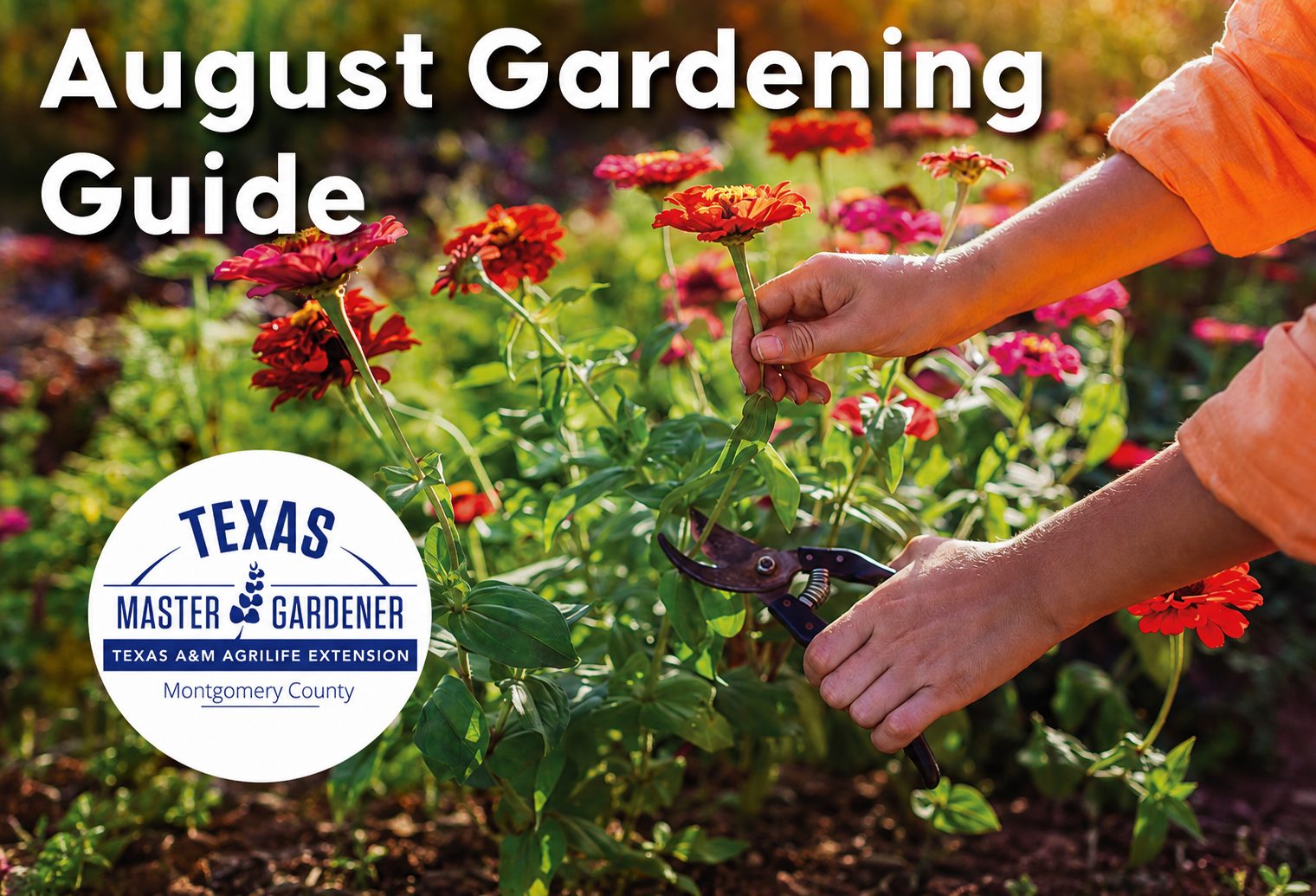
August Gardening Checklist for Magnolia Springs: Montgomery County Tips for a Healthier Yard
By August, even an enthusiastic Montgomery County gardener may be tempted to admire the yard from the air conditioning.
The combination of intense sunshine, high temperatures and stretches of limited rainfall can be hard on lawns, flower beds, vegetable gardens and container plants. It can also be hard on the people caring for them.
August is not necessarily the month for a dramatic landscape overhaul. Instead, it is a good time to protect what is already growing, watch for signs of stress and make a few thoughtful preparations for the seasons ahead.
In a Montgomery County Master Gardener Association blog post titled “What’s Happening in Your Garden in August,” author Elisabeth Castro describes August as the area’s hottest month and encourages gardeners to pay close attention to watering, especially in containers. Her locally focused advice offers a useful starting point for residents of Magnolia Springs who want to help their landscapes make it through the final stretch of summer.
Make Watering the First Priority
Plants can lose moisture quickly during a Montgomery County summer, but more water is not always better. The goal is to water deeply and thoughtfully rather than automatically turning on the sprinklers every day.
Check the soil before watering. A lawn or flower bed may look dry on the surface while still holding moisture a few inches below. When irrigation is needed, watering deeply generally encourages roots to grow farther into the soil, where they are better protected from heat and rapid evaporation.
Early morning is typically the best time to water. Cooler temperatures allow more moisture to reach the soil before it evaporates, while leaves have time to dry during the day.
Watch for signs that plants may be struggling, including:
- Wilting that continues into the evening
- Dry or curling leaf edges
- Leaves turning pale, yellow or brown
- Flowers or developing fruit dropping prematurely
- Soil pulling away from the sides of a container
Residents should also follow any watering restrictions or conservation guidance that may be in place through their municipality, utility district or homeowners association.
Check Containers More Frequently
Castro places particular emphasis on container plants because potting soil can dry much faster than soil in the ground.
Hanging baskets, porch planters and patio pots may require attention more frequently during periods of extreme heat. Smaller containers generally dry out faster than larger ones, and dark-colored pots exposed to afternoon sun can become especially hot.
Before watering, press a finger an inch or two into the potting mix. If the soil feels dry at that depth, the plant may be ready for water. Apply enough for moisture to begin draining from the bottom, but do not allow the container to remain in standing water for long periods.
Moving heat-sensitive pots into morning sun and afternoon shade may also help. Grouping containers together can reduce exposure and create a slightly more humid environment around the plants.
Refresh Mulch Where Needed
A layer of mulch can make a noticeable difference during August by helping the soil retain moisture, moderating soil temperature and limiting weeds that compete with landscape plants for water.
Inspect beds around trees, shrubs and flowers, and replenish mulch where it has washed away or broken down. Keep it several inches away from tree trunks and plant stems rather than piling it directly against them.
The familiar “mulch volcano” around a tree may look tidy, but mulch pressed against the trunk can hold excess moisture against the bark and contribute to future problems.
Give the Lawn a Little Grace
An August lawn does not need to look like it did in April.
Avoid cutting the grass excessively short in an attempt to stretch the time between mowing. Taller grass blades provide more shade for the soil and can help reduce moisture loss. Follow the recommended mowing height for the specific type of turfgrass in the yard, and avoid removing more than roughly one-third of the grass blade at one time.
Keep mower blades sharp. A clean cut is less stressful for turf than the ragged edges produced by a dull blade.
This is also a good month to avoid unnecessary heavy fertilization unless it is specifically recommended for the lawn’s condition and grass variety. Fertilizer cannot correct every brown patch, and applying it to severely stressed turf may create additional problems.
Choose Plants That Can Handle the Heat
Castro encourages Montgomery County gardeners to consider drought-resistant and water-wise plants that are better suited to local summers.
Among the colorful, heat-tolerant choices highlighted in her article are:
- Turk’s cap
- Firebush
- Indian blanket
These plants can bring color and movement to the landscape while also supporting hummingbirds, butterflies, native bees and other pollinators.
When adding plants in August, choose locations carefully and recognize that even drought-tolerant plants need consistent watering while their root systems become established. Planting during the cooler morning or evening hours can help reduce transplant stress.
Homeowners who are not ready to plant immediately can use August to observe their yards. Notice which areas receive full afternoon sun, where water collects after rainfall and which beds remain shaded. Those observations can lead to better plant choices during the fall planting season.
Keep Pollinators in Mind
A garden does not need to be large or elaborate to provide useful habitat.
A sunny flower bed, herb garden or grouping of containers can offer nectar, pollen, shelter and water for beneficial insects and birds. Plants with different flower shapes and overlapping bloom periods can help attract a wider variety of visitors.
Avoid spraying pesticides broadly across flowering plants, especially when bees and butterflies are actively feeding. Before treating a suspected pest, identify it and determine whether the damage is serious enough to require intervention. Many insects found in the garden are harmless or beneficial.
A shallow water source with stones or pebbles that provide safe landing spots may also help pollinators during dry weather. Refresh the water frequently to prevent mosquitoes from developing.
Tidy Carefully, but Do Not Overdo It
August cleanup should focus on plant health rather than making every bed look perfect.
Remove dead, diseased or badly damaged plant material, and collect fallen fruit or vegetables that could attract pests. Light deadheading may encourage some flowering plants to continue blooming.
However, avoid aggressive pruning during periods of extreme heat. Heavy pruning can expose previously shaded stems and branches to intense sunlight while encouraging tender new growth that may struggle in hot, dry conditions.
Major pruning projects are usually better scheduled according to the needs of the particular plant rather than undertaken simply because the landscape looks overgrown.
Start Thinking About the Fall Garden
Even while the summer garden is still producing, August is a useful planning month.
Gardeners can begin preparing space for fall vegetables, reviewing locally recommended planting dates and deciding which beds may need compost or other soil improvements. Montgomery County’s growing conditions differ from those in many national gardening calendars, so local planting guides are especially helpful.
Residents of Magnolia Springs can consult the Montgomery County Master Gardener Association’s vegetable planting chart and Montgomery County Vegetable Gardening Guide when deciding what to plant and when.
Before purchasing seeds or transplants, consider how much sunlight the garden receives as the seasons change, whether irrigation reaches the area evenly and how much space mature plants will need.
An August Gardening Checklist
For an easy weekend yard review, walk through the landscape and check these tasks:
- Test the soil before watering.
- Inspect irrigation heads and hoses for leaks or blocked coverage.
- Check hanging baskets and containers for dry soil.
- Refresh mulch in thin or exposed areas.
- Raise mowing height if the lawn is being cut too short.
- Remove diseased plant material and fallen produce.
- Look under leaves for pests before deciding whether treatment is needed.
- Refill clean water sources for birds and pollinators.
- Take note of plants thriving in the heat.
- Begin planning fall vegetable and landscape projects.
- Complete strenuous gardening work during the cooler morning or evening hours.
- Drink water, take breaks and avoid prolonged work during the hottest part of the day.
What Is the Montgomery County Master Gardener Association?
The Montgomery County Master Gardener Association is a nonprofit educational organization affiliated with the Texas A&M AgriLife Extension Service.
Its trained volunteers share research-based horticultural information with the public through gardening classes, demonstration gardens, educational programs, plant sales, a gardening help desk and other community activities. The organization’s stated mission is to educate the community through fellowship and demonstration using research-based gardening information.
The association maintains demonstration gardens at the Texas A&M AgriLife Extension office at 9020 Airport Road in Conroe. The gardens include areas focused on vegetables, herbs, composting, irrigation, turf, orchards, pollinators and other gardening topics.
What Does Texas A&M AgriLife Extension Do?
Texas A&M AgriLife Extension Service is a statewide educational network that brings university research and practical information into Texas communities.
Its work extends well beyond gardening. Through county offices, specialists, local agents and volunteers, AgriLife Extension provides programs and resources related to agriculture, natural resources, youth development, health, food safety and community needs.
In Montgomery County, AgriLife Extension staff and volunteers provide science-based guidance intended to help residents make informed decisions that fit the county’s climate, soil and growing conditions.
How Residents Can Learn More or Get Involved
Residents do not have to become certified Master Gardeners to benefit from the program.
Community members can:
- Attend public gardening classes and educational events.
- Tour the demonstration gardens when they are open.
- Contact the gardening help desk with questions.
- Consult the association’s vegetable, lawn and tree-care guides.
- Subscribe to updates about upcoming programs.
- Follow the organization’s educational posts and videos.
- Explore the annual Master Gardener training program.
Those interested in becoming certified Montgomery County Master Gardeners complete horticultural training and volunteer service through the AgriLife Extension program. The local association typically holds an orientation for prospective trainees once a year, and Master Gardeners in training are required to complete classroom instruction and 60 hours of volunteer service during their first year.
Gardening in August may feel more like maintenance than transformation, but small actions can protect the investment homeowners have already made in their yards. By watering carefully, supporting pollinators, choosing heat-tolerant plants and planning ahead, Montgomery County residents can help their landscapes hold on until more comfortable gardening weather arrives.
Source and attribution: This article was inspired in part by “What’s Happening in Your Garden in August,” written by Elisabeth Castro and published by the Montgomery County Master Gardener Association on July 26, 2019. Additional organizational and program information was obtained from the Montgomery County Master Gardener Association, Montgomery County Texas A&M AgriLife Extension Service and Texas A&M AgriLife Extension Service.
The original August guidance is attributed to Elisabeth Castro, while the descriptions of the Master Gardener program, local services and volunteer training are grounded in current official sources.

Local business spotlight
Grow your business
where trust already lives.
Let’s introduce your business to the neighbors nearby.
Have a local favorite?
Let’s make an introduction.
Leave your email and our team will reach out with ways to promote your business.
Give a local favorite a little love.
Know a business your neighbors should discover? Tell us who they are.
We couldn’t send that just yet. Please try again.