







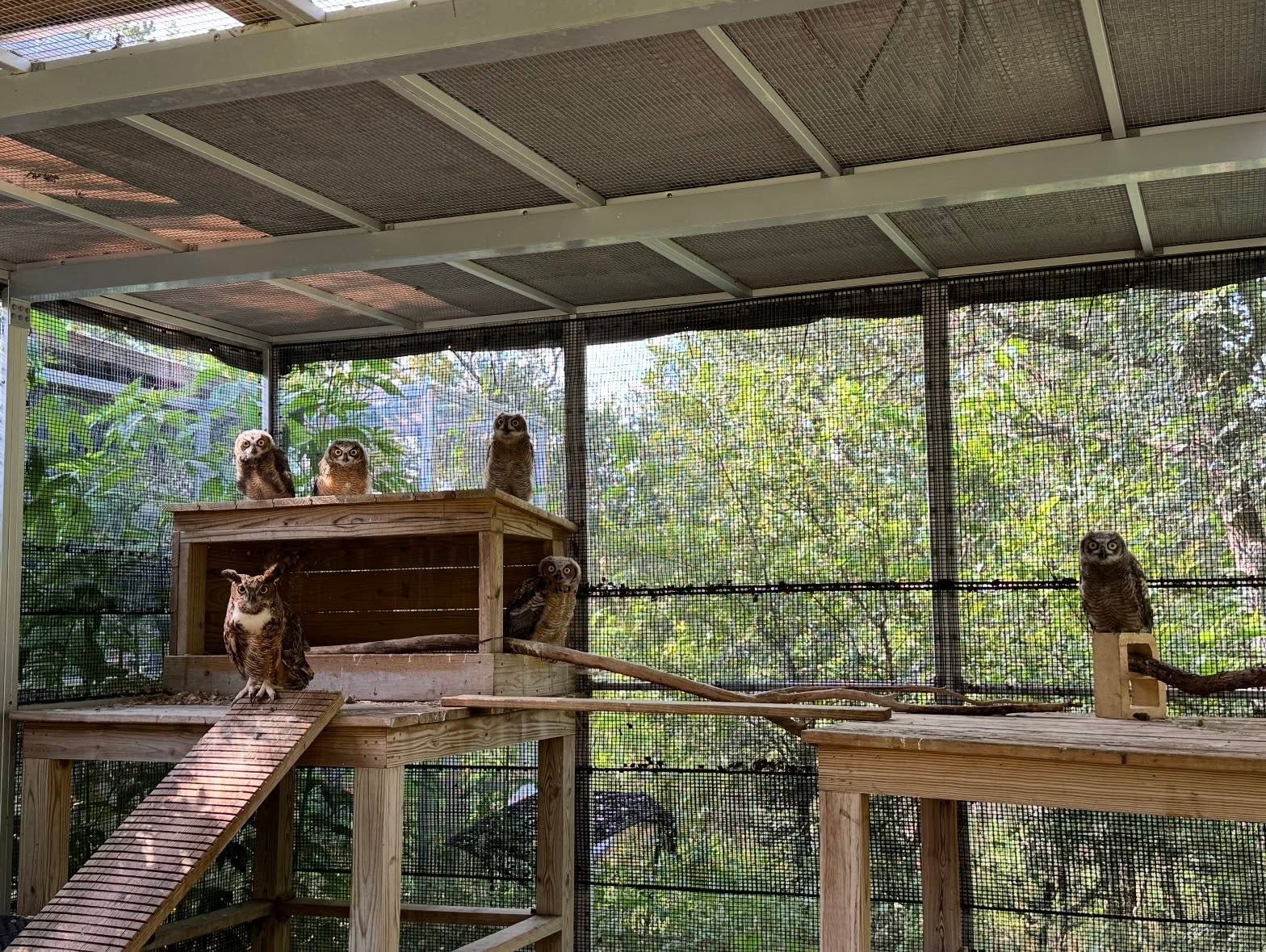
Athena's Miracle Continues: Rescued Great Horned Owlet Takes Flight with Foster Family at Austin Wildlife Rescue
A story that began with heartbreak at the Lady Bird Johnson Wildflower Center has become one of Central Texas' most inspiring wildlife success stories, as the surviving owlet of the beloved great horned owl Athena is now taking its first flights alongside a foster family at Austin Wildlife Rescue.
The latest update from Austin Wildlife Rescue marks an exciting new chapter in the young owl's rehabilitation. Now one of five fledgling great horned owlets learning to fly together, Athena's youngster is spreading its wings under the careful supervision of surrogate mother owl Eddison—a seasoned foster parent who continues to remind everyone "who is truly in charge."
For the many Austinites who have followed Athena's nesting seasons over the years, the milestone is a welcome sign that the owlet is steadily developing the skills it will one day need to survive in the wild.
From Tragedy to Hope at the Wildflower Center
Athena has become something of a local celebrity at the Lady Bird Johnson Wildflower Center, where she has nested above the entrance courtyard for more than a decade. Each spring, visitors and online viewers eagerly follow the nesting pair through live cameras operated in partnership with the Cornell Lab of Ornithology.
The 2026 nesting season, however, took an unexpected turn.
Athena returned to her familiar nest on March 4 and laid two eggs on March 5 and March 9. Both owlets successfully hatched in early April, offering another promising breeding season.
But within days, tragedy struck.
One owlet died on April 17, and by April 18 the second was believed to have died as well. On April 19, Athena abandoned the nest after several difficult days, prompting the Wildflower Center to announce what appeared to be the loss of both young owls and end the livestream.
Then came an extraordinary discovery.
As Cornell Lab of Ornithology staff continued monitoring the nest after the cameras went offline, they noticed subtle movement from what had been presumed to be the second deceased owlet. Working quickly with Austin Wildlife Rescue, rehabilitation specialists carefully retrieved the surviving chick from the abandoned nest.
The young owl arrived weak but alive.
Within a day, wildlife rehabilitators reported encouraging news: the owlet was eating well, staying warm in an incubator, and was found to be healthy overall aside from a manageable mite infestation.

Why Surrogate Parenting Matters
One of the most important milestones came several weeks later, on Mother's Day, when Austin Wildlife Rescue announced that Athena's owlet had been successfully introduced to a surrogate great horned owl named Eddison.
Wildlife rehabilitation experts often rely on surrogate parents whenever possible for young birds of prey. Rather than becoming accustomed to humans, orphaned owls raised by adult members of their own species learn the natural behaviors, body language, hunting instincts, and social cues they will eventually need after release.
Reducing human imprinting dramatically improves an owl's chances of surviving independently once rehabilitation is complete.
Athena's youngster joined four other young great horned owls already under Eddison's care, instantly becoming part of an unusual foster family.
Flight School Is Officially Underway
Today, that foster family has reached one of the biggest developmental milestones yet.
According to Austin Wildlife Rescue, all five fledgling owlets are actively practicing short flights throughout their enclosure, often choosing different perches as they build confidence in the air.
Although Athena's owlet remains the youngest member of the group, caregivers say it has naturally emerged as something of a curious leader among its foster siblings.
The young owl closely watches Eddison's every move, carefully studying the unmistakable expressions and behaviors that define great horned owls. Rehabilitation staff report that Athena's owlet is now achieving impressive lift with fully extended wings while continuing to refine the often more challenging skill of landing gracefully.
Meanwhile, Eddison maintains constant watch over all five young owls, providing the guidance and protection that only an experienced adult can offer.
Why This Matters for Central Texas Wildlife
Stories like Athena's highlight the critical role wildlife rehabilitation organizations play throughout Central Texas.
Austin Wildlife Rescue cares for thousands of injured, orphaned, and displaced wild animals each year, giving many a second chance at returning to their natural habitats. Partnerships with organizations like the Lady Bird Johnson Wildflower Center and the Cornell Lab of Ornithology help ensure that wildlife emergencies can receive rapid, science-based responses when intervention becomes necessary.
Just as importantly, Athena's story offers a reminder that while nature can be unpredictable—even heartbreaking—carefully considered human intervention can sometimes make the difference between loss and survival.
In this case, attentive monitoring, experienced rehabilitation staff, and an attentive surrogate owl have given one tiny great horned owl the opportunity to do exactly what it was born to do.

What Happens Next
Although flight training is a significant milestone, Athena's owlet still has important lessons ahead before it can eventually return to the wild.
As strength, coordination, and natural behaviors continue to develop under Eddison's supervision, wildlife rehabilitators will gradually evaluate the young owl's readiness for independence. Successful rehabilitation means more than simply flying—it requires mastering the instincts necessary to survive on its own.
For the thousands who watched Athena's nest this spring, every new update serves as another reminder that what first appeared to be the end of the story has instead become one of resilience, expert wildlife care, and hope.
Residents can continue following updates from both Austin Wildlife Rescue and the Lady Bird Johnson Wildflower Center as Athena's remarkable owlet continues its journey toward life back in the wild.
Stay tuned to My Neighborhood News for more updates on wildlife conservation, environmental news, and community stories from across Central Texas.

 Tiffany Krenek has been on the My Neighborhood News team since August 2021. She is passionate about curating and sharing content that enriches the lives of our readers in a personal, meaningful way. A loving mother and wife, Tiffany and her family live in the West Houston/Cypress region.
Do you own a business?