







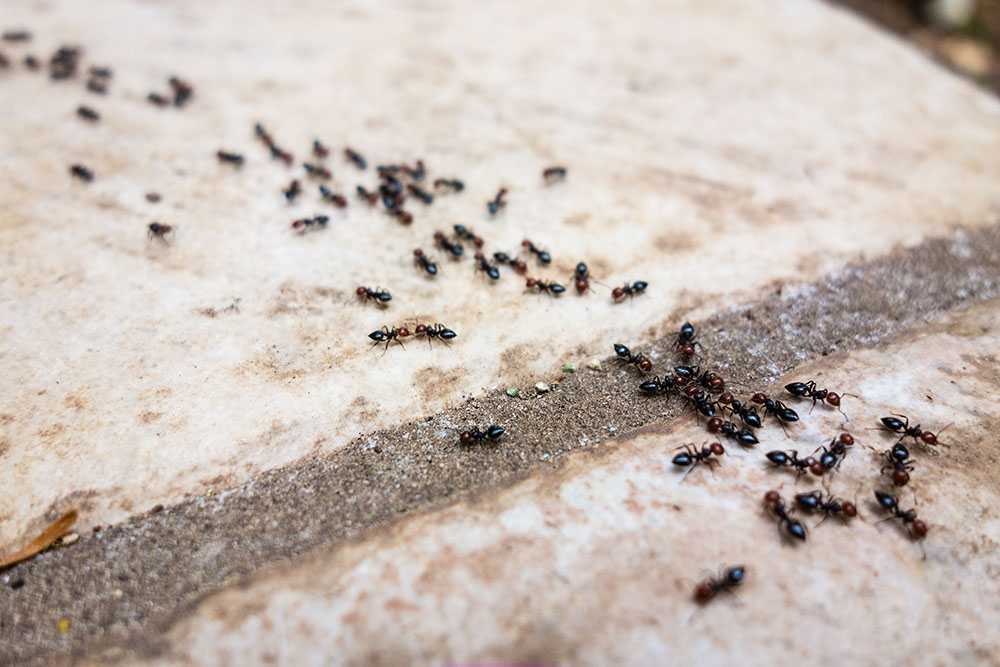
Why Are There So Many Ants in Barker Right Now? What Residents Need to Know About Fire Ants, Lawn Ants, and Yard Safety
Many residents throughout Barker have likely noticed the same thing recently: ant mounds popping up seemingly overnight, trails of ants moving across sidewalks, and increased activity around landscaping, flower beds, and lawns.
The sudden increase is largely tied to a combination of warm temperatures, recent rainfall, moist soil conditions, and the natural seasonal behavior of ants in Southeast Texas. According to experts with the Texas A&M AgriLife Extension Service, fire ants become especially active when rains disrupt their underground tunnels, forcing colonies to move soil to the surface and rebuild visible mounds.
For residents in Barker, that means yards that looked clear a week ago may suddenly contain multiple new mounds after a period of rain.
Why Ant Mounds Seem to Appear Overnight
While many ant species are active this time of year, red imported fire ants are often the most noticeable and problematic in Texas neighborhoods.
When heavy rain saturates the ground, underground tunnels can flood. Worker ants quickly relocate the queen, eggs, and larvae while rebuilding the colony closer to the surface. This process often creates fresh mounds that become highly visible within a day or two after rainfall. Texas A&M AgriLife experts note that spring and summer rains frequently trigger this increase in mound activity.
The result is a familiar sight across many neighborhoods: clusters of reddish-brown mounds scattered throughout lawns, parks, trails, and landscaped areas.
What Are the Health Risks for Residents?
For most people, encountering fire ants results in painful stings that can cause burning, itching, and raised pustules.
However, the risks can be more serious for some individuals.
According to Texas A&M fire ant experts, a small percentage of people can experience severe allergic reactions, including anaphylaxis, which requires immediate medical attention. Symptoms may include difficulty breathing, swelling, dizziness, or widespread hives.
Young children, older adults, and individuals with known insect sting allergies should be especially cautious around fire ant mounds.
Residents are encouraged to:
- Wear closed-toe shoes when working in the yard.
- Watch where children play.
- Avoid disturbing visible mounds.
- Seek medical attention if severe reactions occur.
How Fire Ants Can Affect Pets
Dogs and cats are often curious about moving insects and can accidentally disturb a mound.
Fire ants may swarm and sting pets on their paws, noses, mouths, or bellies. Multiple stings can cause pain, swelling, irritation, and, in some cases, allergic reactions requiring veterinary care. Texas A&M AgriLife identifies fire ants as a significant threat to animals as well as people.
Pet owners in Barker should regularly inspect backyards and common walking routes for new mounds, especially after rain events.

Can Ants Damage Plants and Lawns?
Not all ants are harmful to landscapes, and many actually help aerate soil and break down organic material. However, fire ants can create problems in lawns, gardens, and flower beds.
Large colonies can damage turf appearance through mound building, interfere with mowing and landscaping equipment, and sometimes protect plant-damaging insects such as aphids and scale insects in exchange for sugary secretions. Fire ants can also threaten young plants and seedlings.
For homeowners who spend significant time and money maintaining their yards, unmanaged colonies can quickly become a nuisance.
What Is the Best Way to Control Fire Ants?
Experts caution against relying on internet myths such as pouring grits, vinegar, gasoline, or other home remedies onto ant mounds. These methods are generally ineffective and may damage lawns or create environmental concerns.
Instead, Texas A&M AgriLife Extension recommends a science-based approach often referred to as the "Two-Step Method."
Step 1: Broadcast Bait
Apply a fire ant bait product across the entire yard according to label directions. Worker ants carry the bait back to the colony, helping eliminate ants that are not visible above ground.
Step 2: Treat Individual Mounds
After bait treatments have had time to work, problem mounds can be treated directly using approved mound treatments. (Harris)
Experts note that complete eradication is generally unrealistic in Texas, but consistent management can significantly reduce populations and help protect families, pets, and landscapes.
What Residents of Barker Should Watch For
As summer continues, residents of Barker should expect ant activity to remain elevated, particularly after periods of rainfall.
If you notice new mounds in your yard:
- Avoid disturbing them with lawn equipment.
- Keep children and pets away from active colonies.
- Monitor for signs of stings or allergic reactions.
- Consider implementing a neighborhood-wide management approach when possible.
Texas A&M AgriLife experts note that coordinated treatment efforts across communities can often provide better results than treating individual properties alone.
What Happens Next?
The good news for residents in Barker is that seeing more ants does not necessarily mean an infestation is out of control. In many cases, recent weather patterns have simply made existing colonies more visible.
Still, now is an excellent time to inspect lawns, flower beds, playground areas, and fence lines for new activity. Taking action early can help reduce the risk of painful stings, protect pets, and keep outdoor spaces enjoyable throughout the summer months.
Stay tuned to My Neighborhood News for more seasonal home and yard tips affecting residents across Barker.

 Tiffany Krenek has been on the My Neighborhood News team since August 2021. She is passionate about curating and sharing content that enriches the lives of our readers in a personal, meaningful way. A loving mother and wife, Tiffany and her family live in the West Houston/Cypress region.
Do you own a business?