







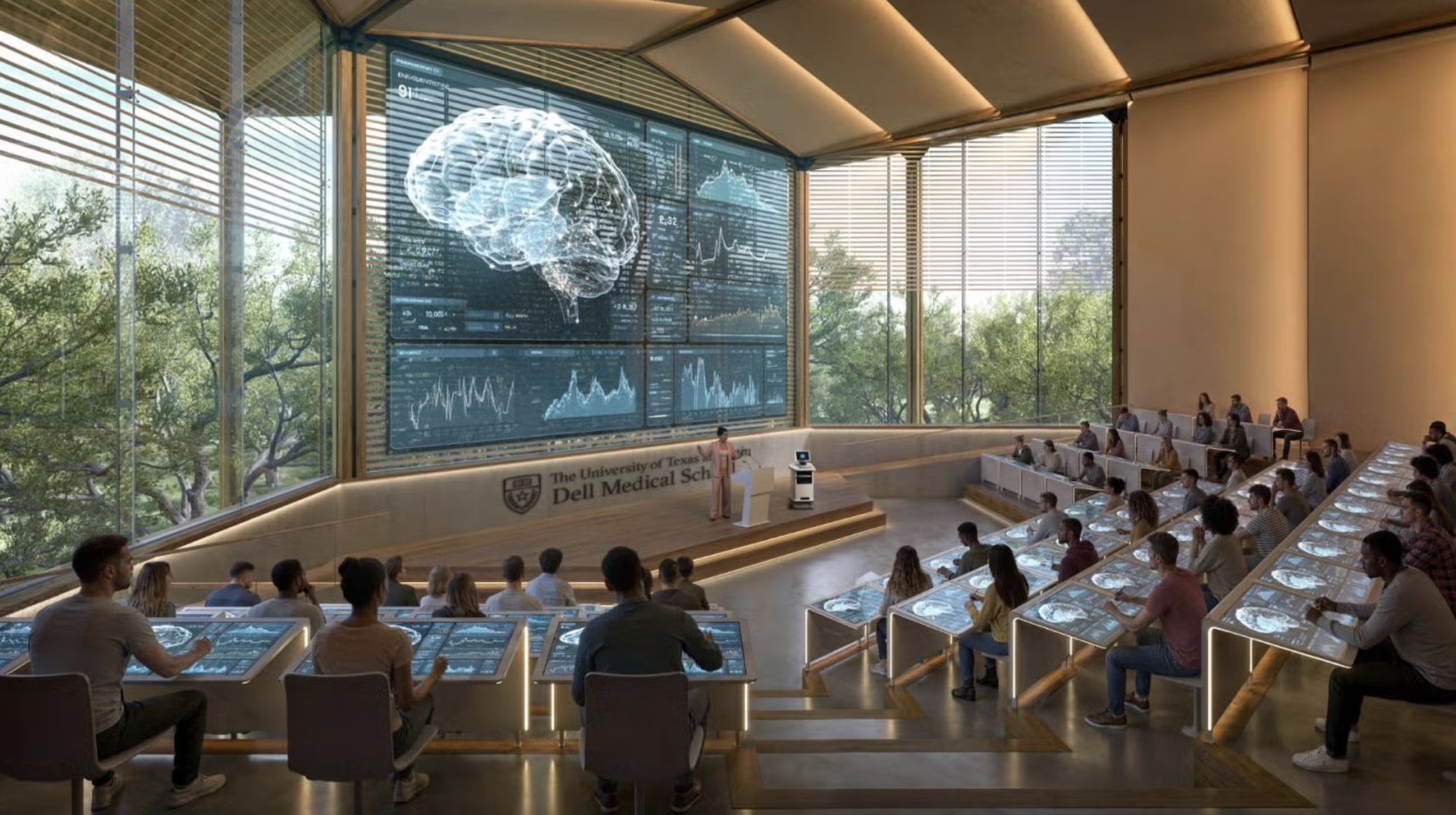
UT Dell Campus for Advanced Research to Transform Austin Into a National Hub for AI-Powered Healthcare Innovation
Austin is preparing for one of the most significant healthcare and research expansions in Texas history after Governor Greg Abbott joined University of Texas leaders to announce the new UT Dell Campus for Advanced Research — a sweeping initiative expected to redefine medical care, AI-driven research, and workforce development across Central Texas.
For residents throughout Austin and the surrounding region, the announcement signals more than the construction of another medical facility. It represents a long-term investment in healthcare access, economic growth, medical education, and technological innovation that local leaders believe could elevate Austin into one of the nation’s premier destinations for advanced medicine and life sciences research.
At the center of the project is the UT Dell Medical Center, a new academic medical center anchored by Dell Medical School and integrated with The University of Texas MD Anderson Cancer Center. The facility is expected to open in 2030 and will focus heavily on artificial intelligence, advanced computing, precision medicine, and patient-centered care.
Until now, Austin has remained the largest major U.S. city without an academic medical center — a gap many healthcare leaders say has forced Central Texans to leave the region for specialized or complex care.
Governor Abbott said the new campus positions Texas at the forefront of the next era of healthcare innovation.
“The future of healthcare starts right here, right now,” Abbott said. “Through this new campus and medical center, Texas will lead America in healthcare innovation. The next generation of medical breakthroughs will take place in Central Texas. More patients will have access to better healthcare that is uniquely tailored to their own personal needs.”
A Transformational Investment for Austin and Central Texas
The announcement also marked another milestone for longtime UT supporters Michael and Susan Dell, whose cumulative giving to The University of Texas at Austin has now surpassed $1 billion — making them the university’s first-ever billion-dollar supporters.
Their newest investments will help launch the UT Dell Campus for Advanced Research while also expanding scholarships, student housing, and the Texas Advanced Computing Center, one of the nation’s leading supercomputing research institutions.
University officials say the new campus is designed to integrate medical research, clinical care, engineering, business, nursing, pharmacy, and advanced computing into one collaborative environment focused on improving patient outcomes and accelerating scientific discovery.
The project arrives as Austin continues experiencing rapid population growth, increased demand for healthcare services, and a growing reputation as both a technology and innovation hub.
For local families, the expansion could eventually mean shorter travel times for specialized treatment, broader access to cutting-edge cancer care, and more opportunities to receive advanced medical services close to home.
“For too long, many Central Texans have had to travel elsewhere for complex care,” university officials said in project materials announcing the initiative. “That ends here.”

AI and Advanced Computing at the Core of the Vision
Unlike older medical campuses built around legacy systems, university leaders say the UT Dell Medical Center will be designed from the ground up with AI and digital integration embedded into nearly every aspect of patient care and research.
The facility aims to connect prevention, diagnosis, treatment, and research into a unified system capable of delivering earlier detection, more personalized treatment plans, and improved long-term health outcomes.
Claudia Lucchinetti, senior vice president for medical affairs at UT Austin and dean of Dell Medical School, described the initiative as a once-in-a-generation opportunity to rethink how healthcare is delivered.
“This is Texas doing what only Texas can do,” Lucchinetti said. “We have a generational opportunity to reimagine what it means to be a patient, to train future doctors and to innovate and build for a future shaped by the greatest acceleration in knowledge and technology in human history.”
Lucchinetti added that the scale of the project extends well beyond Texas.
“The potential for impact is bigger, even, than Texas,” she said. “This changes the world.”
The integration with UT MD Anderson Cancer Center is expected to become one of the defining components of the campus. Through the partnership, patients in Central Texas could gain expanded access to nationally recognized cancer specialists, advanced therapies, and research-driven treatment options without leaving the region.
“With the impactful support of Michael and Susan Dell and by working together through the integrated model of UT Dell Medical Center, we will deliver better outcomes for patients by providing research-driven cancer care that is precise, compassionate and hope-filled,” said Peter WT Pisters, president of UT MD Anderson Cancer Center.
Economic Growth and Workforce Development Expected Across Central Texas
Beyond healthcare, state and university leaders believe the project could significantly strengthen Austin’s growing life sciences and biotechnology sectors.
The UT Dell Campus for Advanced Research is expected to attract researchers, physicians, biotech startups, and healthcare innovators to Central Texas while creating additional opportunities for students entering medical and technology-related fields.
Governor Abbott emphasized that the initiative further diversifies Texas’ economy while reinforcing the state’s national leadership in technology and innovation.
“Texas already dominates in technology, energy, and business, and now we will further cement our leadership in health care innovation as well,” Abbott said.
UT leaders also view the project as part of a broader strategy to elevate Austin’s global standing in medicine and research over the next decade.
Powered by the Dells’ investment, the university has set ambitious goals that include raising $10 billion over the next 10 years and ranking among the nation’s top 10 medical centers.
UT System Board of Regents Chairman Kevin Eltife said the Dells’ contributions have already transformed the university and the region.
“They launched Dell Medical School,” Eltife said. “They have powered groundbreaking UT Austin research and transformed Central Texas into a global hub for discovery.”
What Happens Next
The University of Texas plans to break ground on the UT Dell Medical Center later this year. The campus is being designed by internationally recognized architectural firm Skidmore, Owings & Merrill (SOM), known globally for major innovation-focused projects.
As planning advances, the project is expected to remain closely watched by healthcare leaders, technology companies, researchers, educators, and families throughout Texas.
For Austin residents, the UT Dell Campus for Advanced Research represents more than a construction project. It reflects a broader shift in how Central Texas is positioning itself for the future — blending healthcare, education, technology, and research into a long-term vision that could shape the region for generations.
Stay tuned to My Neighborhood News for continuing coverage on healthcare expansion in Central Texas, and major developments shaping communities across the Greater Austin area.

 Tiffany Krenek has been on the My Neighborhood News team since August 2021. She is passionate about curating and sharing content that enriches the lives of our readers in a personal, meaningful way. A loving mother and wife, Tiffany and her family live in the West Houston/Cypress region.