






Tesla Eyes $10.1 Billion Solar Manufacturing Plant in Fort Bend County, Potentially Bringing Nearly 10,000 Jobs
A stretch of Fort Bend County land could become home to one of the largest manufacturing investments proposed for the Houston region — if Texas ultimately wins Tesla's closely watched Project Crystal Sun.
Construction Dive reported Aug. 24 that Tesla is considering a $10.1 billion solar cell manufacturing facility in Fort Bend County, bringing broader attention to a project detailed in filings with the Texas Comptroller of Public Accounts. The report was first published by sister publication Manufacturing Dive on Aug. 20.
For local residents, the numbers attached to the proposal are difficult to overlook: approximately $10.116 billion in planned investment, 9,712 permanent full-time jobs and a construction workforce projected to peak at about 1,147 workers.
But there is an important distinction.
Tesla has not yet committed to building Project Crystal Sun in Fort Bend County. Company filings say Tesla is evaluating sites in multiple states, with another unnamed location competing against Texas. The Fort Bend County proposal has continued moving through the state's incentive-review process, but a final site-selection decision has not been announced.
That leaves Fort Bend County in the running for an enormous project — but not yet at the finish line.
What Tesla's Project Crystal Sun Would Build in Fort Bend County
Tesla's application describes Project Crystal Sun as a new manufacturing campus that would make photovoltaic solar cells and/or assembled solar modules, the components used to convert sunlight into electricity.
Finished products would be intended for utility-scale solar developments, commercial projects and distributed solar installations, according to the filing.
The proposed facility would include production lines along with supporting infrastructure, warehousing, utilities and other site improvements. Equipment identified in the application includes wafer and ingot manufacturing systems, coating equipment, metallization and printing lines, cell testing and quality-control equipment, automation and material-handling systems, cleanroom improvements, chemical storage and delivery systems and environmental and safety systems.
In other words, this would not simply be a warehouse or distribution center. The proposal calls for a large-scale manufacturing operation producing the building blocks of solar power systems.
Where Would the Tesla Plant Be Located?
Tesla is considering an approximately 3,057-acre area near FM 762 and FM 1994 in Fort Bend County, within Lamar Consolidated Independent School District, for Project Crystal Sun.
Tesla's application identifies several large parcels along FM 762 and FM 1994, including property at or near 6702 FM 1994 Road in Richmond. The company notes that the actual project may occupy only portions of the parcels included in the application.
The filing also makes clear that existing residential, agricultural and industrial improvements shown within the broader mapped area are not owned by Tesla and would have no connection to Project Crystal Sun.
For residents in Richmond, Rosenberg and surrounding Fort Bend County communities, the location makes the proposal especially significant. A manufacturing complex of this scale could introduce thousands of workers and substantial new industrial activity into an area that continues to absorb residential and commercial growth.
Nearly 10,000 Permanent Jobs Are Projected
The employment numbers provide perhaps the clearest indication of Project Crystal Sun's proposed scale.
Tesla's economic-benefit statement projects 9,712 permanent full-time positions once the facility reaches full operations, representing an estimated annual payroll of about $1.3 billion at that point.
Hiring would happen gradually under the current projections.
Commercial operations are planned to begin in 2029, when the analysis forecasts 795 permanent positions. Employment would then increase to roughly 3,885 in 2030, 5,827 in 2031 and 7,770 in 2032 before reaching the full 9,712 positions in 2033.
Construction itself is expected to support hundreds of workers, rising from an estimated 596 in 2026 to 840 in 2027 and peaking at approximately 1,147 construction jobs in 2028.
Those figures are company projections associated with Tesla's incentive application, not guarantees of future hiring.

A $10.1 Billion Investment Spread Across Three Years
Tesla currently anticipates investing $10.1161 billion between 2026 and 2028.
The schedule filed with the state breaks that investment down to approximately:
- $2.33 billion in 2026
- $3.29 billion in 2027
- $4.49 billion in 2028
About $1.52 billion would be invested in real property, while approximately $8.60 billion would go toward personal property such as manufacturing machinery and equipment.
Construction is projected to begin in 2026, finish in 2028 and lead to commercial operations during the first quarter of 2029, according to the application.
The timeline, however, depends on Fort Bend County ultimately being selected.
Why the Project Is Not a Done Deal
Tesla's filing offers an unusually direct look at the competition behind major economic-development projects.
The company says it is considering several locations in multiple states and evaluates potential sites based on land, utilities, permitting, workforce, timelines and economics.
Tesla argues that property taxes put the Fort Bend County location at a cost disadvantage compared with another unnamed site being considered for Project Crystal Sun.
The company is therefore seeking support through Texas' Jobs, Energy, Technology and Innovation Act, or JETI, including a 10-year limitation on the taxable value of qualifying new property.
Tesla's filing says the incentive would help make the Fort Bend County location economically competitive with the alternative site. Detailed information about that competing location was submitted confidentially.
The company has also indicated that it may seek tax-abatement agreements with local jurisdictions.
The Incentive Period Could Run From 2029 Through 2038
Tesla's application identifies 2029 through 2038 as the proposed 10-year JETI incentive period.
The company's filing includes Lamar CISD, Fort Bend County, the Fort Bend County Drainage District and Fort Bend County Emergency Services District No. 10 among the taxing entities associated with the site.
Tesla's economic-benefit analysis estimates that, absent economic-development incentives, the development could generate roughly $1.1 billion in property-tax liability over the 38-year period evaluated in the report.
That analysis stretches well beyond the incentive period because Texas requires applicants to estimate certain economic effects for construction, the incentive term and 25 years afterward.
What Tesla Says the Project Could Mean for the Wider Economy
Tesla's application includes an economic-benefit analysis prepared by Kroll Tax Services, and its estimates extend beyond the 9,712 jobs directly proposed by Tesla.
Kroll estimates that Project Crystal Sun could, on average over the study period, support approximately 13,028 additional permanent jobs through businesses affected by the project's activity. The analysis also estimates about $1.1 billion in purchases from complementary industries, with construction representing the largest share.
Professional and technical services, real estate, manufacturing, utilities, transportation, wholesale trade and other industries are among the sectors projected to see spending tied to the project.
Across the full 38-year analysis, Kroll projects approximately $6.4 billion in combined direct and indirect state and local tax impacts, roughly $107 billion in Texas GDP impact and approximately $68 billion in earnings associated with direct and broader economic activity.
Those numbers should be read for what they are: economic-modeling estimates prepared as part of Tesla's application. They depend on the project being built, operating as projected and producing the assumed ripple effects over several decades.

Why Tesla Is Making a Bigger Push Into Solar Manufacturing
Project Crystal Sun also fits into a broader strategy outlined publicly by Tesla CEO Elon Musk.
At the World Economic Forum earlier this year, Musk said Tesla and SpaceX were separately working toward a combined goal of building 100 gigawatts per year of U.S. manufactured solar capacity. Construction Dive and Manufacturing Dive reported that Project Crystal Sun would represent a substantial expansion beyond Tesla's current solar manufacturing footprint.
Tesla currently engineers solar panels and systems in California and assembles solar products in Buffalo, New York, according to the publications.
The push comes as electricity demand receives increased attention from several directions, including electric transportation, manufacturing and rapidly expanding artificial-intelligence and data-center infrastructure.
Musk addressed that demand during Tesla's July earnings call, saying, “There's going to be tremendous need for electricity in the future.”
Project Crystal Sun would place Fort Bend County squarely inside that emerging manufacturing push if the Texas location is ultimately chosen.
Another Major Texas Manufacturing Proposal From Musk's Companies
The Fort Bend County proposal also comes as Musk-led companies pursue other large industrial projects around Texas.
Manufacturing Dive reported that SpaceX has pursued plans for a 10-gigawatt solar cell factory in Bastrop, while another SpaceX project, TeraFab, has advanced as a multibillion-dollar semiconductor manufacturing development in Grimes County.
Those projects are separate from Project Crystal Sun, but together they reflect the scale of advanced-manufacturing investment being pursued across Texas.
For Fort Bend County, Project Crystal Sun would add solar manufacturing to that wider wave of high-dollar technology and industrial development.
What Happens Next for Project Crystal Sun?
The biggest question remains the simplest one: Will Tesla ultimately choose Fort Bend County?
The proposal has moved further through the local review process since it first became public in August. The Texas Comptroller issued a recommendation on Tesla's JETI application Aug. 31, and Lamar CISD held a required public hearing on the proposed incentive agreement Sept. 15.
The Lamar CISD Board of Trustees also had a resolution on its Sept. 15 agenda to consider whether the district was agreeable to proceeding toward a taxable-value-limitation agreement involving Tesla and the Governor's Office.
As of publication, the Texas Comptroller's public project page continued to list Tesla's J0050 filing in the application phase. Tesla's own application also continues to describe Fort Bend County as one of the locations under consideration rather than a finalized site.
Even progress through the JETI process would not, by itself, mean Tesla has committed to constructing the plant. The company's filing says another viable location outside Texas remains under consideration and identifies incentives, taxes, workforce, utilities, permitting, land and project timing among the factors involved in the final site decision.
That means the $10.1 billion investment, nearly 10,000 permanent positions and projected 2026 construction start should continue to be viewed as proposed or projected if Tesla selects the Fort Bend County site.
Still, even at the proposal stage, Project Crystal Sun provides a glimpse of what could become a major new chapter for Fort Bend County — one involving advanced manufacturing, solar-energy technology and a workforce large enough to have effects well beyond the plant itself.
For families, businesses and communities around Richmond, Rosenberg and the Lamar CISD area, the next steps in the state and local approval process will be worth watching closely.
My Neighborhood News will continue following Project Crystal Sun and Tesla's Fort Bend County proposal as additional decisions and project details become public.

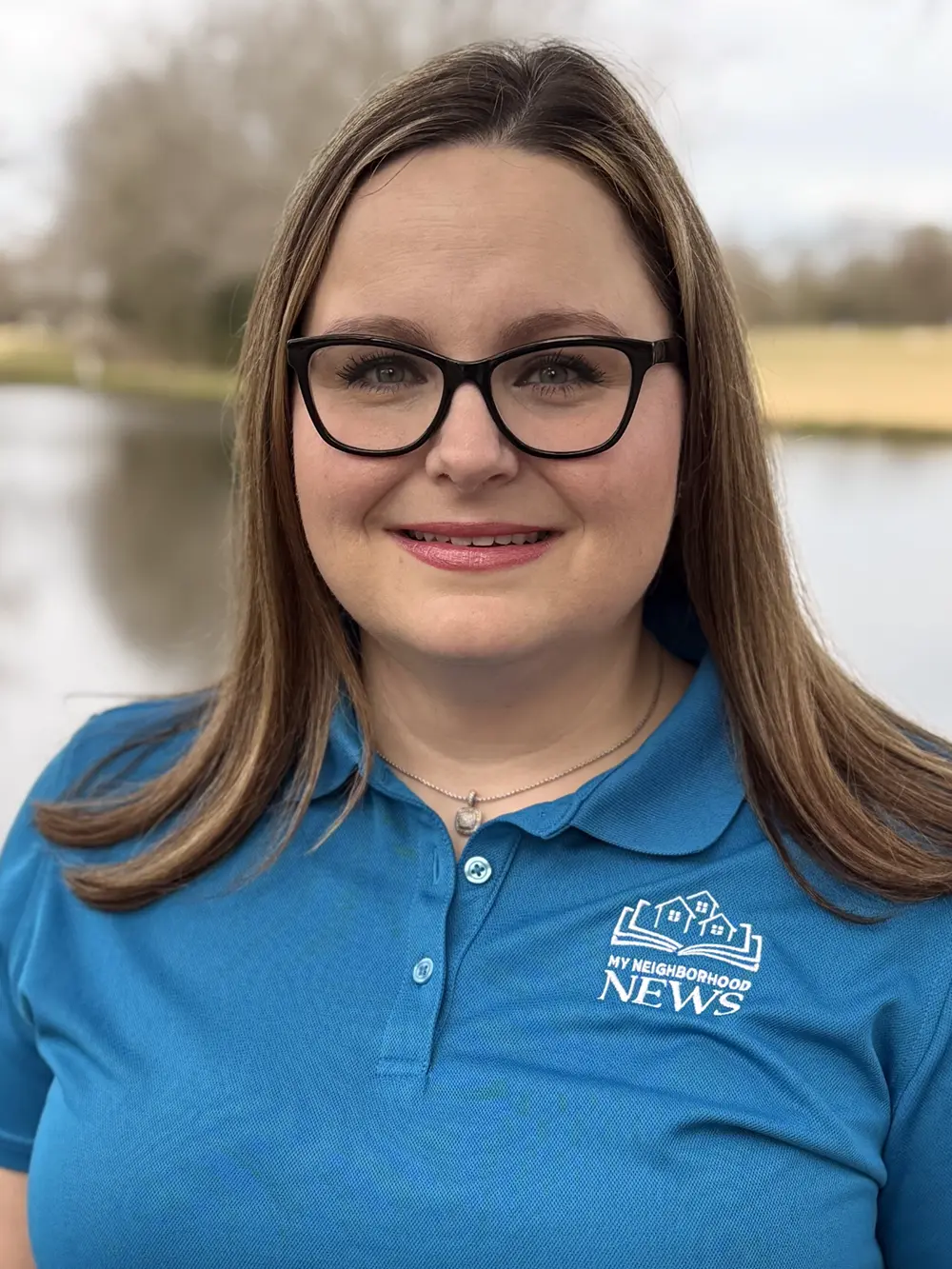 Tiffany Krenek has been on the My Neighborhood News team since August 2021. She is passionate about curating and sharing content that enriches the lives of our readers in a personal, meaningful way. A loving mother and wife, Tiffany and her family live in the West Houston/Cypress region.
Local business spotlight
Grow your business
where trust already lives.
Let’s introduce your business to the neighbors nearby.
Have a local favorite?
Let’s make an introduction.
Leave your email and our team will reach out with ways to promote your business.
Give a local favorite a little love.
Know a business your neighbors should discover? Tell us who they are.
We couldn’t send that just yet. Please try again.