








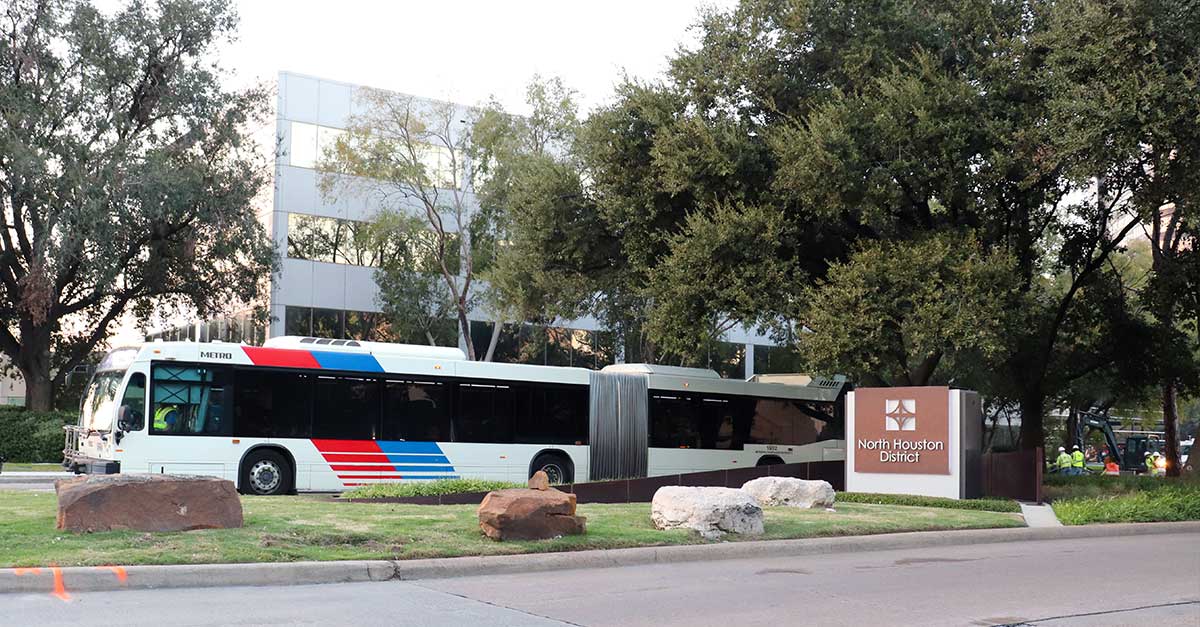
Lone Star College System Extends Discounted METRO Partnership to Help Students Get to Class Across Greater Houston
For many college students in the Houston area, getting to campus is about far more than simply attending class. It can mean coordinating bus schedules around work shifts, finding reliable transportation after caring for family members, or stretching already-tight budgets to cover gas, insurance and parking costs.
That reality was front and center this month as the Lone Star College System Board of Trustees voted to continue its partnership with the Metropolitan Transit Authority of Harris County (METRO), extending discounted transportation services for students over the next three years.
The May 7 vote allocates up to $45,000 to continue the program, which allows students to ride METRO buses for 60 cents per trip — less than half the standard $1.25 fare. Funding for the agreement will be included in the proposed fiscal year 2027 budget.
For a commuter-heavy college system serving more than 90,000 students each semester across the greater Houston region, college leaders say the partnership addresses one of the most practical obstacles students face every day.
“We know that transportation can be a barrier to success, and this community partnership helps alleviate that burden by providing affordable, reliable access to in-person classes and services across the system,” said Mike Sullivan, LSCS board chair. “Lone Star College System is committed to supporting students with practical resources that allow them to focus on achieving their goals.”
Transportation Costs Continue to Shape Student Success in Houston
The renewed partnership comes as transportation affordability has become an increasingly important issue for community college students nationwide — especially in car-dependent metro areas like Houston.
According to Understanding Houston, a regional data initiative supported by the Greater Houston Community Foundation and Rice University’s Kinder Institute for Urban Research, more than 90% of Harris County households have access to at least one vehicle, highlighting the region’s strong dependence on personal transportation. The organization also notes that residents without reliable access to a car or driver’s license can face significant challenges reaching education, jobs and healthcare opportunities.
That pressure can be especially difficult for college students.

A report from Trellis Strategies found transportation costs accounted for nearly 20% of the total cost of attending college for commuting students. The report also found that students who struggle to reliably reach campus are more likely to fall behind academically or stop attending altogether.
National research shows that while many college-age students do have access to vehicles, transportation insecurity still affects a significant portion of the student population. Trellis Strategies reported that 78% of undergraduate students surveyed in its Fall 2022 Student Financial Wellness Survey said they had access to a car, while public transportation remained an important option for students balancing financial pressures, work schedules and school commitments.
In the Houston region, where many students commute significant distances to campus, even modest transportation savings can make a noticeable difference in household budgets. Understanding Houston reports that residents across the region overwhelmingly depend on personal vehicles, despite the substantial costs associated with fuel, maintenance, insurance and parking.
METRO Partnership Aims to Reduce Daily Financial Pressure
Under the program, Lone Star College students can access METRO’s discounted fare pricing of 60 cents per ride, matching METRO’s reduced fare structure. Standard local fares typically cost $1.25. (METRO)
For students commuting multiple days each week, the reduced fares can help offset transportation expenses that often compete with tuition, rent, groceries and childcare costs.
“METRO is proud to offer half-price fares for Lone Star College System students,” said Art Murillo, LSCS trustee and senior public engagement representative at METRO. “Community partnerships like this make all the difference in helping us meet student needs.”
The transportation partnership is part of a broader support network available to Lone Star College students through the LSCS CARE program, which provides assistance related to food insecurity, housing, clothing, employment, mental health and academic support.
Higher education researchers increasingly point to transportation access as a critical — and often overlooked — factor in student retention and graduation rates.
A 2025 MDRC report examining transportation barriers among college students found that unreliable or unaffordable transportation can influence class attendance, scheduling decisions and even whether students remain enrolled in school. Researchers noted that small transportation disruptions, such as missed bus connections or lengthy commute times, can create cumulative stress that impacts academic success.
Supporting Workforce Development Across the Houston Region
The decision also reflects the growing role community colleges play in workforce development throughout the Houston area.
Lone Star College System, the largest institution of higher education in the Houston region, operates eight colleges, six centers, eight Workforce Centers of Excellence and Lone Star Corporate College. The system was recently named a 2025 Great Colleges to Work For institution by The Chronicle of Higher Education.
As enrollment continues across workforce training and academic transfer programs, access to affordable transportation has become increasingly connected to economic mobility for students pursuing healthcare, skilled trades, technology and other high-demand careers.
In a metro area where transportation expenses consume a significant share of household budgets, local transit partnerships are increasingly viewed not simply as convenience programs, but as student success initiatives.
For students traveling across the region to attend classes, labs, tutoring sessions and workforce training programs, the extended METRO agreement offers something practical — and immediate: a more affordable path to campus.
Students seeking additional support services through Lone Star College System can learn more at LoneStar.edu/CARE.
As Houston-area colleges continue addressing affordability and student access, transportation partnerships like this one are likely to remain an important part of the conversation around higher education success in the region.

 Tiffany Krenek has been on the My Neighborhood News team since August 2021. She is passionate about curating and sharing content that enriches the lives of our readers in a personal, meaningful way. A loving mother and wife, Tiffany and her family live in the West Houston/Cypress region.