






Is Your Gun Really Secure? What Towne Lake Families Should Know About Firearm Safety at Home
For many families, home safety means checking smoke detectors, locking medications away from young children, securing swimming pools and making sure doors and windows are protected. In homes where firearms are present, secure gun storage belongs on that same household safety checklist.
The goal is straightforward: prevent a firearm from being accessed by a child, visitor or anyone else who should not have it.
For residents of Towne Lake, that can mean reviewing not only where firearms are kept, but how they are secured, who can access them and whether children know what to do if they encounter one.
Guidance from the Centers for Disease Control and Prevention, the American Academy of Pediatrics and Project ChildSafe consistently points to secure storage as an important way to reduce unauthorized firearm access and prevent injuries.
What Does Secure Firearm Storage Mean?
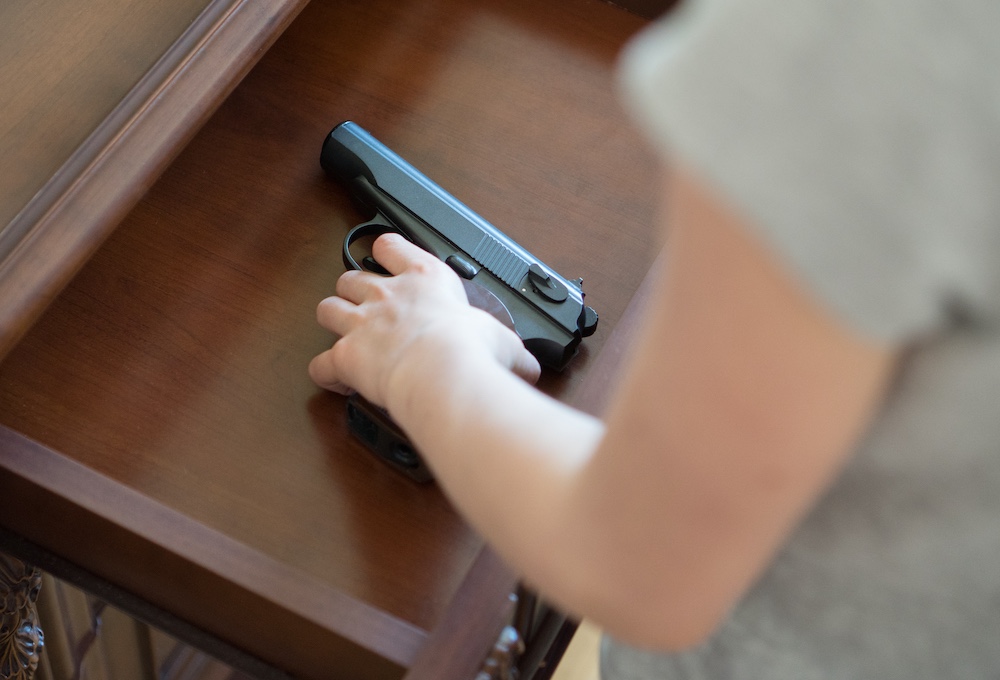
Simply putting a firearm on a high shelf, inside a closet or somewhere children are unlikely to look is not considered secure storage.
The CDC specifically notes that putting a firearm out of sight or out of reach is not enough to prevent access by children or unauthorized adults. The agency recommends secure storage, such as a gun safe or lock box, when firearms are not in use.
The American Academy of Pediatrics outlines four key elements for safer firearm storage in a home:
- Store the firearm unloaded.
- Store the firearm locked.
- Keep ammunition separate from the firearm.
- Keep ammunition locked separately.
Depending on the firearm and household, storage devices may include gun safes, lock boxes, cable locks or trigger locks. Project ChildSafe, a firearm-safety education program of the National Shooting Sports Foundation, also recommends storing firearms unloaded and locked when they are not in use, with ammunition secured separately.
Why Hiding a Gun Is Not the Same as Securing It
Children can be remarkably resourceful when exploring their surroundings, which is one reason safety organizations caution parents against relying on hiding places.
The issue is especially important because unintentional firearm incidents involving children frequently happen inside homes.
A CDC analysis of 1,262 unintentional firearm deaths among children ages 17 and younger from 2003 through 2021 found that 85% of the victims were fatally injured at a house or apartment, including 56% in their own homes. About two-thirds of shooters were playing with or showing the firearm to someone else when it discharged.
The same CDC study found that firearms involved in those deaths were frequently stored loaded and unlocked. Among cases where storage information was available, 74% of the firearms were stored loaded and 76% were stored unlocked. Sleeping areas, including nightstands and similar locations, were the most common places from which those firearms were accessed.
Those findings offer an important practical takeaway for households: a firearm's location alone should not be considered a safety measure.

Consider Who Can Access the Safe or Lock
Secure firearm storage also depends on controlling access to whatever locking device is being used.
Keys, combinations, access codes and other means of opening a gun safe or lock box should remain inaccessible to children and other unauthorized individuals. Families may also want to periodically reconsider those arrangements as children grow older.
A storage location that was inaccessible to a toddler may be easily discovered by a curious elementary-school student or teenager several years later.
That makes firearm safety less of a one-time household project and more of an ongoing responsibility, similar to adjusting other childproofing measures as a family changes.
Talk With Children — But Do Not Rely on the Conversation Alone
Age-appropriate conversations about firearms can still be useful.
Children can be taught that if they encounter a firearm, they should not touch it and should immediately tell a trusted adult. Parents may also make clear that firearms are not toys and should never be handled without appropriate adult supervision and training.
But education should supplement secure storage rather than replace it.
Research reviewed by the American Academy of Pediatrics has found that child-focused firearm avoidance education alone has not proved effective at preventing children from handling firearms. Physical barriers that prevent unauthorized access remain an important part of home firearm safety.
For Towne Lake parents, grandparents and caregivers, that distinction matters: children can understand household rules and still make impulsive decisions.
Ask About Firearms in Homes Your Child Visits
Home firearm safety does not necessarily stop at a family's own front door.
Children spend time at friends' houses, relatives' homes, sleepovers and other gatherings, which means parents may want to include firearm safety among the questions they ask before their children visit another home.
The American Academy of Pediatrics recommends that parents ask whether firearms are present in homes their children visit and, if so, whether those firearms are stored unloaded and locked with ammunition secured separately.
It can be approached the same way parents routinely ask about swimming pools, pets, allergies or who will supervise children.
A simple question about whether firearms are securely stored can provide information a parent needs to make a decision about where a child spends time.
Review Storage During Changes at Home
Certain changes in a household can also be a good reason to reassess firearm storage.
A child becoming mobile, teenagers beginning to spend more time home alone, visitors staying in the house or a change in who knows the combination to a safe can all affect household security.
Families may also want to reassess access during periods when someone in the household is experiencing a mental health crisis or is at risk of harming themselves.
The CDC advises securely storing firearms to prevent access by children and other unauthorized users and identifies reducing access to lethal means as one component of suicide prevention.
In an immediate mental health crisis, residents can call or text the 988 Suicide & Crisis Lifeline for assistance.

Make Safe Handling Part of the Routine
Storage is only one part of responsible firearm handling.
Project ChildSafe recommends treating every firearm as though it is loaded, keeping the muzzle pointed in a safe direction and keeping a finger outside the trigger guard until someone intends to fire. The organization also recommends checking that a firearm is unloaded when removing it from or returning it to storage.
Those practices are particularly relevant when firearms are being cleaned, transported or moved between storage locations.
Just as importantly, firearm owners should become familiar with the specific operating and safety instructions for the firearm and storage device they use.
A Simple Home Gun Safety Check
For households that keep firearms, a periodic review can help identify risks that might otherwise go unnoticed.
Residents can ask:
- Is every firearm that is not currently in use securely locked?
- Are stored firearms unloaded?
- Is ammunition locked and stored separately?
- Can children or unauthorized visitors obtain a key, combination or access code?
- Have children been reminded never to touch an unattended firearm?
- Do parents know whether firearms are securely stored in homes their children frequently visit?
- Has the family's storage plan been reconsidered as children have grown or household circumstances have changed?
Those questions can help turn firearm safety from an assumption into a deliberate household routine.
Small Precautions Can Matter at Home
Firearm ownership is a personal decision, and families have different reasons for keeping or not keeping firearms in their homes. Secure storage, however, centers on a practical safety principle shared across multiple firearm-injury prevention organizations: people who are not authorized to use a firearm should not be able to access it.
For families throughout Towne Lake, reviewing firearm storage can be one more part of creating a safer home — alongside securing medications, supervising children around water, maintaining smoke alarms and addressing other preventable household risks.
Looking for a free gun lock?Families can search for participating local law-enforcement agencies through Project ChildSafe’s free safety-kit locator. Free full-size gun safes and lock boxes are less consistently available, but local agencies periodically distribute them during community safety events. Texas also exempts qualifying firearm-safety equipment, including gun safes and lock boxes, from state sales tax. |
A locked firearm, secured ammunition and a family conversation may each seem like small precautions. Together, they can create important layers of protection for children, relatives, guests and neighbors.
Residents can find additional firearm safety information through the Centers for Disease Control and Prevention, the American Academy of Pediatrics and Project ChildSafe
Stay tuned to My Neighborhood News for more practical resources, community safety information and local updates that matter to families close to home.

 Tiffany Krenek has been on the My Neighborhood News team since August 2021. She is passionate about curating and sharing content that enriches the lives of our readers in a personal, meaningful way. A loving mother and wife, Tiffany and her family live in the West Houston/Cypress region.
Local business spotlight
Grow your business
where trust already lives.
Let’s introduce your business to the neighbors nearby.
Have a local favorite?
Let’s make an introduction.
Leave your email and our team will reach out with ways to promote your business.
Give a local favorite a little love.
Know a business your neighbors should discover? Tell us who they are.
We couldn’t send that just yet. Please try again.