







Houston Has More Homes for Sale Than Ever — Here’s What That Means for Buyers and Homeowners
For anyone thinking about buying or selling a home in Greater Houston, one number from July stands out: there were more single-family homes actively listed for sale than at any other point in Houston Association of Realtors records.
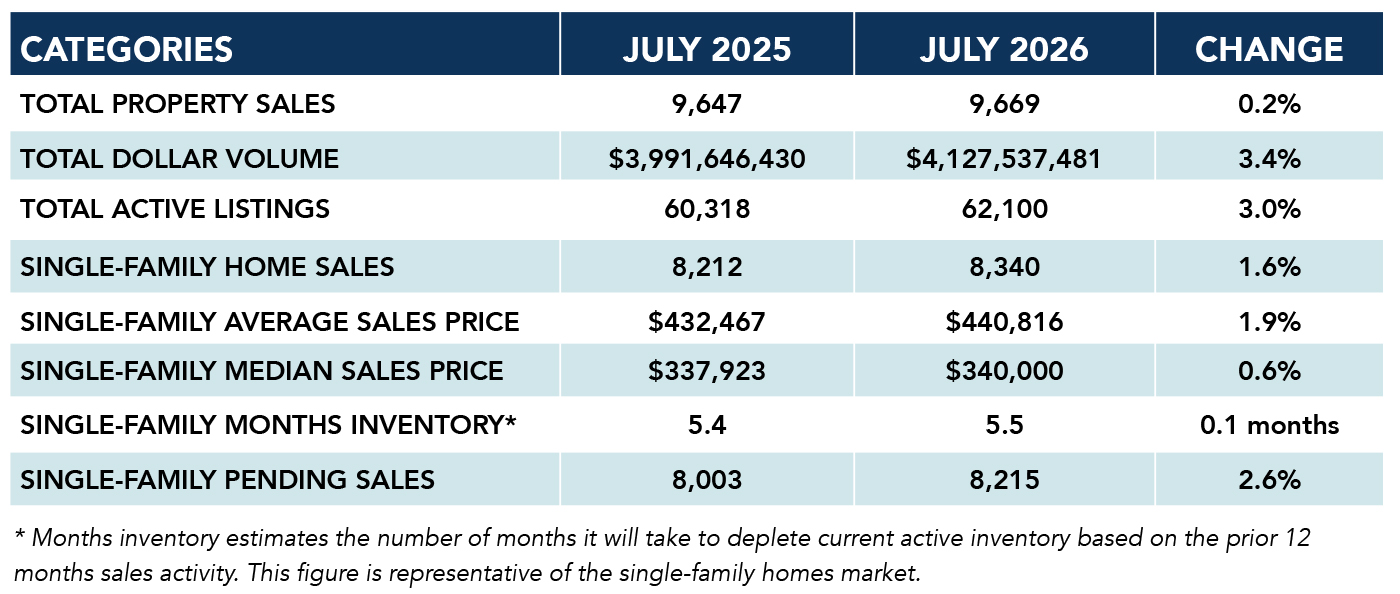
HAR reported 40,750 active single-family listings in July 2026, up 3.4% from a year earlier and the highest level ever recorded by the organization.
But that does not mean Houston's housing market has stalled.
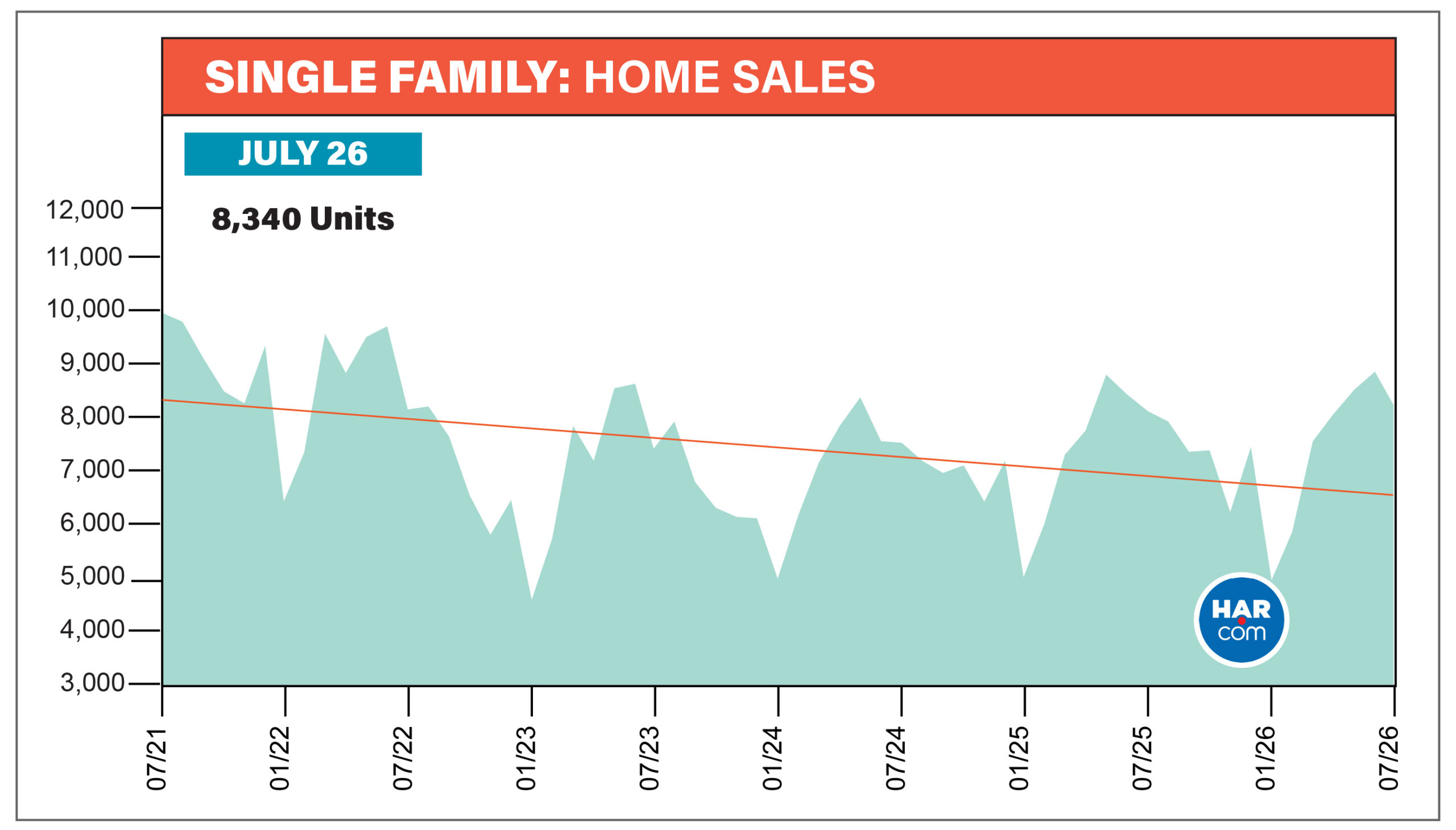
Buyers are still buying. Single-family home sales actually rose 1.6% year over year to 8,340 closings, while pending sales increased 2.6% to 8,215.
The bigger change is simpler: Houston now has more homes competing for each buyer.
For families looking to purchase, that can mean more choices, more time to compare homes and potentially more room to negotiate. For homeowners preparing to sell, it means buyers have alternatives — and price, condition and overall value matter more than they did during the housing frenzy of a few years ago.
“We’re seeing a more balanced market take shape across Houston,” said HAR Chair Theresa Hill with Compass RE Texas, LLC - Houston. “For buyers, that means more opportunities and more flexibility than they've had in quite some time. That's a positive shift and one that could benefit both buyers and sellers as the year moves forward.”
What Houston's Record Number of Homes for Sale Means for You
For many residents, the phrase “record inventory” may sound like bad news. The reality is more nuanced.
If you are buying a home, the record number of listings can work in your favor. Instead of feeling pressure to jump on the first acceptable house, buyers may have more opportunities to compare neighborhoods, school zones, commute times, tax rates, home condition and monthly payments.
If you are selling a home, buyers now have more options. That means a home priced too high or in need of obvious repairs may sit longer while buyers choose a competing property nearby.
If you already own a home and are not planning to move, the record number of listings does not mean Houston home values are suddenly collapsing. Home prices were still slightly higher than a year ago in July.
That distinction matters.
Houston does not have record inventory because buyers stopped purchasing homes. It has record inventory because more homes are entering and remaining on the market while buyers are taking a more selective approach.
Buyers Have More Breathing Room Than They Did During the Pandemic Boom
Houston's single-family inventory reached 5.5 months in July.
In everyday terms, that means that if no additional homes were listed, it would take roughly five and a half months to sell the homes currently available at the recent pace of sales.
That is much closer to what is generally considered a balanced housing market than the shortage conditions Greater Houston experienced during the pandemic-era housing boom.
During those years, buyers frequently encountered limited choices, bidding wars and homes going under contract almost immediately.
Today's market looks different.
Homes spent an average of 53 days on the market in July, compared with 50 days a year earlier. That does not mean every house will take nearly two months to sell, but it does show that buyers generally have more time to evaluate their options.
Greater Houston also had more inventory than the national market, where the National Association of Realtors reported a 4.6-month supply.
The record number of listings also needs to be viewed in the context of Houston's growth. Greater Houston has far more residents, subdivisions and housing units than it did decades ago, so absolute inventory records will naturally become easier to break over time.
For the average buyer or homeowner, the more useful takeaway is the amount of inventory compared with how quickly homes are selling. At 5.5 months, Houston is no longer experiencing the severe shortage that gave sellers such a strong advantage earlier in the decade.

Mortgage Rates Are Still Shaping What Buyers Can Afford
One reason homes are spending more time on the market is that mortgage rates continue to limit how much many families can comfortably spend.
The average 30-year fixed mortgage rate was 6.54% in July 2026, down from 6.72% a year earlier, according to data cited by HAR.
That year-over-year improvement helps, but today's rates remain far above the unusually low mortgage rates seen earlier in the decade.
For buyers, that means the monthly payment has become just as important as the home's asking price.
A family that once might have stretched into a higher price range may now choose a less expensive home, make a larger down payment or spend more time looking for a seller or builder offering incentives.
HAR estimated that a buyer purchasing Houston's median-priced home with 20% down would save more than $250 per year in principal and interest compared with July 2025 because of the lower mortgage rate.
Houston's housing affordability improved year over year in 21 of the previous 24 months, according to HAR, compared with improvement in 15 of 24 months nationally.
Still, affordability remains one of the biggest filters determining which homes buyers can realistically consider.
New Construction Is Giving Resale Sellers More Competition
Houston's ability to keep building homes is another major reason inventory is growing.
Unlike housing markets where land and new construction are severely limited, Greater Houston continues to add subdivisions and new homes throughout the region.
HAR recently reported especially strong new-home activity in areas including Magnolia/1488 West, Huffman, Conroe Southwest, Dayton and Brookshire.
That matters for residents in fast-growing communities across Katy, Fulshear, Cypress, Tomball, Magnolia, Conroe, Richmond, Rosenberg and other suburban corridors.
Consider a family trying to sell a relatively new resale home for $425,000.
A new-construction home nearby may also be listed around $425,000, but the builder might offer a mortgage-rate buydown, money toward closing costs, new appliances, upgraded finishes or a warranty.
To the buyer, those two homes do not necessarily cost the same even when the advertised prices are identical.
That creates a type of competition many resale homeowners did not face as intensely during the 2020-2022 housing boom.
For sellers, it means looking beyond what a neighbor's home sold for several years ago. Today's buyers are comparing a house with every other reasonable option available now.
Home Prices Remain Relatively Stable
Despite the record number of homes for sale, Houston prices did not fall sharply in July.
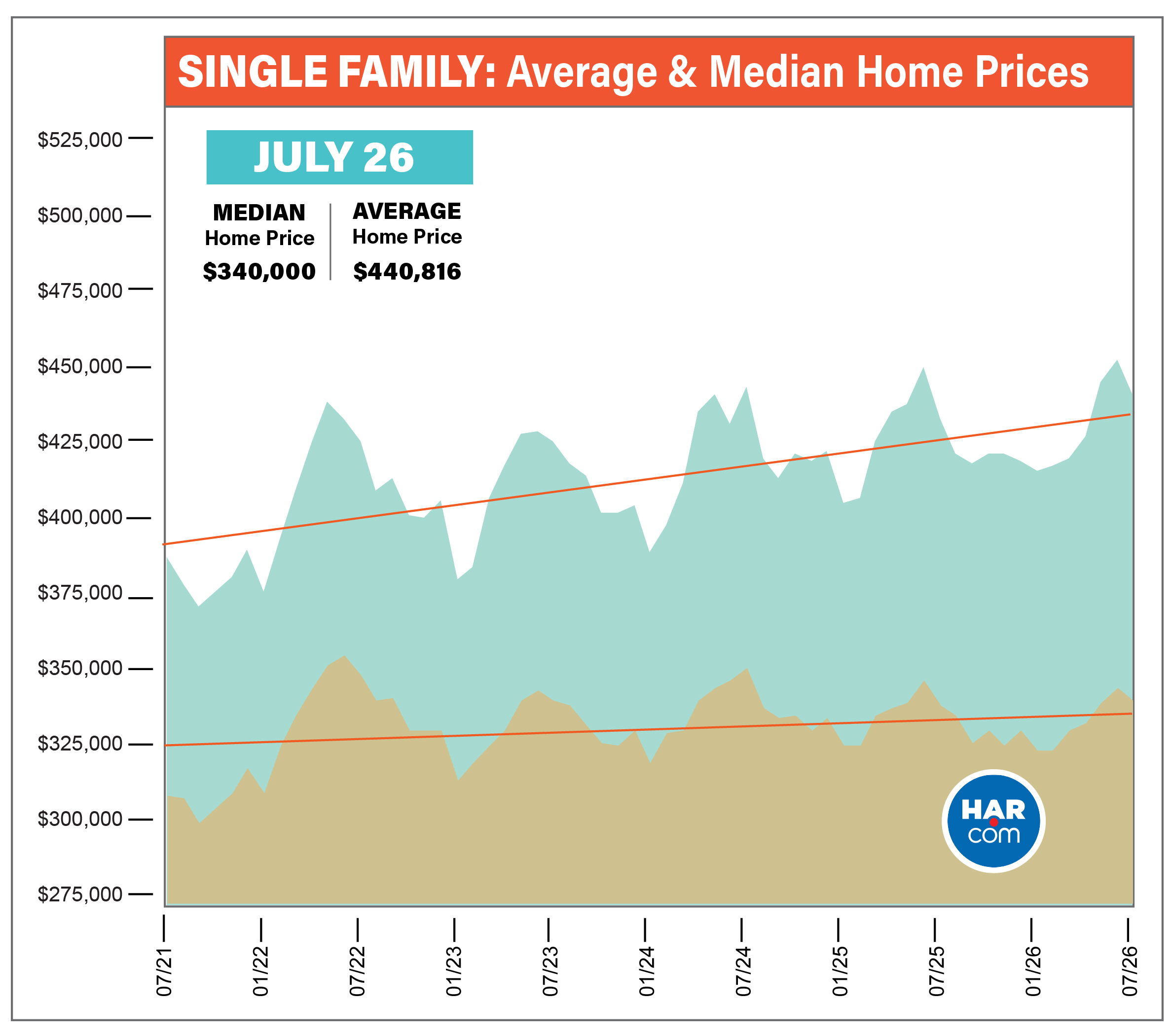
The median single-family home price rose 0.6% to $340,000, compared with $337,923 in July 2025.
The average single-family sales price increased 1.9% to $440,816, up from $432,467 a year earlier.
Existing single-family home sales also performed well. HAR reported 6,121 closings, up 4.6% year over year.
The average price for an existing single-family home rose 2.1% to $453,435, while the median increased 1.5% to $345,000.
Those numbers are important for homeowners because they show the difference between more inventory and falling home values.
Houston has considerably more homes available, but the broader market is not showing a dramatic drop in prices.
Instead, buyers appear to be gaining leverage primarily through greater selection and negotiating flexibility.
Sellers Can Still Find Buyers — But Expectations Matter
For homeowners preparing to sell, July's numbers do not suggest that buyers have disappeared.
In fact, Houston's sales volume remains healthy.
What has changed is the amount of competition.
A buyer who might have had three or four realistic options in a neighborhood during a tight market could now have significantly more homes to consider.
That makes the little things matter more.
Pricing a home substantially above comparable properties may result in fewer showings. Deferred maintenance that buyers once overlooked may become a bigger issue when a move-in-ready alternative is available nearby. Sellers may also encounter more requests for repairs, closing-cost assistance or other concessions.
That does not mean homeowners automatically need to slash prices.
It means the market is becoming less forgiving of listings that do not match what buyers believe they can get elsewhere.
The strongest position for sellers is increasingly one based on realistic pricing, good condition and an understanding of the competition within the immediate area.
Houston Buyers Are Still Active
Another reason the record inventory figure should not be mistaken for a collapse is that sales activity continues.
Houston recorded 89,367 single-family home sales during the 12 months ending in July 2026, up 2.5% from the previous 12-month period.
HAR Chief Economist Dr. Ted C. Jones noted that Houston's sales volume has returned to roughly the levels seen during the 12 months ending in July 2019, the last comparable period before the pandemic disrupted the housing market.
Nationally, the recovery has been slower. HAR reported that National Association of Realtors data showed single-family sales during the 12 months ending July 2026 remained 20.1% below the comparable 2019 period.
That comparison helps explain Houston's unusual situation.
More homes are entering the market.
Buyers are still purchasing homes.
But homes are being added faster than every available property can be absorbed.
The result is record inventory without a corresponding collapse in demand.
Luxury Homes Posted the Strongest Sales Growth
Sales performance varied by price range in July.
Homes priced from $250,000 to $499,999 continued to represent the largest portion of the Houston market, with 4,690 transactions, up 0.4% from a year earlier.
Sales from $500,000 to $999,999 increased 1% to 1,560 homes.
The strongest percentage growth came at the top of the market. Sales of homes priced at $1 million and above increased 9.4%, with 407 transactions.
At lower price points, homes below $100,000 increased 4.2%, while sales between $100,000 and $149,999 declined 11.5%. Sales in the $150,000 to $249,999 range were down 0.7%.
For the average household, those differences reinforce another important point: there is no single Houston housing market. Conditions can vary considerably depending on price range, neighborhood and the amount of new construction nearby.

Townhome and Condo Buyers Have Even More Choices
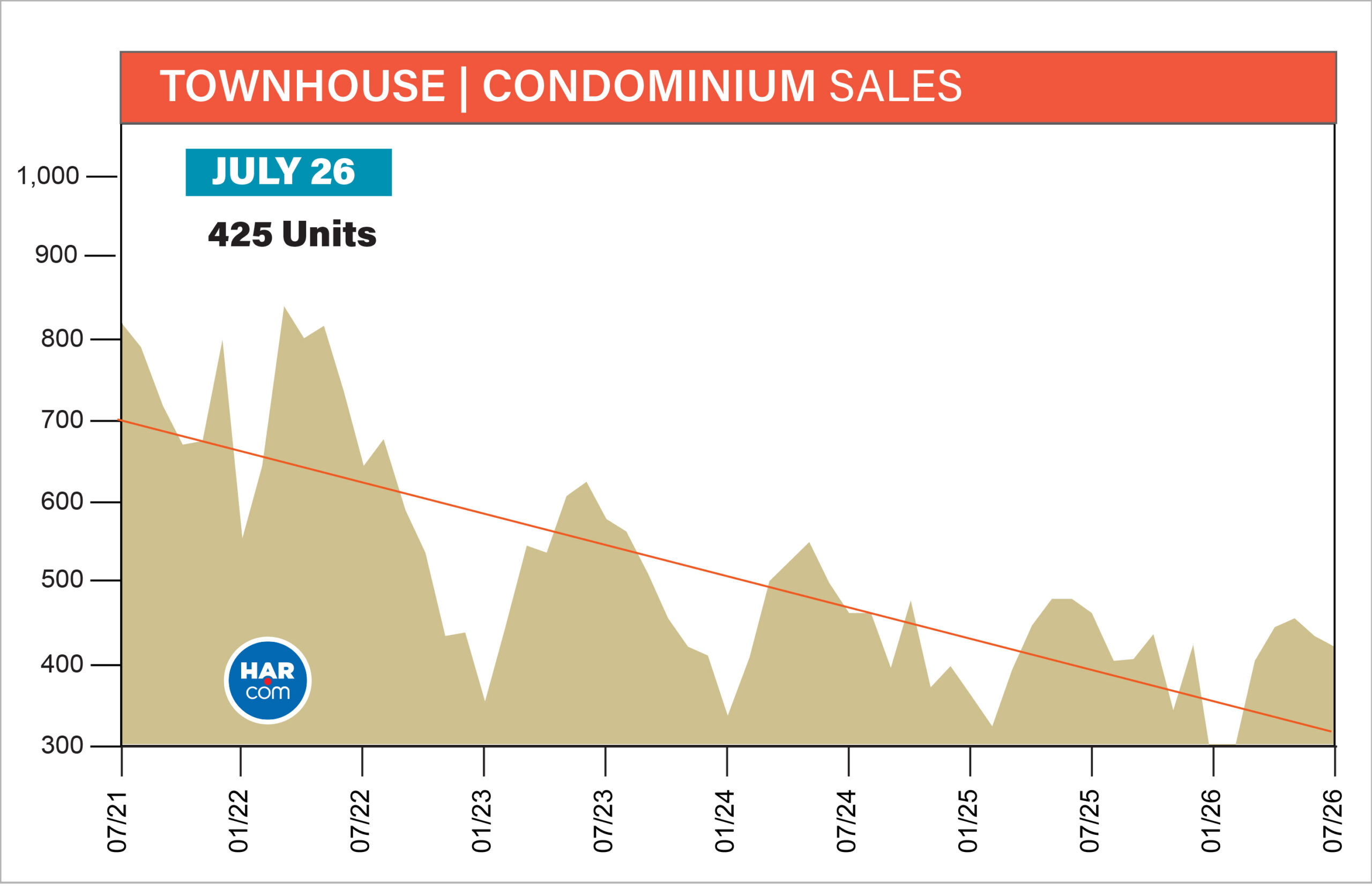
The townhome and condominium market is experiencing an even greater buildup of inventory.
Sales totaled 425 units in July, down 9% from a year earlier.
The average price declined 2.4% to $260,987, while the median price fell 3.7% to $211,000.
Active townhome and condominium listings increased 4.6% to 3,631 units, pushing inventory to 9.1 months.
For buyers considering attached housing, that means considerably more supply is available relative to the pace of sales.
For owners hoping to sell a townhome or condominium, it may mean a more competitive environment than exists in the single-family market.
The Bigger Houston Housing Story: Sellers Are Competing for Buyers Again
The most important takeaway from HAR's July report is not simply that Houston set an inventory record.
It is that the relationship between buyers and sellers has changed.
A few years ago, the defining question for many Houston buyers was, “Can I find a house before someone else buys it?”
Now, more families may be asking, “Which of these homes gives us the best value?”
That is a meaningful shift.
For buyers, it can create more breathing room and more opportunities to negotiate.
For sellers, it means that putting a home on the market is increasingly the beginning of a competition for a buyer rather than a guarantee of immediate interest.
And for homeowners watching the value of their biggest asset, July's numbers offer a measure of reassurance alongside that changing landscape: prices remained relatively steady, sales continued and Houston's housing market is operating at transaction levels much closer to its pre-pandemic norm than much of the country.
Across all property types, Greater Houston recorded 9,669 sales in July, essentially unchanged from a year earlier, while total dollar volume increased 3.4% to approximately $4.1 billion.
For now, Houston's housing market is best described not as a market without buyers, but as one with far more choices for them.
Stay tuned to My Neighborhood News for more Houston housing market updates and local coverage of what changing real estate conditions mean for homeowners, buyers and families across Greater Houston.

 Tiffany Krenek has been on the My Neighborhood News team since August 2021. She is passionate about curating and sharing content that enriches the lives of our readers in a personal, meaningful way. A loving mother and wife, Tiffany and her family live in the West Houston/Cypress region.
Local business spotlight
Grow your business
where trust already lives.
Let’s introduce your business to the neighbors nearby.
Have a local favorite?
Let’s make an introduction.
Leave your email and our team will reach out with ways to promote your business.
Give a local favorite a little love.
Know a business your neighbors should discover? Tell us who they are.
We couldn’t send that just yet. Please try again.