







Greater Austin Braces for Dangerous Freeze: How to Protect People, Pets, Plants & Pipes This Weekend
As a powerful Arctic cold front barrels into South-Central Texas, the National Weather Service has issued a Winter Storm Warning and Extreme Cold Warning for the Greater Austin Area, including Hayes, Travis, Williamson, and surrounding counties.
Starting Friday night and lasting through Monday, the region faces freezing rain, sleet, subfreezing temperatures, and wind chills as low as -5°F in the Hill Country. In some areas, temperatures may not rise above freezing for 48 hours, making icy roads and power outages a real concern.
Governor Greg Abbott has already declared a disaster in 134 counties across the state, emphasizing, “Job number one is always protecting lives,” and urged residents to prepare for dangerous conditions. ERCOT officials have confirmed the state power grid is operating at full capacity and should remain stable.
Whether you’re in Austin, Jarrell, or any part of South-Central Texas, here’s how to stay safe and protect your home this weekend — with trusted advice from the CDC, Texas A&M AgriLife Extension, FEMA, and local authorities.
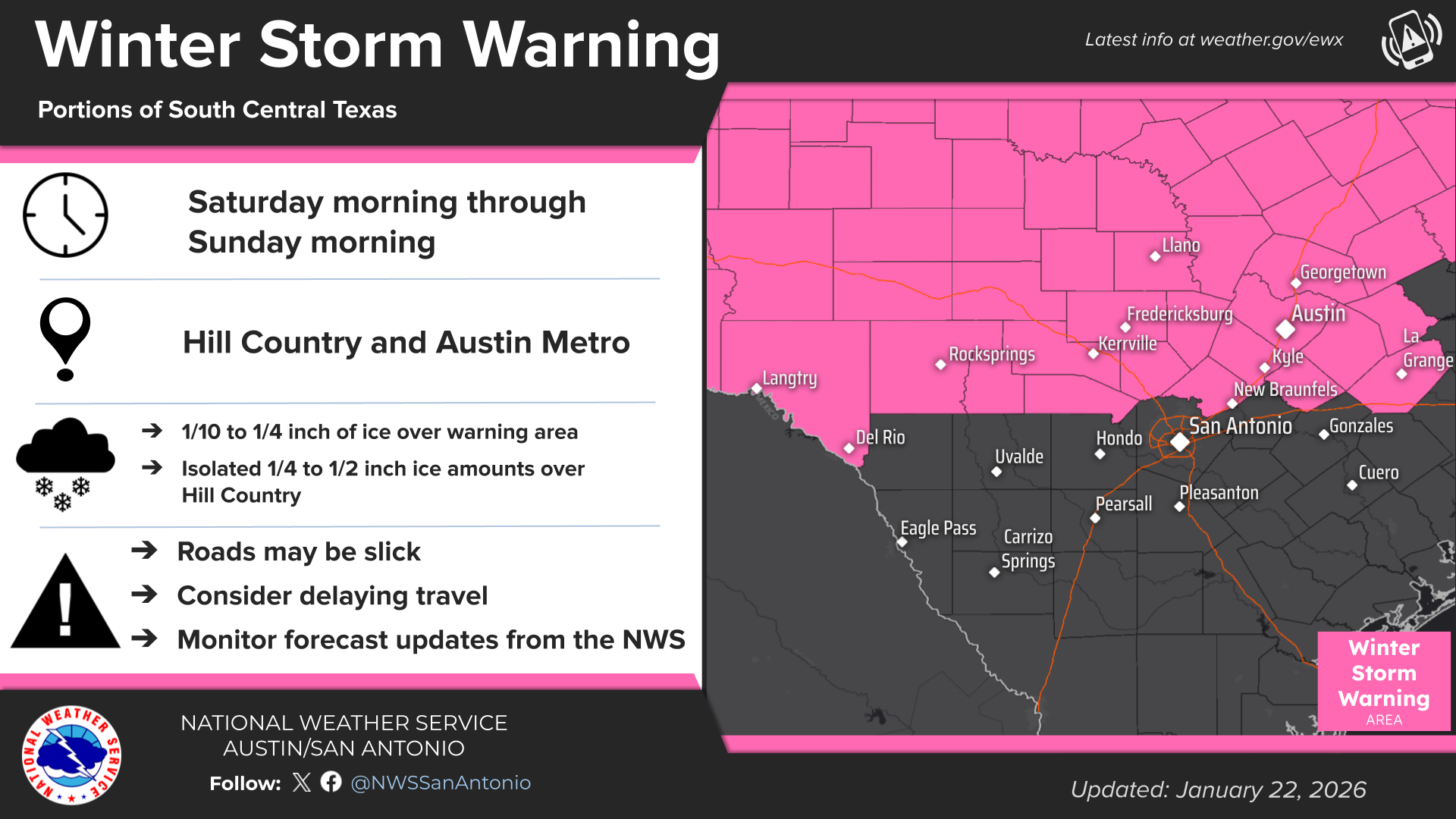 (Source: National Weather Service - Austin/San Antonio)
Protecting People: Safety First Inside and Out
During extreme cold, hypothermia, frostbite, and carbon monoxide poisoning are among the greatest threats — especially for the elderly, young children, and those without stable housing.
Stay Safe Indoors
-
Layer up: Wear warm clothes, especially hats, gloves, and insulated socks. Avoid overexertion, which can increase your risk of heart attack in the cold.
-
Heat safely: Space heaters must be kept 3 feet from flammable items and plugged directly into the wall—never into extension cords.
-
Never use ovens or grills to heat your home: Doing so can lead to deadly carbon monoxide buildup.
-
Install and test carbon monoxide detectors if you haven’t already.
What to Watch For
-
Signs of hypothermia: Confusion, slurred speech, drowsiness, shivering, or exhaustion.
-
Frostbite symptoms: Numbness, gray or waxy skin, especially on fingers, toes, ears, or nose
If you or someone you know shows symptoms of either, seek immediate medical attention or call 911.
Protecting Pets: Bring Them Inside
The Austin Humane Society reminds residents that Texas law prohibits tethering dogs in freezing conditions. Pet safety tips include:
-
Bring all pets indoors, especially at night.
-
If outdoor shelter is absolutely necessary, insulate it with hay (not blankets), elevate it, and block the wind.
-
Knock on your car hood before starting it—cats sometimes seek warmth on the engine.
To report animal cruelty, call 311 and ask for an animal cruelty investigator in your county.
| County | Investigating Agency | Contact Information |
| Hays | Hays County Sheriff's Office Animal Control | 512-393-7896 |
| Travis | Travis County Sheriff's Office Animal Cruelty Unit | 512-974-0845 |
| Williamson | Williamson County Sheriff's Office / Regional Animal Shelter | 512-864-8282 (AC Dispatch) |
Protecting Plants: Expert Tips from Texas A&M AgriLife Extension
Texas gardeners know that even a brief freeze can wipe out months of growth. Thankfully, there are reliable methods to safeguard your landscape:
Before the Freeze
-
Water your garden: Moist soil holds more heat than dry soil and helps protect roots.
-
Cover your plants: Use frost blankets, old sheets, or row covers — avoid plastic touching foliage. Secure them to the ground with weighted objects like bricks and landscaping rocks to trap heat from the soil.
-
Add mulch: This insulates soil and protects the base of perennials and young trees.
-
Bring containers inside: Pots lose heat quickly. If they must stay outdoors, cluster them together against a wall and cover them.
If you have citrus trees, consider building a soil mound at the trunk base to protect the graft union from cold damage.

Protecting Pipes: Prevent Bursts Before They Start
Frozen pipes are one of the most costly and common cold weather hazards in Texas. According to the Texas Department of Insurance, here’s how to prevent disaster.
Prep Your Pipes
-
Wrap exposed pipes with insulation, foam, or towels.
-
Let faucets drip — especially those farthest from the main shutoff. This relieves pressure and introduces slightly warmer water
-
Open cabinets under sinks to let warm air circulate.
-
Disconnect and drain garden hoses.
-
If you're leaving home, shut off your main water supply and leave the heat on low.
If your pipes do freeze, do NOT use a torch to thaw them. Use a hair dryer or call a plumber.
Road Safety: Stay Home If You Can
City of Austin (Local/Municipal Roads)
The City of Austin Transportation and Public Works (TPW) department confirmed they are mobilizing for this weekend. Their strategy is:
-
Targeting "The Big Three": Crews are prioritizing bridges, overpasses, and steep hills. Because these surfaces are disconnected from the ground’s warmth, they freeze first.
-
Tier 1 Prioritization: The city uses a tiered system to keep emergency services moving. Tier 1 routes specifically include roads leading to major hospitals (like Dell Seton and St. David's) and primary police/fire response routes.
-
Brine vs. Sand: The city typically uses brine (saltwater) for pretreatment on bridges. If the ice begins to accumulate Saturday, they switch to a sand-salt mixture to provide traction.
TxDOT Austin District (Highways)
TxDOT manages the major corridors throughout Travis County. Their crews began pretreating on Wednesday, January 21:
-
Major Routes: They have already applied brine to I-35, MoPac (Loop 1), US 183, and SH 71.
-
The "Striping": If you’re driving today, you’ll likely see white, chalky lines on the highway lanes—that is the dried brine from the pretreatment.
-
The Flyovers: TxDOT’s biggest concern in Travis County is the high-profile flyovers (like the I-35/US 183 interchange), which are scheduled for extra treatment because they are highly susceptible to "black ice."
3. Travis County (Unincorporated Areas)
The Travis County Transportation and Natural Resources (TNR) department manages the roads outside of Austin city limits. They are focusing their pretreatment on:
-
The Hill Country (Western Travis County): Areas like West Lake Hills and Bee Cave often see higher ice accumulation.
-
Bridges over Creeks: They are specifically hitting bridge decks over Long Branch Creek, Onion Creek, and the Colorado River.
-
Note on Timing: The Winter Storm Warning for Travis County officially begins at 6:00 AM Saturday. While roads are being pretreated now, officials warn that brine loses effectiveness if heavy rain falls before the freeze (it can wash away), so they may re-treat early Saturday morning.
The safest choice is to stay off the roads completely. If travel is unavoidable:
-
Keep a winter emergency kit in your car: blankets, water, snacks, jumper cables, flashlight, and phone charger.
-
Check road conditions at DriveTexas.org before heading out.
-
If stranded, stay with your vehicle and run the heater intermittently while cracking a window and clearing the exhaust pipe.
Warming Centers in Greater Austin
If you or someone you know doesn’t have reliable heat or shelter, several public facilities in the region are opening their doors for warmth, safety, and support. Visit tdem.texas.gov/warm to view an interactive map of warming centers and shelters across the Greater Austin area, managed by the Texas Department of Emergency Management.
In response to the winter storm, the City of Austin and Travis County typically activate several public facilities as warming centers during normal business hours to provide residents with a safe place to escape the cold.
One Texas Center serves as a central hub for city services and often acts as a primary warming location or a registration point for further assistance.
-
Centrally located near downtown Austin.
-
Typically open during standard city business hours (8:00 AM – 3:30 PM).
Austin Central Library provides a large, modern space for residents to stay warm while also offering access to amenities.
-
Equipped with a cafe and high-tech amenities.
-
Features extensive seating and a roof garden area.
Terrazas Branch Library is a key neighborhood resource in East Austin that provides shelter during cold snaps.
-
Located on East Cesar Chavez Street.
-
Accessible for those in the downtown and east-side communities.
Little Walnut Creek Branch Library serves the northern part of Austin, offering a safe environment for those in the Rundberg area.
-
Provides a heated indoor space during library operating hours.
-
Staff are available to help connect visitors with additional resources.
Ruiz Branch Library is an important warming location for residents in Southeast Austin.
-
Located on Grove Boulevard.
-
Offers extended hours most weekdays (9:00 AM – 8:00 PM).
Primary Warming Centers in Austin
The following locations are frequently used as designated warming centers during winter weather activations:
-
Elgin Open Door Missions (also known as Elgin Open Door Ministries) will operate as a warming center for residents in the Elgin area, which spans parts of Bastrop and Travis counties.
-
The center is scheduled to open at 6:00 PM on Saturday, Jan. 24. This location specifically targets the homeless population but serves as a general resource for those in need of heat.
Warming Centers in Williamson County
Williamson County relies on partnerships with local non-profits and churches to provide warmth during extreme freezes.
Getsemani Community Center in Georgetown is being operated by Helping Hands of Georgetown in partnership with First United Methodist Church.
-
Open nightly from 6:00 PM to 9:00 AM, beginning Friday, Jan. 23, and continuing through Tuesday morning if temperatures remain low.
-
Pets are welcome but must remain in a closed crate; crates and food are available on-site.
-
Volunteers are available to transport residents from the Georgetown Public Library to the center.
St. James Episcopal Church in Taylor will serve as a primary warming center and overnight shelter for eastern Williamson County.
-
The church is scheduled to open its doors Friday, Jan. 23, at 7:00 PM.
-
It plans to remain operational through Tuesday to accommodate the duration of the storm.
Warming Centers in Hays County
Hays County Judge Ruben Becerra has announced that warming centers activate when temperatures hit 32°F or lower and power has been out for eight or more hours, though some centers have specific triggers.
Southside Community Center in San Marcos activates its "Winter Emergency Shelter" when temperatures drop below 35°F for more than three consecutive hours.
-
Opening Saturday, Jan. 24, at 7:00 PM and closing at 9:00 AM daily (reopening at noon if freezing conditions persist).
-
Offers 40 cots on a first-come, first-served basis.
-
Provides a free evening meal at 4:00 PM and breakfast at 8:00 AM.
-
Leashed, non-aggressive pets are permitted to stay with their owners.
Wildlife Safety Reminder
Cold weather affects wildlife too, and many residents may come across birds or animals that appear stunned, injured, or in distress during or after the freeze.
Support Basics
-
Water: Keep birdbaths thawed. Use warm water to melt ice or add a heater; birds can't hydrate from solid ice.
-
Calories: Provide high-energy snacks like suet, black oil sunflower seeds, and unsalted nuts to help animals maintain body heat.
-
Shelter: Leave brush piles and leaf litter alone—they are natural insulators for small critters and pollinators.
Safety Protocols
-
The Hood Thump: Bang on your car hood before starting the engine to alert animals seeking warmth near the motor.
-
Rescue Method: If you find a "frozen" or lethargic animal, place it in a box with a towel in a warm, dark, quiet area.
-
Hands Off: Do not give food or water to a rescued animal, and never attempt to handle adult deer or large mammals yourself.
Quick Contacts
-
Austin Wildlife Rescue: 512-472-9453 (visit Austin Wildlife Rescue to learn more about their work)
-
Emergencies/Large Animals: Call 311
Final Thoughts
This upcoming freeze may rival some of the harshest cold snaps Central Texas has experienced in years. But with early preparation, the right supplies, and a strong community, Greater Austin and surrounding areas can weather this storm safely.
Bookmark TexasReady.gov, Ready.gov, and MyNeighborhoodNews.com for continued updates and resources.
Stay safe, stay warm, and take care of one another.

 Tiffany Krenek has been on the My Neighborhood News team since August 2021. She is passionate about curating and sharing content that enriches the lives of our readers in a personal, meaningful way. A loving mother and wife, Tiffany and her family live in the West Houston/Cypress region.
Local business spotlight
Grow your business
where trust already lives.
Let’s introduce your business to the neighbors nearby.
Have a local favorite?
Let’s make an introduction.
Leave your email and our team will reach out with ways to promote your business.
Give a local favorite a little love.
Know a business your neighbors should discover? Tell us who they are.
We couldn’t send that just yet. Please try again.