







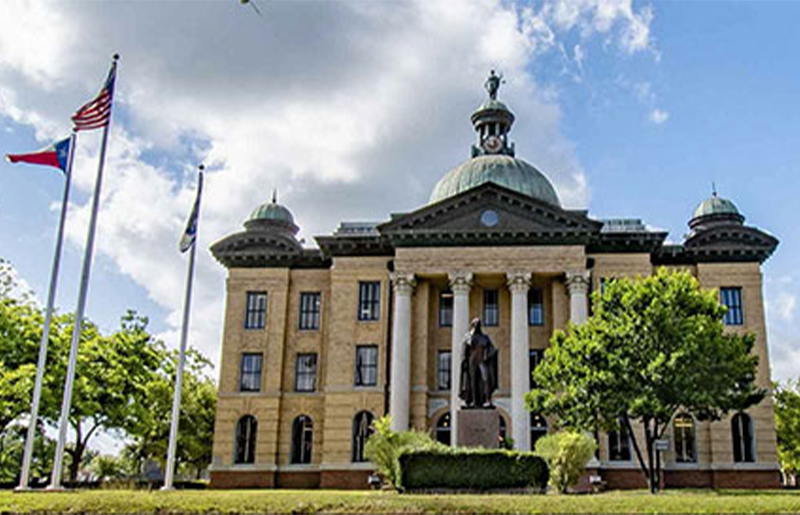
Fort Bend County FY2027 Proposed Budget Tops $841 Million, Keeps Tax Rate Flat as Growth Drives Higher Revenue
For Fort Bend County homeowners, one of the most important numbers in the proposed fiscal year 2027 budget is actually one that is not changing.
Fort Bend County is proposing to maintain its county property tax rate at $0.412 per $100 of taxable value, while the Fort Bend County Drainage District rate would remain $0.010, producing a combined rate of $0.422 per $100 — the same combined rate adopted for the prior year.
But keeping the rate flat does not mean Fort Bend County will collect the same amount of property-tax revenue.
The proposed budget is expected to raise approximately $23.31 million more in county property-tax revenue than last year, a 4.6% increase, including about $10.22 million generated by new property added to the tax roll. The Fort Bend County Drainage District is projected to collect another $575,106 over the prior year, also a 4.6% increase, with about $248,055 tied to newly added property.
That distinction is at the heart of the FY2027 budget discussion: the proposed Fort Bend County tax rate would remain unchanged, but growth in taxable property allows the county to collect more revenue.
From an $80 million challenge to an $841.4 million proposed budget
The road to the current proposal began months before the budget was formally filed.
During an Aug. 4 Fort Bend County Commissioners Court budget workshop, Director of Finance and Investments Pamela Gubbels explained that county officials had initially faced a significant gap after preliminary taxable values came in lower than anticipated earlier in the year.
According to the workshop discussion, county departments had effectively been challenged to reduce budget requests by approximately $80 million, while the Finance Department also looked for additional revenue that could help close the difference.
By July, updated taxable values had improved the picture. The county's estimated net assessed value ultimately reached approximately $133.21 billion, while the Drainage District tax base stood at approximately $132.29 billion.
At the Aug. 4 workshop, the recommended spending plan totaled about $792 million, but the subsequently filed FY2027 proposed budget is larger, with total expenditures of $841,411,589. One of the major reasons is a $52 million General Fund capital-outlay item tied to bond-funded projects.
That $52 million is particularly important when comparing the proposed budget with the previous year.
The General Fund would increase from approximately $464.89 million in FY2026 to $530.93 million in FY2027, a 14.2% increase on paper. But the county notes that the General Fund temporarily includes $52 million for capital activity expected between September and December 2026. Once bonds are issued, the General Fund is expected to be reimbursed and the budget amended.
Without that temporary $52 million capital amount, underlying General Fund expenditures would be approximately $478.9 million.
What the proposed Fort Bend County tax rate means for homeowners
The county's taxpayer impact statement uses a median homestead taxable value of $290,480 for tax year 2026.
At the proposed county rate of $0.412, the estimated county tax on that median homestead would be approximately $1,197. At the no-new-revenue rate of $0.395979, the estimated bill would be approximately $1,150.
The Drainage District's proposed $0.010 rate would add approximately $29 on the same median homestead, compared with roughly $28 at its no-new-revenue rate.
The proposed county rate is slightly above the calculated voter-approval rate of $0.411560 when considered without the county's unused increment calculation, while the budget document shows a voter-approval rate including unused increment of $0.458672. The proposal remains below that latter threshold identified in the county's tax-rate summary.
For individual homeowners, however, the actual tax bill will depend on a property's taxable value, exemptions and appraisal changes — not simply whether the tax rate itself changes.
Why Fort Bend County calls it a tax increase even though the rate stays the same
One detail that can be confusing for taxpayers is the language surrounding the upcoming public hearing.
At the Aug. 4 budget workshop, Gubbels explained that the county would be required to advertise a hearing on a tax increase because the proposed tax rate is higher than the calculated no-new-revenue rate.
The no-new-revenue rate is designed to produce approximately the same property-tax revenue from properties that were on the tax roll in the previous year.
Fort Bend County's proposed rate may be unchanged from last year, but because it would generate more revenue from existing property than the no-new-revenue rate, Texas truth-in-taxation rules trigger the tax-increase hearing process.
That is an important distinction for residents following the Fort Bend County property tax debate: the tax rate itself is not proposed to rise from last year, but the county expects to collect more revenue.

Roads, drainage and capital projects remain major pieces of the plan
Fort Bend County's proposed operating budget includes continued growth in road and drainage spending.
The Road & Bridge Fund would increase 7.9%, from approximately $32.25 million to $34.81 million.
The Fort Bend County Drainage District operating budget would increase 5.4%, from approximately $13.01 million to $13.71 million.
Drainage debt service would rise from approximately $3.35 million to $7.24 million, an increase of 115.8%.
Separate from those operating figures, the Aug. 4 workshop also focused heavily on Fort Bend County's FY2027 Capital Improvement Program.
County officials said departments had submitted approximately $64.9 million in capital requests, but the county auditor's office recommended keeping new financed projects to about $41 million.
The resulting recommended Capital Improvement Program totaled approximately $40.22 million.
Among the proposed capital needs discussed were replacement vehicles, printers, Road & Bridge equipment and other projects intended to maintain county operations.
Four planned bond issues could affect projects already underway
County Auditor Ed Sturdivant also told Commissioners Court during the Aug. 4 workshop that Fort Bend County was preparing four bond issues intended to allow capital projects already underway to continue.
The discussion included additional financing for mobility projects, parks, certificates of obligation and flood-control work.
Sturdivant said the county's mobility program had already drawn significantly on the General Fund while awaiting additional bond proceeds, and he cautioned that some capital projects could face delays if the county were unable to complete the planned financing.
That makes the tax-rate decision more than a question of annual operations.
It can also influence Fort Bend County's ability to move forward with long-term infrastructure projects — including mobility, parks, flood-control work and other capital investments that neighborhoods may see unfolding over several years.
A four-member quorum matters for the tax-rate vote
Another significant issue raised during the budget workshop involved the number of Commissioners Court members required to formally adopt the county tax rate.
County officials said Texas law requires at least four members of Fort Bend County Commissioners Court to be present when levying the tax rate.
If the county were unable to adopt the proposed tax rate, officials discussed the possibility of falling back to the no-new-revenue rate, which would produce less revenue than the rate supporting the current proposed budget.
During the Aug. 4 discussion, Gubbels said such a scenario could force additional budget reductions.
At that point in the process, approximately $10.4 million had been set aside as a placeholder for a possible employee cost-of-living adjustment, potentially supporting about a 3% COLA. Officials discussed that funding as one of the areas that could be affected if the lower tax rate became necessary.
The final proposed budget has since incorporated additional revisions, but the workshop highlighted how closely the tax-rate decision, employee compensation and available spending are connected.
Public safety remains one of Fort Bend County's largest expenses
The Fort Bend County Sheriff's Office remains one of the largest General Fund operations.
The proposed Sheriff Enforcement Operating budget is approximately $65.19 million, up 2.6% from the adopted FY2026 level.
Sheriff detention operations would rise 3.5% to approximately $55.31 million, while Sheriff's bailiff spending would increase 7.3% to approximately $7.53 million.
Fort Bend County EMS would receive approximately $32.29 million, up 1.7%, while the Fire Marshal's budget would increase to approximately $7.10 million.
Constable Precinct 2 would see one of the larger increases among the county's constable offices, rising 11.9% to approximately $3.28 million.
The District Attorney's budget would increase 3.4% to approximately $24.47 million, while the Public Defender's Office would receive approximately $4.36 million.

Behavioral health, transportation and mosquito control stand out
Several smaller departments would see some of the largest percentage increases.
Behavioral Health Services would rise 56.9%, from approximately $2.03 million to $3.19 million.
During the Aug. 4 workshop, Behavioral Health Services officials described growing demand for programs supporting first responders and critical-incident response, illustrating one of the service pressures behind the higher funding request.
Public transportation would increase 39.7%, from approximately $2.56 million to $3.58 million.
Mosquito control would rise 23.9% to approximately $1.42 million, while Public Health Emergency Preparedness would increase 28.1% to about $483,000.
The Medical Examiner's budget would increase 10.7% to approximately $6.16 million, another area where officials told Commissioners Court that service demand is expanding beyond Fort Bend County itself.
Libraries, parks and other community services also receive funding increases
Fort Bend County Libraries would receive approximately $24.67 million, a 3.9% increase.
The Parks Department would rise 4% to approximately $7.10 million, while Social Services would increase 1.9% to approximately $2.88 million.
Animal Services would receive about $2.59 million, and Clinical Health Services would rise 6.2% to approximately $2.02 million.
Engineering would increase to approximately $4.56 million, while Recycling Center funding would grow 6.4% to approximately $607,000.
Not every department would receive more.
Proposed reductions appear in Juvenile Probation operations, the County Attorney's Office, the Senior Center, Veterans Service and indigent health-care coordination, among others.
Some court-related line items also shift because associate-judge funding has been reorganized, meaning individual line-item reductions do not always represent an equivalent reduction in the underlying service.
County proposes drawing down fund balances
Across the funds included in the FY2027 finance summary, Fort Bend County estimates approximately $748.08 million in revenue against $841.41 million in expenditures, resulting in a projected $93.33 million reduction in combined fund balances.
Estimated beginning balances total approximately $253.2 million, while the county projects ending balances of approximately $159.87 million, or about 19% of the total budget.
The General Fund is projected to begin with approximately $168.84 million and end with roughly $100.37 million.
Again, the temporary $52 million capital allocation has a major impact on that calculation. The county notes that without the bond-funded capital amount, the General Fund's projected ending balance would equal 31.8% of the budget.
County budget policy discussed during the Aug. 4 workshop calls for maintaining a General Fund balance equal to approximately 30% of the operating budget as a reserve for emergencies.
Fort Bend County reports $1.86 billion in debt obligations
The FY2027 proposal reports approximately $1.86 billion in total debt obligations.
That includes about $1.19 billion in Fort Bend County debt, $512.28 million in Fort Bend County Toll Road debt and $155.22 million associated with the Fort Bend Grand Parkway Toll Road.
The county's FY2027 debt-service budget is approximately $157.44 million, up 0.7% from FY2026.
The debt supports a range of previously financed projects, including roads, county facilities, parks, technology, public-safety equipment and other long-term investments.
What happens next with the Fort Bend County FY2027 budget
The Aug. 4 special meeting was formally posted as a Fort Bend County Commissioners Court Budget Workshop, with the agenda covering departmental budgets, employee cost-of-living adjustments and FY2027 Capital Improvement Projects.
County officials laid out a budget calendar that called for the proposed budget to be filed with the County Clerk and Auditor's Office by Aug. 31, followed by the first public hearing on the FY2027 proposed budget on Sept. 9.
The most consequential date is expected to be Sept. 10, when Commissioners Court is scheduled to take up public hearings and potential action on county positions, elected officials' salaries, fleet management, the 2026 tax rate and the FY2027 budget.
For residents, those hearings provide an opportunity to follow how the proposed Fort Bend County budget changes before final adoption — and how Commissioners Court ultimately balances taxes, employee compensation, public safety, infrastructure and the costs that accompany continued growth.
The proposal keeps the headline tax rate steady. But beneath that number is a much larger discussion about how a rapidly developing county pays for the roads, drainage, ambulances, deputies, courts, libraries, parks, health services and capital projects residents depend on every day.
Stay tuned to My Neighborhood News for updates on the Fort Bend County FY2027 budget, public hearings, property tax rate and decisions affecting local taxpayers and neighborhoods.

 Tiffany Krenek has been on the My Neighborhood News team since August 2021. She is passionate about curating and sharing content that enriches the lives of our readers in a personal, meaningful way. A loving mother and wife, Tiffany and her family live in the West Houston/Cypress region..
Local business spotlight
Grow your business
where trust already lives.
Let’s introduce your business to the neighbors nearby.
Have a local favorite?
Let’s make an introduction.
Leave your email and our team will reach out with ways to promote your business.
Give a local favorite a little love.
Know a business your neighbors should discover? Tell us who they are.
We couldn’t send that just yet. Please try again.