







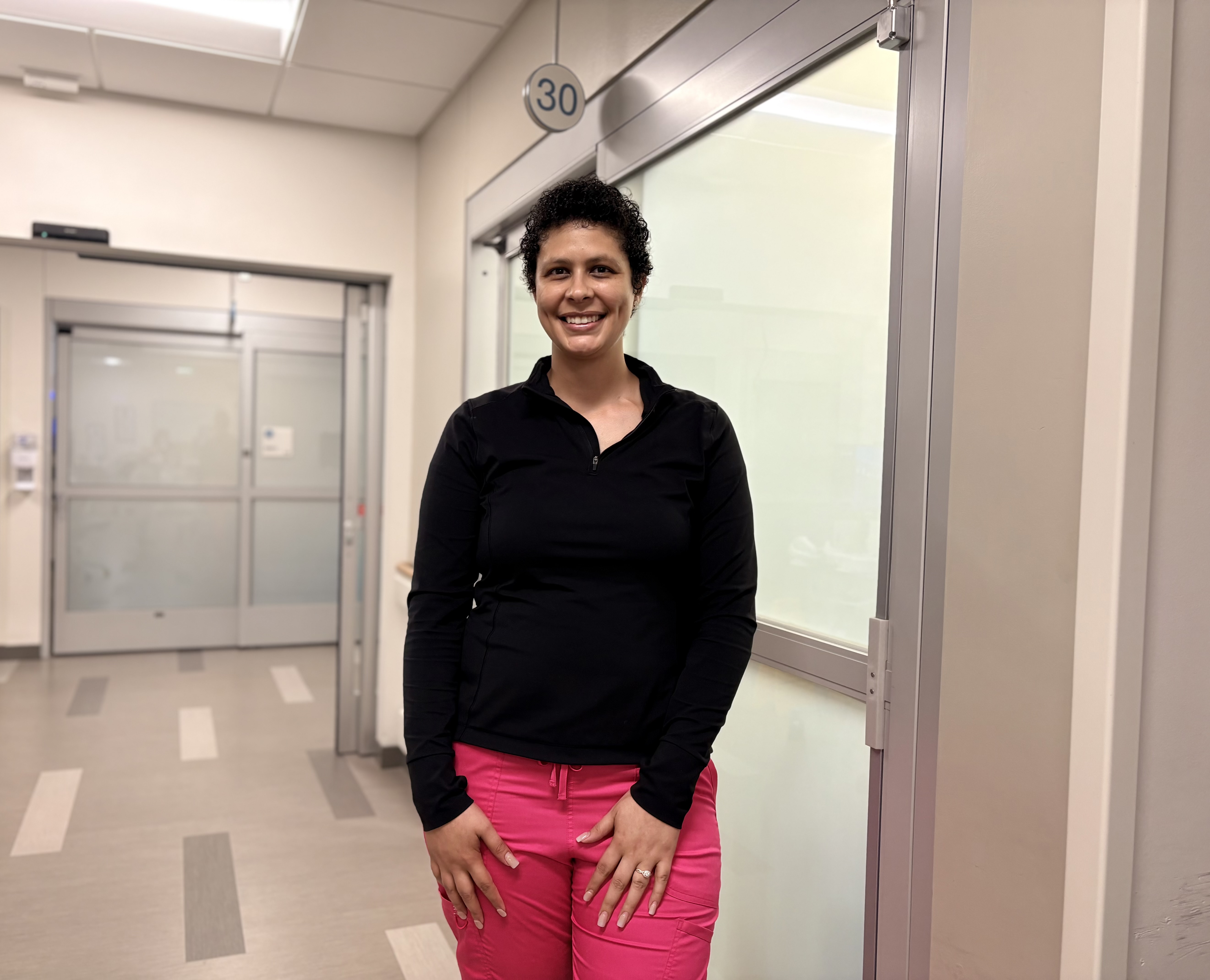
Cypress Nurse Shares Her Breast Cancer Diagnosis at 34 and a Message for Younger Women
Six months after beginning her job as an emergency department nurse at Houston Methodist Cypress Hospital, Alexandria Craig found herself receiving care from the colleagues she worked beside. At 34, the young mother had been diagnosed with stage 3 breast cancer.
Her diagnosis interrupted a season of life centered on a new job, a young family and caring for other people. Now in remission, Craig is sharing her experience during October’s Breast Cancer Awareness Month with women who may see themselves in that description—and may not think breast cancer could be part of their own story.
“It was never something I expected at my age,” Craig said. “I had no family history of breast cancer, was focused on my career, raising my family and taking care of others. Suddenly, I was the one needing care.”
A Place to Still Be Herself
Craig underwent 16 rounds of chemotherapy, surgery and 20 radiation treatments before achieving remission in June. She continued working through treatment, with her team helping her adapt her role when bedside nursing became too difficult.

“Work provided an escape,” she said. “At work, I wasn’t the patient. I was someone who could still help. When I wasn’t able to continue caring for patients at the bedside, I was able to work as the unit secretary. Everyone met me where I was and supported me through every stage.”
Even after those treatments, another part of recovery brought changes she had not expected to face so young. Craig’s estrogen-positive tumor also required hormone therapy to reduce the risk of recurrence, bringing on medically induced menopause before age 35.
“At 34, I was suddenly navigating menopause while fighting cancer,” Craig said. “People think about chemotherapy, radiation and surgery, but hormone therapy can be just as challenging.”
Life After Treatment Brings Its Own Questions
Dr. Dana Holwitt, a breast surgeon at Houston Methodist Cypress Hospital and a breast cancer survivor, said younger patients can face lasting effects from treatment-related menopause. These can include changes in bone density, metabolism and weight management, as well as hot flashes.
“More young women are surviving breast cancer, but survivorship comes with its own challenges,” Holwitt said. “Many are unaware of the long-term effects that can continue for years after treatment ends.”
Holwitt encourages patients to bring those concerns to their care teams, along with questions about their family history and individual risk. For Craig, having no family history had helped make the diagnosis feel so unlikely. Her experience is a reminder to have a new symptom evaluated even when it does not fit what someone expected cancer to look like.
Recognizing Changes and Understanding Screening
The Centers for Disease Control and Prevention lists warning signs including a new breast or underarm lump; swelling or thickening; skin dimpling, irritation or redness; nipple changes or discharge other than breast milk; changes in breast size or shape; and breast pain. These changes can have causes other than cancer, but should be evaluated by a health professional. Some breast cancers cause no noticeable symptoms.
Holwitt recommends that women become familiar with their breasts and advocates regular self-exams beginning around age 25. Her advice emphasizes paying attention to changes; self-exams do not replace recommended imaging or an evaluation by a health professional.
The American Cancer Society does not recommend routine breast self-exams as part of screening for women at average risk. It does encourage women to know how their breasts normally look and feel and report changes promptly. Screening schedules depend on age and risk, so women should discuss when to begin mammograms and whether additional screening is appropriate with their clinician.
For younger women with a new symptom, the next step is medical assessment rather than waiting to reach the age for routine screening.
“If sharing my story can encourage young women to pay attention to their bodies, ask questions or seek care sooner, it’s worth it,” Craig said. “You’re never too young to advocate for yourself.”
Houston Methodist provides breast care and mammography information at houstonmethodist.org/mammogram.

 Johnny Krenek has been connected to community news since childhood, growing up alongside the family business his parents founded—Krenek Printing. Today, he serves as Vice President and lead developer for My Neighborhood News, where he drives the digital experience and supports the team across a variety of technical and operational roles. He is passionate about building tools that help connect neighbors and strengthen communities.
Local business spotlight
Grow your business
where trust already lives.
Let’s introduce your business to the neighbors nearby.
Have a local favorite?
Let’s make an introduction.
Leave your email and our team will reach out with ways to promote your business.
Give a local favorite a little love.
Know a business your neighbors should discover? Tell us who they are.
We couldn’t send that just yet. Please try again.